Dealing With Condensation in Cold Weather
Cold air outside meets warm breath inside, creating the perfect setup for condensation in cold weather. This mix turns windows and walls into a mini indoor rainforest, increasing moisture levels and potential damage.
Wipe down windows regularly and crack a window briefly to balance indoor and outdoor humidity. Keep air moving with ceiling or portable fans, and use vents to prevent stagnant, moist air from settling.
Run exhaust fans after showers to reduce steam buildup. Avoid directing warm, moist breath or steam from cooking directly at cold glass surfaces. Maintaining indoor humidity between 35% and 50% helps control condensation in cold weather.
Your windows will stay clearer, walls won’t sweat, and mold won’t have a chance to grow. Simple habits make a big difference in keeping your home dry and healthy.
Understanding How Condensation Forms Indoors
When the air inside your home is warm and full of moisture—thanks to showering, cooking, or even just breathing—it keenly looks for a place to cool off and settle down, kind of like how you’d park on the couch after a long day.
You’re constantly adding water vapor to the air, whether you realize it or not—drying clothes adds 2–4 pints, and even your breath contributes. That soggy air floats around until it hits something cold, like a window or wall. If that surface is below the dew point—tada!—condensation forms. It’s basically air giving up its moisture in a cold sweat.
In winter, this happens like clockwork, especially on single-pane windows chilled by outdoor temps. The bigger the temperature gap indoors and out, the more dramatic the droplets. So when your window looks like a rainforest, remember: warm air, meet cold glass. You’ve basically invented indoor weather.
Improving Ventilation to Reduce Moisture Buildup
Ever wonder why your bathroom mirror fog is just the tip of a sneaky moisture iceberg?
That damp closet corner or musty basement smell?
Yep, that’s moisture overstaying its welcome.
You’ve got power to kick it out—start by opening doors and cracking windows, even briefly, to let fresh, dry winter air sweep through.
It might sound odd, but cold air actually helps dry your home!
Boost airflow by moving furniture from walls and using fans to chase stagnant air.
For a serious upgrade, consider whole-house systems like HRVs or ERVs—they swap stale, damp air for fresh air while saving energy.
Seal leaks, check ducts, and ventilate crawlspaces to stop moisture before it starts.
With smart tweaks, you’re not just fighting condensation—you’re throwing it a one-way ticket out.
Sweet victory, right?
Household activities like cooking, bathing, and drying laundry release significant amounts of water vapour into the air, contributing to elevated humidity levels.
Using Exhaust Fans Effectively in Key Areas
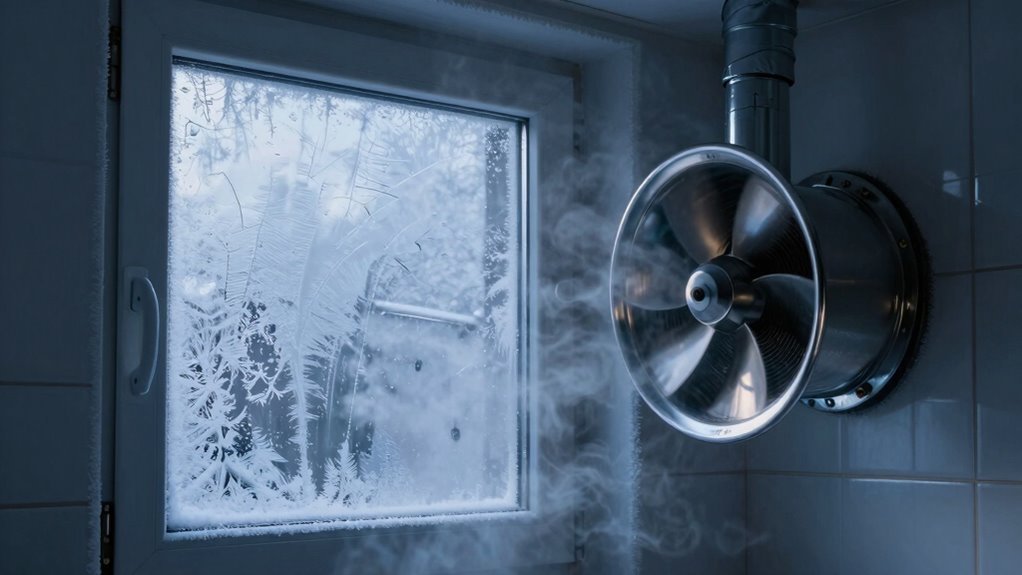
Though you might think flipping on an exhaust fan is a set-it-and-forget-it move, timing and technique actually make all the difference—especially in chilly weather.
Run your bathroom fan during and for at least 20–30 minutes after showers to kick out steam before it turns into a science experiment on your ceiling.
Pick a strong squirrel-cage fan—it’s quieter, tougher, and moves air faster than flimsy blade types.
Size matters: stick with a 4-inch duct installed straight and short, ideally venting through the roof, not the soffit, to dodge cold backdrafts.
A good backdraft damper keeps frosty air out when the fan’s off, but check it for gunk or stuck flaps—it’s not a “set and nap” situation.
Insulate the duct well, but remember: even the coziest wrap won’t help if the fan’s weak or the run’s too long.
Condensation often occurs when cold outdoor temperatures chill the fan can, causing indoor humidity to condense and drip.
Power up, stay dry, and outsmart that drip!
Managing Indoor Humidity Levels During Winter
You just kicked steam out of your bathroom like a pro—good job dodging those ceiling drips—but now let’s talk about what’s floating in the air all over your home.
Winter air’s dry, and your heater makes it worse, often dropping indoor humidity below 30%—yikes!
The EPA says 30% to 50% is comfy, but aim for 35% to 50% in cold months.
Too low? You’ll face itchy skin and scratchy throats.
Grab a hygrometer (it’s like a thermometer for moisture) and place it away from drafts for real results.
Humidifiers are winter heroes—especially whole-house ones—but clean ‘em or risk mold.
Seal drafts and boost insulation to keep moisture steady.
And remember, during deep freezes, keep humidity below 40% to avoid window fog-outs.
You’ve got this—your lungs and skin will thank you!
Choosing the Right Window Treatments and Coverings
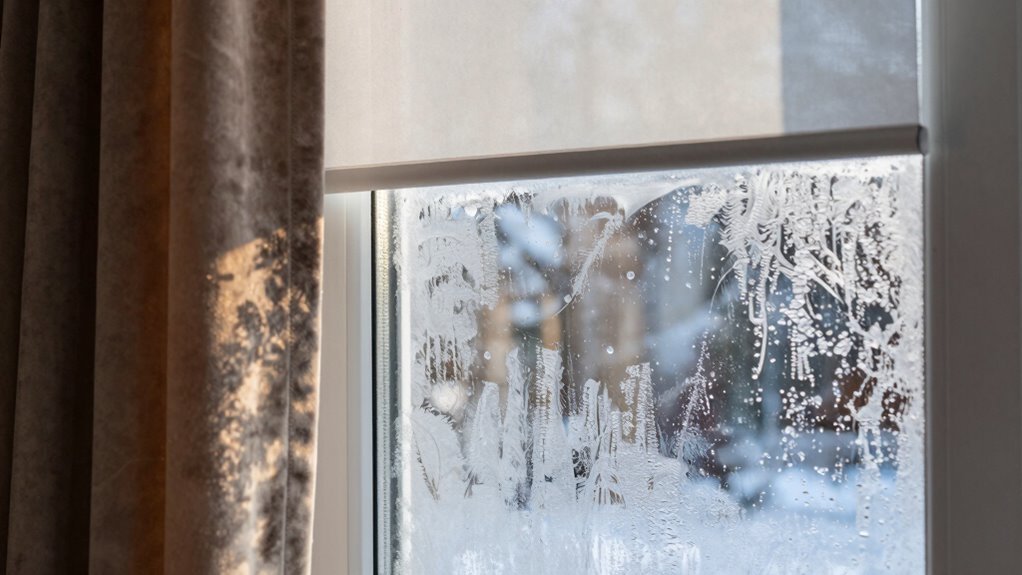
What if your windows could fight the cold like a superhero in a cozy cape?
With the right coverings, they can!
Try Duette® honeycomb shades—they trap warm air in snug pockets, slashing heating bills.
For max efficiency, go for Architella®’s double honeycomb design.
Thermal Roman shades add style and warmth, especially when layered with sheers to soften winter glare.
Love drama? Heavyweight drapery in velvet or wool blocks drafts and adds a luxe touch.
Position shades just slightly open at the bottom—this lets damp air escape and keeps condensation from freezing overnight.
And when the sun peeks through, pull back your cellular roller shades to soak up free heat.
Whether you’re into modern minimalism or farmhouse charm, smart window treatments keep your home toasty, dry, and looking fabulous—all winter long.
Who knew cozy could be this cool?
Preventing Mold and Mildew Caused by Excess Condensation
When warm, cozy air inside your home crashes into chilly windowpanes or drafty walls, it can quickly turn into a soggy surprise—condensation sneaks in like an uninvited guest at a winter party.
But that dampness isn’t just annoying—it’s mold’s favorite playground!
You can stop the party by keeping indoor humidity between 30% and 50% using a dehumidifier or trusty hygrometer. Run exhaust fans when you shower or cook, and don’t forget to change furnace filters—stale air holds moisture like a sponge.
Insulate cold pipes and drafty corners so warm air doesn’t face off with chilly surfaces.
Tackle leaks fast—dripping water is basically mold’s neon “Open for Business” sign.
With good airflow, smart insulation, and a little vigilance, you’ll keep your home dry, healthy, and positively mold-free—even when Jack Frost is knocking!
Frequently Asked Questions
Can Condensation Damage Walls Over Time?
Yeah, condensation can totally wreck your walls over time if you ignore it.
It sneaks into drywall, warps wood, and peels paint like a bad sunburn.
Before you know it, mold’s throwing a pool party in your walls, and metal’s rusting where you can’t see.
Even concrete cracks under the stress.
Don’t wait—fix it early, or your house might start feeling more damp than your jokes at family dinners!
Is It Safe to Use a Dehumidifier Constantly?
You can, but “too much of a good thing” applies here—running your dehumidifier constantly isn’t always safe or smart.
It spikes energy bills, wears out the unit faster, and risks overheating, especially if it’s dusty or crammed in a corner.
Plus, over-drying your air leaves you with itchy skin and static shocks.
Follow the manual, clean it often, use continuous drainage, and let it take breaks.
You’ll save cash, avoid fires, and keep your air comfy—like Goldilocks, aim for “just right.”
Why Does Condensation Form on My Bedroom Windows?
You’re basically running a mini indoor rainstorm every night!
Warm, moist air from your breathing and sweat meets cold window glass, and boom—condensation forms.
Your bedroom’s cozy heat holds more moisture, especially after showers or with poor airflow.
When that warm air touches the chilly glass, it cools down fast and can’t hold water anymore, so droplets appear.
It’s like your windows are sweating… because they literally are!
Can Double-Glazed Windows Stop Condensation Completely?
No, double-glazed windows can’t stop condensation completely, but they sure cut it down big time.
You’ll see less fog on the glass because the inner pane stays warmer, thanks to the insulated air or gas layer.
Still, if indoor air’s too humid or ventilation’s poor, you might wake up to a little morning steam show.
Just don’t panic—wipe it, ventilate, and keep cozy.
They’re heroes, not magic!
Should I Open Windows When It’s Cold Outside?
Yeah, you should open windows even when it’s cold outside—trust me, it works!
Cold air’s drier, so when you let it in and warm it up, it slurps up excess moisture like a thirsty sponge.
Just crack them open for 5–10 minutes daily.
It’s a quick, free fix that boosts air quality and fights foggy windows.
Think of it as a breath mint for your house—fresh, zippy, and oh-so-satisfying!
Conclusion
You wipe the fogged window, and boom—your breath syncs with the sunrise. Coincidence? Maybe. But keeping air moving, humidity in check, and fans humming turns chilly mornings into cozy wins. You’ve got this! A little effort now keeps mold away, windows clear, and your space feeling fresh. Winter’s no match for your smart moves, especially when your cozy home feels like it’s hugging you back. Sweet, right?
References
- https://www.livescience.com/how-does-condensation-happen
- https://www.thepreservationcompany.co.uk/blog/condensation-in-the-home-guide/
- https://glassed.vitroglazings.com/topics/interior-and-exterior-condensation-and-glass
- https://www.foamglas.com/en/advice-center/general-advice/what-causes-condensation-and-humidification-in-the-building-envelope
- https://www.bayviewwindows.ca/blog/what-causes-window-condensation/extreme_temperatures
- https://www.stadlerform.com/en/rooms/living-room-air-quality/dew-point-simply-explained
- https://www.ckd.co.jp/kiki/en/column/column_119.html
- https://www.polygongroup.com/en-US/blog/condensation-problem/
- https://windowsofwisconsin.com/resources/condensation/
- https://www.envirovent.com/help-and-advice/why-ventilate/condensation-problems/how-to-reduce-the-amount-of-moisture-in-your-home/