What Size Generator Do I Need for My RV?
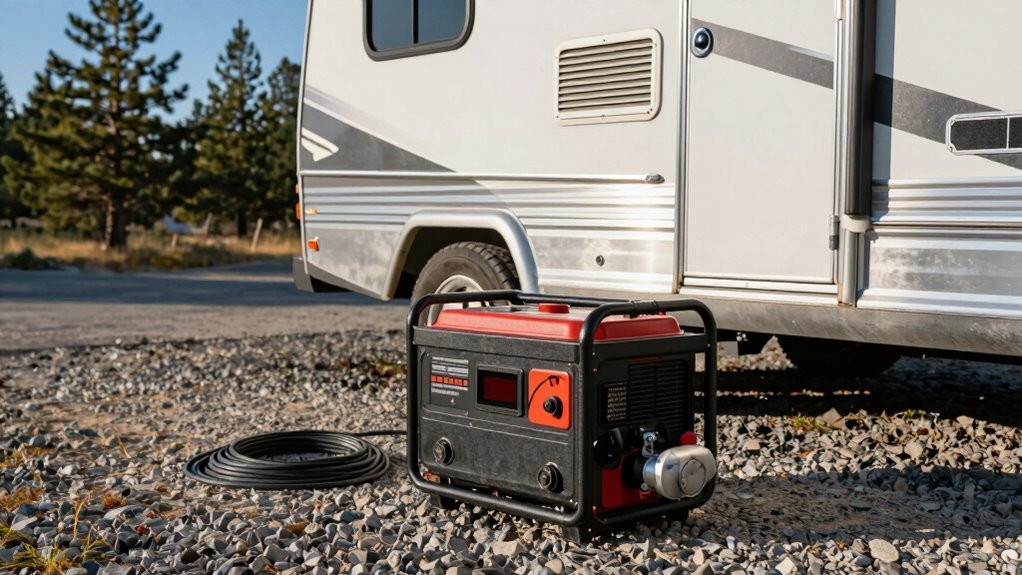
When sizing a generator for your RV, it’s essential to match the power output to your specific needs. For most 30-amp RVs running basic appliances like a fridge and a single air conditioner, a 3,000-watt generator is typically sufficient.
Larger 50-amp RVs with multiple high-demand appliances, such as two or more AC units, require 5,000 watts or more. Always consider starting watts, which can be significantly higher than running watts, as this initial surge determines whether your appliances will power on successfully.
To ensure reliable performance, add a 20% buffer to your total wattage needs. This extra capacity prevents overload and keeps your system running smoothly during peak demand.
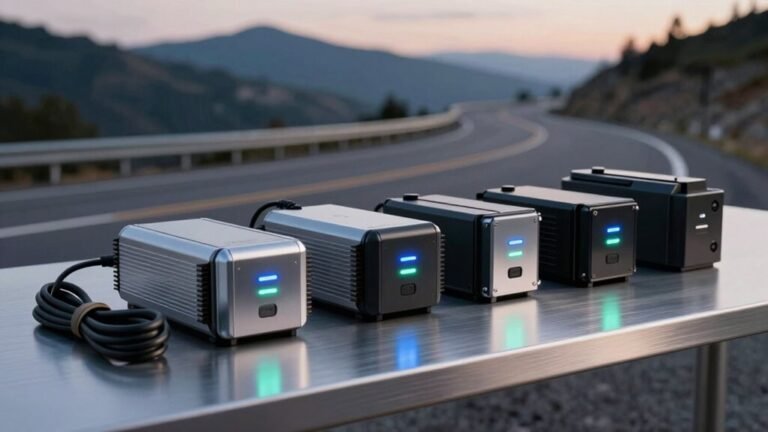
Portable inverter generators are a popular choice for RV owners due to their quiet operation and fuel efficiency. They deliver clean power, making them safe for sensitive electronics and ideal for most camping adventures.
Understanding Your RV’s Electrical System: 30 vs. 50 Amp Service
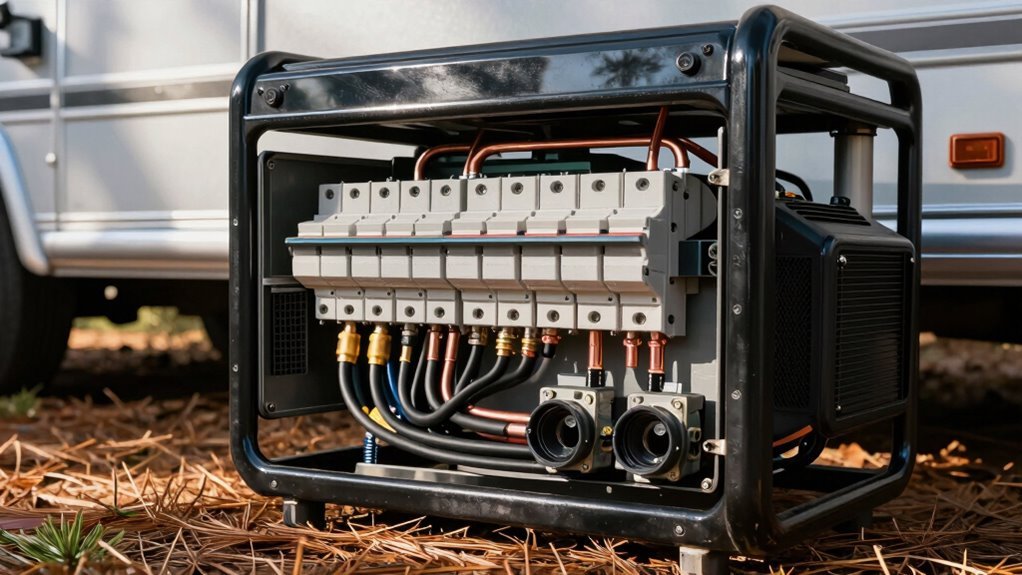
Ever wonder why your RV’s power plug looks nothing like your house outlet? That’s because RVs run on a different electrical system! If you’ve got a 30-amp setup, you’re working with a single 120-volt hot wire—great for smaller trips and simpler rigs. It maxes out at 3,600 watts, which covers basics like lights, a fridge, and maybe one AC unit.
But if your RV screams luxury with dual ACs and a microwave ready for popcorn binges, you’re likely on 50-amp service. That four-prong plug delivers two 120-volt legs, doubling the power to 12,000 watts.
It’s like having two house circuits in one! Your breaker panel splits the load so everything runs smoothly.
Adapters work in a pinch, but remember—you’re only as strong as your weakest link. The difference in plug design reflects the four-pronged configuration necessary for 50-amp service.
How to Calculate Total Wattage Needs for Your Appliances
Let’s get down to the nitty-gritty of powering your home on wheels—figuring out how much juice your gadgets and gizmos actually need.
Start by listing each appliance you’ll run, like your AC (1,200–1,800W), microwave (up to 2,000W), or fridge (300–1,200W).
Don’t forget the little guys—LED lights, fans, your TV, or water pump—those add up!
Tally their running watts, not starting surges—save that for later.
Need amps? Just divide watts by 120.
That 1,500W space heater? That’s 12.5 amps.
Be realistic about what runs together—yes, you *could* blast the AC, cook, and blow-dry, but your generator might throw a fit.
Add it all up, then toss in a 20% buffer so you’re not pushing limits.
Think of it like packing snacks—better to have too much than run on empty!
For 50-amp RVs, you’ll typically need a generator with at least 5,500-8,000W capacity to handle multiple high-load appliances simultaneously.
Starting vs. Running Watts: What the Difference Means for Your Generator
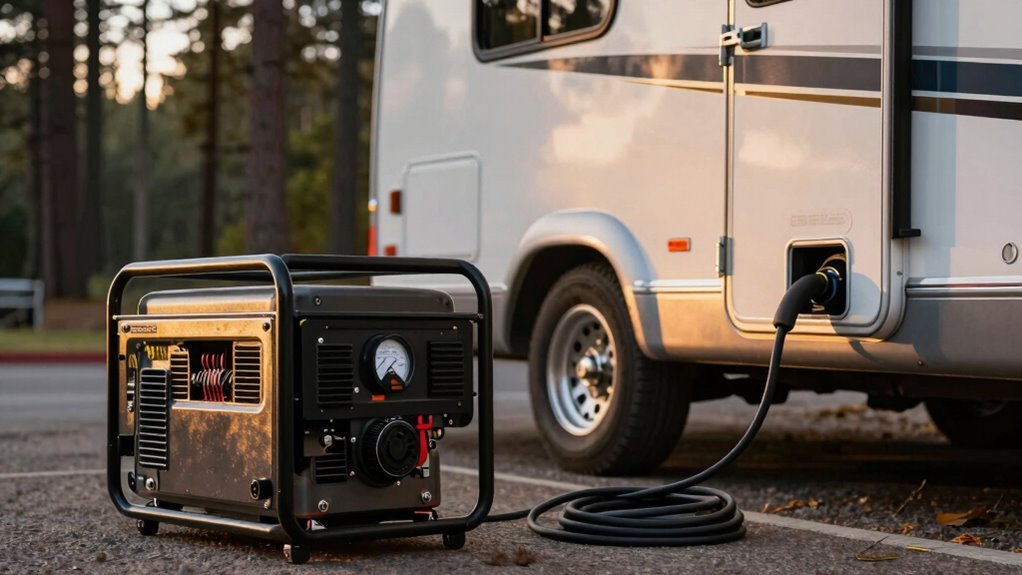
Why do some appliances play nice with your generator while others throw a tantrum the second they power on?
It’s all about starting vs. running watts.
Starting watts are the surge your gadgets need to kick things off—like your AC or fridge firing up.
That burst can be 2–3 times higher than the running watts they use to keep going.
Think of it like a cold engine needing a hard crank before it hums smoothly.
Running watts? That’s the steady beat your lights, fan, or microwave dance to all day.
Your generator handles starting watts for just 5–10 seconds—long enough to win the launch, not the marathon.
If it can’t handle that initial spike, boom: shutdown city.
So when you pick a generator, beat that surge demand like a pro.
Match the peak, not just the calm.
Your fridge will thank you—no more mid-cool tantrums!
Surge watts are higher than running watts and used briefly.
Matching Generator Output to Your RV’s Power Requirements
How much power do you really need to keep your RV humming happily? Add up the starting watts of all appliances running at once—especially AC units, microwaves, and fridges—since surge demands spike at startup.
A 13,500 BTU AC needs at least 3,500 watts, while larger rigs with dual units may require 6,000+ watts.
Don’t forget a 20% buffer to avoid overloads—nobody wants mid-coffee blackouts!
Small RVs often do fine with 2,000–3,000 watts, but bigger models with slide-outs or washer/dryer combos can gulp 5,000 to 7,500 watts.
Skip relying solely on 30-amp vs. 50-amp labels; real-world loads matter more.
Match peak usage, not just averages, and you’ll keep the popcorn popping and the AC blowing—all without sounding like a construction site.
Sweet, sweet juice harmony!
Portable vs. Built-In Generators: Pros, Cons, and Sizing Differences
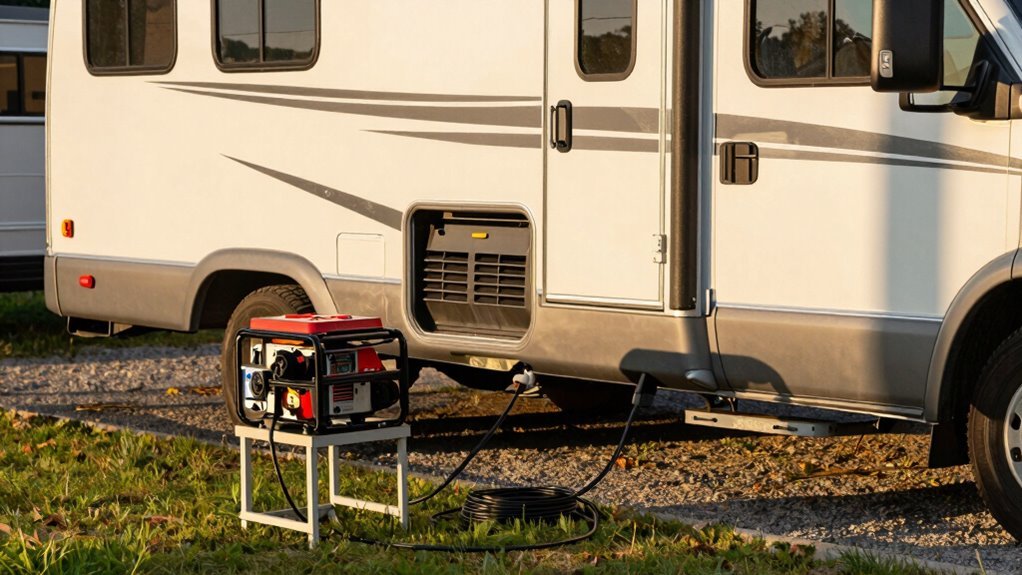
Ever wonder what’s really powering your road trip dreams—the trusty generator in the back or the sleek setup under the hood?
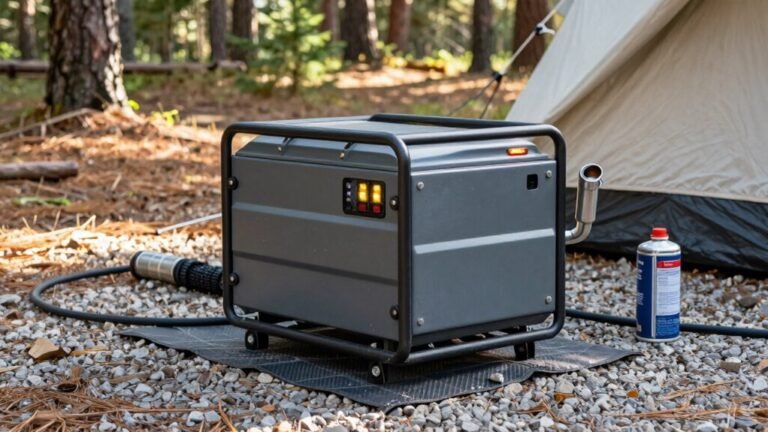
If you’re hauling a portable, you’ve got flexibility and savings, plus no permanent RV mods.
Just plop it down, plug it in, and go!
But you’ll need space, some elbow grease, and earplugs—those puppies can be loud.
Built-in generators? They’re the smooth operators—quiet, automatic, and fueled by your RV’s tank, so no gas cans to lug.
But they cost more, add weight, and tie you down with installation.
Portables usually range from 2,000 to 6,000 watts—perfect for 30-amp rigs—while built-in models often pack more punch for power-hungry setups.
It’s your call: go light and nimble, or all-in with luxury convenience.
Either way, juice is on the way!
Tips for Efficiently Using Your Generator While On the Road
Keeping your RV humming down the highway means getting the most out of every drop of fuel, and smart generator habits make all the difference.
Run your generator at 50-80% capacity—think one AC and the fridge for a 30-amp rig—to boost efficiency and save gas.
Use eco-mode when you can; it slashes fuel use by 20-40% by slowing the engine when power demand drops.
Inverter generators? They’re light, quiet, and sip fuel like a straw.
Avoid idling—nothing wastes gas faster than a thirsty engine doing nothing.
Start appliances one at a time to dodge overloads, and turn off what you don’t need.
And hey, nobody likes a cold shower, but your hair dryer can wait.
Position your generator 20 feet away from the RV, keep it dry, and breathe easy with working CO detectors.
Smart habits mean more miles, more fun, and fewer fuel stops—now that’s road-trip magic!
Frequently Asked Questions
Can I Use a Generator With a Lower Wattage Than My RV Needs?
Nope, you can’t reliably run your RV with a lower-wattage generator—it’s like trying to fit a elephant in a Smart car.
You’ll overload it, trip breakers, or worse, fry your fridge.
Plus, startup surges from the AC or microwave will knock it out fast.
Skip the stress and fire risks—size it right, add a 20% buffer, and enjoy smooth, safe power every time.
How Often Should I Maintain My RV Generator?
You should maintain your RV generator every 8–10 hours with quick checks, because little things prevent big headaches.
Change the oil yearly—or every 100–150 hours—whichever comes first.
Swap the air filter often, keep fuel lines tight, and inspect everything like a detective.
Every year, treat it to a pro tune-up, because even tough generators need love.
Will a Generator Work in Extremely Cold Weather?
Yes, your generator will fire up even when Jack Frost is knocking—thanks to cold-weather smarts.
You’ve got allies like engine block heaters and winter-grade oil keeping things warm and flowing.
Fuel lines stay clear with anti-gel armor, while thermostatic blankets cradle batteries like heated seats for power packs.
With a little prep, your generator doesn’t just survive winter—it throws a block party in it.
Can I Plug My RV Into a Home Outlet Instead of a Generator?
Yeah, you can plug your RV into a home outlet, but it’s not ideal—think of it like feeding a horse a cupcake instead of a meal.
Your RV’s got bigger power hunger, especially if you’re running AC or a microwave.
Standard outlets only give 15–20 amps, so you’ll need adapters and will have to pick and choose what runs.
It’s doable in a pinch, but don’t expect to live large—no Netflix and chill with the heater blasting!
Do I Need a Surge Protector for My Generator?
Yeah, you definitely need a surge protector for your generator—don’t skip it!
It’s like seatbelts for your RV’s electronics.
Sudden spikes can fry your fridge or AC, and repairs cost a fortune.
A good protector stops surges, monitors voltage, and shuts things down fast.
Plus, it guards against sketchy hookups.
Think of it as cheap insurance that lets you sleep easy, not chew antacids worrying about fried circuits.
Stay safe, stay powered!
Conclusion
You’ve got this! Picking the right generator is like finding the perfect campsite—just enough power to keep things running smoothly, without going overboard. Think cozy lights, a happy fridge, and AC that keeps you cool during summer nights. With the right match, your RV hums along like it’s whispering, “Nice job!” No stress, just smooth adventures ahead. Who knew power could feel so peaceful?
References
- https://blog.campingworld.com/learn-to-rv/30-amp-vs-50-amp-whats-the-difference/
- https://www.ecoflow.com/us/blog/differences-between-30-50-amp-systems-for-rvs
- https://koa.com/blog/different-rv-amps/
- https://pagosasupply.co/blog/rv-electricity-and-30-amp-vs-50-amp-explained
- https://www.youtube.com/watch?v=GoOR2AJGjOI
- https://www.youtube.com/watch?v=Zlj4gjENv3Q
- https://www.mygrandrv.com/threads/50-amp-vs-30-amp-on-camper.60835/
- https://solartechonline.com/blog/how-much-electricity-does-rv-use/
- https://ilovervlife.com/docs/RV-Device-Wattage-and-Amperage-Use-by-iLoveRVlife.pdf
- http://www.prorvi.com/electrical.html