How to Back Up a Trailer (Step-by-Step Guide)
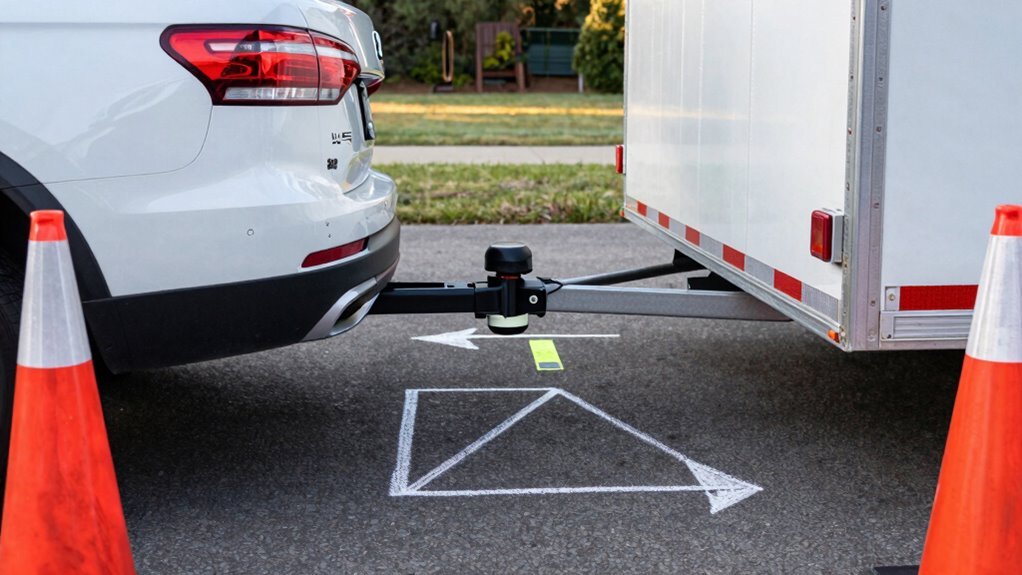
You’ve got the wheel, so take a deep breath—backing a trailer’s easier than parallel parking a shopping cart! First, scan all around for cars, kids, or that sneaky mailbox to ensure a safe start to backing a trailer.
Sit up straight, get comfy, and peek at your mirrors for a clear view behind. Put your hand at six o’clock on the wheel: push right to go right, just a nudge.
Small moves win here—no wild turns! If the trailer drifts, ease the wheel opposite, pause, and reset.
Feel the rhythm, keep it smooth, and you’ll be backing like a boss in no time—with a few more tricks still waiting to surprise you.
Understand How Trailers Move When Reversing
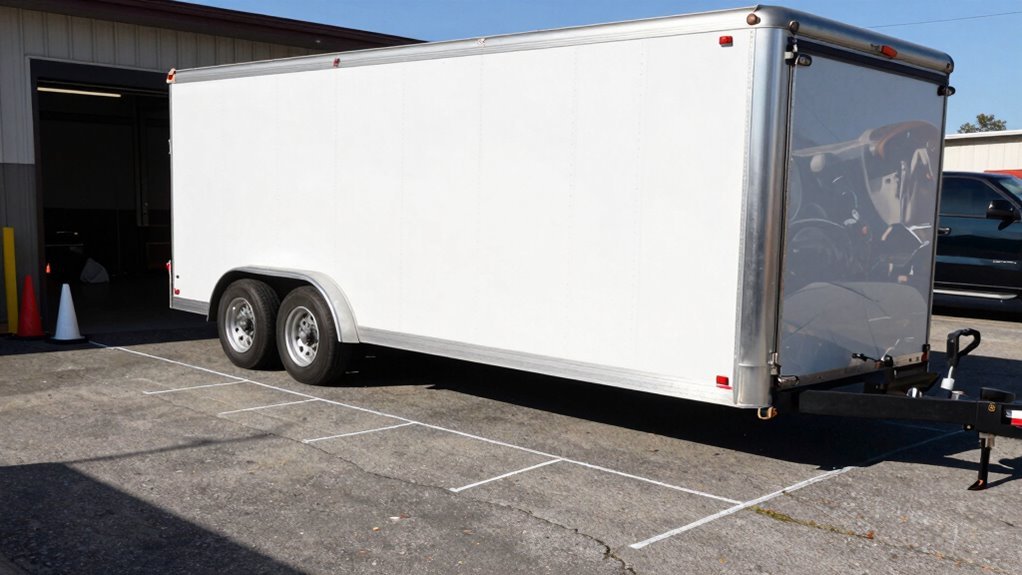
When you start backing up a trailer, it’s kind of like trying to push a shopping cart the wrong way—it doesn’t go where you expect at first, but once you get the knack of it, it feels almost natural.
You’re not steering the trailer directly; you’re guiding it by controlling pressure on the kingpin.
It pivots at the rear tandems, so when your steer tires push sideways, the front of the trailer swings wide.
Short trailers react quicker—longer ones give you more time to adjust.
If the trailer drifts left, turn the wheel counterclockwise to bring it right.
Backing is counterintuitive, yeah, but think of it as dancing in reverse.
Tiny steering tweaks make big differences.
Go slow, watch the angle, and remember: you’ve got this.
It’s not magic—just physics having a little fun with you.
The rate at which the trailer angle increases follows the Offset Law.
Check Your Surroundings and Clear the Area
Take a moment to scan the scene before you start rolling—backing a trailer isn’t just about skill, it’s about space and safety.
Look all around: check for walls, poles, cars, kids, pets, or that sneaky mailbox that thinks it’s invisible.
Make sure you’ve got plenty of room to maneuver—no one likes a surprise crunch.
Clear the area of obstacles, and if you’ve got helpers, wave them into place (but keep ‘em where you can see ‘em).
Watch for dips, curbs, or slippery spots—your trailer won’t laugh when it gets stuck, but your pride might.
Turn your music down and open the window—your ears are part of your backup crew.
A few seconds of checking now saves major headaches later.
Stay sharp, stay patient, and remember: slow moves win the game!
Trailer frame and body inspected for visible damage can help identify structural issues that might affect maneuverability and safety during backup.
Position Yourself Correctly in the Driver’s Seat
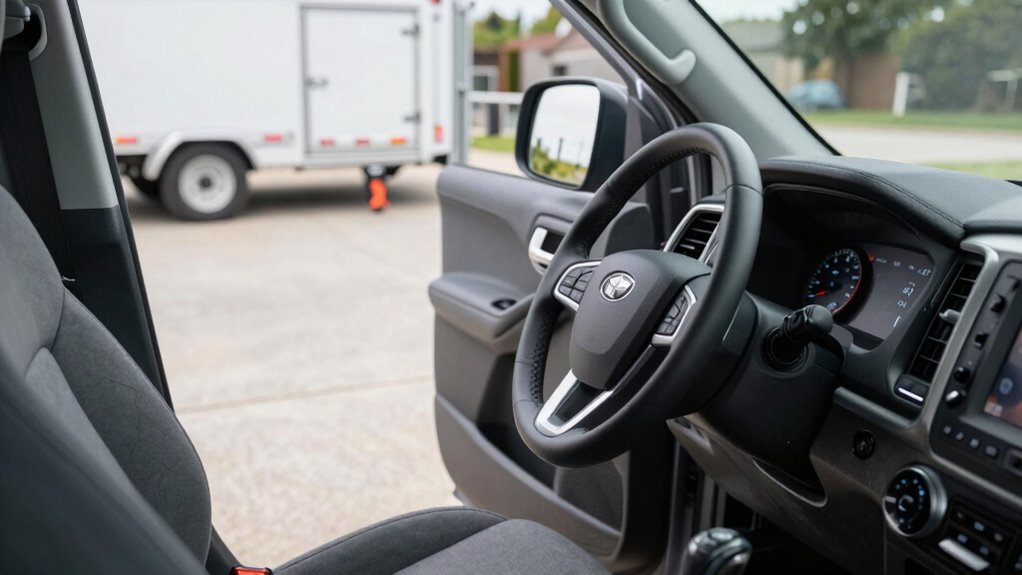
Why do some drivers back a trailer like it’s second nature while others end up in a curvy mess?
It often comes down to how they’re seated.
Don’t just plop in the driver’s seat—tune it!
Get your position right, and you’ll see everything clearly, react faster, and feel like a trailer pro in no time.
You’re in control, and the right setup makes all the difference.
- Slide your seat back so you can see the trailer tires in the mirrors.
- Sit tall and straight, with shoulders square and head centered for steady focus.
- Recline slightly to stay comfy and avoid leaning forward like you’re peeking around a corner.
- Nudge the seat left or right for a full, unblocked mirror view—no peeking around pillars!
Proper mirror alignment supports the two-point perspective concept, helping you judge trailer angle and movement accurately.
Now you’re not just sitting—you’re ready.
Use the Hand-on-Bottom Steering Technique
Getting your hands in the right spot might just be the game-changer you didn’t know you needed.
Place your right hand at the bottom of the steering wheel—think six o’clock, like you’re pointing to “go that way.”
This hand-on-bottom technique makes reversing a trailer way easier than fighting the wheel from the top. Move your hand right, the trailer goes right; slide it left, it follows left.
It’s the opposite of steering forward, sure, but your brain’ll catch on fast.
Use small nudges—big moves lead to drama, and nobody wants a jackknifed surprise.
Keep your eyes on the mirrors, not over your shoulder, and trust what you see.
Lean forward slightly to spy the trailer wheels if you need.
It feels weird at first, like patting your head while rubbing your belly, but soon it’ll feel like second nature.
Practice a little, and you’ll be backing like a pro in no time—smooth, confident, and mistake-free.
Make Small, Controlled Steering Adjustments
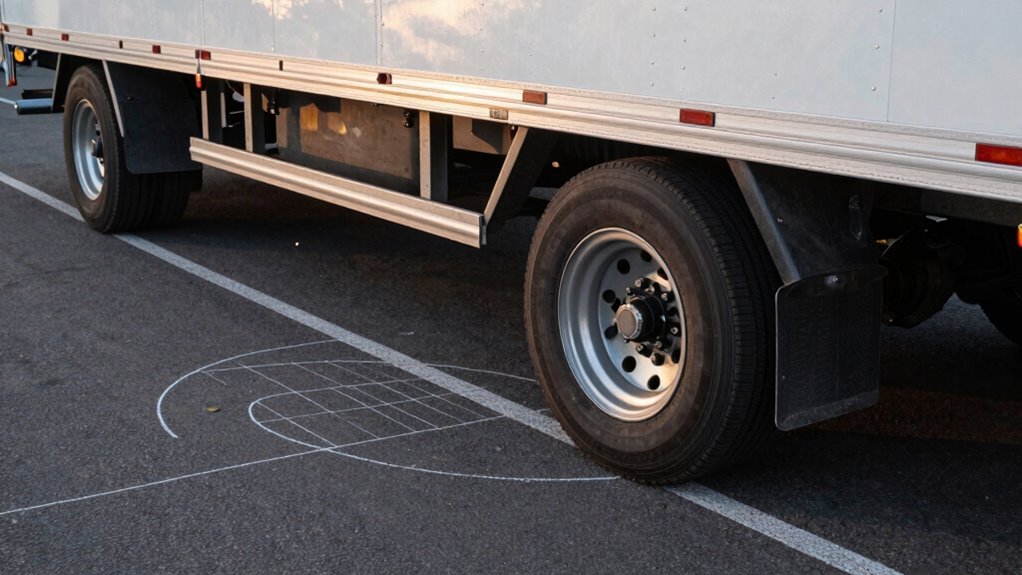
Steer like you’re guiding a shopping cart through a crowded parking lot—small nudges, no wild spins.
Backing a trailer isn’t about big moves; it’s about finesse, timing, and tiny tweaks that add up.
You’ve got this!
Just remember: small, smooth steering keeps the trailer happy and avoids dramatic corrections.
Think of it like texting while walking—tiny adjustments keep you on path.
- Turn the wheel slightly in the direction the trailer is drifting—right drift? Turn right, weird as it feels.
- Use quarter- or half-turns—tiny inputs beat yanking the wheel like you’re starting a lawnmower.
- Hold the position for a few seconds—let the trailer catch up before making another move.
- Watch your mirrors like a hawk—they’re your eyes, your GPS, your trailer truth-tellers.
Stay calm, stay small, and steer like a pro.
Correct Drift and Oversteering Quickly
When that trailer starts drifting like it’s got a mind of its own, don’t panic—hit the brakes and pause for a sec, because stopping is your secret reset button.
It halts oversteer and keeps you from jackknifing into a wonky “L” shape.
Then, take a breath and peek in your mirrors—what’s the trailer doing?
If it’s swinging right, turn the wheel left, and vice versa.
Use gentle countersteering; no wild yanks!
Keep your left hand at the bottom of the wheel—move hand left, trailer goes left.
It’s like magic, but real.
Try an S-turn if needed: swing one way, then unsteer to straighten out.
Watch your reference points—fenders, corners, edges—and adjust as you go.
Think of it as dancing: when the trailer leads wrong, you gently guide it back.
With practice, correcting drift feels smooth, natural, and dare we say… fun?
Practice in an Open, Flat Space
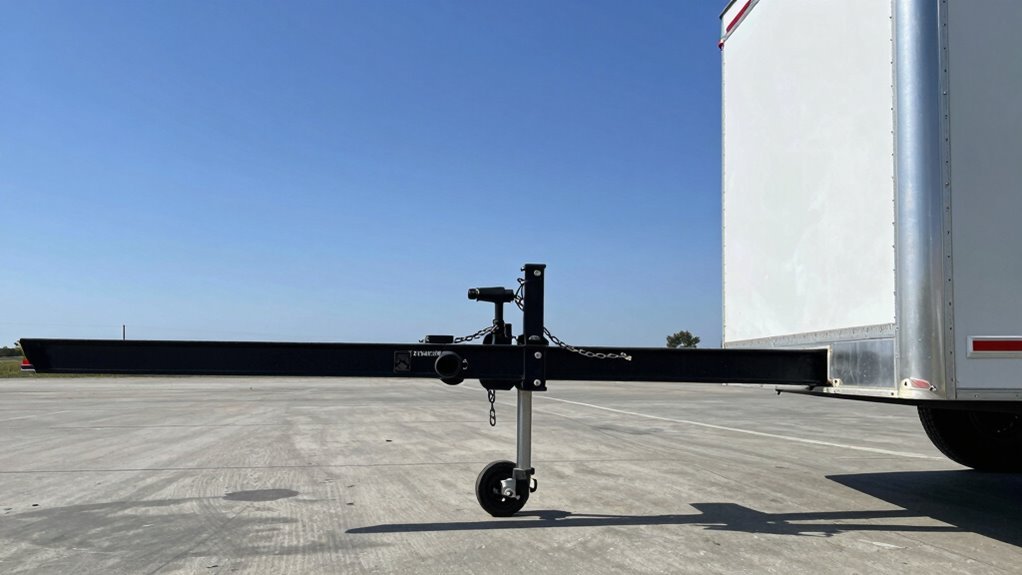
Finding your groove with a trailer starts with picking the perfect playground—think big, flat, and blissfully empty.
You’ll want plenty of room to breathe, make mistakes, and actually learn without sweating every scratch.
Start in a wide-open parking lot or quiet street where the only thing you’ll hit is your confidence.
Go slow, stay calm, and get used to how your trailer dances in reverse—because let’s be honest, it’s got a mind of its own.
Before you know it, you’ll be backing like a pro, all thanks to smart, stress-free practice.
- Pick a large, flat, empty lot or quiet street
- Begin with straight-line backing to feel the movement
- Use cones or markers to create simple practice courses
- Take your time—patience turns panic into precision
Use Spotters or Backup Cameras for Assistance
You’re not alone if the thought of backing a trailer makes your palms sweat—thankfully, you don’t have to do it blind.
Grab a buddy, dress them in bright gear, and agree on simple hand signals before you start.
Position them eight to ten feet on your driver’s side, safely outside the path and where you can see them—eye contact is key!
Keep them in sight at all times; if you lose visual, stop immediately.
Backup slowly, use your mirrors, and let your spotter focus only on spotting—no texting, no multitasking.
They’ll watch for blind spots, clearance, and sneaky obstacles while keeping hands up and signals clear.
If you’ve got a backup camera, bonus!
Just don’t rely on tech alone.
Together, you’ve got eyes in the back of your head—and maybe even a little trailer-dancing confidence to show off.
Frequently Asked Questions
Can I Back up a Trailer Without a Backup Camera?
Yeah, you can definitely back up a trailer without a backup camera—plenty of folks do it all the time!
Just rely on your mirrors, turn your body to look behind you, and take it slow.
It’s like parallel parking with a sidekick that’s clumsy on purpose.
Add a spotter if you can.
While cameras help, they’re not required, so trust your instincts, take your time, and you’ll nail it—no tech needed!
What Gear Should I Use When Reversing With a Trailer?
You’re always reversing in reverse—what else would you use, rocket science?
Pop that gearshift into R and take it slow.
Keep your hands at 6 and 12, gently nudging the wheel like you’re steering with care, not panic.
Use your mirrors, not guesswork, and remember: small moves win the game.
Jackknifing’s no fun, so creep backward like you’ve got all day—because right now, you do.
How Do I Know if My Trailer Hitch Is Secure?
You know your trailer hitch is secure when everything feels tight, solid, and snug—no wobbling or weird noises.
Check that the coupler clicks and locks over the ball, the safety latch is pinned, and the chains are crossed and hooked outward.
Give it a firm shake—no play means you’re good!
Bolts should be tight, welds crack-free, and everything matches your trailer’s weight.
When in doubt, trust your gut and double-check—better safe than sorry!
Does Trailer Tire Pressure Affect Reversing Control?
Yes, trailer tire pressure *totally* affects your reversing control—think of it like trying to back up in socks on ice: slippery and scary!
Underinflated tires wobble more, reducing grip and making your trailer zig when you want it to zag.
Keep ’em properly pumped, and you’ll steer smoother, avoid fishtails, and feel like a pro.
Don’t let flimsy tires turn your backup dance into a disaster.
Safety + confidence = perfect combo!
Can I Back up a Trailer on an Incline Safely?
You can back up a trailer on an incline safely—you’ve got this!
Just don’t wing it.
Use wheel chocks, a trusty spotter, and keep things slow.
Steer opposite, watch your angles, and skip distractions.
Firm ground and proper tongue weight? Non-negotiable.
Bring tools like a Trailer Valet if needed.
Yeah, it’s tricky, but hey, you’re not just backing up—you’re trailer-ninja leveling up!
Conclusion
You’ve got this! Remember, 70% of drivers fail their first trailer-backup attempt—but not you, because now you know the secrets. Just keep your hands low on the wheel, make tiny turns, and breathe! Mistakes? They’re just practice in disguise. Grab a friend, use that backup camera, and have fun with it. Soon, you’ll be reversing like a pro, impressing everyone at the campsite—or at least the picnic table.
References
- https://www.ltlmentor.com/the-offset-law-simplified-backing-physics-that-can-help-bridge-the-knowledge-gap-between-the-experienced-and-beginning-truck-driver/
- https://pp.bme.hu/me/article/download/18971/9738/140925
- https://liu.diva-portal.org/smash/get/diva2:1577619/FULLTEXT01.pdf
- https://www.youtube.com/watch?v=9SUif6rDs20
- https://auto.howstuffworks.com/auto-parts/towing/vehicle-towing/trailer/difficult-backing-up-trailer.htm
- https://www.physicsforums.com/threads/a-trailer-doesnt-react-to-a-tractors-backing-up-until-10-feet-of-travel.882479/
- https://www.alphasoftware.com/blog/trailer-safety-inspection-checklist-templates-free-pdfs
- https://middlecalifornia.ponyclub.org/ContentDocs/48338/UpperLevelHM/C3 Trailer Safety Checklist.pdf
- https://www.felling.com/trailer-inspection-checklist/
- https://www.ditchwitch.com/wp-content/uploads/2022/08/TrailerServSafeChecklist.pdf