Do I Need a Surge Protector for My RV?
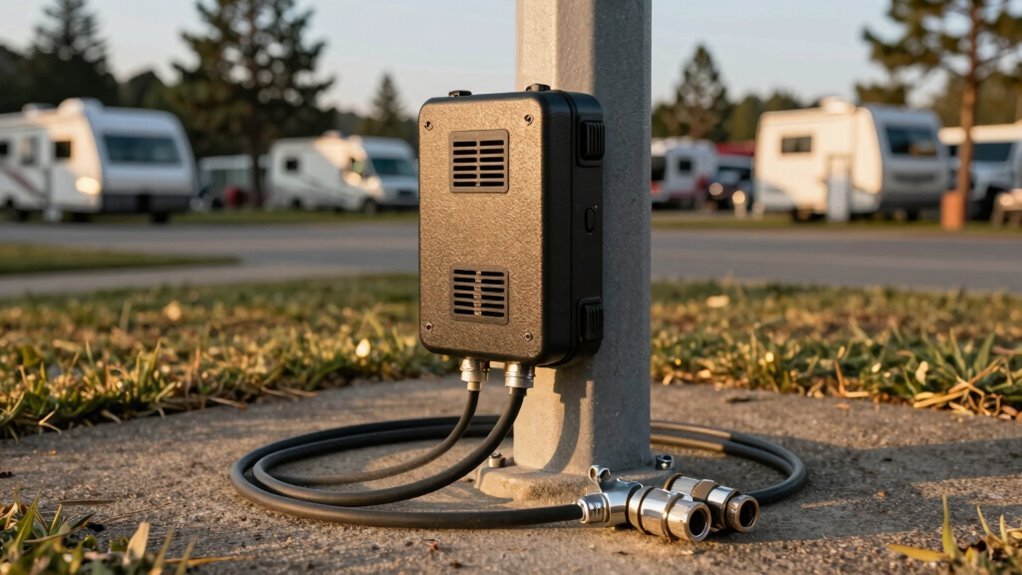
You absolutely need a surge protector for your RV—campground power isn’t always as safe as it looks. Spikes from lightning or faulty wiring can damage your AC, refrigerator, or TV in an instant.
A good surge protector shields your RV from power surges, reverse polarity, and voltage fluctuations. It acts like superhero armor for your electrical system, ensuring your appliances stay safe.
Investing in a surge protector for your RV means fewer surprises when you plug in. It’s a simple step that keeps your rig running smoothly and stress-free on the road.
Understanding Power Surges and RV Electrical Systems
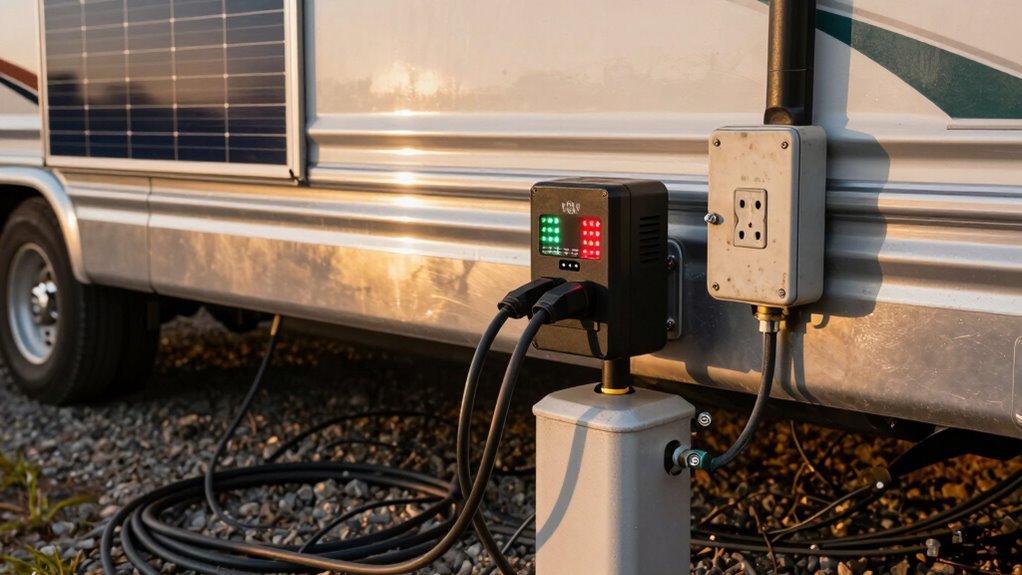
Ever wonder why your RV’s air conditioner suddenly quits or the fridge acts up after plugging in at a campground? Well, surprise voltage spikes—called surges—might be to blame.
They blast through your power cord like uninvited party crashers, threatening everything from your AC to your coffee maker.
These surges, often from faulty campground pedestals or even lightning, pack extra voltage that fries delicate electronics.
Your RV runs on 30- or 50-amp power, and without the right protection, spikes sneak in and wreak havoc.
Motors overheat, circuits stress out, and poof—there goes your vacation vibe.
But here’s the good news: surge protectors jump in like bodyguards, using smart tech like MOVs to redirect danger safely to ground.
They even shut off power if voltage goes haywire.
Think of them as your RV’s superhero sidekick—quiet, reliable, and always on duty.
Hardwired vs. portable options offer different levels of convenience and protection depending on your setup and needs.
Common Electrical Hazards at Campgrounds
You’ve got a surge protector standing guard over your RV’s electrical system, ready to block those sneaky power spikes. But watch out—campgrounds can be electrical jungle gyms full of hidden hazards.
Damaged cords or miswired pedestals might zap your RV’s frame with voltage, giving you a shocking handshake every time you touch the door. The “hot skin” feeling? Never ignore it.
And don’t forget carbon monoxide—this sneaky, invisible gas from heaters or generators can sneak up while you’re busy roasting marshmallows. Pack a detector, because no one wants a silent guest at dinner.
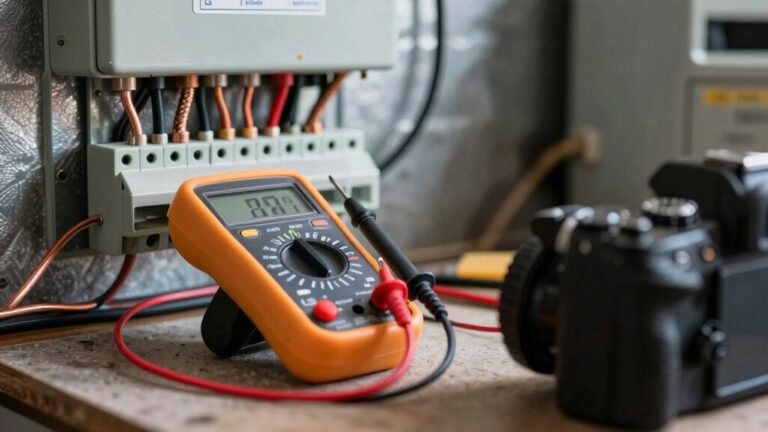
Overheated cords and sketchy campground wiring can also spark fires faster than you can say “pass the s’mores.” Old park infrastructure might look fine but could be playing electrical tricks on you. Stay sharp, test connections, and treat every pedestal like it’s hiding a surprise. Always use a multimeter to check for correct wiring and voltage at the pedestal, because correct polarity and voltage are essential for safe operation.
How Surge Protectors Safeguard Your RV
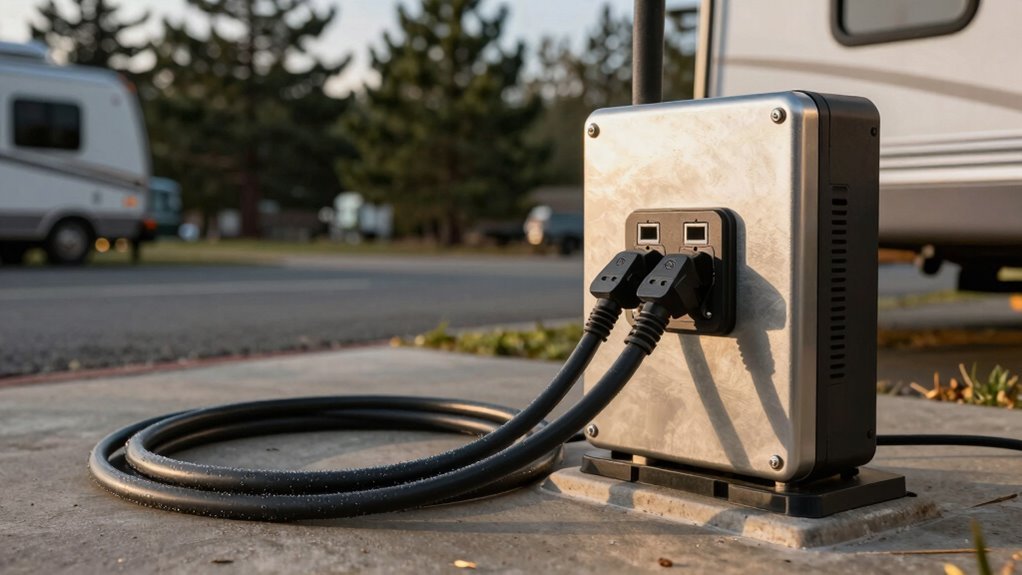
While your RV’s gadgets dream of smooth sailing, a surge protector’s on duty—blocking power spikes before they turn your vacation into a tech disaster.
It uses MOVs to soak up extra voltage like a sponge, diverting surges that could fry your fridge or zap your TV.
With joule ratings up to 14,000, it’s built to last, handling hits from lightning or sketchy campground outlets.
It’s like a bouncer for electricity, kicking out surges and even cutting power if voltage gets too wacky—below 103V or above 132V.
Built-in smarts monitor wiring, grounding, and voltage in real time, flashing alerts so you can act fast.
Some even protect against internal faults, thanks to portable designs with lockable plugs.
You’ll avoid $5,000 repair nightmares and keep your AC’s compressor happy.
Plus, fireproof builds and overload fuses add peace of mind.
Your RV runs smoother, safer, and way smarter—all while you kick back and enjoy the ride.
Protecting against unstable campground power helps maintain steady electricity flow despite external fluctuations.
Types of RV Surge Protection Devices
What’s standing between your RV and a surprise power meltdown? Surge protectors, of course—and you’ve got options!
Hardwired models like Surge Guard’s 34951 go straight into your system, offering permanent, no-fuss protection.
No plug-in hassle, and thieves can’t swipe them.
Then there’s portable units—just plug in between the pedestal and your cord.
Southwire and Camco make tough ones for 30-amp (three-prong) or 50-amp (four-prong) rigs.
The Camco Power Grip even comes with a handy handle—because who doesn’t love a little RV bling?
For serious peace of mind, go full EMS—Electrical Management Systems.
These smart guards, like Progressive Industries’ EMS-PT50X, watch voltage, polarity, and wiring 24/7.
They’ll even cut power before drama hits.
Think of them as your RV’s electric bodyguards—protecting your toys while you nap, grill, or binge your favorite show.
Key Features to Look for in an RV Surge Protector
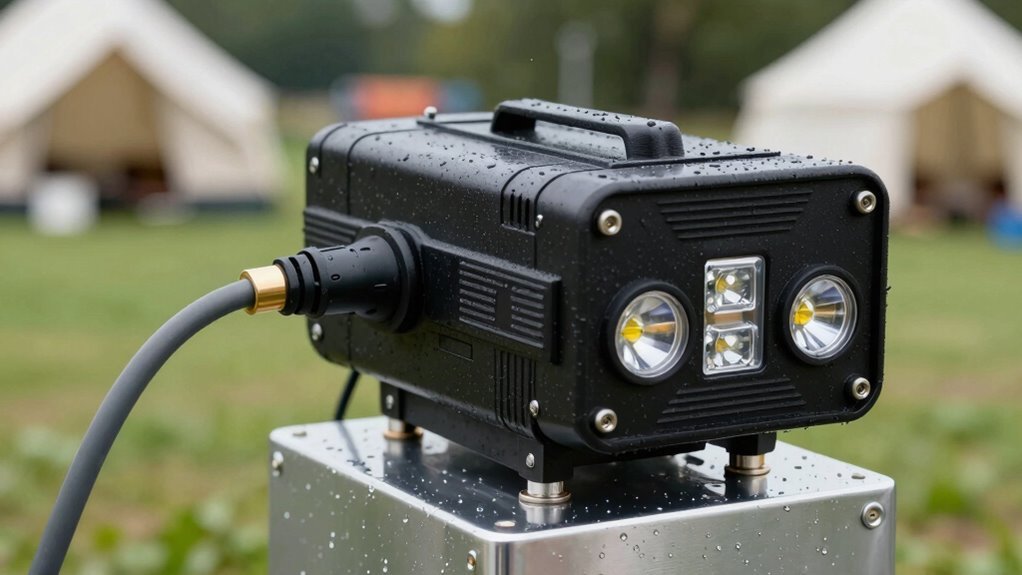
Now that you know the types of RV surge protectors out there—from trusty portables to full-on hardwired guardians—it’s time to zero in on what actually matters when picking the right one.
Match the unit to your RV’s 30-amp or 50-amp service—no guesswork, just right-fit power.
Aim for at least 3,000 joules (think 6,100+ for 50-amp rigs)—more joules mean better burst protection.
Look for models with smart monitoring that catches wiring hiccups like reverse polarity or voltage spikes, then shuts things down faster than you can say “uh-oh.”
Features like Bluetooth alerts, replaceable MOVs, and wireless displays add serious peace of mind.
Hardwired units skip the plug-in dance; portables let you guard your gear no matter where you park.
Pick one with a lifetime warranty, and you’ve got a win.
Your RV’s electrical system will thank you—no drama, just smooth sailing.
The Risks of Skipping Surge Protection
If you’ve ever plugged into a campground pedestal without a second thought, you might be rolling the dice with your RV’s entire electrical system.
Miswired outlets, voltage spikes, and sneaky power surges can fry your fridge, wreck your AC, or worse—start a fire while you’re out hiking.
Yikes!
Even if the pedestal looks fine, it could be pumping out 220 volts instead of 120, cooking your electronics before you even fire up the coffee pot.
Low voltage? That quietly fries sensitive circuit boards over time, like a slow-motion disaster.
And let’s not forget loose wires arcing like tiny lightning bolts—hot, dangerous, and totally preventable.
Skip surge protection, and you’re basically inviting electrical gremlins to move in rent-free.
Don’t gamble with your home on wheels.
A good surge protector isn’t just smart—it’s your RV’s best BFF.
Real-World Scenarios Where Surge Protectors Save the Day
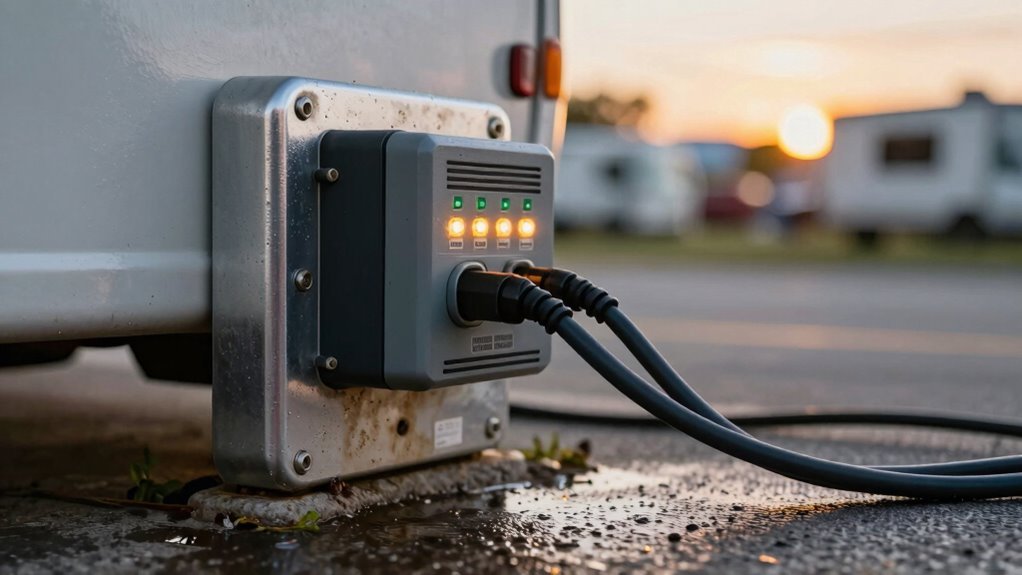
You’ve seen what happens when surge protection takes a vacation—fried circuits, melted breakers, and that sinking feeling when your fridge goes kaput halfway through a road trip.
But here’s the good news: surge protectors play superhero when lightning strikes, like the time a nearby bolt made one RV glow like a novelty lamp while protected rigs snoozed safely.
Imagine your EMS unit blocking reverse polarity before it fries your TV—yes, it’s saved countless rigs from “oops” moments.
When voltage dipped low at a storm-hit park, smart systems shut things down neatly, letting inverters take over like a well-rehearsed backup band.
Autoformers teamed up with surge guards to power AC units without drama, avoiding costly replacements.
Multi-layer protection? More like *peace-of-mind layering*.
Real-world wins like these happen daily—because your RV’s brain trusts its guardian plug-in pal.
And honestly, isn’t that worth celebrating with a happy dance?
Installation and Setup Made Simple
While your RV’s electrical system might seem like a behind-the-scenes mystery, getting your surge protector set up is easier than hooking up your favorite campsite playlist.
Just grab your screwdriver, multimeter, and wire strippers—think of them as your electrical sidekicks.
First, shut off all power like a pro: campsite breaker, internal breakers, the works.
For hardwired models, find the shore power wire before the transfer switch, strip those ends half an inch, and match black to load, white to neutral, green to ground.
Pop it into your panel, route the monitor wire, and you’re golden.
Going portable? Plug the protector into the pedestal first—yes, before your RV cord—then connect your rig.
Wait a couple of minutes while it checks for sneaky issues like reverse polarity or low voltage.
If the coast is clear, power flows and you’re all set.
It’s like a bouncer for your electricity—simple, smart, and ready to serve.
Maintenance Tips for Long-Lasting Protection
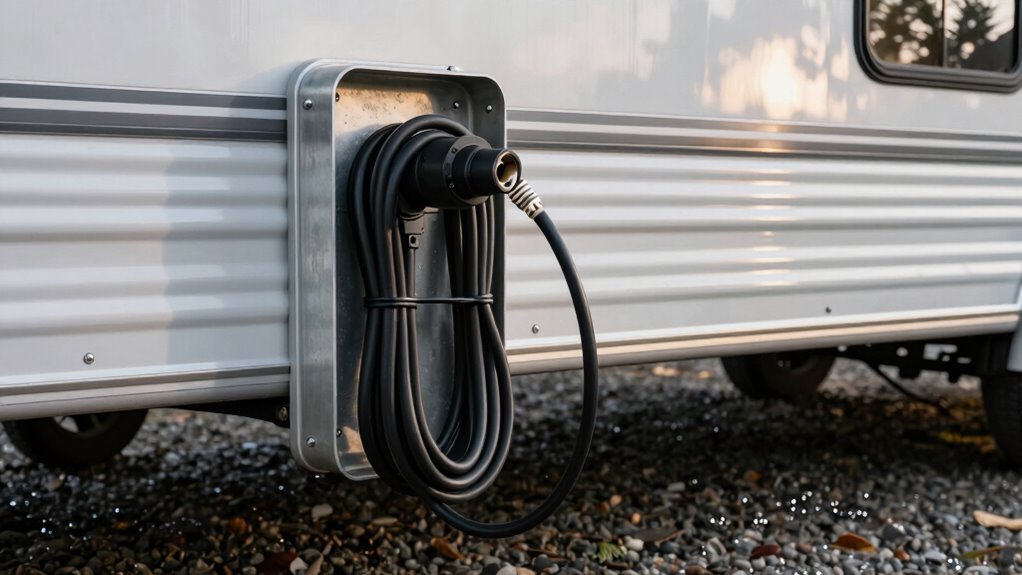
Now that your surge protector is up and running—whether hardwired like a hidden bodyguard or sitting snug on your pedestal like a bouncer at an exclusive club—it’s time to keep it in top-tier shape.
A little TLC goes a long way in guarding your RV’s electrical heart. Stay on top of these must-do maintenance moves:
- Test it regularly – Before plugging in, check for voltage issues, open grounds, or reverse polarity. Think of it as a quick diagnostic checkup.
- Clean all connections – Zap corrosion with a wire brush, use deoxidizer, and apply dielectric grease. Sparky thanks you.
- Swap out worn modules – Sacrificial parts like MOVs wear out, even if they seem fine. Keep spares handy—like having a backup superhero.
- Shield from weather and thieves – Tuck it in a plastic box or storage compartment, and lock it down. Because villains include both rain and sticky fingers.
Cost vs. Benefit: Is a Surge Protector Worth It?
Ever wonder if splurging on a surge protector is just RV paranoia or a genius move?
It’s actually a smart, wallet-saving play.
Think about it: a basic model starts at $50, but a single power surge could fry your $3,000 AC unit or cooking gear.
Ouch.
For $150–$300, standard models guard against open neutrals and voltage spikes—common at sketchy campgrounds.
Premium ones, around $500, shut off power automatically when trouble hits.
If you’re out there often, one saved incident pays for the whole thing—fast.
Even lightning or a shaky outlet won’t sneak past.
And let’s be real, your RV’s full of stuff you don’t wanna replace.
For full-timers or fancy rigs, skimping makes about as much sense as leaving your fridge open in the desert.
Smart move? Absolutely.
Peace of mind? Priceless.
Frequently Asked Questions
Can I Use a Surge Protector With a Generator?
Yes, you can use a surge protector with a generator, but don’t just plug it in and hope!
Some generators have floating neutrals that confuse surge protectors, triggering error messages. You might see a red light and no power—bummer!
Fix it with a ground neutral bonding plug, like the Hughes Autoformers model. It’s like giving your generator and surge protector a handshake they’ll both like. Boom—power flows, you’re protected, and no drama when the AC kicks on!
Do Surge Protectors Work on 30-Amp RVS?
Yes, surge protect Clients, you’re golden—surge protectors work like bodyguards for your 30-amp RV, dodging nasty voltage spikes at lightning speed.
They use MOVs to soak up surges, have fuses as backup, and handle up to 22,500 surge amps.
With LED lights watching your back and rugged cases fending off the elements, they’ve got your rig’s electronics covered—no more fried gadgets or messy surprises, just peace of mind on the open road.
Will a Surge Protector Prevent Lightning Damage?
Yes, a surge protector helps, but it won’t stop damage from a direct lightning strike—nothing really can.
It does block sneaky surges from nearby strikes, miswired pedestals, or power hiccups, though.
Think of it like a seatbelt: not foolproof, but way better than nothing.
Just make sure it’s grounded right, or it’s basically decoration.
Your RV’s electronics will thank you when chaos hits the campground!
Are Portable Surge Protectors as Effective as Hardwired Ones?
Yeah, portable surge protectors are just as effective as hardwired ones—no magic in the walls!
You plug ’em right in, and boom, your RV’s shielded from spikes, bad wiring, and wild voltage swings.
With solid joule ratings, weatherproof builds, and smart features like alerts and auto-shutoff, they’ve got your back.
Sure, hardwired units stay put, but portables? They’re your RV’s loyal, tough little bodyguard… with a handle.
Can I Plug My Surge Protector Into an Extension Cord?
No, don’t plug your surge protector into an extension cord—it’s like stacking pancakes on a skateboard, ready to tumble.
You risk mismatched wires, overheating, and even fire.
Keep it simple, smart, and safe: plug directly into the pedestal.
If you *must* extend, match the gauge, check connections, and watch the load.
But really, skip the cord and let your protector do its job without extra drama.
Conclusion
You absolutely need a surge protector—it’s like a bodyguard for your RV’s electrical system. Did you know nearly 1 in 4 RV repairs are due to power surge damage? Yikes! A good surge protector saves you cash, stress, and frying your fridge mid-road trip. Plug it in, relax, and let it work its magic. Think of it as cheap insurance with superpowers. Stay safe, stay powered, and keep those lights on—no shocking surprises!
References
- https://www.motortrend.com/how-to/1107rv-protecting-rv-electrical-systems-surge-spike
- https://store.propridehitch.com/surge-guard-30a-hard-wired-total-electrical-protection-surge-protector-with-telekom-jack-35530/
- https://www.winnebago.com/lifestyle/winnebagolife/gear/do-you-really-need-an-rv-surge-protector-tips-for-protecting-your-rvs-electrical-system
- https://www.rvupgradestore.com/rv-surge-protection-comparison-guide-a/279.htm
- https://www.southwire.com/recreational-power
- https://www.youtube.com/watch?v=a6k7JBio0CQ
- https://www.walmart.com/browse/auto-tires/rv-surge-protectors/91083_2983678_2470422_8699147
- https://energized.edison.com/stories/power-down-the-danger-at-your-campsite
- https://www.happycampers.store/blog/rv-hot-skin-the-hidden-electrical-danger-that-can-shock-you-through-your-rvs-frame/
- https://rvguardstore.com/blogs/must-know-rv-tips/preventing-rv-power-cord-overheating