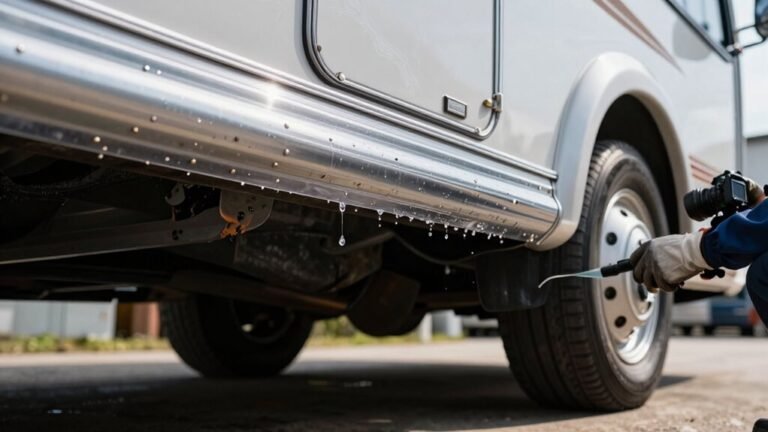
How to Protect Your RV From Sun Damage
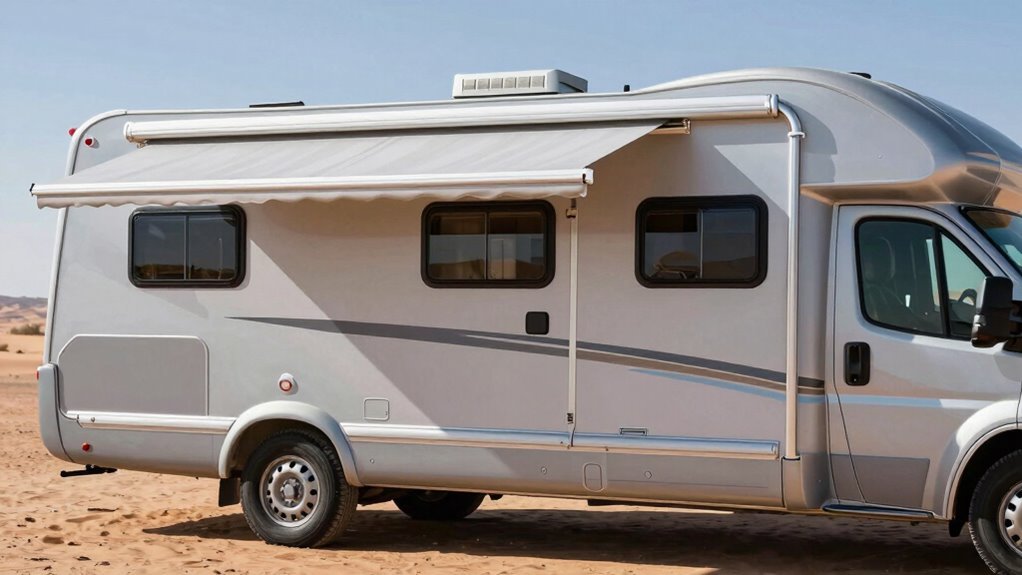
To protect your RV from sun damage, start by parking in the shade whenever possible and using a high-quality cover like Tyvek. These steps shield the exterior from direct UV exposure and help preserve the finish.
Apply UV-reflective film to windows and keep it maintained to reduce interior heat and sun damage. Pair this with reflective insulation and a sturdy awning to further block solar radiation and maintain cooler temperatures inside.
Wax your RV regularly to protect the paint and finish from sun-induced fading and oxidation. This added layer works alongside 303 Protectant, which keeps seals, vinyl, and rubber from drying out and cracking due to prolonged sun exposure.
Install skirting around the underside to block ground heat and minimize UV penetration from below. Regularly inspect seals, tires, and the roof for early signs of wear, as these are common targets of sun damage.
Staying proactive with maintenance ensures your RV remains protected and durable against constant sun exposure. There’s a whole playbook waiting to make your RV nearly bulletproof.
Choose the Right RV Cover for Maximum Protection
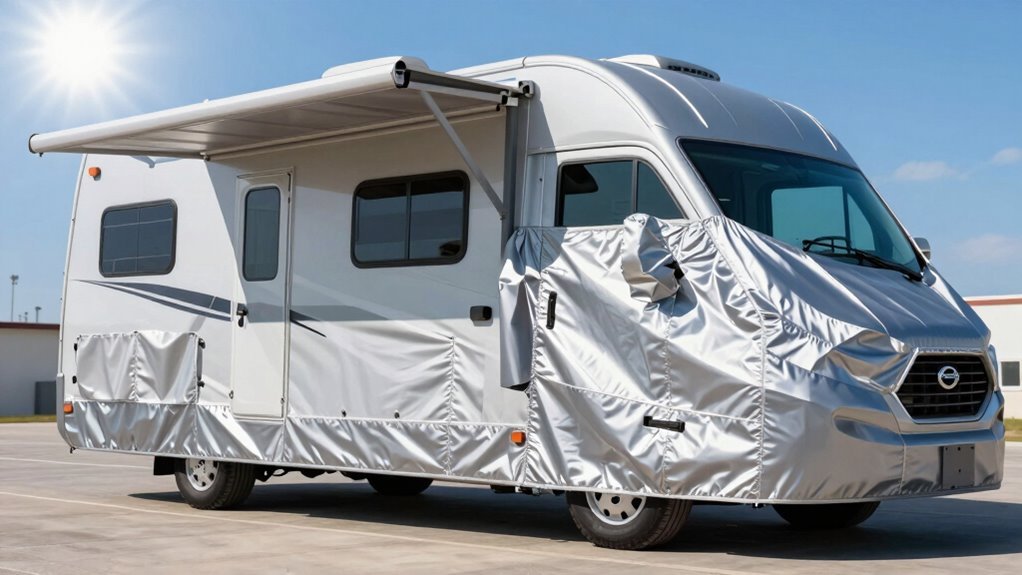
Ever wonder how your RV can stay cool, safe, and looking new even when parked under a blazing sun?
You’ve got options—smart ones!
Grab a cover made from DuPont Tyvek or 7 oz. loom-woven polyester, and you’re basically giving your rig a superhero cape against UV rays.
If you’re in a super sunny spot, go for ADCO Tyvek Plus Wind—it’s tough enough to laugh at harsh sunlight.
Living where it rains *and* shines? Try AquaShed fabric that beads water like it’s showing off.
For snow lovers who still fear sun damage, Classic Accessories Skyshield’s got your back with rip-stop strength and weatherproof tops.
Oh, and don’t forget dual-flow vents and roof poles—they fight sagging and moisture so your cover won’t turn into a sad, sun-soaked pancake.
Pick the right fit, and your RV stays fresh, not fried.
Classic Accessories offers durable, high-quality covers designed to withstand prolonged sun exposure.
Win!
Apply UV-Resistant Protectants Regularly
What’s standing between your RV and a sun-bleached retirement?
You guessed it—UV-resistant protectants!
Wax your RV regularly with a quality product, and you’ll shield the paint, keep it shiny, and make dirt slide right off.
Think of it as sunscreen for your rig—skip it, and things fade fast.
Don’t forget the windows: slap on UV-protective film to block rays that fry your curtains and couches.
Your roof needs love too—use sealants with serious UV defense, especially on seams and edges where damage sneaks in.
In blazing climates, pick coatings built for heat and relentless sun.
Clean the surface first; gunk and old goop ruin new protection.
Match your products to your roof type—rubber, fiberglass, or TPO—because one size doesn’t fit all.
Continuous exposure causes grave harm to ceramic coating, so applying protective layers consistently is key to maintaining your RV’s finish under harsh sunlight.
Do this right, and your RV stays cool, colorful, and ready for adventure.
Park in the Shade Whenever Possible
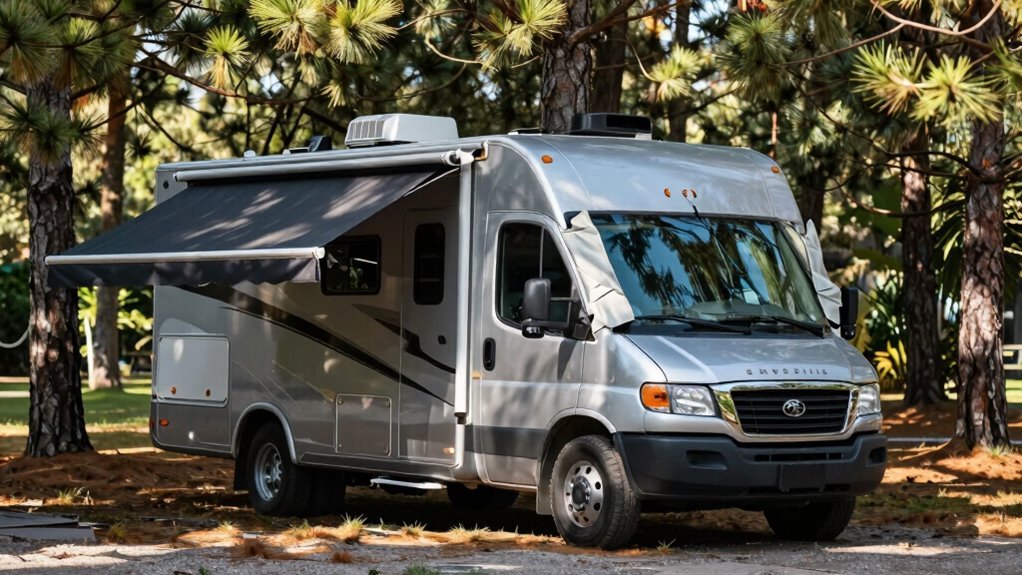
When the sun’s blazing like a furnace, your RV’s going to take the heat—literally.
Park in the shade whenever you can, and you’ll keep the inside way cooler, almost like giving your RV a chill pill.
Trees, canopies, or covered spots block harsh sunlight, so your AC isn’t working overtime—and your wallet stays happier.
Plus, shade isn’t just for comfort; it’s like sunscreen for your rig.
It protects paint from fading, prevents seals from cracking, and keeps tires from drying out.
Think of it as a spa day that also saves you money.
Covered spots might cost a bit more, but you’ll make it back in lower energy bills and fewer repairs.
And hey, less grime, sap, or surprise acorn bombs from above? Yes, please.
Whether it’s a carport, a tree line, or a shaded lot, choosing shade means your RV stays cooler, cleaner, and younger—just like a well-rested vacationer.
Shade structures also help extend the life of your RV by shielding it from UV damage and extreme weather conditions.
Use Window Covers and Reflective Insulation
Blocking the sun’s sizzle before it floods in? Smart move.
Use window covers and reflective insulation to shield your RV like armor.
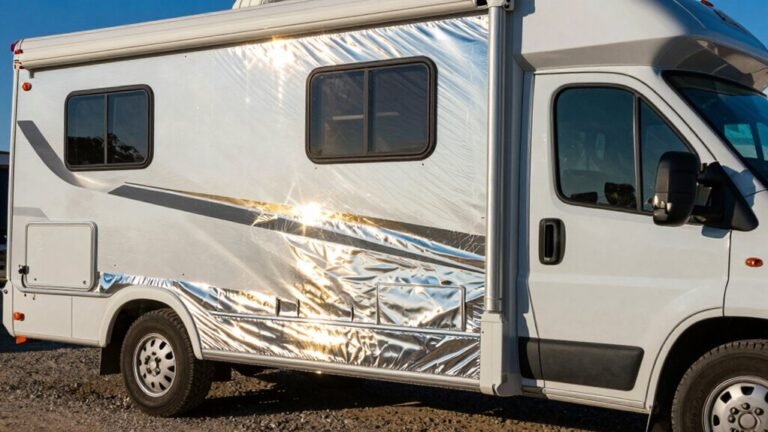
Exterior sunshades block up to 90% of heat—yes, even when it’s 122°F outside—and keep your interior a cool 80°.
They’re easy to snap on, fit snugly, and protect rubber seals from sun-rot.
You’ll sleep cooler, your furniture won’t fade, and you’ll still see outside while staying private.
UV-blocking film on windows cuts harmful rays, too, so your skin and couch stay safe.
These covers work day or night, even while driving.
Combine them with AC, and cooling feels effortless.
It’s not just comfort—it’s survival in summer heat.
Turn your RV into a cool cave, not a parked oven.
With reflective insulation, you’re not fighting the sun—you’re outsmarting it.
Pretty cool, right?
Install RV Skirting to Reduce Heat Exposure
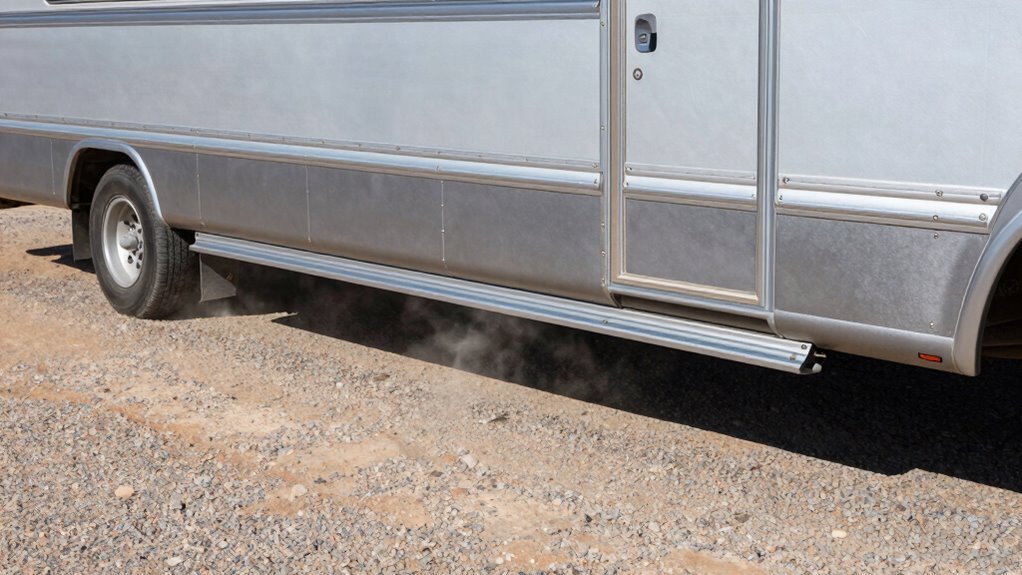
While the sun turns the ground into a griddle, your RV’s underbelly doesn’t have to soak up all that sizzling heat—installing skirting is like giving your rig a cool, shady hug from the ground up.
You block hot ground heat, keep floors comfy, and stop your A/C from working overtime.
Skirting slashes energy bills, boosts AC efficiency, and can even double your unit’s lifespan—no more $3,000 surprise replacements!
Snap-on systems like EZ Snap ($814) stay put in wild weather, while vinyl or insulated foam boards offer tough, cozy barriers.
Use stakes or sandbags to secure panels, seal seams tight, and laugh as pests and dust bounce off.
You’ll love the clean look, too—hidden tires, tidy storage, and zero drafts.
It’s not just shade, it’s smart: skirting shields plumbing, stabilizes temps, and makes your home-on-wheels feel like, well, home.
Maintain Your RV’s Exterior Seals and Caulking
You’ve shaded your RV’s underbelly like a pro, but don’t stop there—now it’s time to play detective on the outside, where sun-baked seals and silent cracks can sneak in trouble.
Check seams and seals twice a year—or every three months on the roof—and don’t wait for leaks to scream for help.
Look for cracks, shrinking, or gaps, especially where your finger can wiggle under a bead of caulking.
When you find trouble, strip the old stuff completely—no cheating by layering new over old!
Clean with soap, water, or a splash of alcohol, then choose the right sealant: self-leveling for roofs, non-sag for walls.
Tape edges for clean lines, smooth it out like frosting, and use trusted RV brands like Alpha or Geocel.
And hey, give those slide-out wiper seals some love with 303 Protectant—they blush at attention!
Wash and Wax Your RV to Preserve the Finish
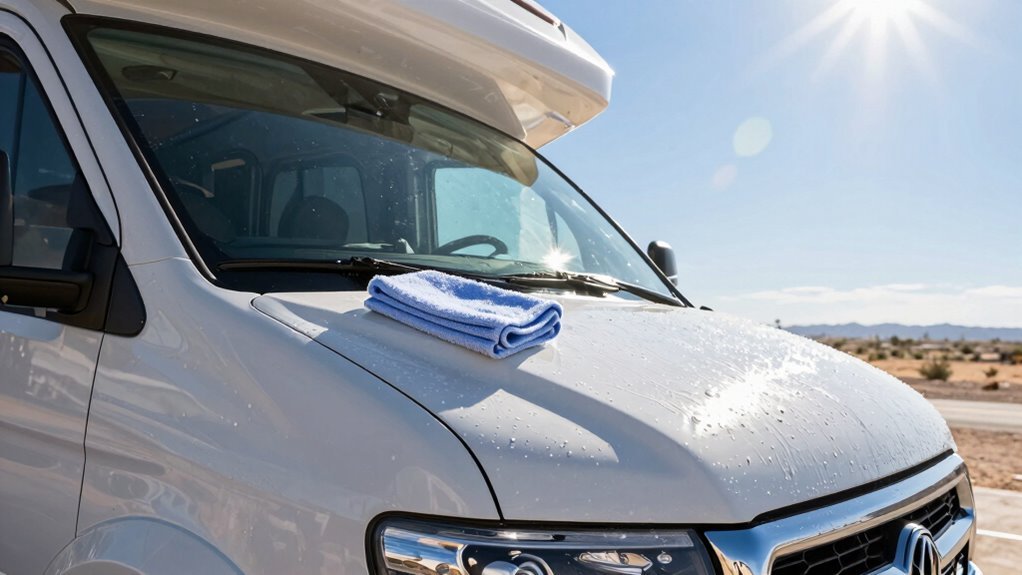
Keeping your RV looking sharp isn’t just about pride—it’s about protection, fun, and a little bit of automotive spa time. You’ve got the open road and sunshine, but that UV exposure can fade and damage your finish fast. Here’s how to keep your rig shining bright:
- Wash it right: Rinse top to bottom when the surface is cool, use a gentle RV-specific soap, and scrub in small sections with a microfiber mitt to avoid swirls.
- Dry like a pro: Skip air-drying—use a soft microfiber towel or chamois to prevent spots and reveal that glossy finish.
- Wax for armor: Apply a UV-blocking wax or sealant two to four times a year; it’s like sunscreen for your RV, shielding against sun damage and grime.
Bonus? You’ll feel like a pro detailer—and your neighbors will notice!
Invest in a Retractable Awning for Extra Coverage
When the sun’s blazing overhead and your RV’s exterior starts to sizzle, a retractable awning rolls out like your camping setup’s cool sidekick—ready to shade your deck, chill your vibe, and keep things from turning into a sweltering picnic nightmare.
You’ll love how it turns your cramped doorway into a breezy outdoor lounge, giving you 10–20 feet of shade for dining, chilling, or just pretending you’re on a tropical vacation.
It blocks UV rays, cuts down on AC costs, and retracts fast when storms pop up—no drama.
You can crank it open or hit a button if you’ve got a motorized model, because who doesn’t want gadget-powered shade?
Priced from $500 to $8,000, it’s a smart move that pays off in comfort, cash savings, and next-level camping cred.
Schedule Regular RV Inspections and Maintenance
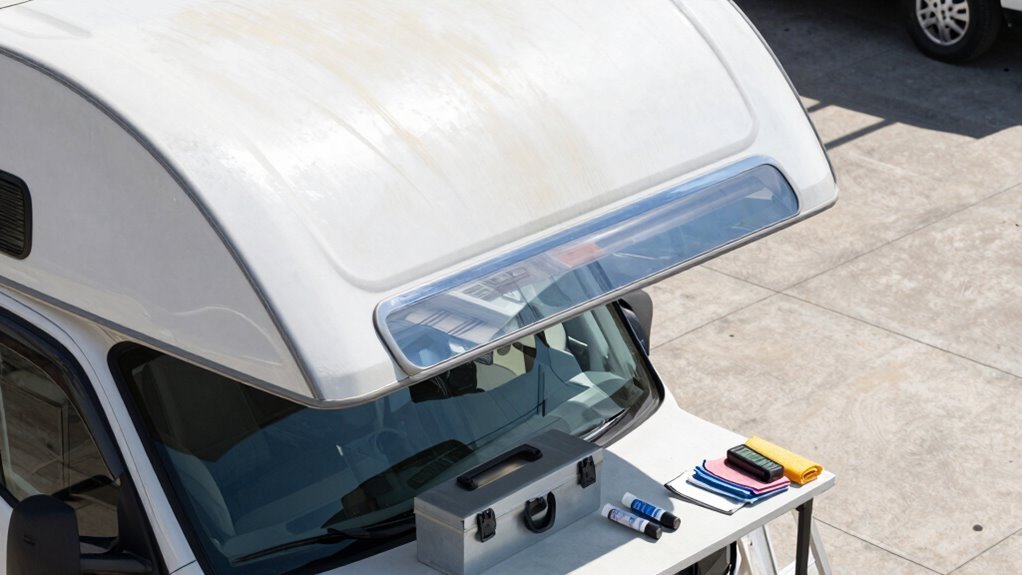
Now that you’ve shaded your space with a slick retractable awning, it’s time to give your RV some long-term love with routine checkups—because looking cool in the shade means nothing if your rig’s falling apart underneath.
Stay on top of wear and tear with these three must-dos:
- Inspect your roof—scan for cracks, loose seals, and gunk like leaves that trap moisture, especially around vents and seams.
- Check seals and windows—hunt for cracks, peeling caulk, or stiff windows, and reseal gaps fast to keep UV and rain out.
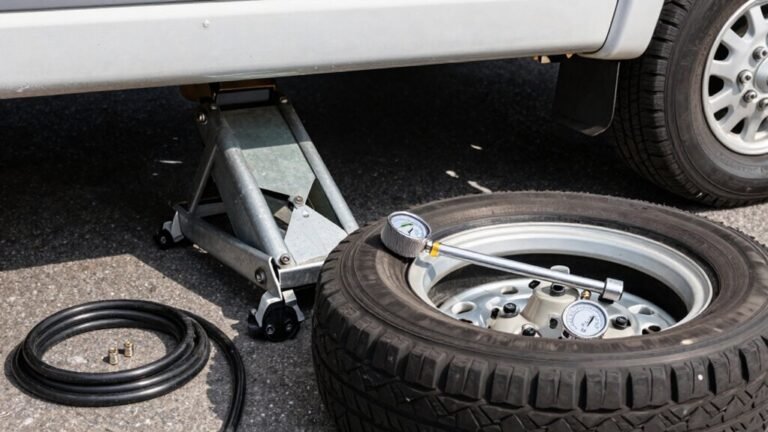
- Pamper your tires and chassis—verify tire pressure, scan for cracks, and check for rust or loose bolts underneath.
Hit these spots regularly, and your RV won’t just look good—it’ll *feel* road-ready, adventure after sunny adventure.
Consider Tinted Windows to Minimize Sun Penetration
If your RV’s interior is starting to look like it’s been marinating in the sun too long, tinted windows might just be your new best friend.
They block up to 99% of UV rays, so your skin stays safe and your furniture doesn’t turn into a faded relic.
You’ll also stay cooler—tints cut down on heat, so your AC won’t have to work overtime.
Plus, they help keep things warm in winter.
Less glare means easier driving, especially at sunrise or when some minivan insists on blinding you with their high beams.
And let’s be real, nobody likes squinting like a mole stepping into daylight.
Good tints protect without messing with your tech or breaking local laws.
Have them professionally installed, and boom—your RV stays looking fresh, feels more comfortable, and holds its value longer.
Smart, simple, and seriously sunny-side-up awesome.
Frequently Asked Questions
How Often Should I Replace My RV Cover?
You should replace your RV cover every 3 to 5 years if it’s quality and well-cared for—think of it like swapping out sunscreen before it quits working!
But if you spot big tears, fading, or leaks that just won’t quit, toss it sooner.
Cheaper covers?
They might only last a couple of years, especially under brutal sun or storms.
Keep it clean, secure, and inspected, and it’ll hug your RV like a champ for years!
Can Direct Sunlight Damage RV Tires Even When Parked?
Yeah, sunshine’s sneaky—it’ll bake your RV tires even when you’re not driving.
Think of it like sunburn for rubber: UV rays dry them out, cause cracks, and weaken the structure over time.
Parked for weeks? The damage still adds up, especially in hot, sunny spots.
Tires hates sitting in the spotlight too long, so giving them a break from the sun’s glare is a smart—and easy—move.
Does Condensation Under RV Covers Cause Mold?
Yeah, condensation under RV covers can definitely cause mold if you’re not careful.
Trapped moisture loves to sneak in when covers don’t breathe, turning your shiny shelter into a mold playground.
But hey, no need to panic!
Just pick a breathable, UV-blocking cover with air vents, seal it tight with straps, and let air flow.
Wipe damp spots, run a fan, and boom—mold won’t stand a chance!
Are There Sun Protection Products Safe for Rubber Roofs?
Yes, you’ve got great options that won’t harm your rubber roof!
Try Roof Armor—it battles UV rays and grime with smart nanoparticle tech.
Bio-Kleen’s SPF 70 formula cleans and protects in one go, while Roof-Gard gently blocks sun damage without harsh stuff.
Liquid Rubber seals and shields like armor, and Star Brite adds shine while keeping UV at bay.
They’re all safe, easy to use, and your roof’ll thank you—no sunburn allowed!
Can Interior Fabrics Fade Even With Window Covers?
Yes, your interior fabrics can still fade—even with window covers up.
Did you know nearly 60% of UV rays sneak through glass?
That means sunlight’s doing sneak attacks on your couches and curtains while you’re not looking.
Regular covers help, but they’re not superheroes.
Pair them with UV-blocking film and UV-resistant fabrics like marine vinyl or solution-dyed acrylic, and boom—your RV stays vibrant, not sun-faded and sad.
Conclusion
Remember that old lemon you left in the sun? Turned hard, shriveled, sad. Your RV’s no different without care. But lucky for you, a little love goes a long way—cover it, wax it, park it smart. Think of it like sunscreen for your home-on-wheels. Do these simple things, and your rig will laugh at summer, staying cool, shiny, and ready for adventure. You’ve got this!
References
- https://www.coversdirect.com/rv-covers/
- https://www.etrailer.com/question-804258.html
- https://rvshare.com/blog/best-rv-covers-our-top-picks/
- https://blog.campingworld.com/gear-and-accessories/rv-cover-for-camper/
- https://www.nationalrvcovers.com/a/RV_Cover_Comparison_Features_&_Benefits_National_Covers.html
- https://community.goodsam.com/discussions/rvtipstricks/best-rv-cover/3465937
- https://bobmosescc.com/2023/07/how-do-i-protect-my-rv-from-uv-damage/
- https://www.campgroundviews.com/weatherproof-your-rv-must-know-coating-hacks-for-extreme-conditions/
- https://thervsmith.com/how-to-seal-rv-roofs-for-long-lasting-weatherproofing/
- https://tooltroopers.com/blogs/tooltroopers/rv-roof-sealant-guide-2025