Troubleshooting an RV Refrigerator That Won’t Cool
When troubleshooting an RV refrigerator that won’t cool, start by checking all power sources. Make sure the 12V battery is charged, shore power is properly connected, and the propane supply is turned on with no lockout triggered.
Confirm the fridge is set to the correct cooling mode for your current power source. Whether using electric or propane, selecting the wrong setting can prevent the unit from cooling properly.
Next, inspect airflow around the refrigerator. Ensure exterior vents are clear of debris and cooling fans are operational to maintain efficient heat exchange.
Leveling the RV is crucial when troubleshooting an RV refrigerator that won’t cool. An unlevel unit can disrupt the internal cooling process, leading to poor performance or no cooling at all.
Look into the burner assembly for signs of dirt or a weak flame. A contaminated or misaligned burner often results in unreliable heating and cooling issues.
If you notice yellow residue or smell ammonia, stop using the fridge immediately. These signs may indicate a serious problem, including a potential ammonia leak, which requires professional repair.
Check Power Sources and Settings
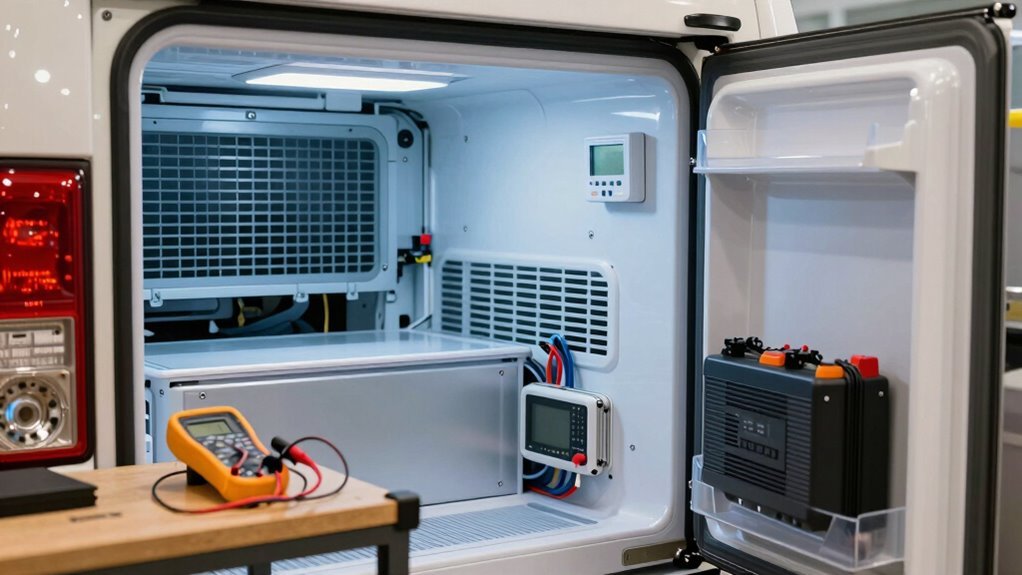
Before you start tearing into your RV fridge, let’s make sure it’s not just cranky from a bad connection or the wrong setting—you’d be surprised how often a little power check fixes everything.
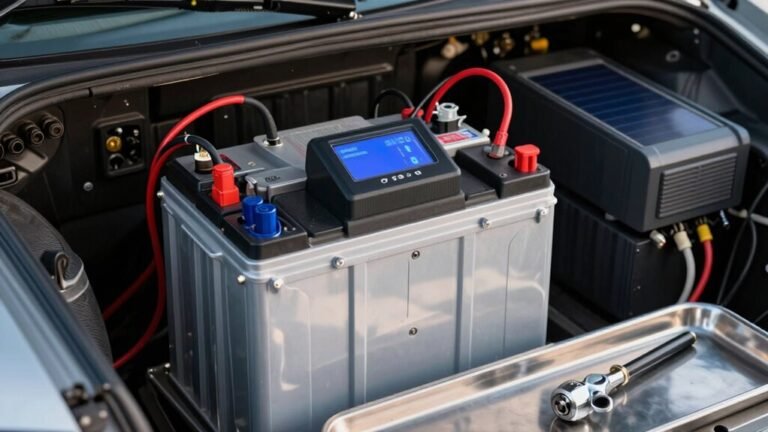
First, confirm your 12V DC is solid—hook up that multimeter and check the coach battery. If it’s below 10.5V, your fridge won’t even try. Dead batteries can also drain your engine power, so don’t ignore it.
Is your RV plugged into shore power? Make sure it’s a 30- or 50-amp outlet, and check that the circuit breaker hasn’t tripped—reset any GFCIs too.
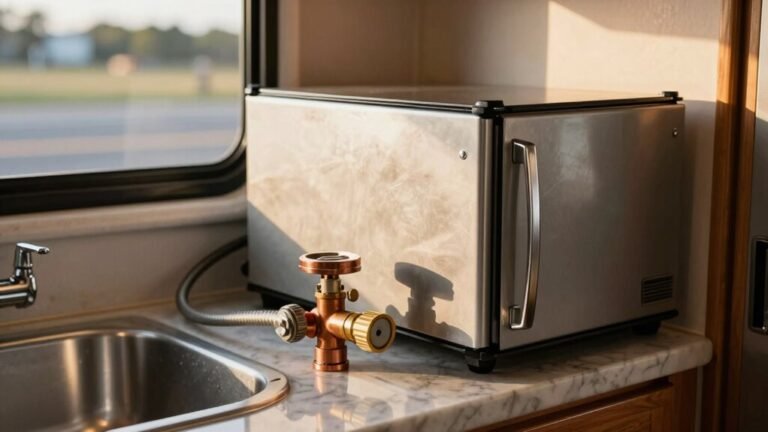
For propane, confirm the tank’s not empty and the valve’s open; three failed ignitions lock it out, so power off and restart.
Finally, double-check the power mode: AC, DC, gas, or auto—pick the right one, or you’ll chase ghosts all day.
Simple fixes first—save the drama for dinner!
Propane lockout can prevent your fridge from starting even with proper fuel and power—reset it by turning off all propane appliances, closing the tank valve for a minute, then reopening it to reestablish pressure.
Inspect the Cooling Unit for Blockages
Roll up your sleeves and get up close with your RV fridge’s cooling unit—because sometimes the real issue isn’t magic, it’s gunk.
Over time, crud builds up and blocks the tiny tubes that keep things flowing smoothly.
You’ll want to look for these clues:
- Yellow powder near the burner? That’s rust inhibitor leaking from a cracked boiler—definitely not part of the decor.
- Boiler blazing hot but cooling coils staying cool? Flow’s blocked, and your fridge is basically working overtime for nothing.
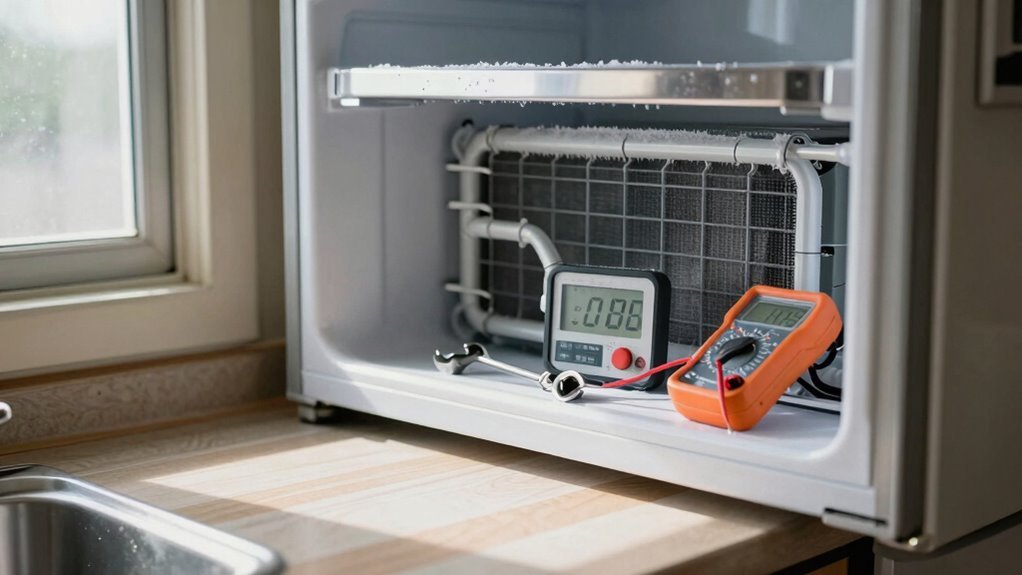
- Ice hiding inside the unit? It’s like a snow day in your fridge’s veins, slowing everything down.
- Fridge warming up even though it’s running? Yep, that’s the sad cry of a clogged system.
Sorry, no quick fixes here—banging pipes or flipping the unit won’t save it. If it’s clogged or cracked, it’s replacement time. Cracks often form due to repeated thermal expansion and contraction along weld seams, especially when the unit overheats frequently.
Ensure Proper Ventilation and Airflow
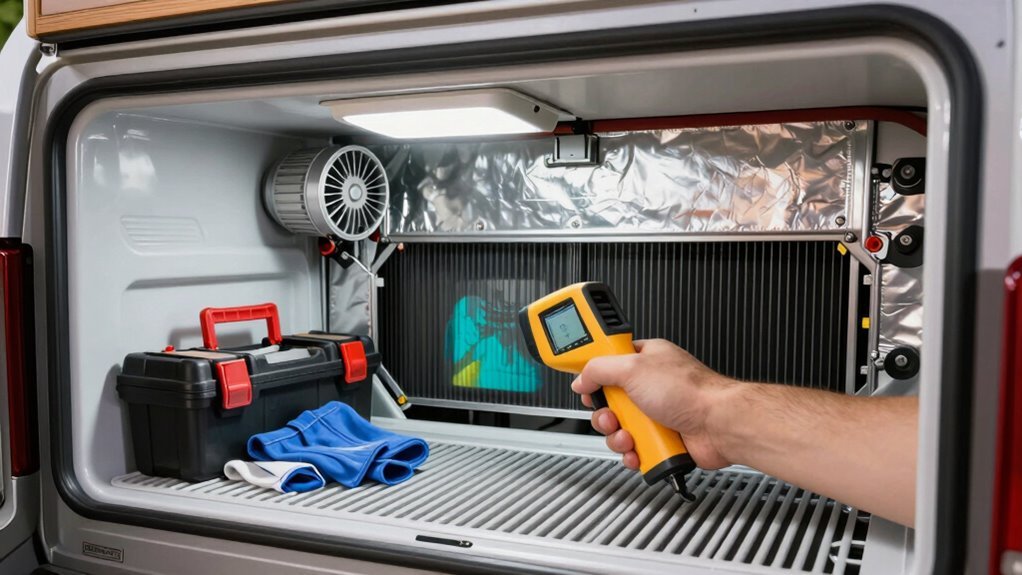
You’ve checked for gunk and grime inside the cooling unit, but don’t stop there—your RV fridge also needs to breathe easy, just like you on a summer camping trip.
Make sure air flows freely: cool air enters the bottom vent, hot air escapes through the top or roof vent.
Install an intake fan at the lower vent—grille facing in—to pull in fresh air, and an exhaust fan up top, grille facing out, to push heat out.
Keep less than an inch between the fridge back and the wall for that chimney effect.
Don’t pack the fridge like a Tetris game; leave space for air to circulate.
Toss in a battery-powered interior fan—it’ll cool things faster and run for weeks.
Clear vents of leaves, dust, or sneaky cobwebs, and check them every few months.
A well-ventilated fridge isn’t just happy—it’s *cool*, literally.
Proper dual-fan setup enhances airflow by creating a continuous path for cooling, matching the natural rise of hot air and fall of cool air.
Examine the Heating Element and Burner Assembly
Let’s dive into the heart of your RV fridge’s heat game—the heating element and burner assembly—because even this cool customer needs a little warmth to keep things running right.
Before you peek inside, shut off the breaker, unplug the fridge, and disconnect shore power and batteries—safety first!
Now, open the outside access panel, remove the covers, and unhook the wiring. Here’s what to look for:
- A grimy or warped heating element glowing like a sad campfire
- Wires pulled loose or looking chewed up by tiny, mischievous gremlins
- A multimeter showing no continuity—meaning the circuit’s a goner
- Resistance way off the spec sheet, like a recipe with no salt
If any of these ring true, swap in a new element, snap it in tight, reattach wires, and give it a test run. You’ve got this!
Verify the RV Is Level
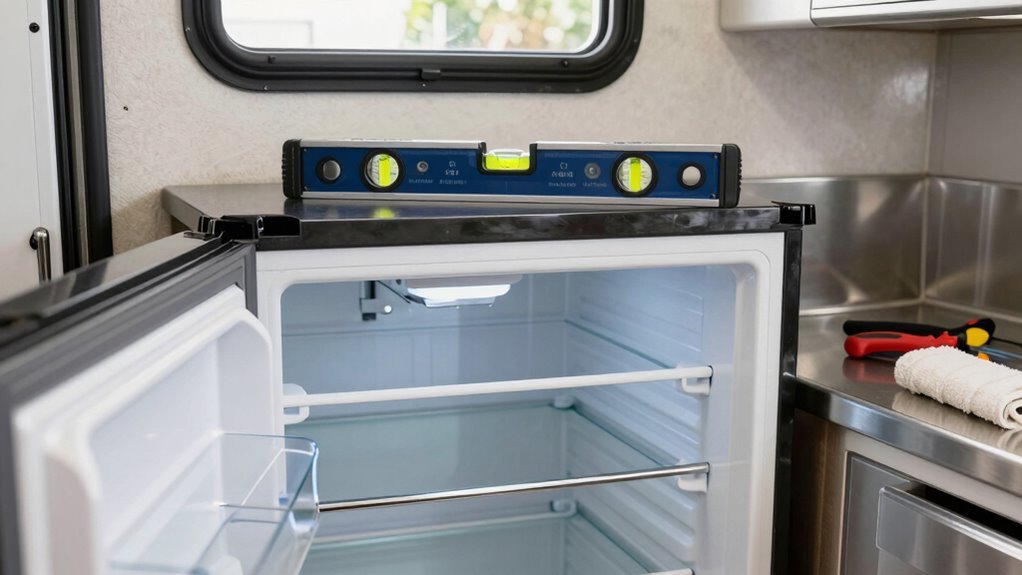
While your RV fridge works hard to keep your drinks cold and veggies crisp, it’s got a quirky demand most appliances don’t—it *needs* to feel balanced, like a yogi on a mountain retreat.
Absorption fridges rely on gravity to move ammonia, so if your rig’s lopsided, the cooling cycle breaks down.
You’re aiming for within 3 degrees side-to-side, and up to 6 front-to-back—modern units are forgiving, but older ones? Not so much.
Tilt too long, and sodium chromate flakes form, clogging tubes like gunk in a clogged drain.
Worse, ammonia crystals build up permanently, killing flow.
Use a bubble level on the floor or counter, adjust with ramps or blocks, and check both directions.
It’s not just fridge drama—leveling helps slideouts and sleep comfort too.
Sure, compressor fridges shrug off slopes, but your absorption unit? It’s a delicate flower.
Look for Signs of Ammonia Leaks or System Failure
Sniff the air near your fridge—yes, really—and don’t laugh, because that funky smell mightn’t be last week’s leftovers but a sneaky ammonia leak.
If you catch that sharp, eye-watering stink even when the fridge is off, trouble’s brewing.
But don’t just rely on your nose—look, listen, and feel for clues:
- Green-yellow stains creeping from seams like tiny warning flags
- A babbling brook sound from silent coils, gurgling like a mini spring
- A hot side tube blazing even though your fridge isn’t cooling a thing
- That unmistakable ammonia punch in enclosed spaces, making you gasp and blink
Turn it off fast if you spot these, crack open windows, and bail to fresh air. Ammonia’s no joke in tight spots—your safety comes first. When in doubt, call a pro. Better safe than sorry!
Frequently Asked Questions
How Long Should I Wait to See if Cooling Starts?
You should wait at least 2–3 hours to see if cooling starts—most fridges show progress by then. If it’s gas-electric, give it up to 12 hours to fully chill. Pop open the door, check that the light turns on, stick in a thermometer, and watch the numbers drop.
Freezer getting cold first? Totally normal.
Just don’t panic if it feels like your fridge’s running a slow marathon—sometimes, it’s just warming up to impress you later!
Can I Run the Fridge on Batteries While Driving?
You can run your fridge on batteries while driving—if it’s a compressor model, that is.
Clever, compact, and efficient, these coolers crave 12-volt juice straight from your battery bank.
Absorption fridges? Not so much—they need propane or shore power.
So, if you’ve got a modern compressor unit, you’re golden.
Just make sure your battery’s big enough and charged up, or you’ll end up with warm yogurt and regret.
Is It Normal for the Fridge to Cycle off Frequently?
Yeah, it’s totally normal for your fridge to cycle off frequently—those little power naps are part of its routine!
Most RV fridges kick on and off every 10 to 15 minutes, especially in warm weather.
Think of it like breathing: short inhales, longer exhales.
Just make sure it’s actually cooling inside.
If it’s cycling like crazy but not chilling?
Then you might wanna play detective—maybe check the seals or thermostat.
Cool, right? (Pun intended!)
Should I Unplug the Fridge During Long Storage Periods?
Should you unplug during long storage?
Yeah, go ahead and unplug it—just make sure you clean it out first, leave the doors propped open, and toss in some baking soda.
You’ll skip the dust bunnies throwing a party inside.
Plus, saving a few bucks on power doesn’t hurt, right? Your fridge’ll thank you when spring rolls around—fresh, dry, and ready to chill your drinks again!
Can Overpacking the Fridge Affect Its Cooling Performance?
Yep, overpacking your fridge totally messes with its cooling game.
You’re blocking the air, and without airflow, cold just can’t do its thing.
Warm spots pop up like surprise parties no one wanted.
Your fridge works overtime, gets tired fast, and might even frost over.
Think of it like a crowded party—everyone needs space to breathe!
Leave air channels, toss in a fan, and keep it nicely organized.
Cool air will thank you.
Conclusion
You’ve checked the power, cleared the gunk, made sure it’s level—now that fridge’s got no excuse! Think of it like a sleepy bear: it just needed a little nudge to wake up and cool down. If it’s still not working? Don’t panic, partner—sometimes, calling in a pro is the smartest fix. Keep that sense of humor, stay curious, and remember: every hiccup’s a high-five waiting to happen!
References
- https://roadtrippers.com/magazine/rv-refrigerator-issues-rv-troubleshooting/
- https://www.youtube.com/watch?v=6OPMX4pKO-M
- https://blog.campingworld.com/learn-to-rv/rv-refrigerator-not-working/
- https://www.youtube.com/watch?v=J0omVg6n9fc
- https://www.rvrepairclub.com/video/common-rv-refrigerators-and-refrigerator-power-sources-007854
- https://coolfunrv.com/whats-the-main-cause-of-failure-in-rv-refrigerator-cooling-units/
- https://prorvprineville.com/rv-refrigerators-what-to-look-for-when-it-stops-working/
- https://www.youtube.com/watch?v=–DCnSw1jP4
- https://www.youtube.com/watch?v=DyzjvGXyNbU
- https://www.youtube.com/watch?v=BUTXhB58Wo4