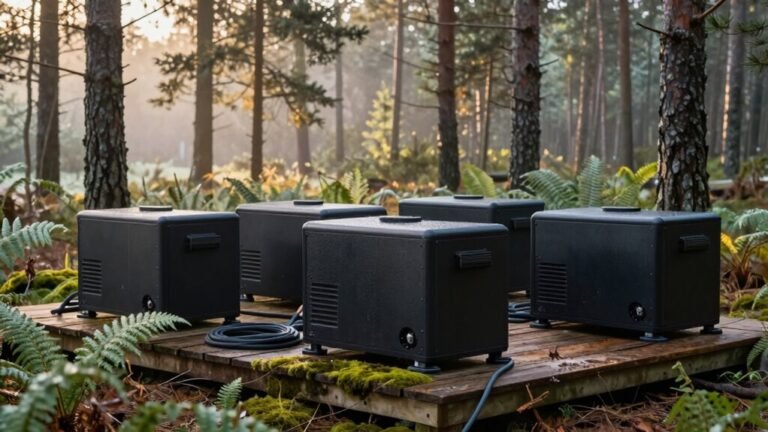
How to Safely Use an RV Generator at Camp
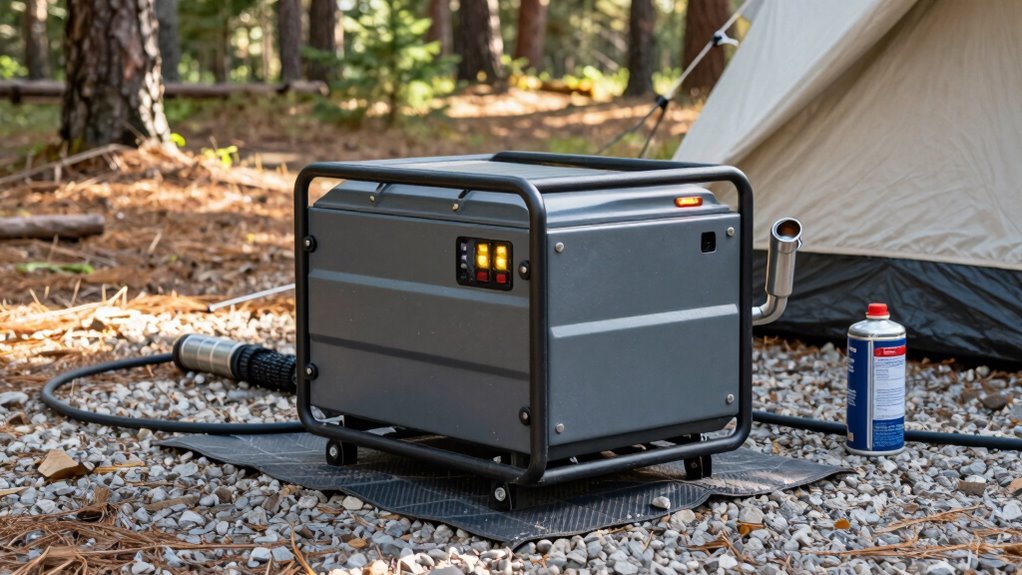
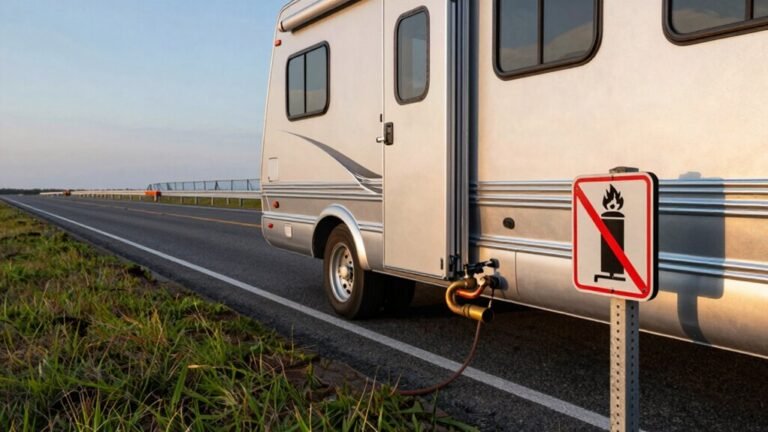
When using an RV generator at camp, always place it at least 20 feet from your RV or tent. Keep it away from dry leaves, pool floats, and all flammable materials to reduce fire risk.
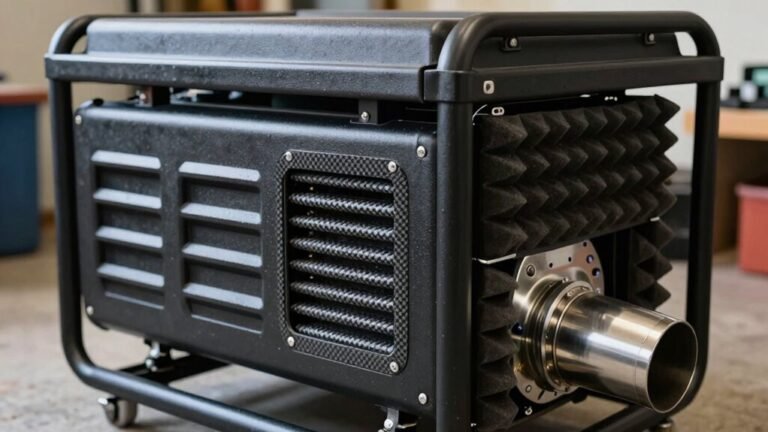
Point the generator’s exhaust away from people, tents, and windows to prevent carbon monoxide exposure. Never operate the generator in enclosed spaces, as this can lead to dangerous CO buildup.
Make sure the generator sits on level, dry ground for safe and efficient operation. Use a snug, weather-resistant cover during rain to protect it from moisture without blocking ventilation.
Regularly check the oil level and air filter to keep your RV generator running smoothly. Always have a carbon monoxide detector nearby when using a generator at camp for critical safety protection.
Choose the Right Location for Your Generator
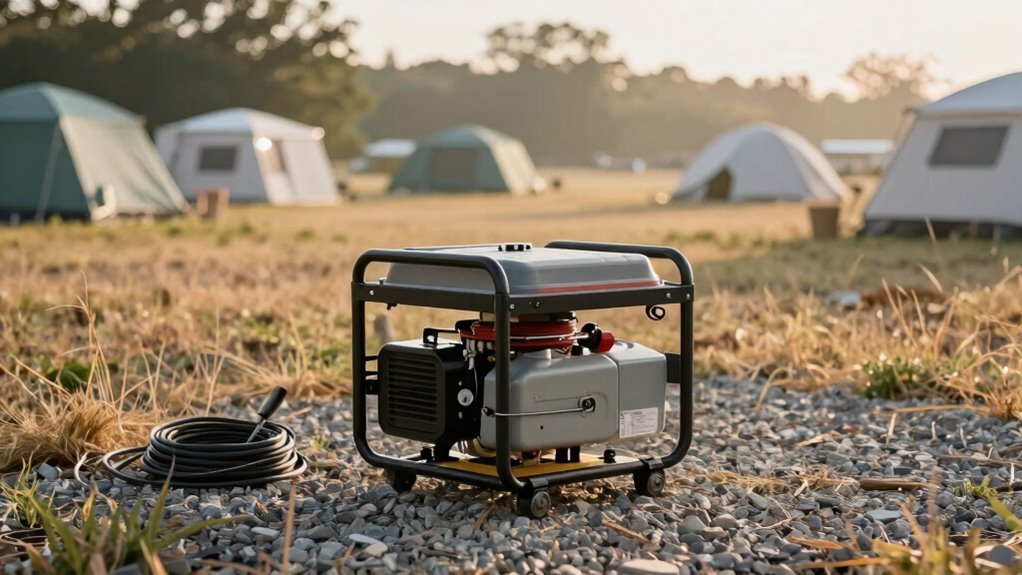
Imagine this: your RV trip is going perfectly—sunshine, open roads, and your favorite playlist humming along—until someone forgets where to plug in the generator and suddenly you’re dealing with fumes, fire risks, or worse.
Don’t let a simple mistake turn your adventure into a campsite catastrophe!
Pick a spot at least 20 feet from your RV or tent—that’s what the CDC insists on—and keep it 5 feet clear of anything flammable, like dry leaves or that half-inflated pool float.
Seriously, even a spark from pine needles could turn your serene setup into a s’more emergency.
Put it on level ground so it doesn’t wobble like a drunk camper at karaoke night, and stash fuel far away—no “handy” jugs next to the unit.
Clear, stable, and distant? You’re golden.
And always place the generator in a well-ventilated area to prevent carbon monoxide buildup—CO exposure risk in semi-open areas makes this non-negotiable, even if it seems safe.
Maintain Proper Ventilation and Exhaust Direction
Keeping fumes out of your space isn’t just smart—it’s a must when running your RV generator.
Always point portable generator exhaust away from tents, windows, and neighbors—nobody wants a whiff of that stinky stuff!
Check the exhaust system before firing things up; if it’s cracked or damaged, fix it first.
Make sure exhaust pipes extend well away from the RV, especially if your generator’s tucked under a couch or diner booth—yeah, fumes don’t belong with your fries.
Run your generator weekly to keep things dry and happy, and use a portable fan to help blow bad air away.
Position your RV so the wind carries exhaust off into the distance, not into your picnic.
And never block vents—your generator needs to breathe as much as you do (but way less dramatically).
Prevent CO poisoning by placing portable generators at least 20 feet away from any occupied area and never operating them inside enclosed spaces.
Protect Against Carbon Monoxide Exposure
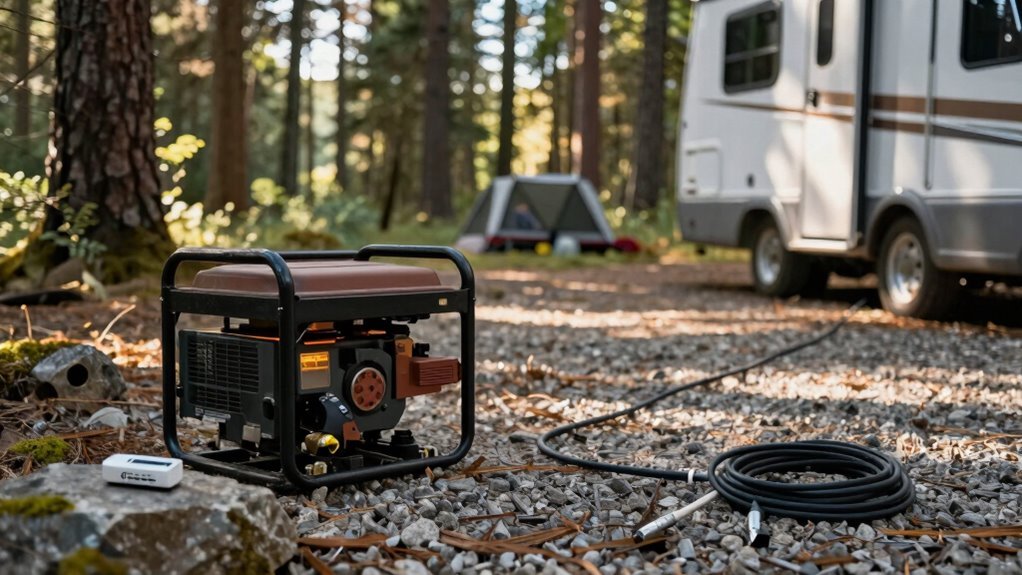
Fire up your generator the smart way—because carbon monoxide (CO) might be invisible and silent, but it’s no joke.
Install a UL-listed CO detector inside your RV, especially near sleeping areas, and test it often—think of it as your RV’s superhero sidekick.
If you don’t have a built-in alarm, grab a portable battery-powered one; better safe than sorry.
Check your generator’s exhaust system every time—no cracks, no weird sounds, and always point that exhaust away from your campsite like it’s blowing bad vibes far away.
Never run the generator in an enclosed space (yes, even the garage—really).
You wouldn’t invite poison to dinner, so don’t let CO sneak in.
Watch for headaches, dizziness, or nausea—your body shouting, “Hey, something’s wrong!”
Shut it down, get fresh air, and act fast.
Safety never takes a vacation!
Maintain at least 20 feet distance between your generator and the RV to minimize the risk of CO accumulation.
Keep Your Generator Dry and Weather-Protected
Don’t let the weather rain on your generator’s parade—protecting it from the elements is a no-brainer when you’re out exploring the great outdoors.
Keep it dry with a snug-fit cover like a GenTent, designed to handle rain, snow, and wind without smothering the engine.
These smart covers let heat escape while keeping water out, so your generator won’t overheat or sputter.
Running covers work too, shielding your unit during operation with side skirts and breathable material that laughs in the face of downpours.
If you’re parked long-term, a fixed canopy adds sturdy, always-there protection.
Got a DIY vibe? Use a heavy-duty tarp—just keep it elevated and ventilated, never touching the hot parts.
Oh, and don’t forget: place your generator on level, dry ground, away from puddles.
After all, even generators hate soggy socks!
Perform Routine Maintenance and Safety Checks
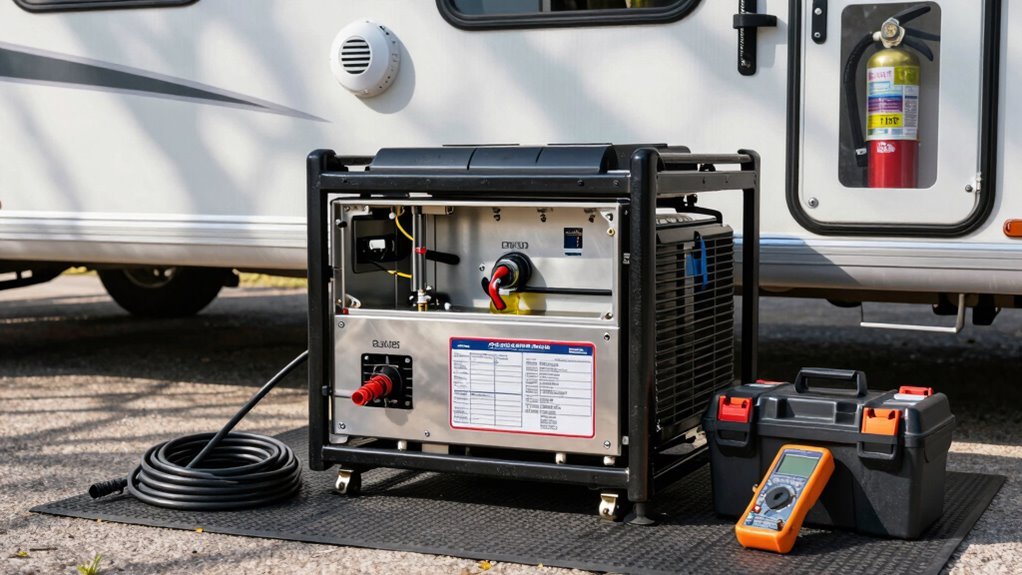
Staying on top of your generator’s tune-ups keeps it running like a champ through every adventure.
Change the oil and filter every few hundred hours—it’s quick, easy, and keeps your engine happy.
Use the right oil type, or you’ll hear that grumpy engine groan!
Check the air filter often; if it’s dirty, just swap it out—clean air means peak performance.
Don’t forget the spark plugs—replace ‘em around 450 hours to keep ignition sharp and fuel burning clean.
Fuel filters need freshening every 500 hours, and inspect those fuel lines yearly.
And hey, don’t let old gas turn your carburetor into a science experiment—winterize right!
Wipe down battery terminals monthly with a baking soda mix, wear gloves, and always disconnect the negative first.
A little love goes a long way—your generator’s got your back, so return the favor!
Frequently Asked Questions
Can I Run My Generator Overnight While Sleeping in the RV?
No, you shouldn’t run your generator overnight while sleeping—it’s risky and not worth the danger.
Carbon monoxide can sneak in silently, even through tiny gaps, and you won’t smell or feel it while you’re out cold. Think of it like leaving a dragon in the basement: sure, it gives power, but it might roast you by morning. Keep it off while sleeping, stay safe, and let your CO detector snooze peacefully too.
How Loud Is a Typical RV Generator During Operation?
Your RV generator’s usually as loud as a normal chat—around 50 to 70 decibels.
If you’ve got a shiny inverter model, it hums quietly at 50–60, like a dishwasher doing its thing.
Older, chunky ones? They roar up to 76 decibels, louder than city traffic!
Newer designs keep things peaceful, so you won’t annoy neighbors—or wake up the whole campground like a lawnmower at a naptime party.
Is It Safe to Use a Portable Generator Inside the RV?
Nope, pal, you’re playing with fire—literally—if you run a portable generator inside your RV.
It’s a carbon monoxide trap waiting to happen, like baking in a closed oven with the heat cranked.
Keep it outdoors, 20 feet away, exhaust pointing away from your rig.
Fresh air keeps you safe, and your detector beeping means it’s doing its job—don’t ignore it.
Stay smart, stay alive!
Do I Need to Disconnect the Shore Power to Use the Generator?
Yes, you absolutely need to disconnect shore power before using your generator.
Leaving it plugged in could fry your rig’s electrical system—or worse, backfeed into the campground grid.
Think of it like choosing between tap water and a hose: you don’t run both at once!
Unplug fully, fire up the generator, and enjoy your power freedom—just don’t forget to flip the breakers on afterward.
Safety first, fun second!
How Often Should I Change the Generator’s Oil?
Like a trusty campfire buddy, your generator’s oil needs checking early and often—don’t ghost it!
Change the oil first at 20 hours, then every 150 hours or yearly, whichever comes first.
Skipping it? That’s like hiking in flip-flops—ouch!
Clean oil keeps your generator running strong, happy, and ready for adventure.
Plus, swap the filter every time—teamwork makes the dream work!
Conclusion
Remember that camper in Montana who fried his morning toast and nearly his generator too? Yeah, let’s not be that guy. Treat your RV generator like a finicky campfire—keep it dry, fueled, and breathing. With fresh air flowing and CO detectors humming happily, you’ll stay safe, cozy, and ready for s’mores… or at least a hot breakfast. Power up smart, and the open road stays bright!
References
- https://www.novuspowerequipment.com/how-to-use-an-inverter-generator-safely-when-camping-outdoors
- https://www.duromaxpower.com/blogs/news/camping-and-rv-generator-safety-tips
- https://www.gentent.com/blog/our-essential-rv-generator-safety-guide/
- https://community.goodsam.com/discussions/diymaintenance/inverter-generator-storage-during-use/1044390
- https://www.mygrandrv.com/threads/running-generator-overnight.77751/
- https://blog.campingworld.com/learn-to-rv/how-to-maintain-a-generator/
- https://www.lowell-light.org/generator-and-rv-safety/
- https://gen-stick.com/blog/f/rv-generator-exhaust-solutions-to-keep-your-campsite-safe
- https://community.goodsam.com/discussions/motorhomesforum-board/generator-fumes-inside/2850420
- https://www.youtube.com/watch?v=MOMkdrPuo-M