Propane Vs Electric RV Fridge: Which Is Better?
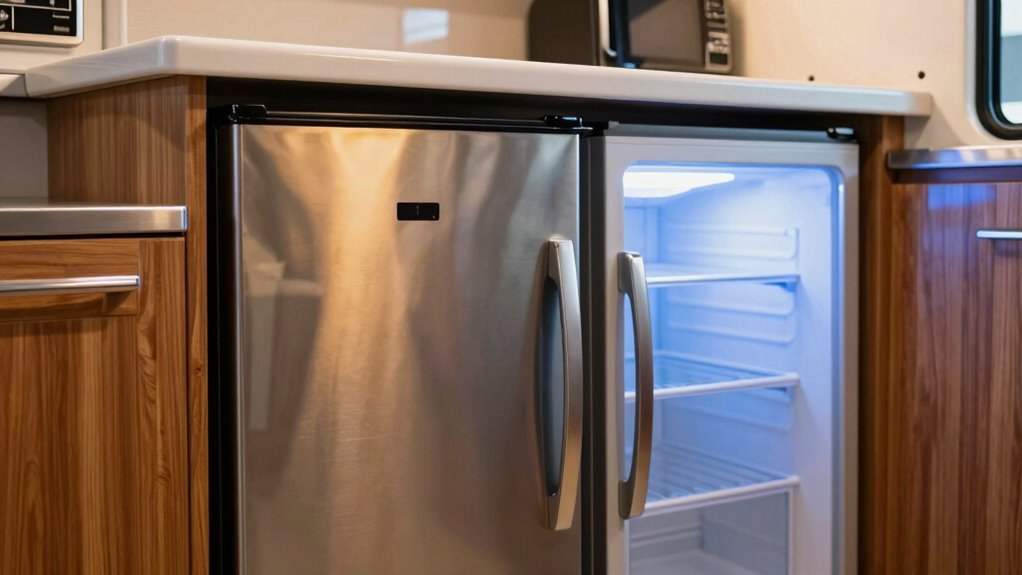
When it comes to propane vs electric RV fridge performance, electric models have a clear edge. They cool faster, run quieter, and eliminate concerns about running out of fuel or dealing with fumes.
No flames or ventilation are needed—just plug into shore power, your battery, or solar setup for reliable, clean operation. This makes an electric RV fridge ideal for off-grid adventures without the hassle of propane refills or maintenance.
Electric fridges handle high temperatures better, keeping food and drinks consistently cold even in summer heat. They’re also easier to clean and maintain, with fewer moving parts and no pilot light to worry about.
How Propane RV Fridges Work
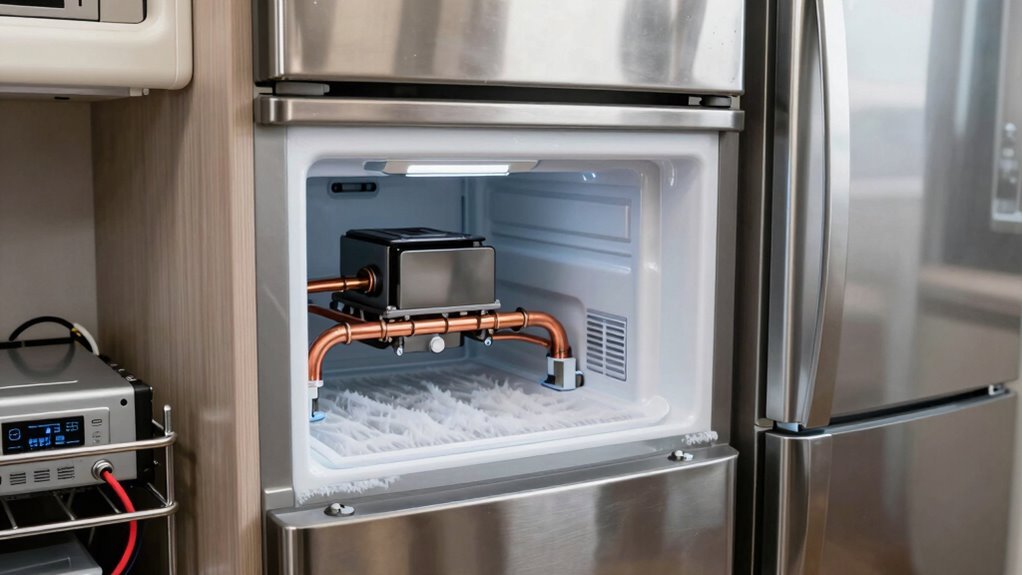
Think of your propane RV fridge as a clever chemistry show on repeat—no moving parts, no noisy compressor, just smart science keeping your drinks cold and your food fresh.
You fire up the propane, heating a mix of water and ammonia until it boils, while insulation keeps the heat right where it’s needed.
The ammonia escapes as gas, leaving water behind, and zooms up to the condenser.
There, it cools down and becomes liquid again—like magic, but better.
That liquid sneaks into the evaporator, meets hydrogen gas, and poof! It evaporates, sucking heat from inside your fridge.
Freezer gets icy, drinks chill, snacks stay safe.
The gas duo floats up to the absorber, splits, and ammonia heads back to start all over.
No moving parts, no noise—just quiet, reliable coolness.
It’s not a fridge; it’s a science project that *actually* works!
This entire process depends on gravity-driven circulation, so the fridge must be level during operation to function properly and avoid long-term damage.
How Electric RV Fridges Work
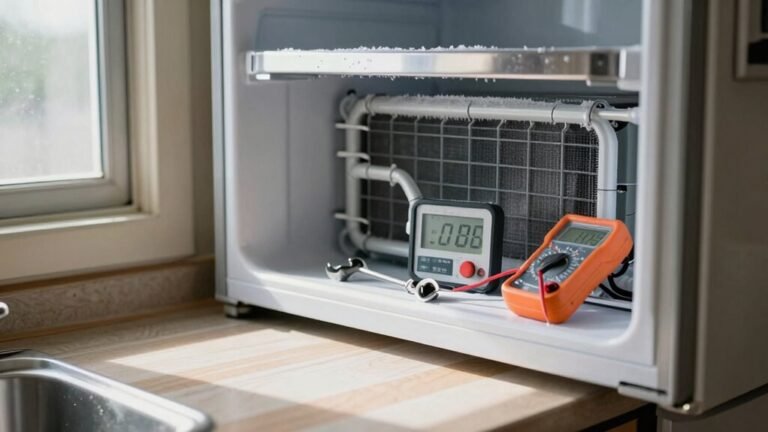
Ever wonder how your electric RV fridge keeps things cold without a lick of flame? You’re using electricity to heat things up—yes, really! Plugged into shore power or running off your battery, an electric heating element warms the ammonia-water mix in the boiler.
That heat sends ammonia vapor soaring to the condenser, where it cools down and becomes liquid.
Then, it zips through an expansion valve, chilling hard before hitting the evaporator. There, it soaks up warm air from inside your fridge, cooling your drinks and snacks like magic.
Hydrogen helps it evaporate super fast—even at crazy low temps.
Some models use compressors like your home fridge, running smoothly on 12V while you drive.
Controls keep everything in check, shutting things down if it gets too hot.
No flames, no fuss—just cool comfort at the flip of a switch. Neat, right?
These systems rely on absorption technology for flame-free cooling.
Cooling Performance and Efficiency Compared
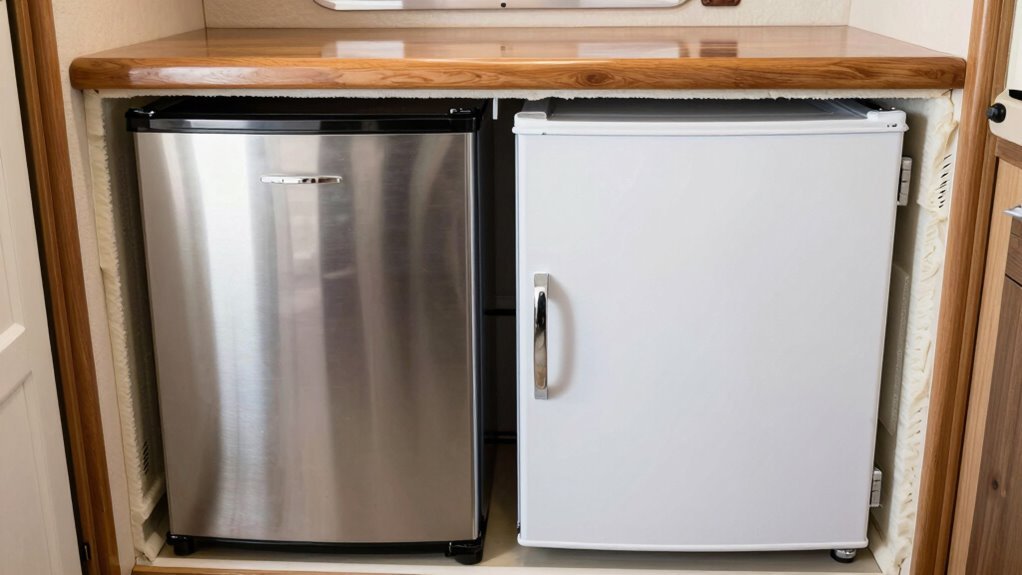
So, how does your fridge stack up when the heat is on?
If you’re using a 12-volt electric model, you’re golden—cooling down fast and holding steady at 37°F, even in 100°F blazing heat.
Propane fridges, though, start sweating when it’s hot outside, losing cooling mojo as temperatures climb.
Electric compressors don’t just win on power—they’re quicker too, chilling your drinks in no time, while propane units often need a 24-hour cooldown before you can even pack your snacks.
No pre-cooling? No problem with electric.
It’s ready when you are, perfect for those “let’s go!” weekend escapes.
Plus, electric fridges sip power smarter, especially off-grid, so your batteries last longer.
In hot climates or spontaneous adventures, electric doesn’t just keep up—it outshines.
Your ice cream stays solid, and your coolness? Well, that’s guaranteed.
More consistent cooling means electric models maintain stable temperatures without relying on external conditions.
Energy Source Availability and Reliability
How do you keep your fridge running when the nearest power outlet feels like a distant memory?
You’ll love how propane fridges run anywhere, anytime—just hook up a tank and you’re good, no cords or solar panels needed.
But what if you’re miles from the nearest refill station? That’s where electric 12V compressor fridges shine, sipping power from your lithium batteries or solar setup like a smoothie on a hot day. They keep running even when the grid’s a fantasy.
Sure, propane gives you fuel flexibility with AC, DC, or gas, but modern electric models thrive on solar, generators, or shore power without missing a beat. Propane wins in remote simplicity, but electric offers smarter, more reliable energy use—especially as battery tech gets better. You’ve got options, and that’s the real power move.
Maintenance and Long-Term Durability
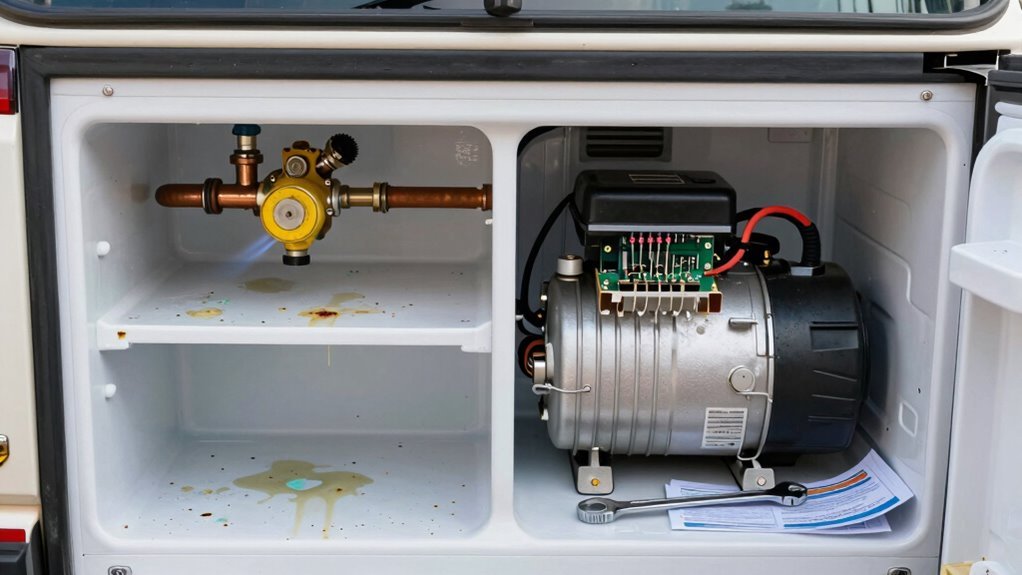
What keeps your RV fridge going strong after years of bumpy roads and wild adventures? You do—by staying on top of simple, smart care.
Clean the interior and door seals every few months, wipe down the exterior with soapy water, and clear dust, bugs, and leaves from vents and exhausts to keep airflow smooth.
Check door gaskets monthly for cracks—they’re temperature heroes!
Keep your rig within 3° of level when running on propane; otherwise, that tiny flame’s all wonky, which can damage the system over time.
Defrost regularly to avoid ice glaciers inside, catch the meltwater like a pro, then let it air-dry.
Replacing the propane regulator every decade-plus helps, too.
Run electric mode occasionally—even fridges like a change!
Tackle burner cleaning through the access panel or call a pro if cooling quits.
With love and light upkeep, your chill buddy will keep your snacks cold for years.
After all, no one wants warm soda on a hot trail day!
Safety Considerations and Installation Tips
Ever wonder what keeps your snacks cold without turning your RV into a science experiment?
Electric 12V fridges have your back—no gas, no flames, no worries.
They’re safer on the road, run smoothly over bumps, and won’t explode your weekend with a leak.
Since they use batteries (and love solar power), there’s no need for ventilation or dealing with fussy propane lines.
Just wire it right, size your battery well, and you’re golden.
Propane fridges? They work, but come with risks—leaks, sparks, and strict leveling rules.
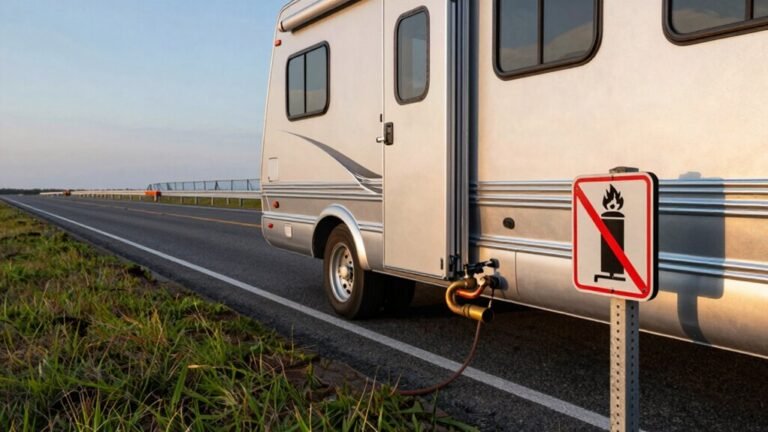
Plus, running them while driving is a big no-no fire-wise.
Installation needs gas lines, vents, and careful setup.
Bottom line: go electric for peace of mind, fewer hazards, and cooler vibes—literally.
Frequently Asked Questions
Can I Convert My Electric Fridge to Propane?
You can’t just flip a switch and turn your electric fridge into a propane one—sorry, no magic here!
But you *can* swap it out for a two-way absorption model that runs on both.
You’ll run copper lines, tap into your propane system, and vent it right.
It’s doable, kinda fun, and costs around $100.
Just don’t forget the s’mores—your new setup’s gonna earn its keep!
Are Propane Fridges Louder Than Electric Ones?
No, propane fridges aren’t louder—they’re actually quieter than electric ones, averaging around 45 decibels, about as loud as a whisper.
You’ll hear soft gurgles or faint pops, like a tiny science experiment brewing.
Electric models hum and click, sometimes sounding like a lawnmower on standby.
If you’re a light sleeper, propane’s near-silent charm might just win you over—with bonus points for not startling you awake!
Do Electric Fridges Work While Driving?
Yes, your electric fridge absolutely works while driving — it’s like a loyal co-pilot keeping your snacks cold!
Powered by your vehicle’s alternator charging the battery, 12V fridges run smoothly on the go.
Since they’re built for DC power, they sip energy efficiently, especially when you keep the door shut.
Just keep your battery’s healthy and you’ll cruise cool, literally.
No propane fumes, no fuss — just chill, happy travels!
How Much Propane Does an RV Fridge Use Daily?
You’re burning through propane?
Small fridges sip it—just 0.6 pounds a day.
Medium ones gulp 0.75 gallons, while large models drain a 20-pound tank in a week when it’s hot out.
Your fridge runs, it runs, it runs—no breaks mean more fuel used.
Hot days, low settings, and big units all spike use.
Check levels often, or you’ll face warm milk—yuck!
Stay stocked, stay cool.
Can I Run a Propane Fridge Indoors Safely?
You can run a propane fridge indoors, but only if you play it smart and safe.
You’ve gotta have solid ventilation—open a window or use vents, or that sneaky carbon monoxide could crash your fun.
Check for leaks with soapy water, keep flames away from sparks, and install detectors.
Think of it like camping indoors: cozy, but respect the fire.
When in doubt, get a pro to peek at your setup—better safe than sorry!
Conclusion
You’ve got options, and hey, it’s not the Wild West anymore—no need to hitch a wagon to decide! Propane fridges work off-grid like champs, while electric ones chill quietly, no flame involved. Think efficiency, safety, and what powers your adventures. Whether you’re sipping cocoa in the mountains or parked at a campground with Wi-Fi and dreams, pick the fridge that fits your ride. It’s your kitchen, your rules!
References
- https://artofrv.com/all-you-need-to-know-about-rv-propane-refrigerators/
- https://www.youtube.com/watch?v=32pPaso0k6E
- https://www.escapees.com/blog/rv-refrigerator-part-2-lp-gas-operation
- https://www.youtube.com/watch?v=cy1W-uWvR9U
- https://www.ferrellgas.com/tank-talk/blog-articles/how-propane-powers-refrigeration/
- https://www.youtube.com/watch?v=npINrvUyiCc
- https://www.roamly.com/learning-center/how-does-an-rv-refrigerator-work
- https://www.rvrepairclub.com/video/how-the-120-volt-operation-runs-your-rv-refrigerator-007857
- https://www.escapees.com/blog/rv-refrigerator-part-3-electric-operation
- https://www.youtube.com/watch?v=dn6MNp3FMtI