Propane Restrictions on Roads: What RVers Should Know
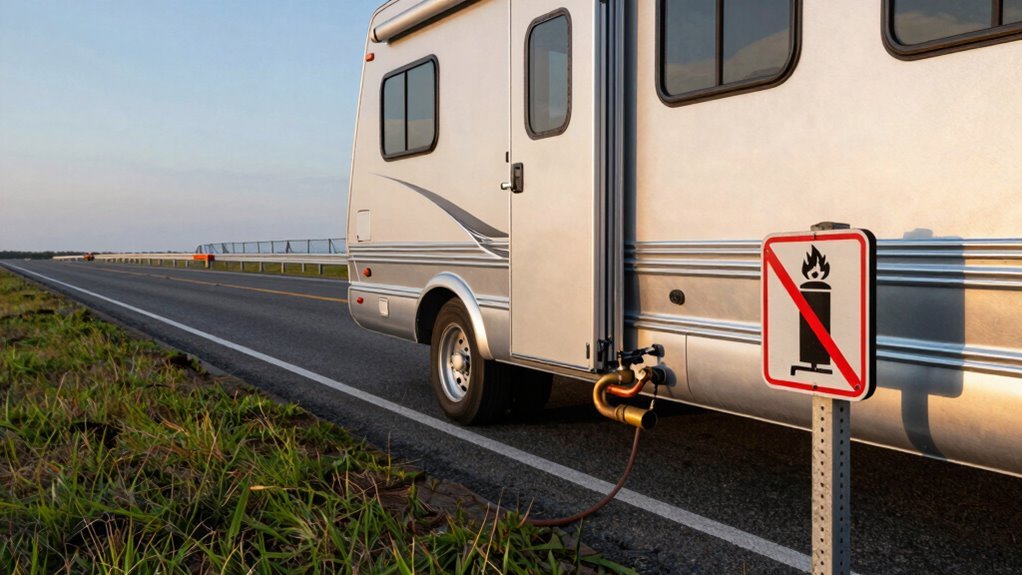
Keep your propane legal and your trips stress-free by knowing the rules. Propane restrictions on roads vary by location, but being informed helps RVers avoid fines and hazards.
The feds impose an 18.3¢ tax per gallon equivalent, though your RV’s built-in tank is typically exempt from stricter regulations. Most states allow up to 90 pounds of propane in an SUV, provided tanks are securely fastened—never use bungee cords.
Avoid Boston and NYC tunnels, as they ban propane outright. Always shut off propane valves when crossing bridges like the Chesapeake Bay Bridge-Tunnel for safety and compliance. If your rig meets these propane restrictions on roads, you’re set for a smooth adventure.
Understanding Federal Propane Regulations for RVs
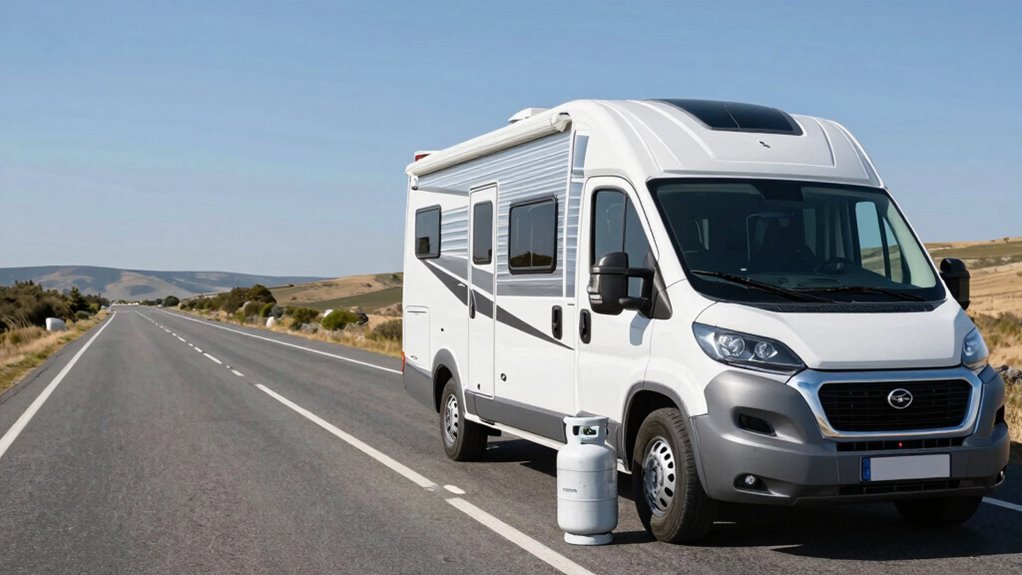
While you’re out chasing sunsets in your RV, it’s worth knowing that Uncle Sam keeps a close eye on how you use your propane—even if it does power your stove, fridge, and that oh-so-necessary morning coffee maker.
You’re paying an 18.3¢ federal excise tax per gallon equivalent, no matter where you roll, so factor that into your fuel budget.
Good news? Your RV’s attached propane tank is seen as part of the vehicle, so it skips the heavy DOT red tape.
Just keep the valve shut when loading onto a ferry and you’re golden.
Portable tanks, though? They’ve got rules—strap ‘em down tight, never use bungee cords, and don’t haul more than 90 pounds without a permit.
And while propane-powered RVs used to zip through HOV lanes, that perk’s gone since 2025.
This tax is based on the Alternative Fuel Excise Tax rate for propane measured in gasoline gallon equivalents.
State-Specific Rules That Impact Propane Transport
Ever wonder why your buddy won’t let you toss a couple of propane tanks in the back of his sedan? It’s not just because he’s picky—it’s the rules.
In enclosed vehicles like cars or SUVs, you’re limited to four cylinders, up to 90 pounds total, with none heavier than 45 pounds.
They’ve gotta stay upright and secured—no flopping around like a game of propane Jenga!
But if you’ve got an open pickup or trailer, you can haul up to 1,000 pounds, thanks to better airflow.
Just strap them down properly—bungees won’t cut it.
And in Virginia, bridge-tunnels allow RVs with propane, but cap it at two 45-pounders or 200 pounds total, and make sure everything’s shut tight.
It’s not just about staying legal—it’s about rolling safely and stress-free.
After all, nobody wants a roadside surprise from a rogue tank!
This exemption means that propane cylinders attached to your RV are treated as integral to the recreational vehicle and not subject to federal financial responsibility rules under Part 387.
Tunnel Restrictions and Mountain Pass Regulations
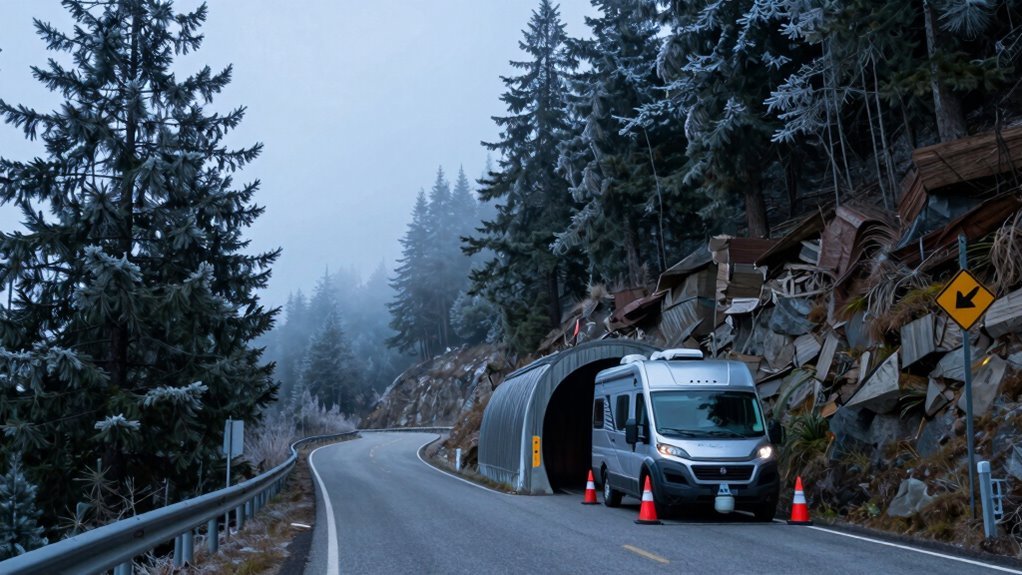
You’ve got your propane secured, your route mapped, and you’re ready to roll—just don’t hit a tunnel without checking the rules first.
Some tunnels let you pass with closed valves, like Chesapeake Bay, where you just show your tank’s off.
But others, like Boston’s Sumner and Callahan, say no propane, period—no exceptions, not even for that tiny backup tank.
In New York, the Holland and Lincoln Tunnels slam the door on LP gas altogether.
Maryland’s Fort McHenry? Only 10-pound containers, max ten of ’em.
And watch your size—Baltimore’s Harbor Tunnel bans tall or wide propane haulers.
Virginia’s crossings are friendlier, allowing bigger tanks if they’re approved and tagged.
Texas? Washburn Tunnel allows just two 7.5-gallon containers.
Mountain passes usually don’t sweat propane, but tunnels? They’ve got standards.
A surprise inspection or detour beats a fine—or worse, getting turned around mid-journey.
Stay sharp, stay legal, and keep rolling smoothly.
The Chesapeake Bay Bridge-Tunnel handles over 17 miles of bridge and tunnel system, requiring propane safety checks before entry.
Bridge and Urban Area Propane Limits
What’s your propane game plan when the road takes you over a bridge or straight into a city’s heart?
You’ll want to shut off your tanks before hitting urban hotspots or crossing tunnels—seriously, Boston bans propane in its harbor tunnels, and New York’s Holland and Lincoln Tunnels won’t let you through with it on.
Texas’ Washburn Tunnel? Only two small tanks allowed, valve closed tight.
In Virginia, the big bridge-tunnels welcome RVs with approved tanks—just cap it at two and keep everything secure.
Canada’s chill: up to 100 pounds total.
Quebec? Two 12-gallon bottles max.
Cities like Boston and NYC are strict, so always check local DOT rules—they’re sneaky about updates.
When in doubt, turn it off, lock it down, and keep your adventure stress-free.
Think of it like airport security for your RV: no propane, no problem!
Types of Propane Tanks and Legal Compliance
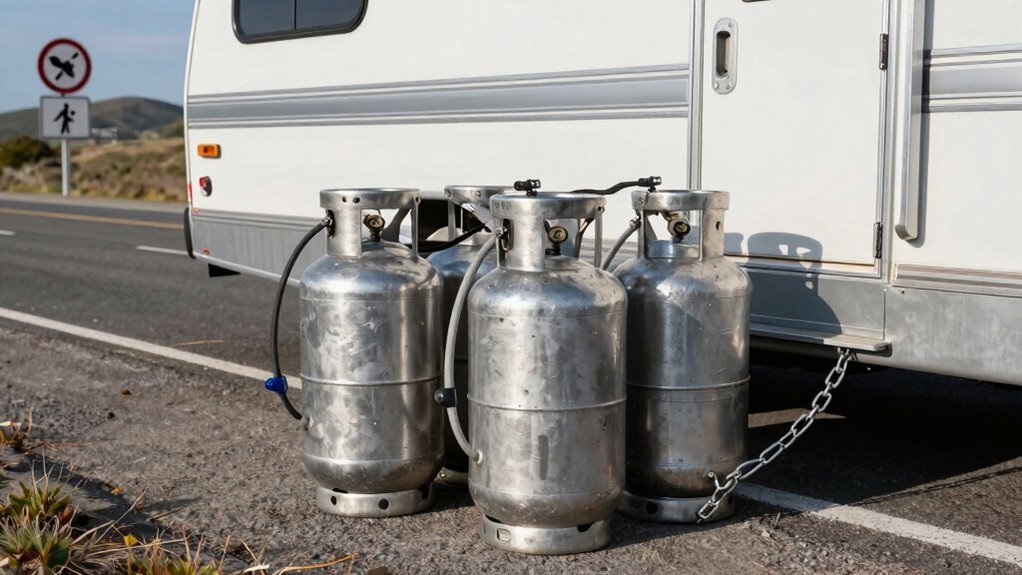
When city streets and tunnels tell you to shut it off, it’s good to know exactly what kind of propane setup you’re working with—because not all tanks play by the same rules.
If you’re in a motorhome, you likely have an ASME tank—permanently mounted, horizontal, and tough as nails, with no DOT requalification needed.
Sweet, right?
But if you’re towing a travel trailer or fifth wheel, you’re probably rocking DOT cylinders: portable, vertical, and ready for a refill at the nearest exchange.
They come in 20-, 30-, or even 40-pound sizes, each stamped with a date—check it!
A 10- or 12-year shelf life kicks in, then every 5 years after.
ASME tanks don’t age like wine, but they do need visual checkups.
Either way, you’ve got options—and knowing your tank type keeps you legal, safe, and grill-ready wherever the road takes you.
Weigh Stations and Roadside Inspections
Ever wonder if your RV needs to pull into a weigh station during your cross-country adventure? You’re not hauling freight, but rules still apply.
Here’s what you need to know:
- Check your weight: Over 10,000 pounds GVWR? Many states want you to stop—especially in Arkansas, Nevada, or Wisconsin.
- Know your status: Private RVs under limit usually bypass, but business-use rigs—like rentals—must stop, no excuses.
- Play it smart: Use CAT scales at truck stops to weigh your loaded RV (full propane, water, and all) and avoid surprises.
- Obey the officer: Even in “discretion” states like Texas or Illinois, if a cop waves you over, play nice and follow directions.
Skip a required stop, and you could snag a $500 ticket—yikes!
When in doubt, weigh it out and roll with confidence.
Planning Your Route Around Propane Bans
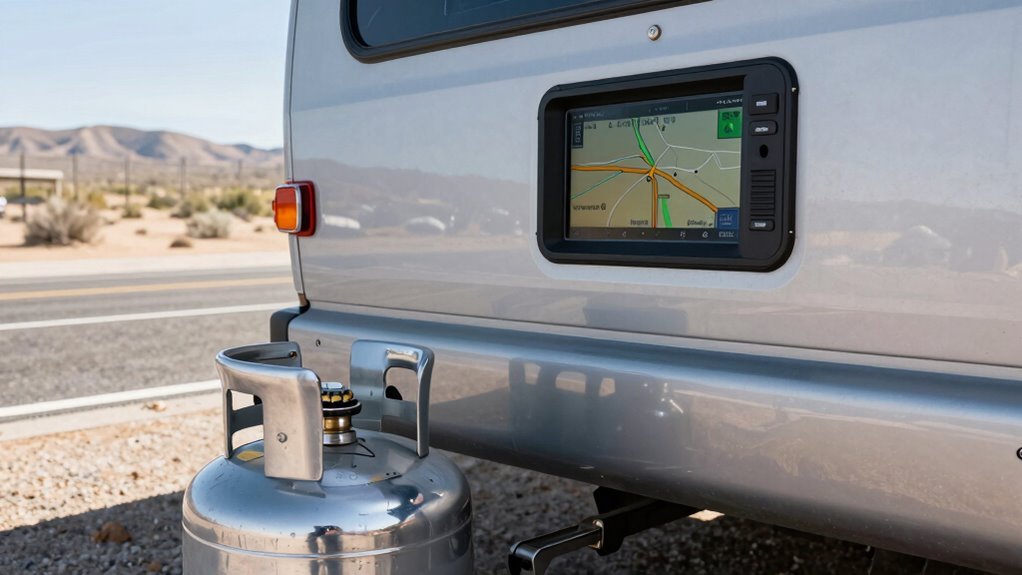
Thinking about cruising into a city with your propane tank in tow, only to hit a tunnel ban and suddenly feel like you’re in a real-life maze with no exit?
You’re not alone—cities like Boston, Baltimore, New York, and Houston slam the brakes on propane, no matter if your tank’s full, empty, or shut tight.
RVs aren’t exempt, and in Texas, the Washburn Tunnel says no to propane and limits containers—even two 7.5-gallon ones.
Boston bans it in harbor and Sumner tunnels, while New York blocks propane in the Holland, Lincoln, and on lower GW Bridge levels.
Lucky for you, smart routing apps like Roadtrippers plan ahead, dodging these no-go zones like a pro.
They check height, weight, and propane restrictions together, so you don’t end up trapped at a tunnel mouth.
Trust the tech, take that Key Bridge detour, and keep rolling—your adventure stays smooth, safe, and surprise-free!
Safe Handling and Storage While Traveling
While you’re busy chasing sunsets and ticking destinations off your list, don’t let your propane tank turn into a backseat daredevil—keep it upright, locked in place, and shut tight before you hit the road.
Play it safe and smart with these four must-dos:
- Secure it snugly – Use stabilizers or crates so your tank won’t dance around on bumpy backroads.
- Shut it off completely – Turn valves to OFF, and don’t run the fridge or stove while rolling. No flame bro, no game!
- Keep it cool and legal – Store away from heat, sun, and living spaces, and never exceed 90 lbs in your SUV.
- Sniff test = stop test – If you smell gas or hear alarms, pull over, exit fast, and call for help.
Treat your tank right, and it’ll keep your coffee hot and pancakes flipping—without the drama.
Frequently Asked Questions
Can I Refill Propane at Gas Stations in Restricted Zones?
You can’t refill propane at most gas stations in restricted zones—those little roadside pumps? Nah, they’re not for DIY refills.
It’s illegal and unsafe to use adapters, so skip the MacGyver moves.
But hey, good news: many stations offer refill services done by pros, or grab a swap from hardware stores.
Just check for OPD valves and use approved spots.
Stay safe, save the adventures for the campsite, not the gas pump circus!
Are Propane Restrictions Enforced During Emergencies or Breakdowns?
Yeah, they still enforce propane restrictions even during emergencies—because nothing says “urgent crisis” like a fiery tunnel explosion.
You’d think a breakdown grants you rebel status, but nope, the rules don’t care if you’re stranded or heroic.
Cops won’t laugh when you plead, “But I broke down cutely!”
Stay smart, stay legal, and reroute like a pro.
Safety’s no joke, even when you’re waving hazard lights dramatically.
Do Propane Rules Apply to Empty Tanks the Same as Full Ones?
Yeah, empty tanks still count just like full ones—rules don’t play favorites!
You’ve gotta keep them upright, secured, and in line with weight and size limits, even if they’re totally drained.
Think of them like ghosts: invisible gas, but still causing trouble if you ignore them.
Play it safe, follow DOT regs, and you’ll skip the headaches (and tickets!) down the road.
Safety never takes a day off!
How Do I Report a Propane-Related Road Hazard or Violation?
You spot a propane hazard on the road?
Don’t wait—call 911 right away, especially if there’s a leak, fire, or crash.
It just so happens most folks don’t realize how fast things can go sideways with gas.
Then, ring the Hazardous Materials Info Center at 800-467-4922 for backup smarts.
You’ve got 72 hours to file a written report, so snap photos, jot notes, and keep calm—safety’s got your back!
Are There Exceptions for Medical Use of Propane in RVS?
No, there aren’t special exceptions for medical propane in RVs—you’ve gotta follow the same rules as everyone else.
But don’t sweat it!
As long as your tank’s secure, vented, and outside the cabin, you’re good.
Use ASME tanks when you can—they’re built tough.
And hey, at least your gear won’t rattle around like last week’s snacks.
Safety first, adventure always!
Conclusion
So, you’ve checked the regs, packed smart, and planned your route—now you’re ready to roam free, propane in tow. But wait, did you really think a little tank rule could stop your next adventure? Think again! With a map in hand and a smile on your face, you’re all set to explore. Just keep it safe, stay savvy, and remember: the open road loves a clever RVer. Now, what’s next on your journey?
References
- https://afdc.energy.gov/fuels/laws/LPG?state=US
- https://www.fmcsa.dot.gov/regulations/travel-trailer-or-motor-home-has-propane-cylinders-attached-subject-part-387-fmcsrs
- https://www.law.cornell.edu/cfr/text/49/176.90
- https://www.epa.gov/regulations-emissions-vehicles-and-engines/regulations-emissions-recreational-vehicles
- https://www.npga.org/wp-content/uploads/2022/05/NPGA-Container-Law-White-Paper-Jan.-2012.pdf
- https://phillipsoilandgas.com/about/blog/propane-and-your-rv-what-you-need-know/
- https://www.youtube.com/watch?v=kp9sRQNqcpI
- https://faracerv.com/blog/importance-rv-propane-tank-safety/
- https://www.hazmatschool.com/blog/how-to-safely-transport-propane-tanks/
- https://triptik.aaa.com/help/pdf/RV-Bridge-Ferry-Tunnel-Guide-3-26-20.pdf