Tips for Managing Power Consumption in an RV
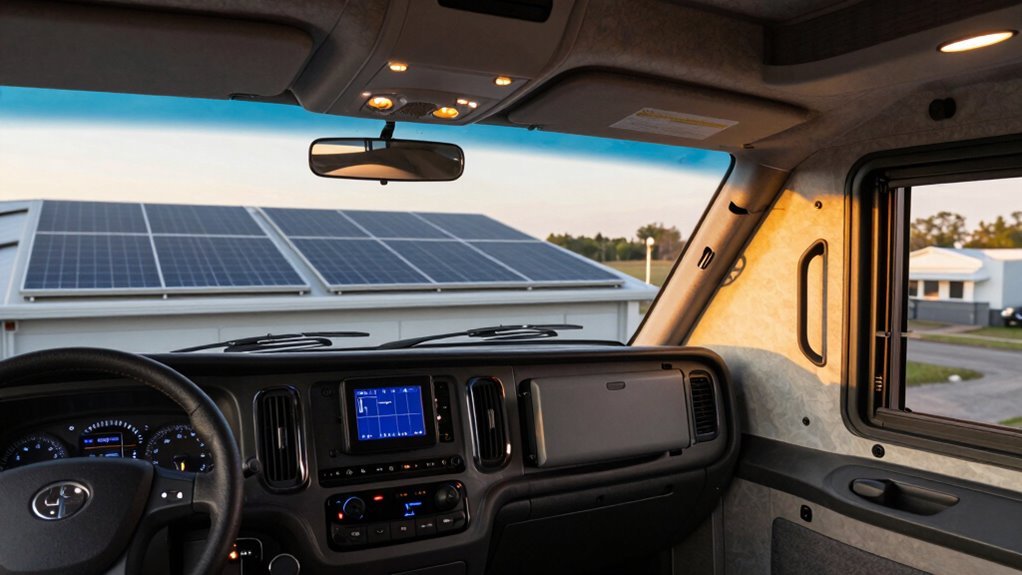
Swap out old bulbs for LEDs and cut your lighting load from a whopping 38.4 amps down to just 2.8—your fridge will thank you. This simple switch is one of the most effective ways to manage power consumption in an RV.
Keep that fridge at 41°F, run it on 12V, and let propane do the heavy cooking. Timing high-draw appliances like the microwave and AC helps avoid tripping circuits and keeps power consumption in check.
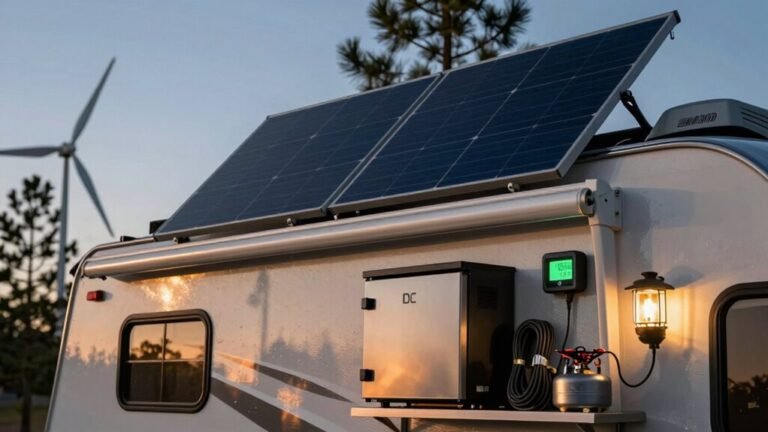
Ride the solar sweet spot midday to power up, and invest in a smart battery monitor to track your usage efficiently. Keep solar panels clean and angled properly to maximize energy intake and maintain optimal power consumption in an RV.
Switch to Energy-Efficient LED Lighting
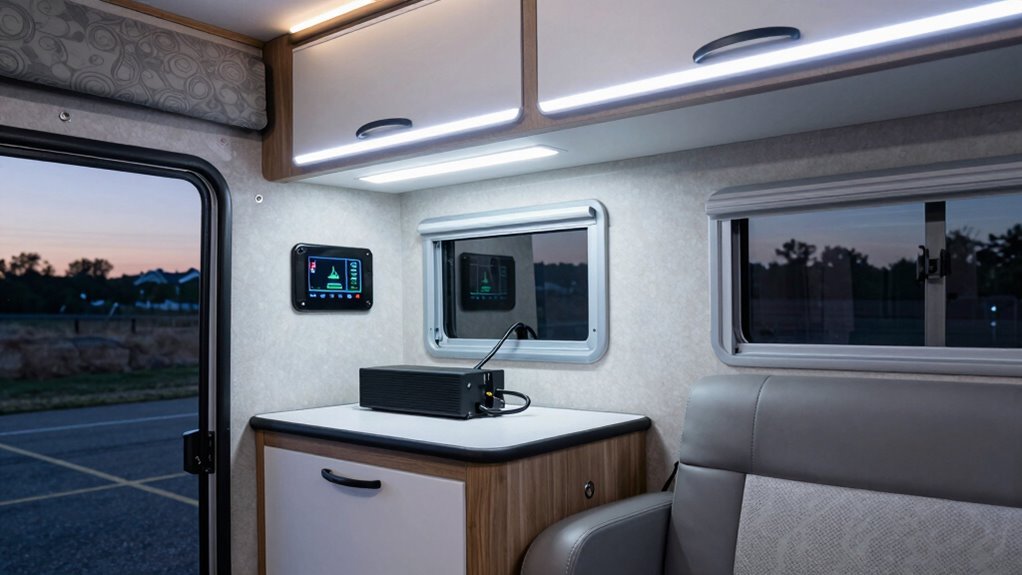
Flip on the lights—and your savings—with a simple switch to LED bulbs in your RV.
You’ll cut energy use by up to 90%, turning 38.4 amps of drain into just 2.8—hello, extra battery life!
LEDs sip power instead of guzzling it, letting you roam off-grid longer without hookups or generators.
They also run way cooler (80°F vs. 200°F), so no more burning your hand changing a dome light mid-snack.
Plus, your A/C won’t work overtime fighting heat from bulbs.
Bright, crisp lighting? Check.
UV-free, so your curtains won’t fade? Check.
And with LEDs lasting 25 times longer, you’ll swap bulbs less often—save money *and* avoid late-night hardware store runs.
One quick upgrade gives you light, comfort, and freedom—all without breaking a sweat.
Now that’s smart camping!
72% wattage reduction compared to incandescent bulbs makes LED lighting a highly efficient choice for RVs.
Optimize Refrigerator Usage and Settings
You’ve already slashed your power bill on the road by switching to LED lights, so why stop there?
Let’s talk fridge smarts—your coolest power hog.
Set it to 41°F after pre-cooling, and it’ll sip just 44.8 Ah daily on 12V in mild weather.
That’s way better than a residential model guzzling 80 Ah overnight!
Opt for a quiet compressor fridge; they’re way more efficient than old-school absorption types and won’t drain your battery by sunrise.
Your RV fridge’s efficiency also depends on ambient temperature and usage patterns, but modern units typically use 100–400 watts while running, making them far less taxing on solar and battery systems.
Avoid letting your lithium dip below 50%—nobody likes a dead battery hangover.
And seriously, stop playing fridge roulette with the door.
Every peek adds up.
Stick to propane or AC when parked, and let solar help shoulder the load.
With smarter settings and a little discipline (okay, and less midnight snack hunting), you’ll keep things cold and power in the bank—literally.
Chill out, not burn out.
Time Your Appliance Use Strategically
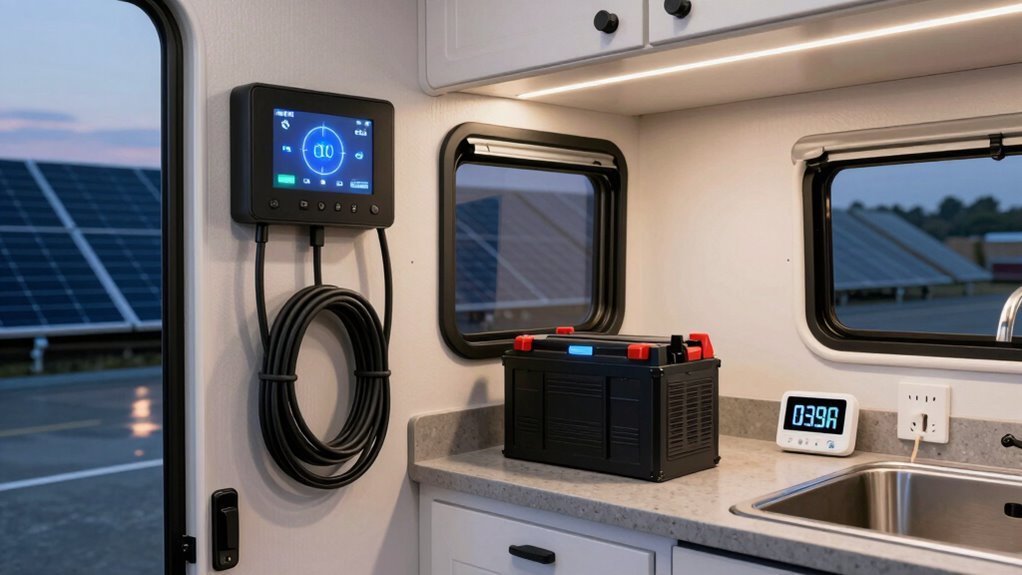
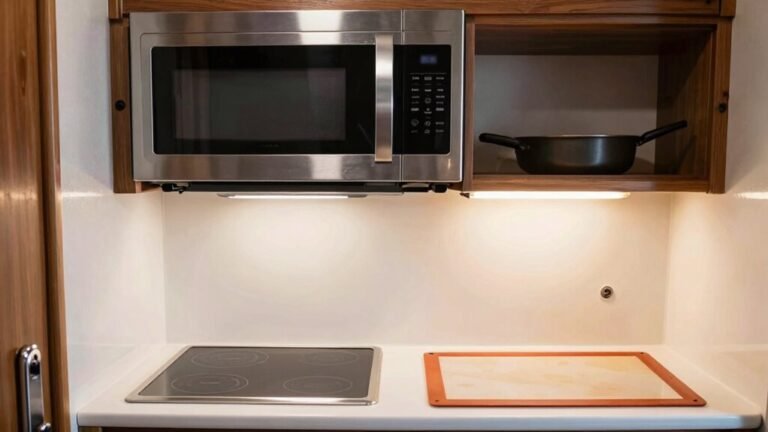
How’s your game plan for juggling that microwave and AC without tripping a breaker?
Smart timing keeps your power smooth and stress-free.
Don’t boil water while the AC’s blasting—spread out those power-hungry moments like a pro.
Peak usage determines inverter capacity, and exceeding it can lead to overload, so managing when high-wattage appliances run is crucial. Peak usage determines inverter capacity
Here’s how to stay cool, cooked, and in control:
- Flip the script on time – Run the microwave at dawn or dusk when the AC isn’t working overtime.
- Stagger the heavy hitters – Use the microwave, AC, and water heater one at a time, especially on 30-amp service.
- Ride the solar wave – Charge devices and run fans midday when your panels are pumping max power.
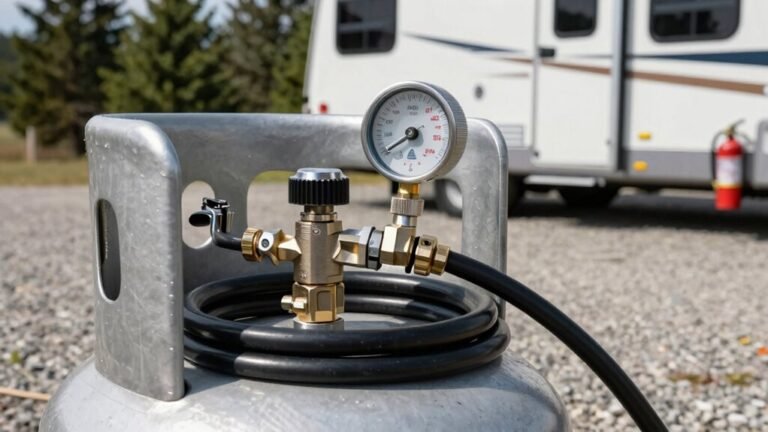
- Embrace the propane life – Fire up the stove or furnace on propane so your electric system doesn’t freak out.
Small shifts, big savings—your rig (and wallet) will thank you!
Monitor Battery Levels With a Power Monitor
Now that you’ve got your appliance timing down to a science—microwave in the morning, AC in the afternoon, and the propane stove saving the day—it’s time to get up close and personal with your RV’s real power MVP: your battery.
A power monitor is your secret weapon, telling you exactly how much juice you’ve got left.
It tracks voltage, current, and amp-hours, then spits out your battery’s percentage and how long it’ll last—no more guessing games.
With ±1% accuracy, it works flawlessly on lithium, AGM, or lead-acid batteries.
You’ll get alerts when power runs low, plus Bluetooth lets you check stats from your phone—how cool is that?
It even remembers data if the power cuts out.
Think of it as your battery’s best friend (and your own personal energy sidekick).
Sweet, smart, and totally worth the install.
Maximize Solar Panel Efficiency
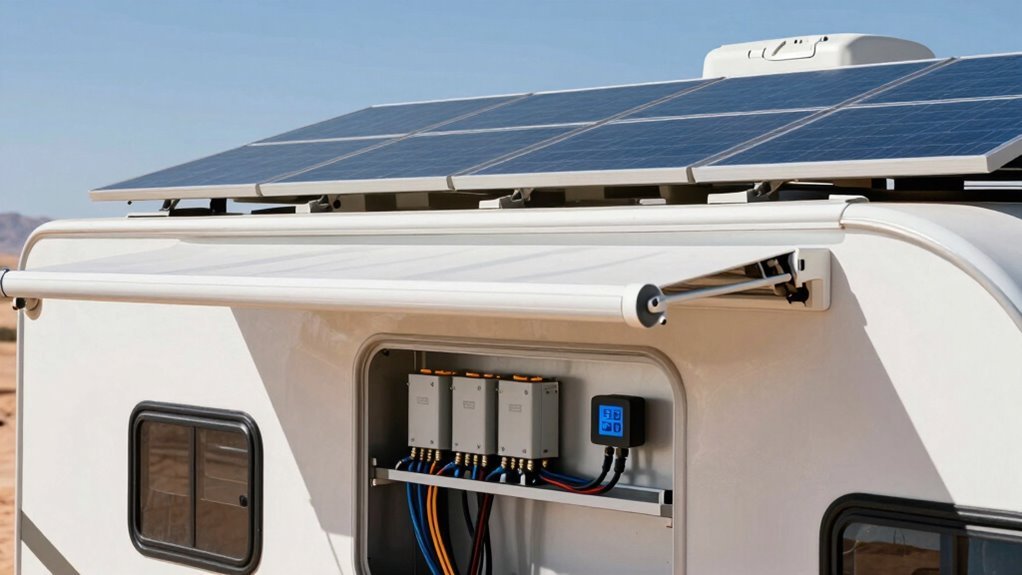
Ever wonder why your solar panels sometimes feel like they’re napping when the sun’s blazing overhead? You can wake them up with a few smart tweaks!
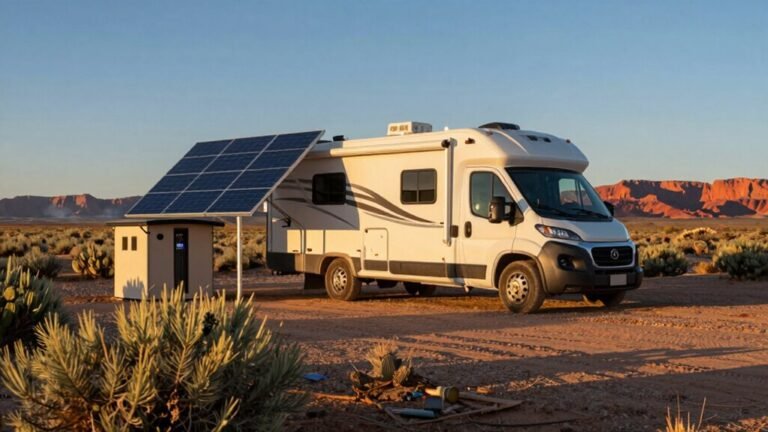
Sunlight is free, but shade from vents or AC units cuts power fast. Keep those panels clean, cool, and happily soaking up rays. Here’s how to get every drop of sunshine working for you:
- Angle for advantage – Tilt panels or park smart to catch more sun, especially in winter.
- Shade? No way! – Even a little shadow from a vent or branch can slash output. Keep it 100% sunny.
- Cool it down – Hot panels lose steam. Use Z-brackets for airflow and avoid midday meltdowns.
- Clean & check – Wipe off grime, inspect wires, and hug your inverter (okay, just ventilate it).
Your solar system’s got serious potential—help it shine like the sun!
Frequently Asked Questions
How Often Should I Check My Rv’s Electrical Connections?
You should check your RV’s electrical connections before every trip—you’re smarter than a squirrel before a storm!
Give terminals and wires a quick once-over for looseness or fraying.
Do a thorough inspection each season, especially in spring.
If something smells like burnt toast or lights flicker like disco strobes, don’t wait—fix it now.
Stay current, stay safe, and keep the volts on your side!
Can I Use a Portable Generator With Solar Panels?
You can absolutely use a portable generator with solar panels—it’s like giving your RV a power tag team!
While solar quietly charges during the day, your portable generator jumps in when clouds roll in or energy demands spike.
They play well together, especially if you’re off-grid.
Just make sure connections match, and you’ll have backup energy ready when the sun takes a nap.
Smart, simple, and seriously reliable!
Are There Power-Saving Tips for RV Heating Systems?
You bet there are power-saving tips for RV heating systems, and they’re easier than wrestling with a tangled hose!
Use your space heater only when needed, not 24/7.
Close off unused rooms, set your thermostat lower at night, and wear cozy socks—fashion statement and efficiency win!
Run the hybrid water heater on gas, and let the sun warm your rig during the day.
Small tweaks save serious juice.
What’s the Best Way to Store Batteries When Not in Use?
You stash your batteries like buried treasure—cool, dry, and safe from the elements.
You keep them off concrete floors, in ventilated boxes, and out of the sun’s frying pan.
You charge them monthly, use smart chargers, and never let them die.
You treat them like old friends—visit often, keep them happy, and they’ll power your adventures for years, no drama, just smooth sailing.
Do Vent Fans Really Help Reduce AC Energy Use?
Yeah, vent fans really do cut down on AC energy use—no kidding!
You let them pull hot air out, and suddenly your AC isn’t working overtime.
They move air across the coils, help release heat, and boost airflow so your unit runs smoother.
Open vents + fans? That’s free cooling!
Plus, less humidity means your AC chills more efficiently. It’s like giving your AC a sidekick—smart, sneaky, and seriously power-saving. Win-win!
Conclusion
You’ve got this! Did you know switching to LED lights can cut your energy use by up to 80%? That’s like trading a gas-guzzler for a scooter. Use your fridge wisely, time your gadgets, and let your solar panels soak up the sunshine like lazy lizards on a rock. Keep an eye on that battery monitor, and you’ll stay powered without the panic. Happy rolling!
References
- https://roamingnelsons.com/led-lights/
- https://rvshare.com/blog/7-things-need-know-rv-led-lights/
- https://hitlights.com/blogs/premium-led-strip-lighting/energy-savings-environmental-impact-of-led-lights-vs-cfl-vs-halogen-vs-incandescent-hitlights
- https://www.ledlightingsupply.com/blog/led-lighting-statistics-to-know-in-2022
- https://www.energystar.gov/sites/default/files/asset/document/LBR_2017-LED-Takeover.pdf
- https://www.itc-us.com/news/rv-sustainability-led-benefits
- https://www.energy.gov/sites/default/files/2024-08/ssl-lmc2020_apr24.pdf
- https://www.armacostlighting.com/blogs/news/led-lights-rvs-boats
- https://www.renogy.com/blogs/home-backup/an-indepth-guide-how-many-watts-does-a-refrigerator-use
- http://www.beginningfromthismorning.com/refrigerator/