RV Fire Safety: Prevention and Extinguishers
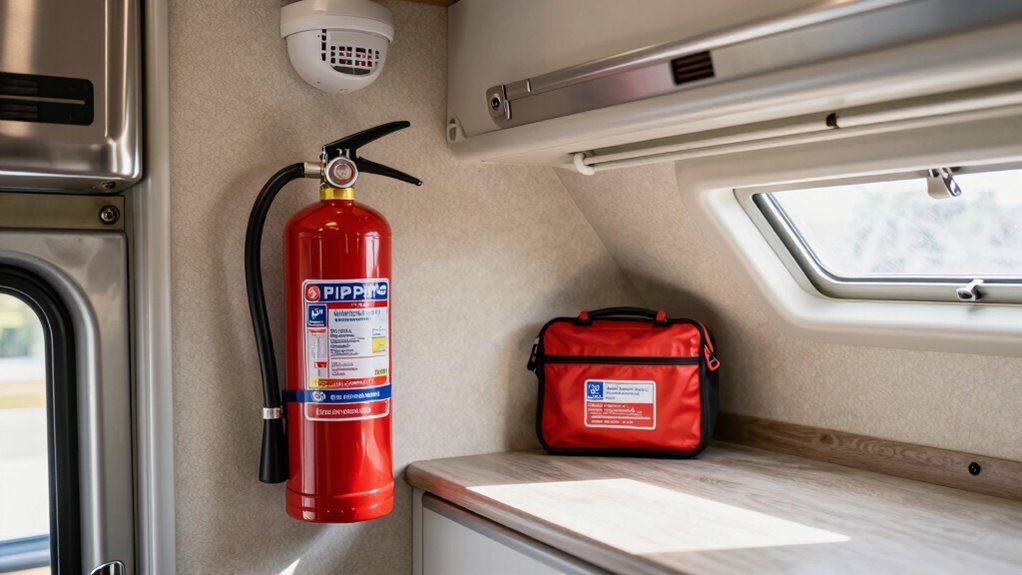
You’re in charge of keeping your home-on-wheels safe, so prioritize RV fire safety by checking electrical connections regularly. These can loosen from bumpy roads and create sparks that lead to fires.
Avoid using open flames for cooking while distracted or outside the vehicle—always stay nearby and keep a lid handy to smother potential flare-ups. Simple precautions can prevent dangerous situations before they start.
Install smoke and carbon monoxide (CO) detectors in recommended locations throughout your RV. Early warnings are critical for safe evacuation and response.
Stock an ABC fire extinguisher near the kitchen and a main exit for quick access. This essential tool is a must for effective RV fire safety.
If flames do appear, act fast—but stay calm and focused. With the right preparation, you can respond coolly and wisely, protecting your home-on-wheels and everyone in it.
Common Causes of RV Fires
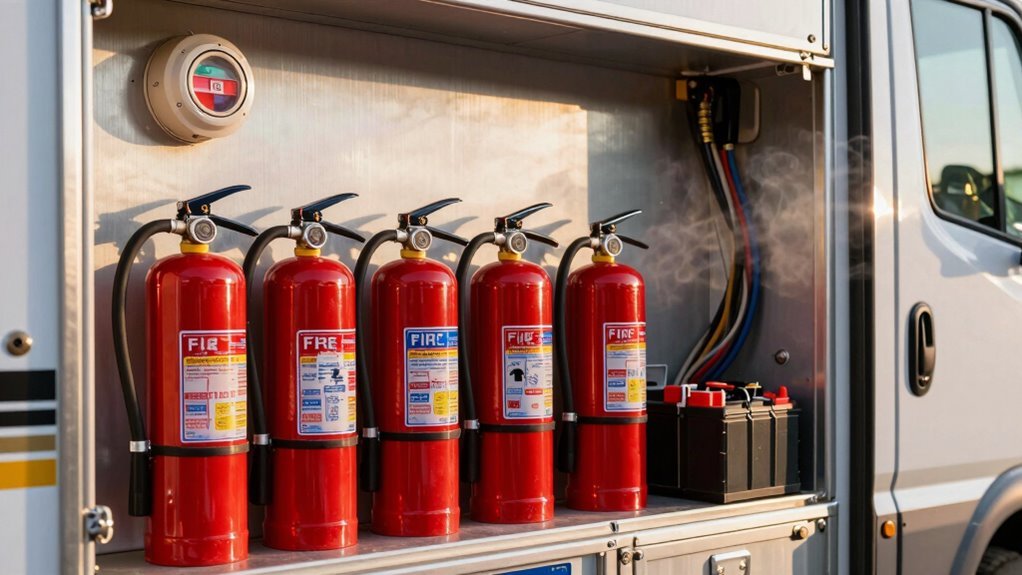
While you’re busy planning your next adventure on the open road, it’s easy to forget that some of the most common RV fires start from simple mistakes or overlooked details—but the good news is, most of them are totally preventable.
You mightn’t realize it, but loose electrical connections can heat up from road vibrations, so always tighten them before you roll.
Those 12-volt wires? Give ’em a quick once-over—shorts are sneaky fire starters.
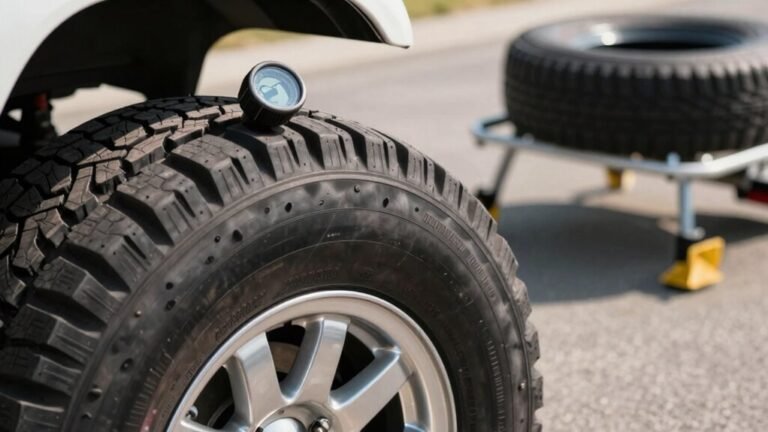
Dragging brakes or underinflated tires can overheat and go *poof*—literally—so check your wheels and brakes like you check your snack supply (because yes, both are essential).
And hey, we get it—cooking with the open window breeze is dreamy, but never walk away from a lit burner.
Oh, and that dry grass under your hot exhaust? It won’t thank you for a nap.
Treat your RV like a moody campfire: respect it, inspect it, and keep the fun *safe*, not smoky.
Most RV fires occur in not self-propelled units, so extra vigilance during storage and setup is key.
Installing Smoke and Carbon Monoxide Detectors
One smoke alarm and a carbon monoxide detector could be the unsung heroes of your next road trip, quietly standing guard while you’re busy flipping pancakes or chasing sunsets.
You’ve got to install them right—put smoke alarms within 12 inches of the ceiling, near sleeping areas, and at least a foot from lights to avoid glitches.
Since carbon monoxide rises, mount your CO detector high on the wall or right on the ceiling.
Use 12-volt models designed for RVs so they’ll work on battery or shore power—no surprise blackouts mid-drive.
For best protection, go dual-sensor: photoelectric and ionization tech in one.
And hey, your propane detector? That one goes low, near the floor—propane sinks, remember?
Test all detectors yearly, and don’t ride with decade-old alarms; replace ’em!
It’s like giving your RV a safety upgrade without the price tag.
Sweet dreams come easier when your tiny home on wheels’s got your back.
Legal requirements vary by region.
Safe Cooking Practices on the Road
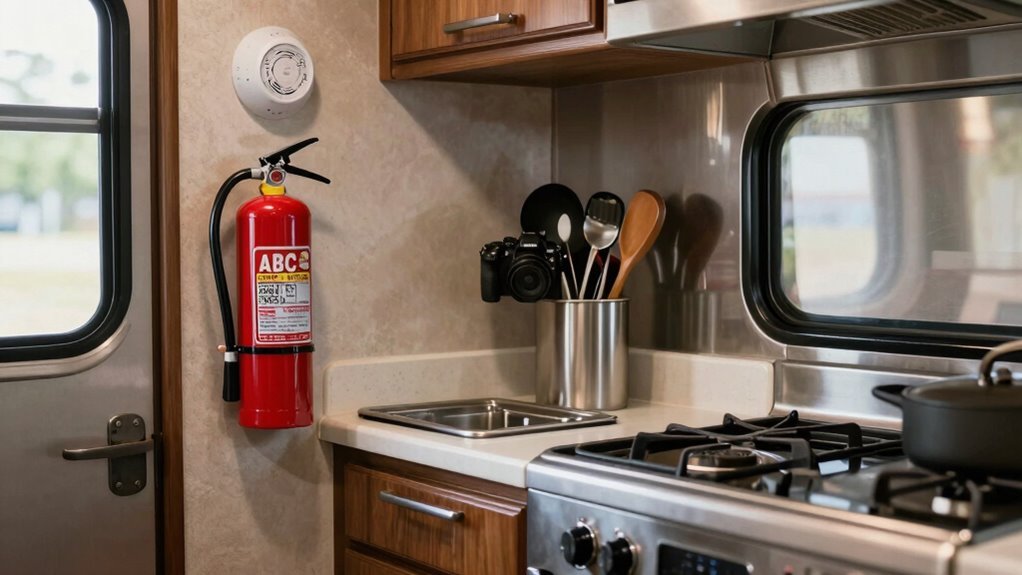
You’ve got your smoke and CO detectors humming safely in the background, so now let’s turn that peace of mind into something even tastier—dinner!
Plan meals ahead to dodge grocery panic and wasted snacks.
Stock up on familiar recipes—they’re way easier when you’re juggling pots in a tiny kitchen.
Pack smart with nesting pans, a trusty cast iron skillet, and just the basics—less clutter means less chaos.
Prep everything before you fire up the stove, and keep your space tidy (no one likes stepping on a rogue carrot).
Use lids to trap heat and keep bugs out, and always stay close—cooking solo in an RV means no sneaky screen-checking!
Try one-pot wonders or foil packets to save cleanup time.
Bring extra fuel, keep fires on safe surfaces, and serve fast—because let’s be honest, cold fries are a crime.
Choose ingredients that hold up in a cooler.
Electrical System Maintenance Tips
Ever wonder what keeps your lights bright and your phone charged off the grid?
It’s all about smart electrical system maintenance.
Check your batteries often—look for cracks, corrosion, or bulges, and clean terminals with a wire brush and baking soda mix.
Don’t forget to spray them with protector spray afterward—think of it as sunscreen for your battery!
Test voltage regularly and recharge before it dips too low.
Keep lead-acid batteries topped up with distilled water, and never drain them completely.
Tighten loose connections at the terminals, breakers, and fuse boxes—they loosen up like socks in the wash.
Clean corroded spots and use dielectric grease to keep trouble away.
Inspect your shore power cord for burns or frays, always use a surge protector, and check GFCI outlets monthly.
A few simple habits keep your RV’s power safe, strong, and ready for adventure—no shocking surprises included!
Propane System Safety Checks
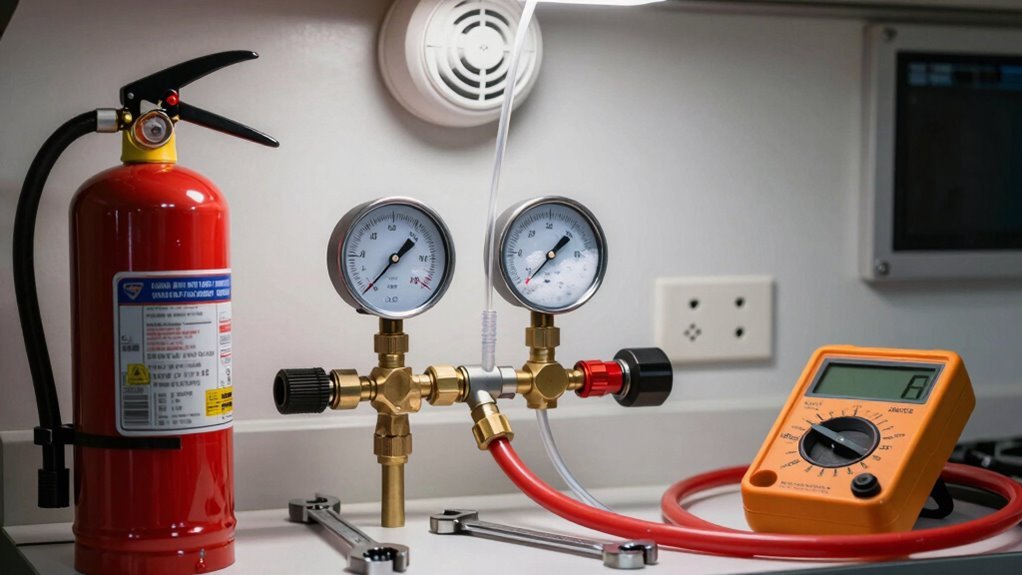
How does your RV stay warm on chilly mornings or power through meal prep at a remote campsite?
Propane!
But before you fire up that stove or furnace, let’s keep things safe.
Check your propane tank for rust, dents, or leaks—no one wants a surprise hiss.
Make sure the date stamp’s good: recertify every 10 years, then every 5.
Transport it upright, secured, and never stow a damaged cylinder.
Use a two-stage regulator (replace every 10–15 years) and keep its vent clean—no insect condos allowed!
Squeeze hoses for stiffness or cracks; replace if they feel like concrete.
Do a soapy water test on connections—bubbles mean trouble.
Clear vents of nests and debris, and test appliances so they light smoothly.
Turn everything off and ventilate before checking.
Stay safe, smarty—your cozy nights depend on it!
Choosing the Right Fire Extinguisher for Your RV
Why wait for a flare-up before thinking about fire safety?
Don’t let a tiny spark turn your cozy RV adventure into chaos.
You need the right extinguisher—stat.
Skip the old 5BC models; they don’t cut it anymore.
Today’s RVs need at least a 1A10BC, especially if yours was made after 2021.
An ABC or ABC-K extinguisher handles almost anything: wood, grease, propane, even your fridge’s wiring.
Go for the Element E50 if you love clean, mess-free action—it’s compact, powerful, and won’t trash your interior.
Hate cleanup? Try foam types like Fire Fight—they’re gentle on surfaces and tough on flames.
Just don’t toss dry powder near grease unless you want fireworks.
Size matters, but so does fit—pick one that’s effective yet easy to store.
Your safety, your call—make it a smart one!
Where to Place Fire Extinguishers in Your RV
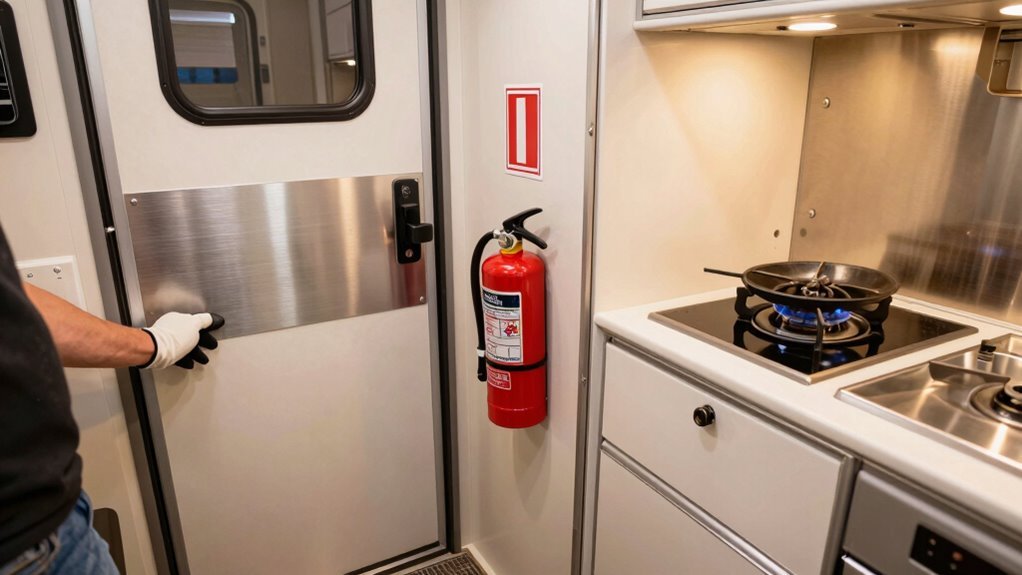
Now that you’ve picked the right fire extinguisher for your RV, let’s make sure it’s exactly where you need it when seconds count.
Stick one within 24 inches of the primary exit—NFPA says so, and hey, they’ve seen a fire or two.
Mount it near the kitchen too, since stovetop surprises happen.
Keep it visible and close, so you’re not playing hide-and-seek during a flare-up.
Pop another at the entrance to sleeping areas—no one wants to wake up to flames and a scavenger hunt.
If you’ve got space, stash one outside near an exterior door; perfect for engine or propane hiccups.
Secure all units well (no roller derby in motion!) and keep them at least 4 inches off the floor.
With extinguishers in plain sight near exits, cooking zones, and sleep spots, you’re not just ready—you’re downright heroic.
Safety never looked so smart!
How to Use a Fire Extinguisher in an Emergency
While flames mightn’t wait, you’ll be ready if you know what to do—and trust us, it’s way less scary than it sounds.
First, pull the pin and aim low at the fire’s base—don’t get distracted by the flashy flames.
Squeeze the lever fast and sweep side to side like you’re painting over the fire with a brush.
It only sprays 8 to 10 seconds, so make every squirt count!
Keep 6 to 10 feet between you and the fire, and never turn your back on it.
Remember, your extinguisher’s a sidekick, not a superhero—it’s meant to clear a path so you can escape, not fight a full-blown blaze.
Call 911 first, always.
If the fire grows, just go.
Safety’s way cooler than heroics.
Frequently Asked Questions
How Often Should I Replace My RV Fire Extinguisher?
You should replace your RV fire extinguisher every 10 years—no exceptions.
Even if it looks fine, it’s time to swap it out.
Check the label for the manufacture date; if it’s older than a decade, it’s basically retired.
Don’t risk it catching on fire and letting you down.
Stay safe, stay smart, and toss in a fresh one like it’s a birthday candle.
Boom—peace of mind!
Are Fire Blankets Useful in RVS?
You bet fire blankets are useful in RVs—you’ll love how fast and simple they are!
While extinguishers blast chemicals, blankets quietly smother flames like a cozy hug, cutting off oxygen.
They’re lightweight, mess-free, and perfect for kitchen grease fires or electrical mishaps.
Plus, anyone from your kid to your grandma can use one—no training needed!
Just grab, throw, and step back.
And hey, they even double as a heat shield if you ever need to make a dramatic getaway—action star optional!
Can I Use a Home Smoke Detector in My RV?
No, you shouldn’t use a home smoke detector in your RV—it’s not built for that!
RVs need detectors with special certifications, like UL 217 for vehicles, to handle vibrations, temperature swings, and cooking fumes.
Home units may give false alarms or miss fires.
Plus, RV models have features like tamper-resistant pins and hinged covers.
Think of it like wearing hiking boots to swim—you need the right gear!
What Should I Do if My Fire Extinguisher Is Damaged?
You find a dent, rust, or a wonky gauge—don’t panic, but act fast.
Stop using it, because a damaged extinguisher might quit when you need it most—like during a greasy kitchen flare-up.
Check the nozzle, handle, and seals, then call a pro.
Most times, it’s safer (and smarter) to replace it than risk a fizzle.
Think of it like socks with holes—sure, they fit, but they won’t keep you warm.
Safety first, always!
Do RV Fire Extinguishers Expire?
Yeah, your RV fire extinguishers do expire—don’t panic, though!
Non-rechargeable ones last about 10 to 12 years, while rechargeable models can go longer if you service them every six years.
Check the stamped date on the canister, look for rust or dents, and make sure the pressure gauge isn’t playing dead.
Out of sight, out of mind, right?
But hey, this one’s worth checking—your cozy rig’s safety depends on it!
Conclusion
You’ve got this! Stay smart, stay safe, and enjoy the open road with peace of mind. Remember, an ounce of prevention is worth a pound of firefighting—so check your detectors, keep that extinguisher handy, and never skip a propane check. A little care goes a long way, and your RV adventure should be fun, not flaming! Stay cool, stay safe, and keep chasing sunsets, not smoke.
References
- https://www.usfa.fema.gov/statistics/reports/where-fires-occur/snapshot-rv-fires.html
- https://www.govinfo.gov/content/pkg/GOVPUB-HS5-PURL-gpo187721/pdf/GOVPUB-HS5-PURL-gpo187721.pdf
- https://www.nps.gov/articles/p52-rv-fire-safety-101.htm
- https://www.usfa.fema.gov/prevention/vehicle-fires/recreational-vehicles/
- https://orbitinsuranceservices.ca/news-and-tips/causes-of-rv-fires
- https://www.nfpa.org/education-and-research/research/nfpa-research/fire-statistical-reports/vehicle-fires
- https://leisurecw.com/rv-life/fire-and-safety-in-your-rv-maintenance-tips-for-extinguishers-and-smoke-detectors/
- https://www.orbitinsuranceservices.ca/news-and-tips/do-i-need-a-special-smoke-detector-for-my-rv
- https://www.placer.ca.gov/DocumentCenter/View/2981/Declaration-of-Installation-for-Smoke-Alarms-and-Carbon-Monoxide-Alarms-PDF
- https://www.rv.com/archive/proper-selection-and-maintenance-of-smoke-and-carbon-monoxide-detectors-are-critical-for-safe-rv-living/