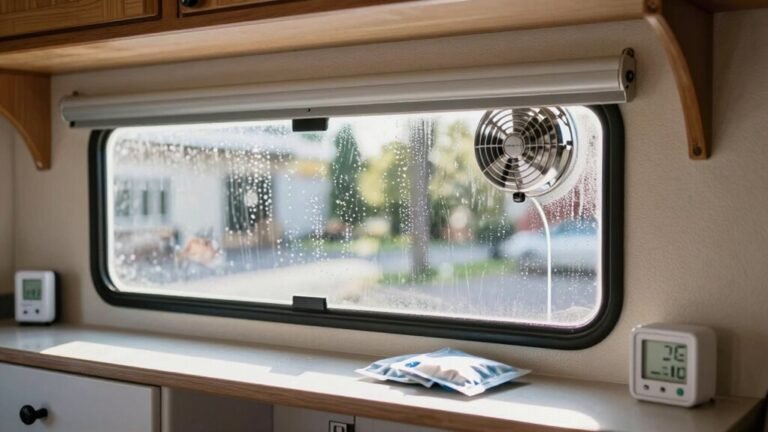
How to Conserve Water When Boondocking
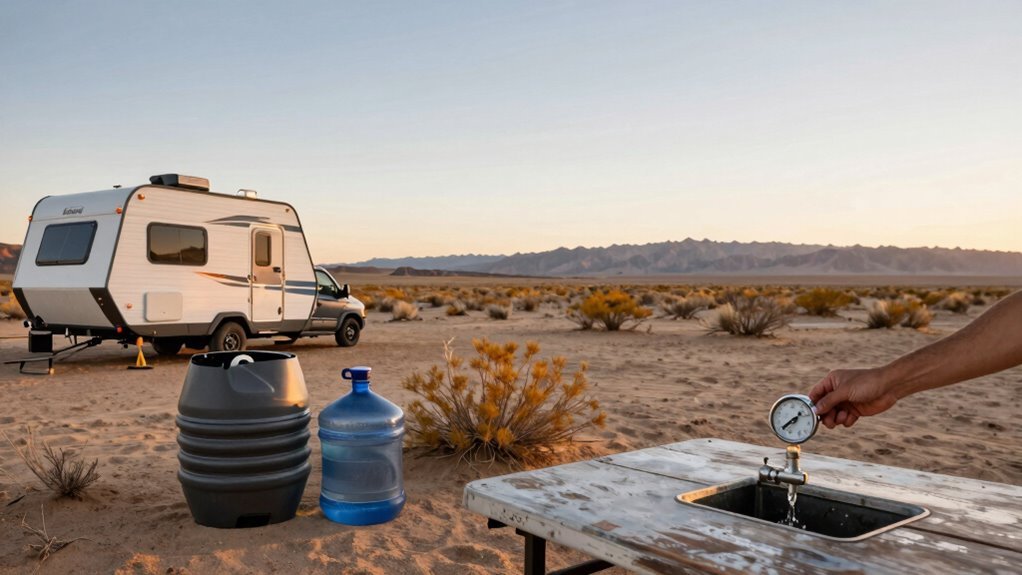
You can save tons of water while boondocking by using a low-flow showerhead and keeping showers under five minutes—seriously, Navy-style: wet, scrub, rinse quick! Install aerators on faucets to further reduce water use without sacrificing pressure. These simple changes make a big difference in conserving water when boondocking.
Cook one-pot meals to minimize dishwashing and the amount of water needed for cleanup. Reuse gray water for non-edible plants, but avoid using it on vegetables or herbs. Every drop counts when you’re off-grid, so smart habits go a long way.
Time your water refills and regularly check your tank levels to avoid running dry. Small routines like turning off the tap while brushing your teeth add up. Your future self will high-five you when you still have water left on day three. There’s even more clever hacks where that came from.
Use a Low-Flow Showerhead and Limit Shower Time
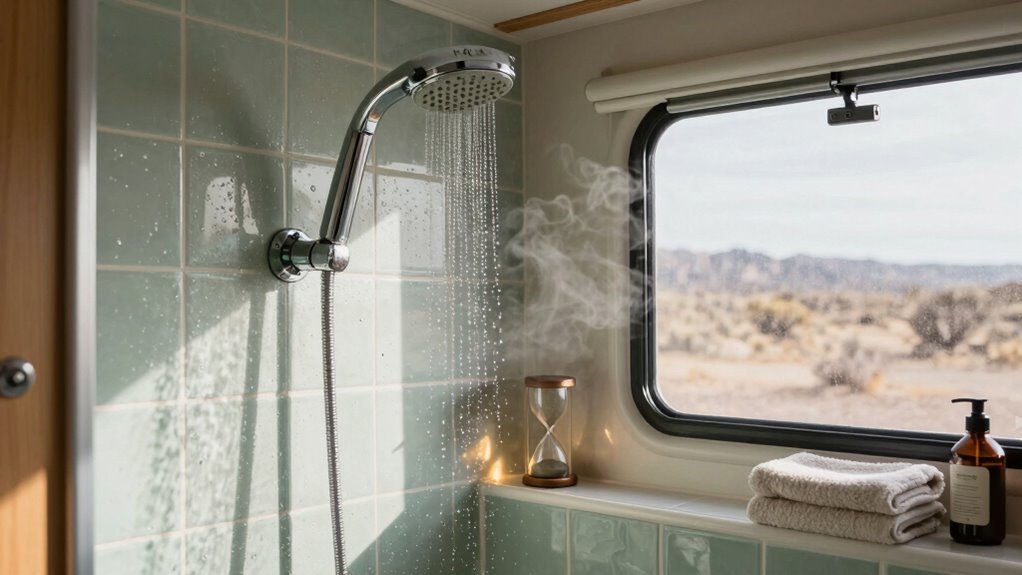
Saving water starts with a splash—well, a smaller splash, actually.
Swap your old showerhead, especially if it’s guzzling 4 gallons per minute—you’re basically watering the walls.
Switch to a low-flow model at 2.0 or 1.5 GPM, and you’ll save thousands of gallons a year.
A family of four could slash 29,200 gallons annually just by ditching that dinosaur.
And hey, you’ll cut energy costs too—22.8 fewer therms if you heat with gas.
Shorten your shower to eight minutes (time it with a song!) and boom, you’re down to 20 gallons instead of 40.
Even better: use a timer and save under 17 liters per shower.
You’ll stretch your boondocking water supply, dodge refills, and still feel fresh.
Plus, fewer showers mean more adventures.
Who needs suds when you’ve got sunshine?
That kind of conservation adds up fast—average savings: about 2,700 gallons per year for a family of four.
Install Water-Saving Faucet Aerators
Twisting on a water-saving aerator is one of the quickest mods you can make—and it feels like cheating the system in the best way.
You just unscrew your old aerator (hand-tight on most kitchen faucets, though you might need a wrench for bathroom ones) and screw in a new low-flow version—boom, done in minutes.
Pick a 0.35 gpm for the bathroom and 0.5 gpm for the kitchen, and you’ll save serious water without missing that strong stream.
These little heroes mix air into the flow, so pressure stays zippy while you slash usage—some folks stretch their 39-gallon tank to over half full after three days!
They’re cheap, durable, and fit both RV and standard faucets.
Grab one from Amazon or an RV specialty shop, and start saving faster than you can wash a greasy pan.
It’s a tiny tweak with a huge payoff—like getting extra camping days for free!
Overall water consumption can drop by nearly half, with 45% reduction in usage observed in real-world boondocking scenarios.
Cook and Clean More Efficiently
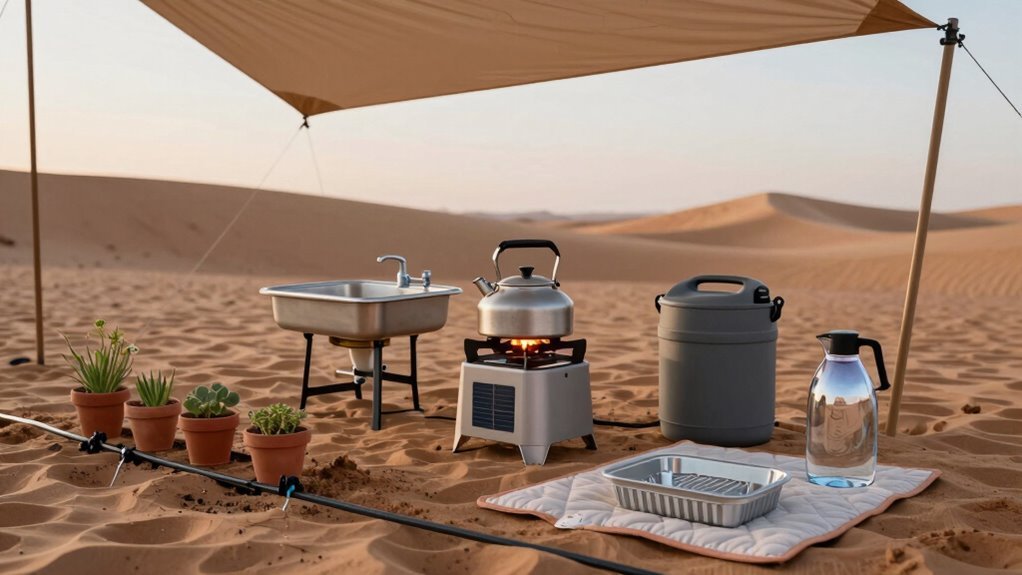
Whip up your meals like a boondocking chef and watch your water stretch further than your road-trip playlist.
Cook on the grill or campfire when you can—fewer grimy pots means less scrubbing.
Plan one-pot meals and prep veggies at home, sealed in vacuum bags so you just boil and serve.
Skip the sink drama and use paper plates—burn ‘em if it’s safe, goodbye dish pile!
When you do wash, batch it all after dinner.
Wipe off gunk first, stash dishes in the sink, and cover ‘em till showtime.
Heat water on the stove instead of waiting half a gallon for hot—save that precious water (and propane!).
Use a small tub with soapy water, rinse with a spray bottle, and splash rinse water outside with biodegradable soap.
Less water, less waste, more adventure.
You’re not just cooking—you’re conserving like a trailblazing kitchen ninja! Dump used dish water on the ground if permitted, rather than filling your grey tank, to extend your boondocking stay.
Collect and Reuse Gray Water Wisely
Turning every drop into a second act, you can stretch your water supply further by smartly collecting and reusing gray water—because even your dishwater has dreams of purpose.
You can catch shower runoff and sink water in small tubs or with installed pipes, then reroute it outside using biodegradable soap.
Hook up portable totes or stash a tank in your RV’s bays to store it safely.
Add a simple carbon filter and 12-volt pump to keep things flowing smoothly and clean.
Use that gently used water to quench thirsty flowers or bushes—just skip the veggies and drinking, please.
Avoid dumping on BLM land; instead, follow local rules, pack it out, or haul it to dump stations.
Dig a cat hole if needed, then vanish without a trace.
With a little grit and a playful mindset, your gray water becomes a sidekick in the adventure, not just waste.
Win one for resourcefulness!
Choose the Right Camp Kitchen Setup
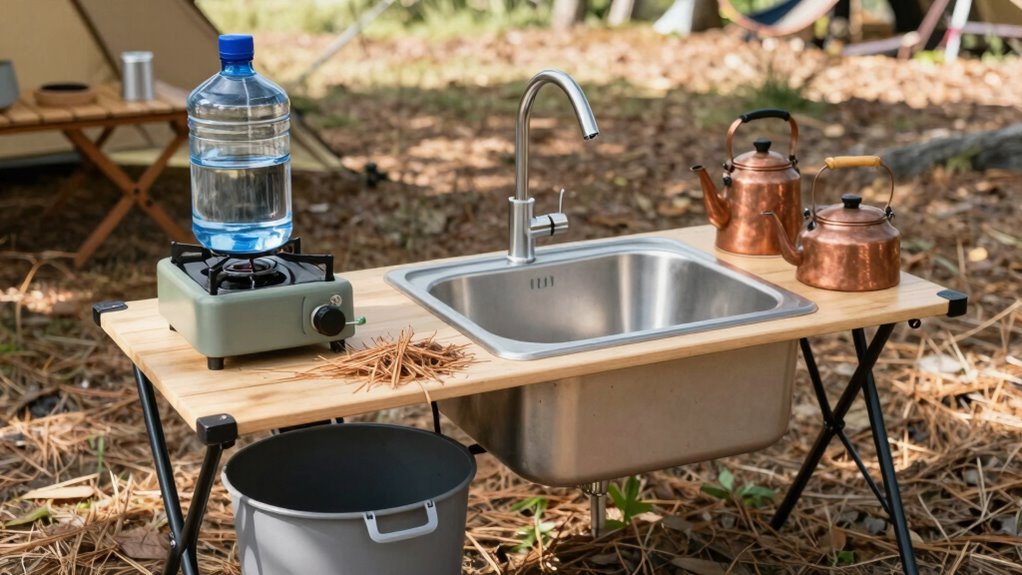
How much easier would your mornings be if breakfast didn’t leave you buried in dirty pans and suds?
With the right camp kitchen setup, you can save serious water and skip the sink-time struggle.
Ditch the sink—use a small dishpan so you see exactly how much water you’re using.
Scrape plates with paper towels first, then spritz soap from a spray bottle to avoid filling the basin.
Rinse smart: reuse water, turn off the tap, and let a kettle’s leftover heat do the work.
Grill more, boil less—foil packets and one-pan meals slash cleanup.
A wok beats ten pans any day.
And pick biodegradable soap so you can dump gray water legally.
With a little planning, you’ll cook, eat, and wander on—no sink drama, just freedom.
Who knew clean dishes could be this easy—and this fun?
Plan and Time Your Water Usage
You’ve sorted your camp kitchen down to a smart, suds-saving system—now let’s talk about making every drop of water work as hard as you do when you’re out there chasing sunsets.
Start by calculating your needs before you go—think drinking, cooking, cleaning, and yes, even that post-hike shower stink.
Plan around your tank size, crew size, and how brave you feel skipping showers.
Try navy showers: get wet, shut off water, lather up like a bar of soap’s your last friend, then rinse fast.
Cook on the grill, batch-wash dishes in a basin, and save toilet flushes for emergencies.
Use greywater wisely—rinse veggies with it, maybe give your dusty boots a splash.
Time your splashes around cool mornings or park restroom runs.
A little planning means you won’t be crying over spilled—or missing—water.
You’ve got this, Captain Conservation!
Monitor Your Fresh Water Levels Regularly
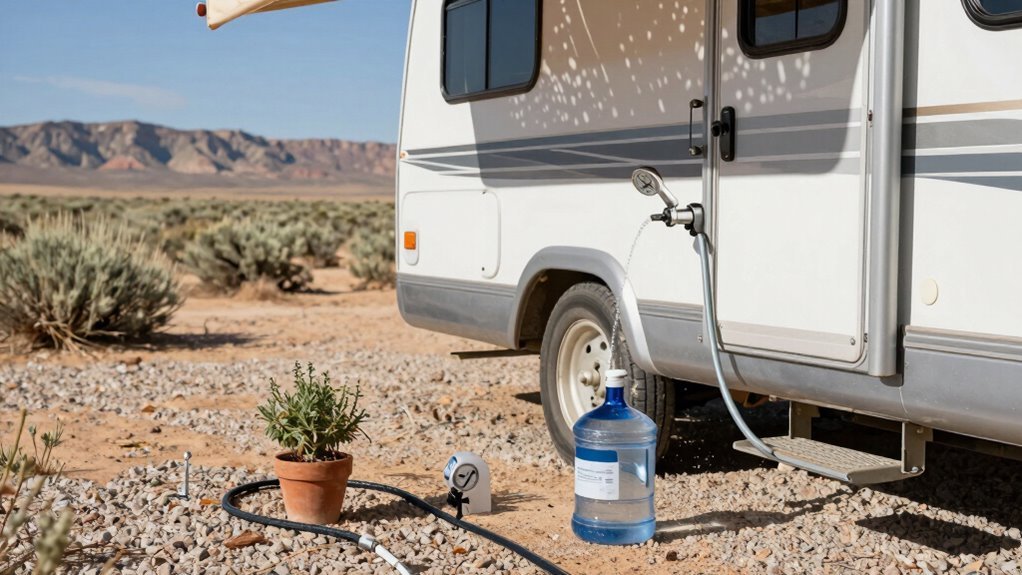
When you’re miles from the nearest water spigot, keeping an eye on your freshwater tank isn’t just smart—it’s survival, sort of like being a water detective with a side gig in camping.
Check your tank gauge daily—digital ones, like SeeLevel II, give you real-time percentages so you know exactly how much water you’ve got left.
Track your usage over a few trips to learn your crew’s rhythm: showers, dishes, and coffee runs add up fast.
Spotting a sudden drop? That could mean a leak or a sneaky running toilet—fix it quick.
Use that data to plan refills before you’re scraping the tank’s last drops.
Topped off at 50%? Head to a grocery store water vending machine and refill with ease.
Need more capacity? Toss in a few collapsible jugs—15 extra gallons can stretch your trip.
Monitor like a pro, and you’ll stay hydrated, clean, and happily off-grid.
Frequently Asked Questions
Can I Drink Filtered Gray Water in Emergencies?
No, you can’t safely drink filtered gray water, even in emergencies—it’s a hard no.
Filters catch gunk but miss germs and chemicals.
Even if it looks clean, invisible nasties like bacteria and viruses can make you super sick.
Boiling helps kill germs, but it won’t zap soap residue or toxins.
Your best bet? Stick to clean sources—your stomach will thank you later.
Save the gray water for washing pans, not sipping!
How Often Should I Sanitize My Fresh Water Tank?
You should sanitize your fresh water tank at least once or twice a year—think of it like giving your RV a spa day, but with bleach instead of cucumber water.
Spring de-winterizing? Perfect time.
If you stash your rig for weeks, especially in heat, sanitize before you use it again.
Saw a fellow RVer get funky algae that looked like swamp monster hair? Yeah, don’t be that person.
Stinky water or odd tastes? Zap it immediately.
Is It Safe to Use Biodegradable Soap for Everything?
Yeah, you can use biodegradable soap for pretty much everything—showering, dishes, even brushing your teeth—but don’t get too wild with it.
Even the good stuff can mess with nature if you dump it all in one spot.
Think of it like hot sauce: a little’s great, a gallon’s a disaster.
Use a small amount, scrub on land (not in lakes), and let the dirt vanish without harming critters or your conscience.
What’s the Best Way to Thaw Frozen Water Lines?
You’ve got frozen lines? Bummer!
Start by using a hair dryer or heat tape to gently warm the pipes—don’t blast them, though, or you’ll have leaks and a bigger mess.
Check for insulation gaps and add foam sleeves where needed.
Keep your holding tanks heated with tank warmers if it’s super cold.
And hey, maybe your water line needed a heated jacket—just like you!
Prevention beats thawing every time.
Can I Refill My Freshwater Tank From a River?
Nope, you can’t safely refill your freshwater tank from a river—those pretty streams are hiding bacteria, gunk, and nasties that’ll mess up your tank and maybe even your health.
Your RV’s freshwater system isn’t built for wild water, and your pump really hates sand and muck.
Stick to clean, tested sources like campground taps or city water—you’ll keep your rig happy and your belly safer.
Your water tank will thank you!
Conclusion
You’ve got this, so don’t sweat the small stuff—every drop counts when you’re off the grid. Use smart swaps like low-flow heads and aerators, cook with clever hacks, and reuse water where you can. Keep an eye on your tank, plan ahead, and remember: it’s not just about saving water, it’s about making your adventure last longer. Now go enjoy the wild, one splash at a time!
References
- https://lifestyle.sustainability-directory.com/learn/what-is-the-average-water-savings-from-switching-to-a-low-flow-showerhead/
- https://www.aceee.org/files/proceedings/1992/data/papers/SS92_Panel7_Paper29.pdf
- https://map-testing.com/wp-content/uploads/2022/11/LBNL-Showerhead-final-rpt.pdf
- https://www.swfwmd.state.fl.us/sites/default/files/medias/documents/Showerhead_Replacement_Final_Report.pdf
- https://title24stakeholders.com/wp-content/uploads/2020/01/CASE-Report_Multi-Head-Showers-and-Lower-Flow-Shower-Heads-1.pdf-1.pdf
- https://www.thewaterscrooge.com/blog/top-myths-of-low-flow-shower-heads
- https://www.freethink.com/energy/water-pressure
- https://www.epa.gov/watersense/showerheads
- https://thetincantravelers.com/rv-101-water-conservation-while-boondocking/
- https://www.rvwithtito.com/articles/boondocking-conserve-water/