Carbon Monoxide Safety in RVs
You fire up the stove or heater in your RV, and cozy turns risky fast—carbon monoxide can build up quicker than your morning coffee brews. This silent, invisible gas is a serious threat, especially in small spaces where CO can become deadly in minutes.
Tiny areas in RVs mean faster carbon monoxide accumulation, particularly when vents are blocked or burners are dirty. That’s why proper ventilation and routine equipment checks are essential for safety on the road.
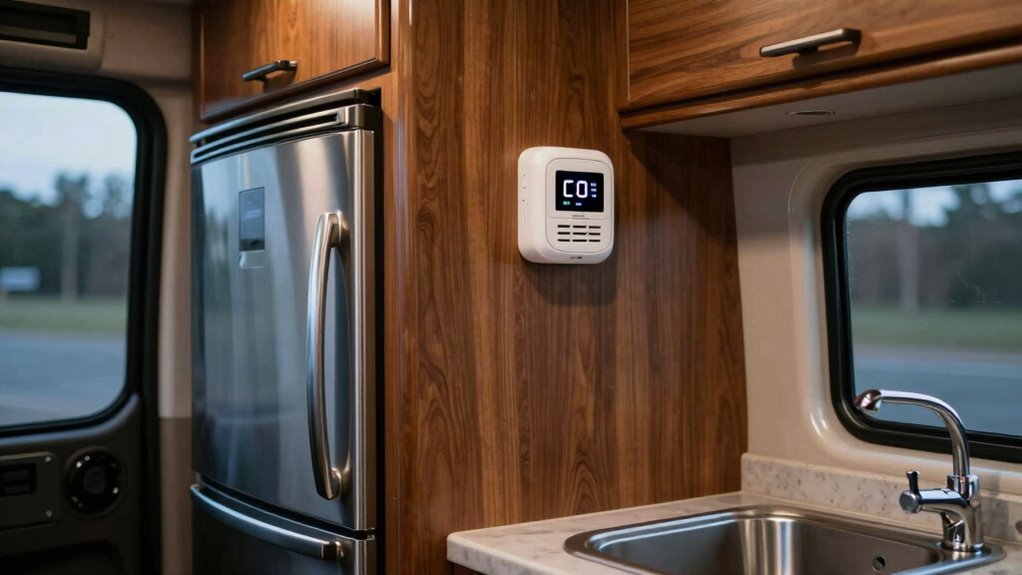
Your carbon monoxide detector is your first line of defense, but only if it’s placed correctly and tested weekly. A working detector can make all the difference, ensuring your adventures stay safe and full of fresh air.
There are even more clever tricks to keep you breathing easy, from regular maintenance to knowing the warning signs of CO exposure. Stay proactive, and you’ll enjoy every mile with peace of mind.
How Carbon Monoxide Builds Up in RVs
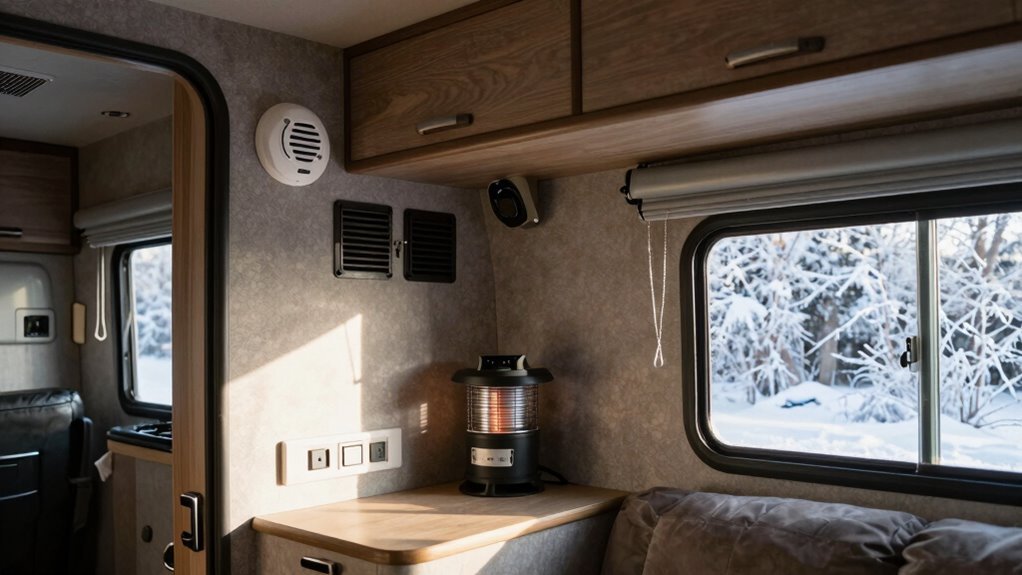
Ever wonder how something invisible can sneak up on you in your cozy RV?
Well, your small space works like a tiny science lab where carbon monoxide (CO) builds up faster than popcorn at movie night.
With less air to spread out, CO zips to dangerous levels quicker than in a big house—like hitting 200 ppm from a faulty heater while your home might only hit 30.
Even after turning it off, CO sticks around, ghosting through your RV like it’s overstaying a welcome.
Tiny flames might look calm, but they’re sneaky, cranking out CO when air’s low or burners get dusty.
Blocked vents, weak airflow, or a heater throwing a tantrum mean trouble.
And no, cracking a window isn’t always enough.
That trapped gas doesn’t play fair—it builds, lingers, and waits.
Gas kitchen ranges can emit 20,000–30,000 ppm of CO when operating improperly, making unvented stoves a serious hazard.
Sounds dramatic?
It is.
But now you’re in the know.
Common Sources of CO Inside Your RV
You’re already aware how quickly carbon monoxide can take over your RV’s cozy interior, but now let’s shine a light on where that sneaky gas actually comes from.
Your propane furnace might be keeping you warm, but if it’s not working right, it’s also pumping out dangerous CO.
That nifty space heater? Yep, it’s cozy but can pollute the air fast without proper ventilation.
Cooking dinner on your gas stove or using a camp stove indoors sounds convenient, but malfunctioning burners can blast out crazy-high CO levels—think 20,000 ppm!
Generators and engines are big offenders too, especially if exhaust leaks nearby.
Even your water heater or pilot light can chip in if they’re dusty or broken.
And hey, never fire up a charcoal grill inside—cozy dinner, yes; safe, absolutely not!
CO loves tight spaces, so keep things vented, maintained, and never assume “it won’t happen to me.” About 500 deaths annually occur in recreational vehicles from CO poisoning, highlighting the critical need for vigilance.
Recognizing the Early Signs of CO Exposure
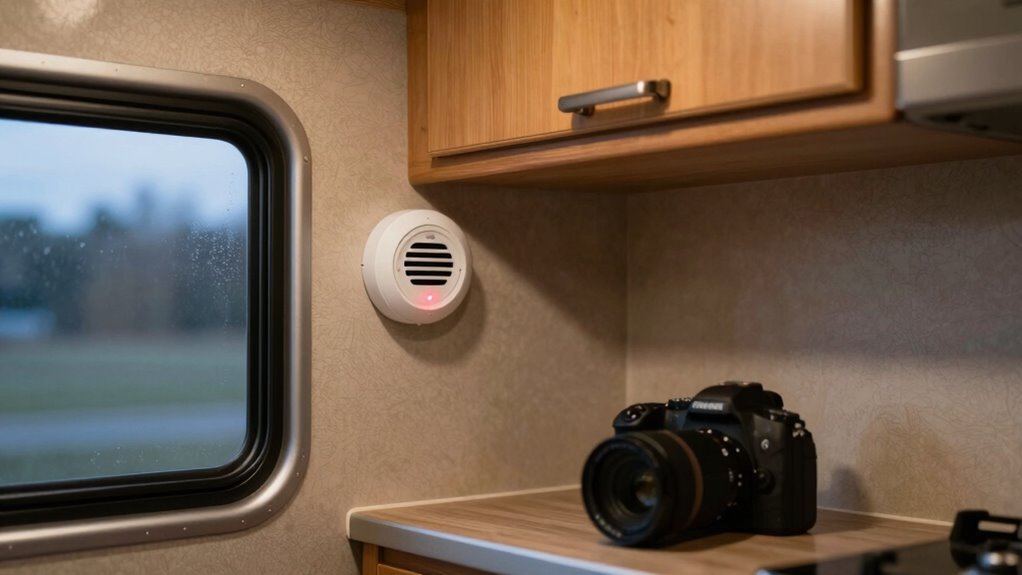
What if your cozy RV nap comes with a sneaky intruder no one invited?
That uninvited guest could be carbon monoxide, creeping in when you least expect it.
You might notice a scratchy throat, a mild headache, or just feel oddly tired—no big deal, right?
But wait, that dry irritation or shortness of breath could be your body waving a tiny red flag.
Maybe you’re a bit nauseous or feel flu-ish, minus the fever.
Don’t brush it off!
As CO builds up, you might get dizzy, confused, or weak—like your brain’s running on fumes.
And here’s the scary part: you could fall asleep and never wake up.
It hits faster if you’ve had a drink or are exhausted.
So if something feels “off,” don’t snooze on it—get fresh air fast.
Your gut just might save your life.
Carbon monoxide forms when fuels burn without enough oxygen, making enclosed spaces like RVs especially vulnerable.
The Critical Role of Carbon Monoxide Detectors
How would you like a silent superhero watching over your RV trips—one that doesn’t wear a cape but definitely saves lives?
That’s exactly what a carbon monoxide detector does for you.
Since CO is odorless, colorless, and deadly, you can’t rely on your senses—only a working detector gives you that early warning.
These smart little gadgets sound the alarm before CO builds to dangerous levels, giving you time to act.
They’re specially designed for RVs, where space is tight and threats grow fast.
Whether powered by battery or hardwired into your system, there’s a detector fit for your rig.
Some even show real-time CO levels or combine with propane leak detection.
Just remember: test it weekly, know when it expires, and replace it every 5–7 years.
It’s not just a beeping box—it’s your first line of defense on the road.
Stay safe, stay alert, and let your unsung hero do its job!
Proper Placement of CO Detectors in Your RV
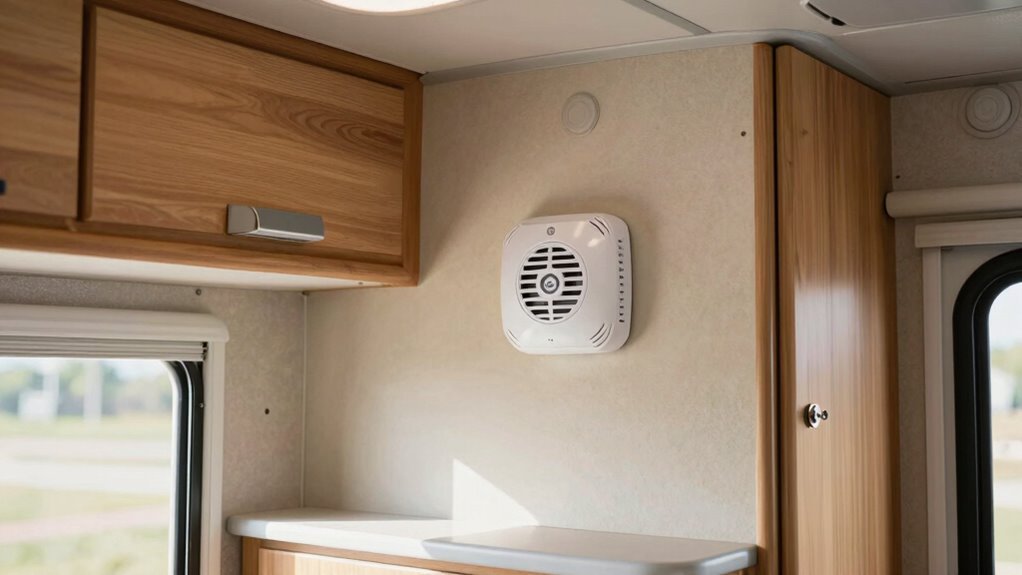
Now that you’ve got your trusty carbon monoxide detector—your RV’s silent guardian, always on watch—it’s time to give it the best seat in the house.
Mount it on an upper wall or ceiling, where CO naturally gathers, but skip the kitchen or bathroom—nobody wants false alarms with breakfast.
Place one within 10 feet of each bedroom door; you’re most at risk while sleeping, and this little buddy’s job is to shout before danger sneaks in.
If your RV has multiple levels, add detectors on each floor—better safe than sorry!
Keep it away from vents, windows, and rowdy ceiling fans that could mess with its sensors.
And don’t let curtains or bunk ladders block its “nose.”
Since CO mixes evenly in air, exact height matters less, but smart placement saves lives.
Think of it as interior decorating with purpose—because the safest spot is wherever it can do its job best.
Essential Ventilation Practices for Safe Travel
Ever wonder why your RV feels stuffy after a long drive or a cozy night in?
You’re not alone—poor airflow traps moisture, odors, and even dangerous gases.
The fix? Smart ventilation habits that keep air fresh and safe.
You don’t need fancy gadgets—just a few savvy moves.
- Crack opposite windows to create a breeze, and use roof vents with screens to let air in without bugs.
- Run fan-powered vents or portable fans to push out hot, humid air—especially when cooking or showering.
- Park in the shade with windows aligned to catch natural winds, and always clear debris from vents.
A well-ventilated RV isn’t just comfy—it’s safer.
Plus, your morning coffee tastes better when it’s not competing with last night’s onions.
Stay fresh, stay safe, and let the breeze do the work!
Generator Safety and Avoiding Backdrafts
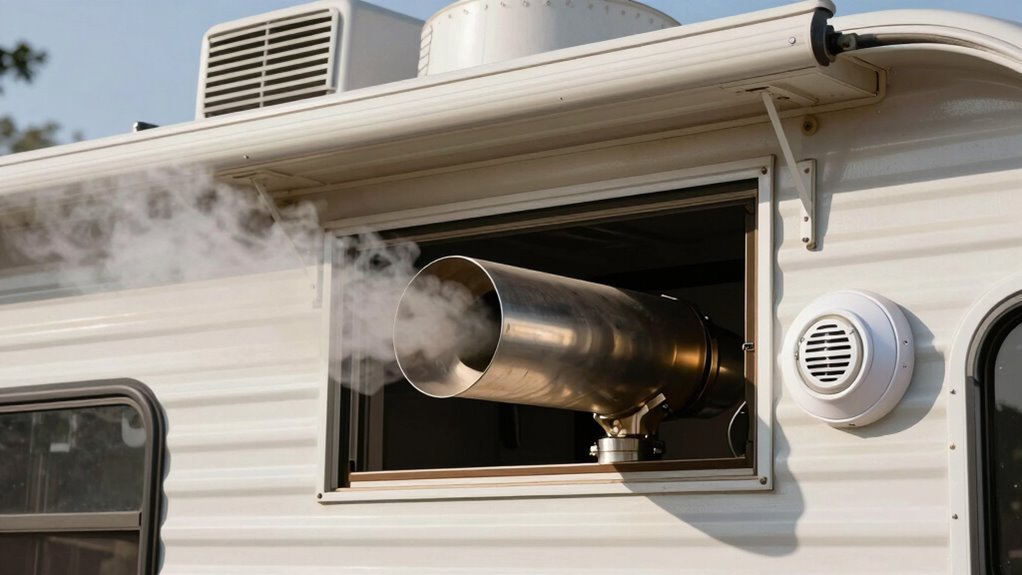
You’d be surprised how quickly a generator can turn a fun road trip into a hazardous situation if it’s not handled with care.
Always place it at least 20 feet from your RV, preferably downwind, and point the exhaust away from windows, doors, and vents—think of it like setting up a campfire, but with more attitude.
Never run it indoors, not even in a garage or under a canopy.
Keep five feet of breathing room on all sides so airflow stays strong and sneaky carbon monoxide (CO) can’t sneak in.
Check for exhaust leaks before firing it up—small issues cause big trouble.
That invisible, odorless gas can slip through cracks or drift under your RV faster than your dog spots a squirrel.
Stay smart, stay upwind, and treat your generator like a smoky grill—useful, but never up close.
Safety isn’t glamorous, but neither is getting knocked out by CO.
Creating a Routine for CO Safety Checks
Keeping your generator in check sets the stage for safer adventures, but don’t stop there—your RV’s carbon monoxide (CO) detector deserves just as much attention.
Make CO safety part of your routine like brushing your teeth—no skipping allowed!
- Test your detector weekly, before trips, and after storage; a solid green light means you’re good to go
- Replace the unit every 5–7 years, depending on the model, and never ignore that end-of-life beep—it’s not just nagging, it’s saving your life
- Change the 9-volt backup battery yearly and keep house batteries charged to avoid surprise alarms during cozy mornings
Label the detector’s front with the expiration date (think: “Do Not Eat After This”) and log everything in a handy tracker. Stay sharp, stay safe, and let your adventures breathe easy—literally!
Frequently Asked Questions
Can I Use My Rv’s CO Detector at Home?
No, you can’t use your RV’s CO detector at home—it’s built for life on the road, not your living room.
It’s tough, compact, and senses both CO and propane, which most homes don’t need.
Plus, its alarm might drive your family nuts!
Stick with a home model for indoor alerts, and keep your RV detector where it belongs: rolling with you, not couch surfing.
How Often Should I Replace the CO Detector?
You should replace your CO detector every five years—no exceptions, even if it still beeps happily at you.
Think of it like replacing your toothbrush: just because it looks fine doesn’t mean it’s working right.
Mark the expiration date on the front with a Sharpie, set a phone reminder, and when that chirping starts, don’t ignore it.
Fresh unit, peace of mind, and safer adventures await!
Are There Pets More Sensitive to CO Than Humans?
Yeah, pets are way more sensitive to CO than humans—seriously, your dog or cat’s tiny body and fast breathing make them feel effects faster.
Birds? Extreme divas when CO’s around.
They’ll show trouble before you even notice anything, turning into real-life (feathered) canaries in a coal mine.
Keep an eye out for shaky steps, red gums, or sudden naps.
Save your furry (or chirpy) pals by installing detectors—you’ll all breathe easier, literally.
Do Battery-Powered CO Detectors Work in COld Weather?
Yeah, battery-powered CO detectors can work in cold weather, but they might act grumpy—like you on a Monday morning.
Below 40°F, their batteries lose juice fast, and sensors can slow down.
You’ll likely hear chirping, not because they’re singing, but because they’re cold and low on power.
Keep them warm and test them often—think of it as giving your detector a cozy hug so it keeps you safe.
Can a CO Detector Warn Me About Propane Leaks?
Oh, you sweet summer camper, no—a CO detector won’t warn you about propane leaks, and betting on it’s like bringing a fork to a fire extinguisher fight.
It just doesn’t work that way.
CO alarms only sniff out carbon monoxide, leaving propane undetected.
Want real safety?
Grab a combo detector, the unsung hero that guards against both.
Stay smart, stay alarmed (the right way), and keep your RV adventures fun, not funky.
Conclusion
You’ve got this! Carbon monoxide isn’t just a scary myth—it’s real, silent, and sneaky, like a ninja in your camper. But don’t worry, buddy: detectors, fresh air, and smart habits keep you safe. Imagine roasting marshmallows, not fighting dizziness! Stay sharp, laugh loud, and breathe easy—your adventures should be legendary, not risky. Safety’s your co-pilot, so make every trip a happy one—alive, alert, and full of s’more stories to tell!
References
- https://www.escapees.com/blog/carbon-monoxide-an-odorless-tasteless-and-toxic-danger
- https://www.winsen-sensor.com/knowledge/ensuring-safety-sensors-in-rvs.html
- https://www.cdc.gov/carbon-monoxide/about/boating.html
- https://pmc.ncbi.nlm.nih.gov/articles/PMC4568061/
- https://www.michigan.gov/-/media/Project/Websites/mdhhs/Folder1/Folder71/CAMPING__CO.pdf?rev=e01b684b1bac47039b537207a99e27fe
- https://www.peakmtncamps.com/the-vital-role-of-co2-detectors-in-your-rv-why-you-should-never-disconnect-them/
- https://www.mayoclinic.org/diseases-conditions/carbon-monoxide/symptoms-causes/syc-20370642
- https://www.acacamps.org/article/camping-magazine/protecting-campers-carbon-monoxide-poisoning
- https://www.hlmlawfirm.com/blog/carbon-monoxide-in-boats-campers-know-the-risks/
- https://www.mtiindustries.com/prevent-carbon-monoxide-poisoning-during-summer-recreation/