Generator Vs Solar: What’s Best for RV Power?
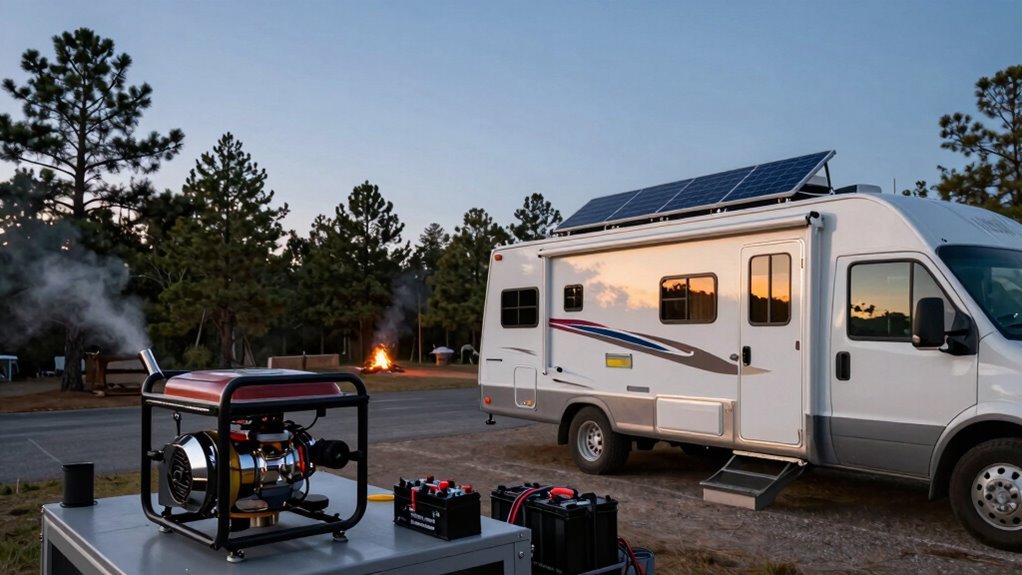
You want power on the road without the noise and fumes? Solar runs your fridge and lights quietly using the sun—no gas, no generator roar, just free energy. It’s perfect for off-grid spots and keeps nature peaceful.
Generators work in a pinch but need fuel and maintenance. Solar is cleaner, quieter, and offers more freedom for your adventures. When comparing generator vs solar for RV power, solar stands out for long-term convenience.
Want to see how solar can power your next trip? With consistent sunlight, it reliably supports essential appliances without the hassle of refueling or repairs. It’s a smart investment for quiet, sustainable travel.
How Generators Power Your RV
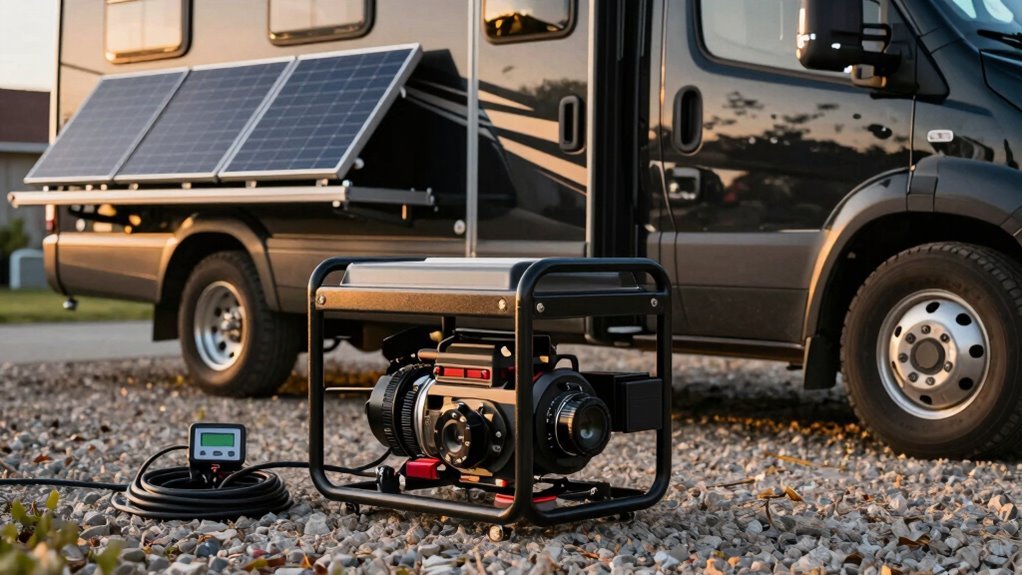
Fire up your RV’s generator, and you’re instantly in charge of your own power supply—no more hunting for electrical hookups or stressing over brownouts.
You’re burning diesel to spin an engine that drives an alternator, which creates 120V or 240V AC power on demand.
That juice zips through a transfer switch—your RV’s bouncer—making sure only one power source rocks the panel at once.
From there, electricity flows into the main breaker panel, powering your AC, microwave, TV, and outlets like a champ.
Bigger rigs with 10,000-watt beasts even run split-phase power for heavy loads.
Need 12V DC? The converter steps down the AC to keep your batteries charged and lights glowing.
And yes, your popcorn still pops during storms—because you’ve got this.
Generators mean go, no permission needed.
Just fuel up, hit start, and boom: you’re the powerhouse.
Literally.
The generator automatically takes over when shore power is disconnected.
How Solar Panels Generate RV Electricity
Soaking up the sun isn’t just for lazy beach days—harnessing those rays powers your RV in the smartest, quietest way possible.
When sunlight hits your solar panels, tiny photons kick electrons into action, creating an electric current through a process called the photovoltaic effect.
No moving parts, no noise—just clean energy flowing from your roof.
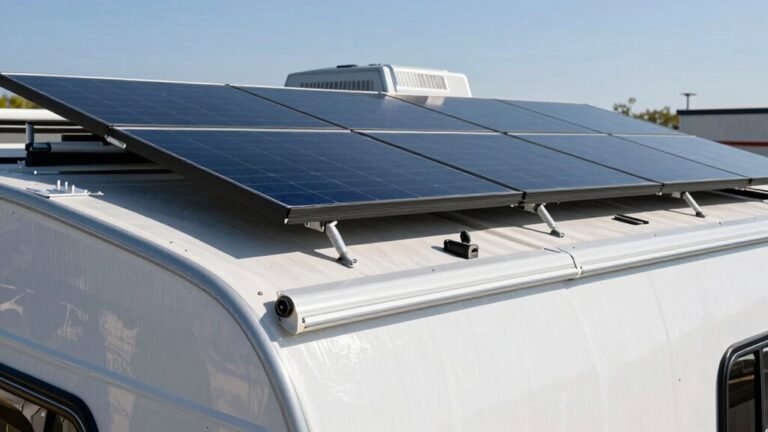
Your panels are made of special semiconductor cells, usually monocrystalline, because they’re efficient and perfect for tight RV spaces.
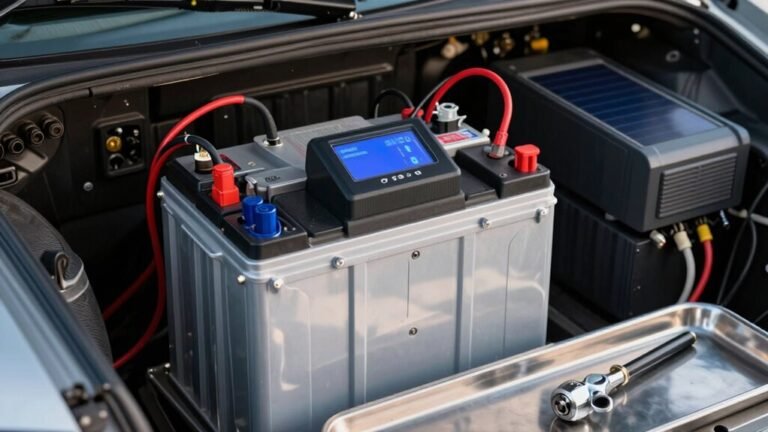
This raw power—direct current (DC)—travels to a charge controller, which smartly regulates the flow so your deep-cycle batteries don’t overcharge.
Those batteries store energy for night or cloudy days, like sunshine in a jar!
Need to power your blender or TV?
An inverter converts DC into standard AC power.
It’s like magic, but better—it’s science you can actually use on your next adventure!
This entire setup is part of what’s known as the balance of system (BOS) components, which include inverters, racking, and wiring.
Noise Levels and Campsite Enjoyment
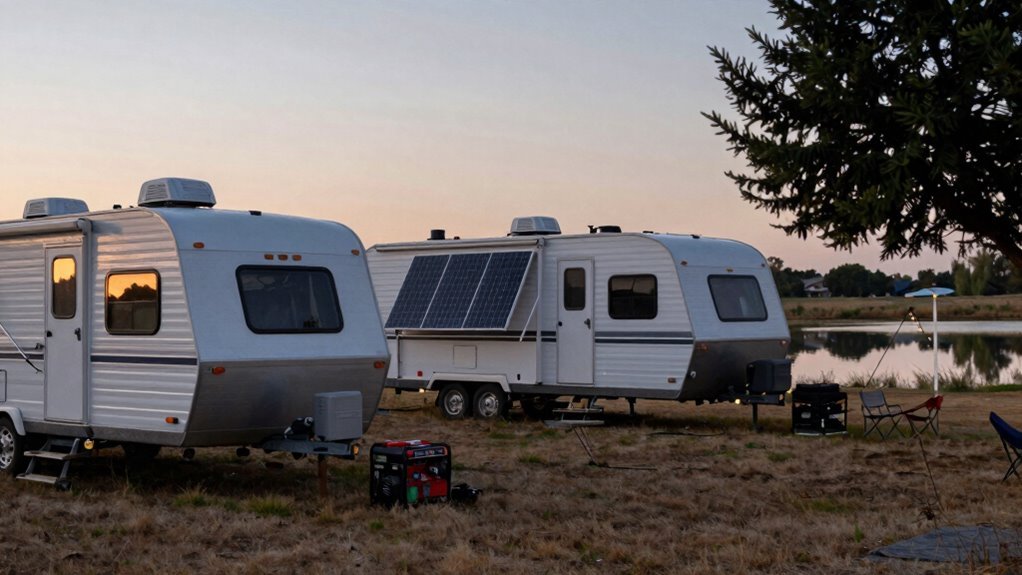
You’ve got your solar panels soaking up sunshine and turning it into power, no sweat—just like magic, except it’s all real. And the best part? They’re whisper-quiet, around 35 dB—like someone rustling leaves or whispering secrets. No chugging engine, no vibrations, just silent, smooth energy.
Meanwhile, even quiet inverter generators hum at 50–60 dB, about as loud as your fridge or a casual chat. That’s okay, but step closer and traditional models can hit 70 dB—like a vacuum cleaner serenading your campfire.
Most campgrounds prefer noise under 60 dB, so solar slips right under the radar. At 65 dB, laughter levels feel loud, and anything higher kills the chill vibe fast.
Solar generators like the EcoFlow DELTA 3 Pro keep it serene, while fuel units, even the “quiet” ones, still buzz with effort.
Your campsite stays peaceful, neighbors stay happy, and nature? She stays *noise-free*. Perceived loudness doubles between 50 and 60 dB, making even “quiet” generators more disruptive than they may seem.
Fuel Dependence vs. Energy Independence
While generators chug through gallons of fuel like they’re training for a gas-guzzling marathon, solar power hands you the ultimate freedom pass to energy independence. You’re not hauling jugs of gas or driving miles just to refuel—sunlight’s free and everywhere.
Imagine waking up, unfolding your panels, and sipping coffee while your RV charges itself. No trips to sketchy gas stations, no hauling stinky diesel, and definitely no surprise fuel costs.
Generators guzzle 0.5 to 1 gallon per hour, adding up fast, especially off-grid. Solar? Once installed, it’s all sunshine and savings—zero fuel bills, zero emissions, and zero hassle. Even on cloudy days, your batteries keep the lights on.
With solar, you’re not chained to fuel runs or price spikes. You’re free to roam, park anywhere, and live loud or quiet—power’s got your back. Now that’s independence worth charging up for.
Maintenance Requirements Compared
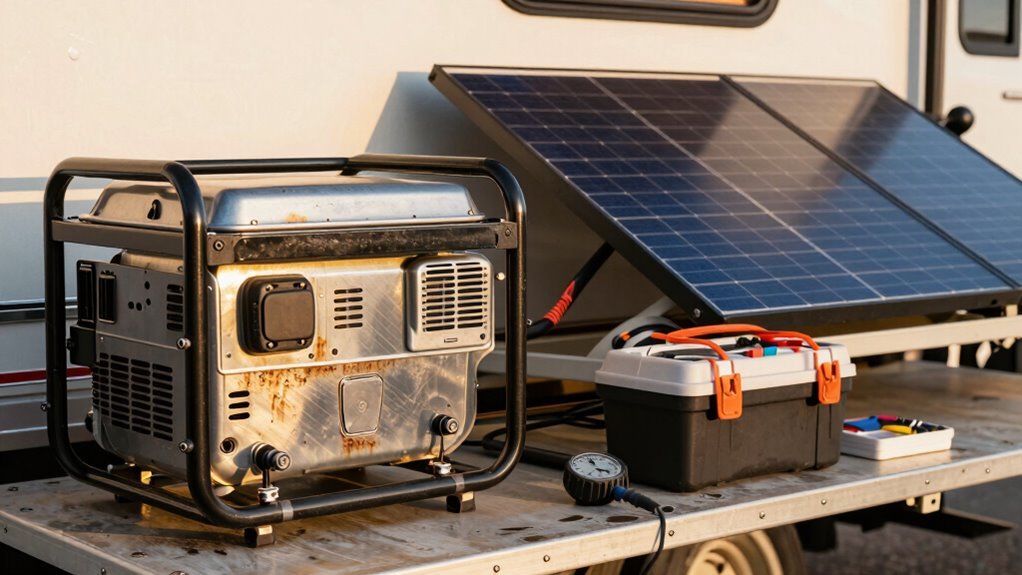
Keep your generator purring like a contented housecat, and you’ll spend more time fixing spark plugs than actually adventuring.
You’ve got oil changes every 100–150 hours, fresh filters, and spark plugs to swap out every few hundred hours.
Don’t forget cleaning the air filter—dusty trails mean dirtier engines.
You’ll check battery terminals monthly, scrub off corrosion, and top off electrolyte levels like you’re tending a tiny car pet.
Fuel filters clog, coolant gets tired, and yes, you’ll drain water from diesel tanks like a pro.
Miss a tune-up? Say hello to cranky starts and mid-campout shutdowns.
Solar, though? Once it’s up, you’re golden—no oil, no plugs, no fuss.
Just sunshine and silence.
Your biggest maintenance task? Wiping dust off panels.
Less wrenching, more wandering—that’s the solar deal.
Upfront and Long-Term Costs
A solid power setup for your RV doesn’t just happen—it starts with smart choices that won’t break the bank.
Solar systems can cost anywhere from $100 to over $8,000, depending on size and installation, while generators run $200 to $6,700+.
But here’s the kicker: once solar’s installed, the sun powers your adventures for free.
No more hunting for gas or listening to a noisy generator sputter at dawn.
Over time, solar wins big—lasting 25+ years with minimal upkeep and zero fuel costs.
Generators? They’ll keep draining your wallet with gas, maintenance, and repairs.
If you’re off-grid often, solar pays for itself in 5–7 years.
Weekend warrior? A portable solar setup under $600 might be all you need.
Smart spending now means more freedom—and more fun—later.
Your wallet (and the planet) will thank you.
Performance in Different Weather Conditions
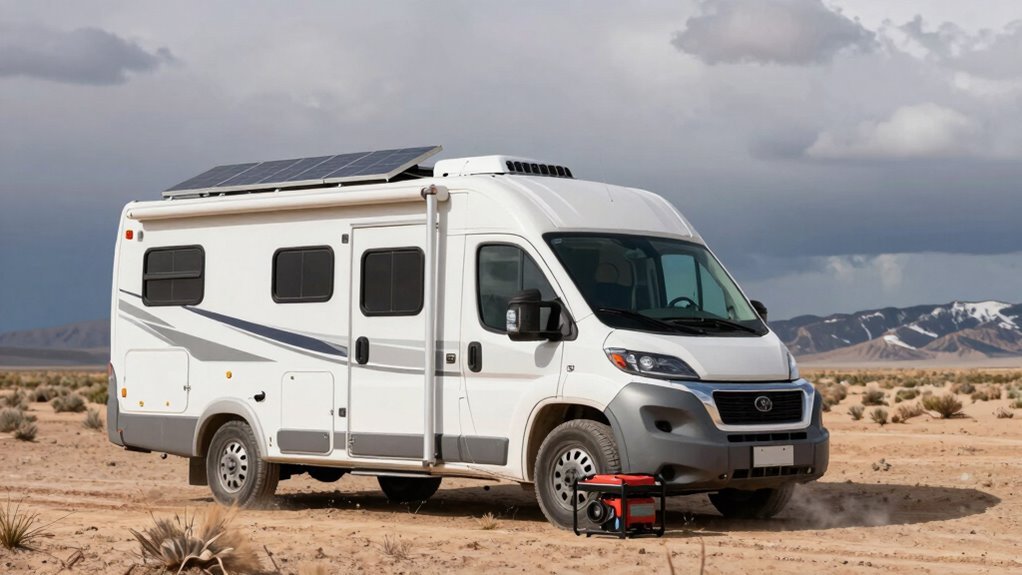
You’ve saved up for your setup and know the numbers—but what really matters is how it holds up when Mother Nature throws a curveball.
When the sky’s clear and the sun’s blazing, your solar panels hum along happily, soaking up hours of free power while you nap in the shade.
But when clouds roll in or rain starts tapping on your roof, things shift.
Generators don’t care—they’ll roar to life no matter the weather.
Here’s what you’ll see:
- A gleaming solar panel under golden sun, steadily charging your batteries all day.
- That same panel wet and dark under storm clouds, barely ticking over.
- Your trusty generator, wrapped in a cozy rain cover, purring like a cat in a thunderstorm.
Cold, wind, or drizzle? Fuel-powered wins when skies frown.
Solar’s great when the sun’s out—but when it’s not, you’ll want that backup growl of gasoline doing the heavy lifting.
Environmental Impact and Sustainability
When the sun powers your RV, you’re not just saving fuel—you’re giving the planet a high-five every time you charge your phone or fire up the coffee maker.
Solar panels kick out zero emissions, run quietly, and last over 25 years with no fuss.
Meanwhile, gas and diesel generators spew NOx, soot, and carbon—some emit as much pollution as hundreds of cars.
In fact, small generators cause over 20,000 ER visits yearly from CO exposure.
Yikes! Solar lets you boondock cleanly, ditching noisy hookups and sketchy fumes.
Plus, you’ll cut your carbon pawprint while enjoying nature the way it’s meant to be—fresh and quiet.
You’re not just traveling; you’re doing Mother Nature a solid.
And honestly, what’s cooler than running your fridge off a star 93 million miles away? Now *that’s* power with purpose.
Frequently Asked Questions
Can I Use Solar and a Generator Together in My RV?
Yes, you can absolutely use solar and a generator together in your RV—they’re like the ultimate road trip power duo!
You run silent, clean solar by day, and flip to the generator when clouds hover or you need a quick boost.
Mix sunshine and fuel to keep your fridge cold, AC humming, and devices charged.
It’s flexible, smart, and honestly, kind of genius.
How Long Do Solar Panels Last on an RV?
Your solar panels will likely last 25 to 30 years on your RV, with many chugging along happily for up to 40!
They don’t just quit—just slow down a bit, losing about 0.5% to 1% efficiency yearly.
In cooler spots, they’ll degrade slower, like a fine wine.
Even after decades, they’re still working, just not at full sprint.
Keep ‘em clean, install ‘em right, and they’ll power your adventures for a lifetime—and then some!
Do I Need an Inverter With a Solar Setup?
Yes, you do need an inverter with a solar setup if you want to power regular appliances—solar charges the batteries, but they store power as DC, and your gadgets crave AC.
Think of the inverter as a clever translator, flipping 12-volt battery juice into 120-volt household current.
No inverter?
No toaster, coffee maker, or TV.
It’s the unsung hero of off-grid life, quietly working so you don’t have to miss out on the good stuff.
Are RV Generators Allowed in All Campgrounds?
No, you can’t fire up your RV generator in all campgrounds—rules vary and you’ve gotta play by them.
Most places enforce quiet hours, usually banning generators from 10 p.m. to 6 a.m., and national parks slash that even more.
Some, like Yosemite, only let you run it during short windows.
Others, like Bolsa Chica, say “nope” unless something breaks.
Always check policies—surprising your neighbor with early-morning generator noise isn’t the best icebreaker!
Can I Upgrade My Rv’s Solar System Later?
Yep, you can totally upgrade your RV’s solar system later—no crystal ball needed!
Start small, then add panels like rooftop extras or portable ones that sunbathe wherever you park.
Need more juice? Toss in bigger batteries, even swap to lithium when you’re ready.
Controllers and inverters can tag along for the ride, upgrading as you go.
It’s like LEGO for energy—snap, click, power on!
Conclusion
You’ve crunched the numbers, weighed the pros and cons—now the real question hits: will you wake up to birdsong or generator roar? Picture yourself sipping coffee, sun powering your lights, fridge humming silently. Or maybe you like playing campsite DJ—with fumes. Solar gives freedom, quiet, and zero fuel runs. Generators? They’re loud, thirsty, and kinda high-maintenance. Spoiler: the sun’s got this one in the bag.
References
- https://www.nirvc.com/blog/rv-electricity-101-part-2-an-rv-owners-guide-to-rv-electrical-systems/
- https://leisurecw.com/rv_repairs/the-basics-of-rv-electrical-systems/
- https://fischerpanda.com/vehicle/rv-diesel-generator/what-does-an-rv-generator-power/
- https://ronsautorv.com/understanding-rv-electrical-systems-a-complete-guide-for-rv-owners/
- https://technorv.com/blogs/articles/how-does-an-rv-electrical-system-work
- https://www.ecoflow.com/us/blog/how-does-an-rv-electrical-system-work
- https://www.youtube.com/watch?v=oqPZVlM4FQE
- https://recpro.com/rv-electrical/
- https://www.pplmotorhomes.com/parts/electrical-plumbing-lp-gas/rv-electrical-systems-and-accessories
- https://aurorasolar.com/blog/how-a-photovoltaic-system-produces-electricity/