How to Tow a Trailer: Tips for Beginners
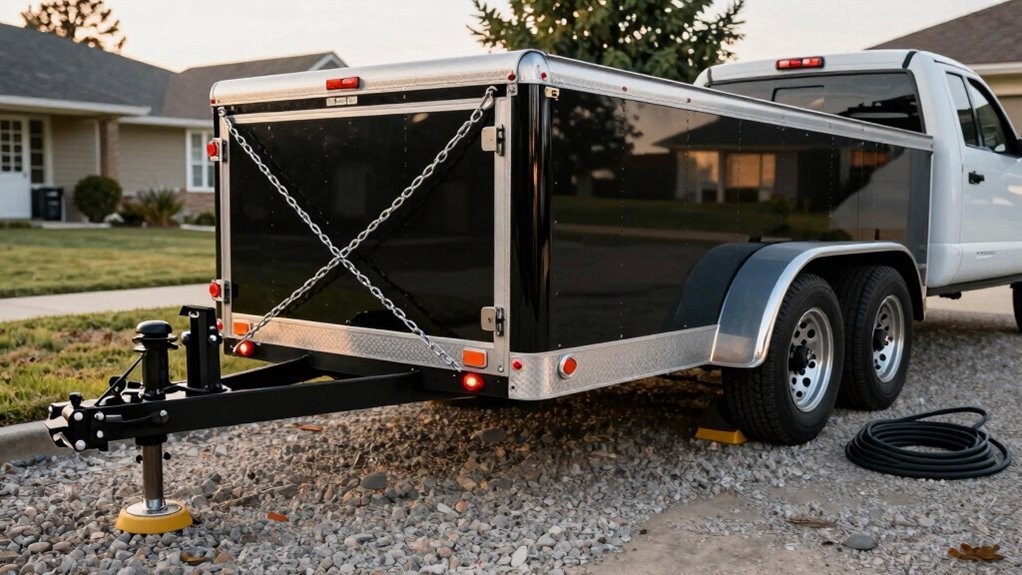
Know your truck’s limits—check the GVWR and GCWR to stay safe and legal. These numbers are crucial when you’re planning how to tow a trailer, as exceeding them can lead to dangerous situations and legal issues.
Pick a trailer that matches your needs, like an open utility for yard runs or an enclosed tandem for gear. Make sure the trailer’s weight stays within your truck’s towing capacity to ensure a safe and smooth experience.
Match the hitch class to your load, ensuring it’s rated for the trailer’s weight. Plug in the trailer lights and confirm the wiring is correct—green for passenger-side turn signal, brown for taillights.
Test the brakes before hitting the road, including the breakaway system. This is a critical step in how to tow a trailer safely, as brake failure can lead to loss of control.
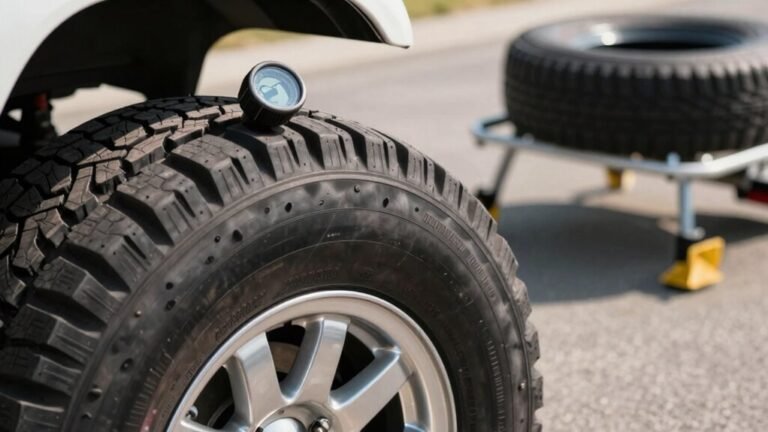
Secure your load properly and double-check tire pressure on both the truck and trailer. Uneven weight distribution or underinflated tires can compromise stability while towing.
Drive with care, allowing extra distance for stopping and taking turns wider than usual. Remember, you’re now handling a longer, heavier combination that responds differently to steering and braking.
Practice backing up in an empty lot—maneuvering a trailer takes skill and patience. The more you practice, the more confident you’ll become in real-world situations.
Know Your Vehicle’s Towing Capacity
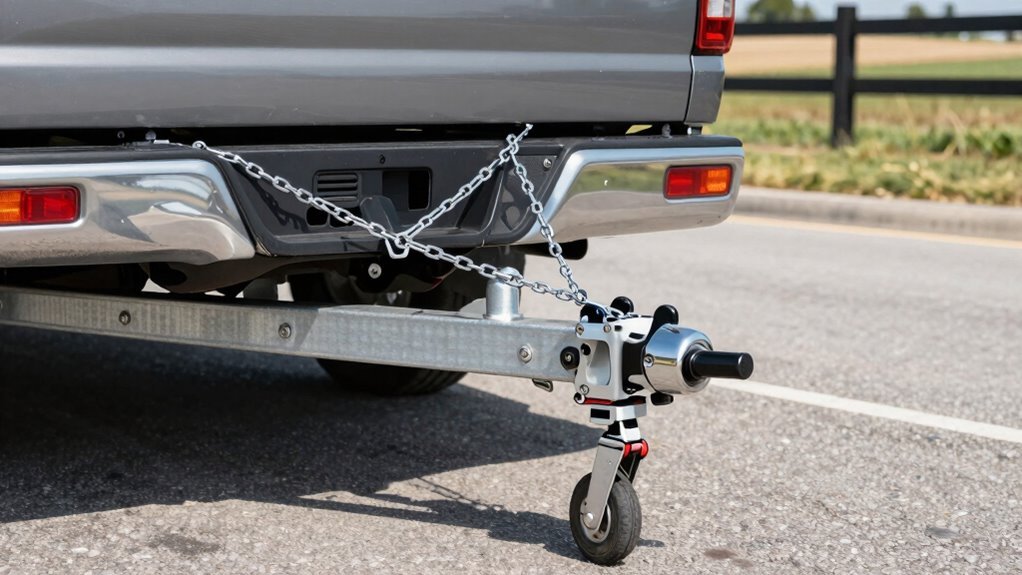
Thinking about hitting the road with a trailer in tow?
First, you’ve gotta know your rig’s limits—no guessing!
Your vehicle’s GVWR is the max weight it can safely carry, including you, your gear, and even that snack stash.
Find it on the driver’s door jamb or in the manual.
Curb weight is what your vehicle weighs solo, just with fluids—like its “base model” self.
Then there’s GCWR: the heaviest combo of your truck and a fully loaded trailer.
To find your max towing capacity, subtract curb weight from GCWR.
Easy math, big peace of mind.
And don’t forget tongue or pin weight—it eats into your payload fast!
Play it smart, stay under that 10% safety cushion, and keep the adventure fun, not risky.
Understanding towing capacity helps prevent vehicle damage and ensures safer towing for you and others on the road.
You’re not just towing—you’re towing *right*.
Choose the Right Trailer for Your Needs
What kind of load are you planning to haul—lawn mowers, ATVs, or maybe a mountain of mulch? If it’s light jobs around the yard, a 4×6 open utility trailer ($800–$1,200) handles that no sweat.
Need more space? Step up to a 5×8 or beefy 6×10 model with 3,000-lb capacity—perfect for heavy gear.
Hauling equipment? Tilt decks make loading a snap, especially for mowers and ATVs, while dump trailers save your back when moving gravel or dirt.
For tools or valuables, enclosed trailers lock it down tight, and tandem axles keep things steady on the highway.
Moving big stuff? Gooseneck or heavy-duty flatbeds can tote over 10,000 lbs—yes, even your buddy’s “slightly used” tractor.
Car hauling? Drive-over fenders keep low vehicles safe.
Pick the right trailer, and you’re not just hauling—you’re owning the road.
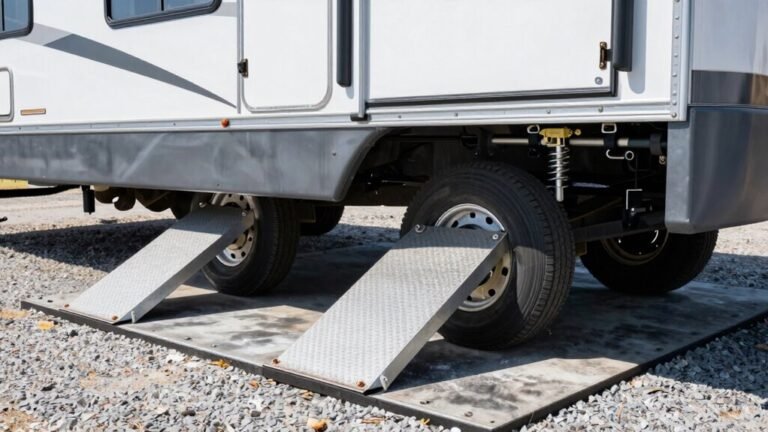
Ramps are essential for smooth loading of vehicles and heavy machinery, and many tilt deck and car hauler trailers come equipped with foldable or removable ramps for added convenience.
Understand Trailer Hitch Classes and Types
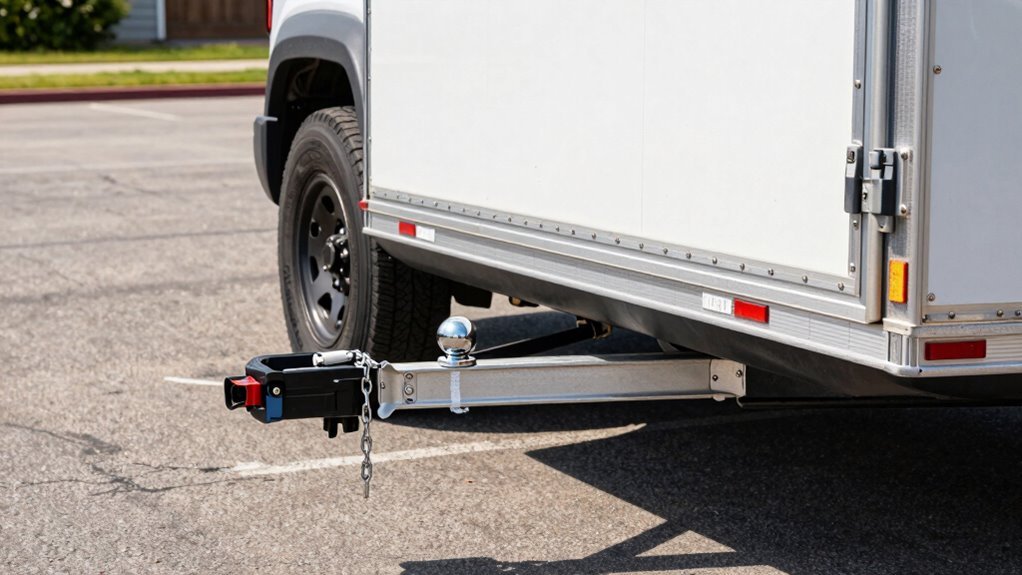
Once you’ve picked the perfect trailer, it’s time to lock in the right hitch—because no one wants their weekend adventure turning into a roadside drama.
Receiver hitches are your go-to, graded from Class I to V based on towing muscle.
Hauling bikes or a small cargo rack? A Class I (up to 2,000 lbs) or II (3,500 lbs) fits most cars and minivans.
For campers or boats, jump to Class III (8,000 lbs) or IV (12,000 lbs) on SUVs and trucks.
Need serious power? Class V handles up to 20,000 lbs—just add sway control.
These hitches sport 2-inch or 2.5-inch tubes, so check your fit!
And if you’re towing big, like an RV, consider a 5th wheel or gooseneck hitch for rock-solid stability.
They live in truck beds and turn like champions, though they require some drilling.
Don’t guess—match the hitch to your load.
Your future self (and your trailer) will thank you when you’re smoothly rolling down the highway.
U-Haul is North America’s No. 1 Hitch Installer with over 1,500 locations nationwide.
Connect Lights and Brakes Properly
Getting your trailer’s lights and brakes dialed in doesn’t have to feel like solving a puzzle blindfolded—though let’s be honest, staring at a tangle of colored wires can make you feel like a mechanic detective.
Plug in that 7-way connector snug and clean, and make sure there’s no rust sneaking on the pins—corrosion is a party crasher for brake signals.
Match the wires right: blue to brakes, white to ground, brown to taillights.
Use a multimeter if things act up—it’s like a lie detector for wiring.
Set your brake controller to moderate gain, then test at 20–25 mph.
If the trailer drags or jerks you forward, tweak the setting.
Don’t forget the breakaway cable—hook it to the frame, keep it shorter than the chains, and test it.
You want those brakes to kick in fast if the hitch says “peace out.”
Perform a Pre-Trip Trailer Safety Check
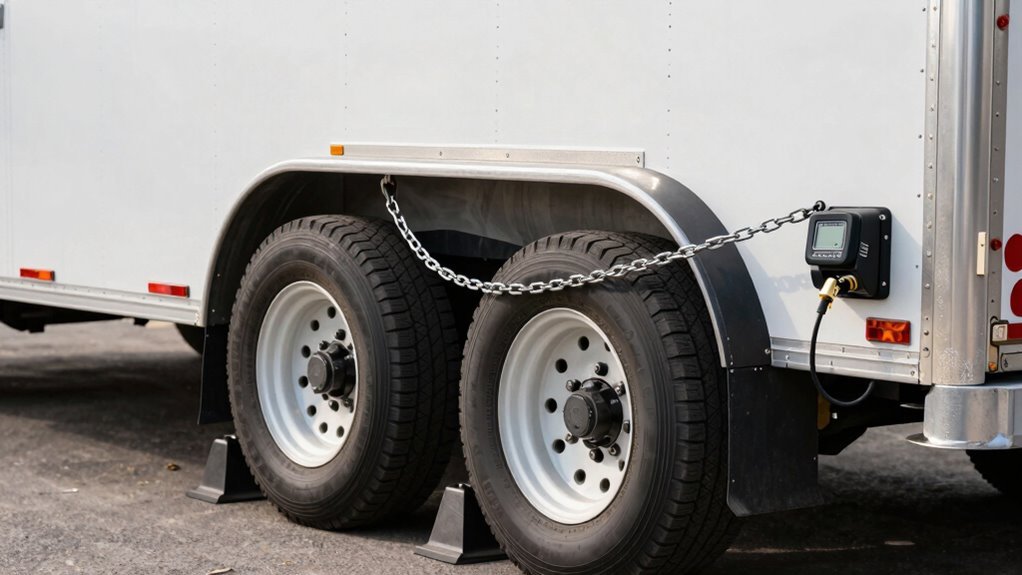
You’ve got the lights blinking and the brakes responding—now let’s make sure your trailer isn’t held together by hope and duct tape.
A quick but thorough safety check keeps you out of trouble down the road—literally.
Don’t just glance; actually inspect. Kick the tires, eyeball the frame, and tug on the hitch like you’re testing a stubborn jar lid.
- Check tire pressure and tread—you’re not betting your trip on a blowout, right?
- Scan the frame and body for rust, cracks, or drama hiding in the metal.
- Confirm the hitch is locked tight and those safety chains are crossed like wishbones.
- Make sure your load’s secure, balanced, and not planning a surprise roadside escape.
A few minutes now save a world of hassle later. Safety’s not glamorous, but arriving in one piece? That’s a win.
Master Driving With a Trailer Attached
How’s your confidence behind the wheel when there’s a trailer tagging along like a determined duckling? Don’t sweat it—you’ve got this!
Keep your speed at or below 55 MPH, even if the limit’s higher, since extra weight means less control.
Stay in the right lane on highways; you’ll accelerate slower, and others will appreciate the predictability.
Always leave a 5-second gap—more if it’s wet or windy—because stopping takes longer now.
Take wider turns, especially rights, and go slow so your trailer doesn’t clip curbs.
Use your mirrors constantly; make sure they show the full side of the trailer, and add towing mirrors if needed.
Check blind spots like you’re on a mission.
And remember, smooth and steady wins the road.
Drive like you’re showing off how *not* to rush—because now, everything you do takes just a little more space, time, and cool-headed grace.
Learn How to Back Up a Trailer Smoothly
Why does backing up a trailer feel like trying to pat your head while rubbing your stomach—backward?
Because it’s counterintuitive, but once you get it, you’ll wonder what took so long.
Start by pulling past your spot until the trailer lines up, then reverse slowly at idle.
Grip the bottom of the wheel—turn right, trailer goes right; turn left, it follows left.
If things go sideways, just pull forward to reset.
Use your mirrors, take your time, and make small, early tweaks instead of wild last-second moves.
- Get out and look—know your space before you start
- Your hands on the wheel’s bottom control the trailer’s path
- Small corrections early beat big fixes later
- It’s okay to go forward—realigning isn’t failing, it’s smart backing
Practice Turning and Maneuvering in Tight Spaces
Mastering tight turns with a trailer isn’t just about steering—it’s like playing a real-life game of Tetris, where your rig’s the piece that never quite seems to fit.
You’ll want to position your truck slightly left before a right turn, giving the trailer room to off-track without clipping the curb.
Pull past the turn first, then crank the wheel hard—go full lock to swing that trailer where it needs to go.
Keep an eye on your mirrors, watching how the trailer’s tires hug the inside path.
Stay wide on turns, use a bit of the oncoming lane if safe, and don’t rush—wait for traffic.
If you’re stuck, it’s totally okay to pull forward and reposition.
Think of it as trailer yoga: a little wiggle, a lot of patience.
With practice, you’ll nail those 180s and fit into tight spots like a pro, all while looking cool doing it.
Frequently Asked Questions
Can I Tow a Trailer With a Rental Vehicle?
You can tow a trailer with a rental, but only if you pick the right company and truck.
Enterprise lets you tow with their big pickups, and U-Haul actually encourages it—just check your vehicle, hitch, and weight limits.
But skip Sixt or Alamo—they flat-out say no.
Budget? Only with their largest trucks.
Choose wisely, match the weights, and you’ll hit the road with confidence—no surprises, just adventures!
Are There Tolls Specifically for Vehicles Towing Trailers?
Yeah, there are tolls specifically for vehicles towing trailers—you bet!
When you tow, toll systems count your trailer’s axles and bump your fee accordingly.
They see your combo as a bigger rig, so you’ll pay a bit more.
Just link your license plate to your pass, and you’re golden.
Forget double transponders—bag that tag on the towed vehicle.
Smooth sailing, no surprise bills!
Do I Need a Special License to Tow a Trailer?
You probably don’t need a special license to tow a trailer—regular driver’s license works if you’re under 10,000 pounds.
Just keep the total weight below 26,001 lbs, and you’re golden.
But go over that, and Uncle Sam wants a CDL.
Check your state’s rules though—they love throwing curveballs.
When in doubt, less weight means less worry—and fewer tickets!
How Does Weather Affect Towing a Trailer?
Weather turns your trailer into a kite, a slip ‘n slide, or an ice cube—sometimes all at once!
Crosswinds shove you sideways, rain makes you float, and ice laughs at your traction.
You’re not just driving—you’re dancing with the elements.
Slow down, grip steady, and laugh when the wind tries to steer for you.
Stay alert, stay ready, and hey—don’t let Mother Nature tow you!
Can I Use Cruise Control While Towing a Trailer?
Yeah, you can use cruise control while towing—but only when it’s safe.
Flip it on during long, flat highway stretches with light traffic and dry roads.
Keep it off on hills, curves, or in rain or wind.
Watch your speed, ’cause ST tires usually max out at 65 mph.
And if your rig starts swaying or the transmission hunts gears, tap the brakes and take full control.
Cruise helps, but don’t let it drive—stay ready to jump in!
Conclusion
You’ve got this! Did you know over 4 million trailer accidents happen each year, mostly from improper hookups? Don’t let that scare you—just stay sharp and double-check everything. Towing’s a breeze once you get the hang of it, like driving with a trusty sidekick. Treat every trip like a mini adventure, keep calm, and back up like a pro. Before you know it, you’ll be turning heads—and corners—like a total champ!
References
- https://www.efleets.com/en/proof-and-insights/white-papers/payload-towing-capacity-measurement-guide.html
- https://bigjoeauto.com/blog/the-ultimate-guide-to-truck-payload-and-towing-capacity
- https://www.blueox.com/towing-capacity-guide-how-is-towing-capacity-calculated/
- https://triwich.com/blog/how-to-calculate-towing-capacity/
- https://www.youtube.com/watch?v=9VvJpwE5ljc
- https://www.curtmfg.com/towing-capacity
- https://www.weigh-safe.com/towing-safety/how-much-can-my-vehicle-tow-towing-and-payload-capacity/
- https://www.ford.com/support/towing-calculator/
- https://www.arrowtrail.com/blog/6-types-of-trailers-and-what-theyre-best-used-for/
- https://midstatetrailers.com/which-trailer-is-ideal-for-what-im-towing/