How to Improve Your RV’s Fuel Efficiency
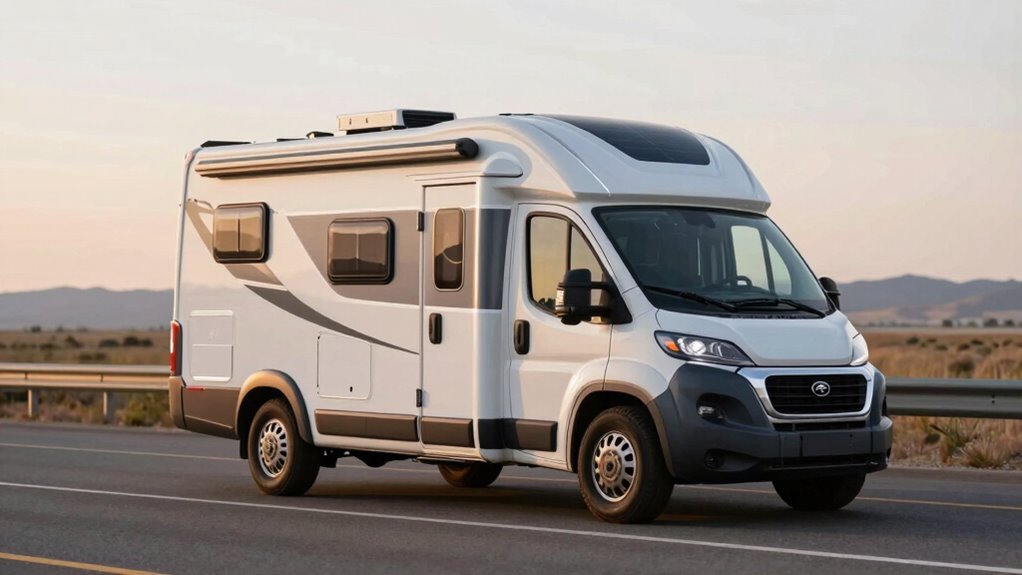
Keeping your tires inflated to the correct PSI—found on the door sticker, not the sidewall—can improve your RV’s fuel efficiency by reducing rolling resistance. Properly inflated tires help your RV move more easily, which means burning less fuel over time.
Lighten your load and maintain speeds between 55–60 mph to maximize your RV’s fuel efficiency. Using cruise control on long stretches helps maintain a steady pace, minimizing fuel-wasting acceleration and braking.
Add aerodynamic upgrades like RV deflectors or trailer tails to reduce wind drag and boost fuel economy. When parked, swap energy-draining air conditioning for smart roof vents that regulate temperature efficiently.
Cutting unnecessary weight, optimizing speed, and reducing drag all contribute to better fuel efficiency. These smart habits save you gas, money, and hassle—one clever trip at a time. There’s even more where that came from.
Maintain Proper Tire Pressure
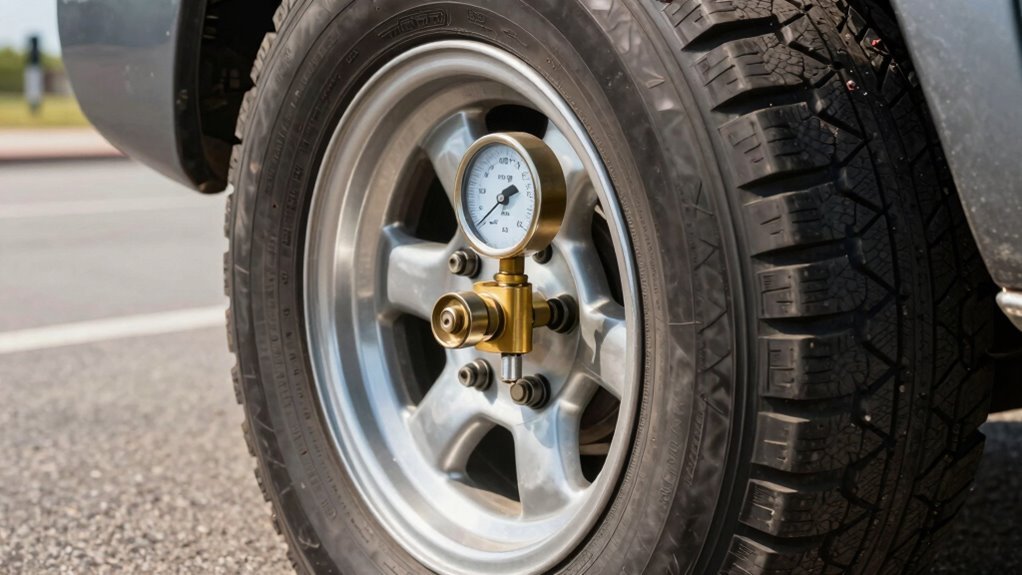
Let’s pump up your RV’s fuel efficiency—starting with your tires! You’re in control: keeping them properly inflated can save up to 10% on fuel, especially at highway speeds.
Don’t guess—check the placard on your driver’s door, not the sidewall, for the right pressure.
Underinflated tires create more rolling resistance, making your engine work harder (and burn more gas).
For every 1 PSI low, you lose about 0.2% in mileage—small drops add up!
Weigh your RV fully loaded, then consult the manufacturer’s table for the *one* correct PSI.
Check pressures cold—after sitting three hours or driving less than a mile—and use a reliable gauge.
Properly inflated tires don’t just save fuel; they grip better, wear longer, and keep you safer.
Think of it as a tune-up for both your wallet and the road.
50% underinflation causes up to 10% fuel economy loss at lower speeds, according to Oak Ridge National Laboratory testing on a 2009 Toyota Corolla.
Air today, go further tomorrow!
Reduce Excess Weight and Drag
Strip down your RV to the essentials—because that extra weight isn’t just baggage, it’s burning cash. Every 100 pounds you haul can knock down your MPG by up to 2%, and that adds up fast on long trips. Overloaded trailers? They guzzle 2–5% more fuel. Plus, improper tongue weight can cost you over 2 MPG compared to the sweet spot at 15%. Lighten the load and watch your efficiency soar.
Proper tongue weight at 15% GTW maximizes fuel efficiency, as shown in tests where correct loading improved MPG by over 2 compared to under- or over-loaded trailers.
- Picture binoculars, fishing gear, and a spare toolbox piled in the back—you don’t need ‘em all.
- Imagine your RV cutting through air like a sleek dolphin, not a brick wall.
- Visualize neatly packed cabinets where every item earns its spot.
- Think of your engine breathing easy, not groaning uphill with junk you forgot you owned.
Less weight, less drag, more miles—your wallet will thank you!
Drive at Consistent Speeds
Cruising at the right speed isn’t just about relaxing behind the wheel—it’s like giving your RV a VIP pass to better fuel mileage.
You’ll hit the sweet spot between 55 and 60 mph, where every gallon goes the extra mile.
Go faster, and you’re basically throwing money out the window—about 1 MPG lost just by doing 65.
Wind resistance grows fast, and your boxy beauty has to work harder for each extra mph.
But slow, steady pressure on the gas? That’s your friend.
Use cruise control on highways to stay smooth and consistent—it’s like autopilot for saving fuel.
Gentle acceleration and braking keep things efficient too, unlike jackrabbit starts that gulp gas.
Skip the stop-and-go grind by driving off-peak.
Stick to the sweet range, and your wallet will thank you later.
Who knew slow and steady could win the fuel economy race?
Driving like a semi-truck—gradual acceleration and coasting to stops—can significantly improve efficiency, making slow, steady acceleration a key habit for maximizing mileage.
Optimize Aerodynamics
Slicing through the air like a hot knife through butter? You can get closer by streamlining your RV’s shape.
Aerodynamics matter—especially at highway speeds—where cutting drag boosts fuel economy. While boxy RVs limit gains, small tweaks still help. Think of your rig as a wind-cheating machine, not just a rolling home.
- AeroShield deflectors that tilt to guide air smoothly over your trailer and truck bed.
- Side skirts hugging your trailer’s edges, silencing wind chaos underneath.
- Rear trailer tails extending like fins, calming the storm of air behind you.
- AC shrouds cloaking rooftop units, keeping airflow sleek and branches out.
These gadgets won’t turn your RV into a sports car, but hey, every drop of fuel saved is a win.
Just remember: slowing down 5 mph often beats spending $5,000 on add-ons. Work *with* the wind, not against it.
Use Roof Vents to Minimize AC Use
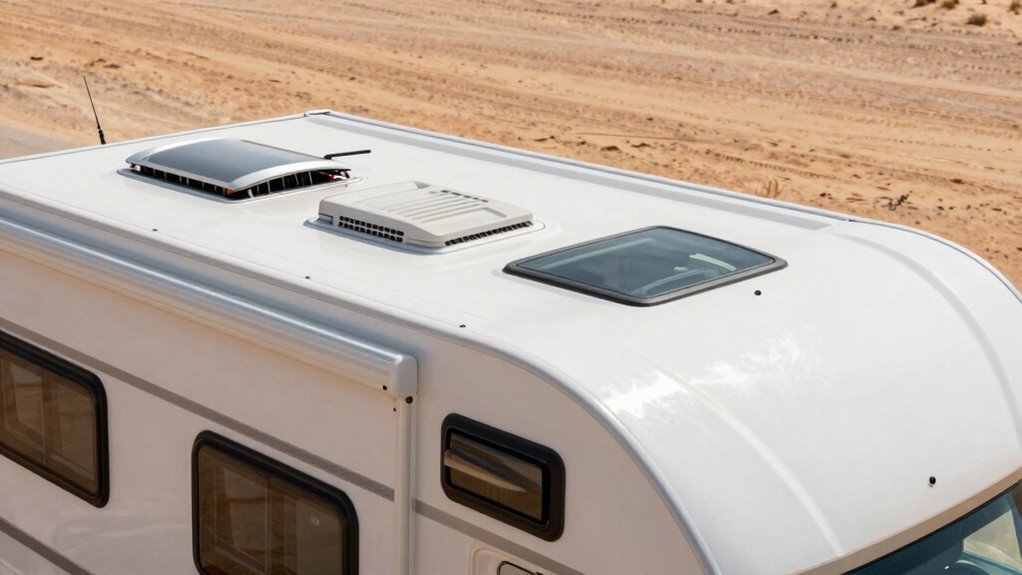
Letting a breeze chase the heat out through your roof vent? You’re already halfway to beating the heat without firing up the AC.
Manual vents work fine, but automatic ones with fans—like the MaxxFan Deluxe—let you kick back while they suck out hot air and pull in cool breezes.
They use way less power than your AC (we’re talking under 3 amps!), so your battery stays happy, especially off-grid.
With 10-speed control and even thermostat settings, you stay comfy without wasting fuel.
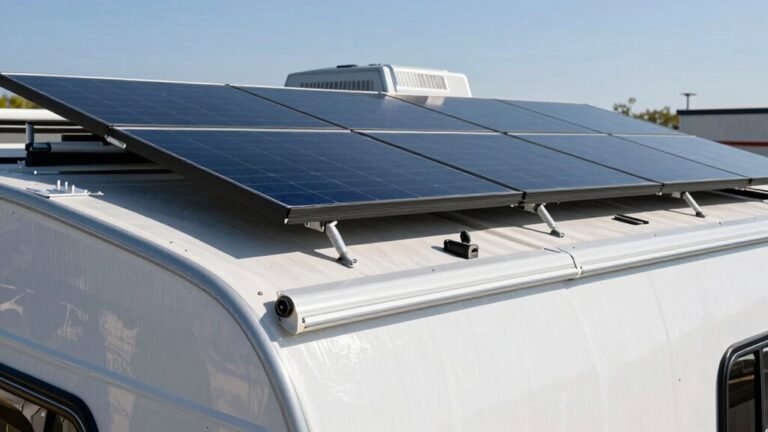
Plus, solar-powered options run nearly free and keep working in the rain thanks to smart covers.
Open vents let air flow even when you’re parked, stopping that sticky, stuffy feeling.
They also slash mold risk and protect your rig from moisture damage.
Just clean ‘em once a month, slap on insulation, and enjoy the fresh air—your wallet and your generator will thank you!
Frequently Asked Questions
How Often Should I Change My Rv’s Oil?
You should change your RV’s oil every 3,000 to 8,000 miles, depending on your engine and oil type—diesel lasts longer, while gas needs more frequent swaps.
Use synthetic? You’re golden for up to 7,500 miles.
But hey, don’t just drive blindly—check that dipstick!
Dark gunk or engine knocks mean it’s time.
And always, *always* change it at least once a year, even if you’re just parked and dreaming of the open road.
Does Using Cruise Control Save Fuel on Hills?
You might think cruise control saves gas on hills, but it actually burns more fuel trying to hold speed uphill.
It pushes harder, shifts more, and revs your engine—wasting fuel.
You’re better off turning it off and driving manually.
Let your RV slow down a bit going up, then build momentum on the way down.
You’ll save fuel, stress less, and feel like a pro—plus, it’s kind of fun!
Can Engine Additives Improve Fuel Efficiency?
Yeah, some engine additives can actually boost your fuel efficiency!
You’ll see real gains when you pick the right one—like cetane boosters for diesel or quality detergents that clean gunk from injectors.
They help fuel burn cleaner and more completely, which means better mileage.
Just don’t expect miracles; think of them as pit crew members, not magic wands.
Older engines? They’ll love the extra TLC!
Should I Warm up My RV Before Driving?
You bet, but only for about 30 seconds—no need to treat your RV like a diva who needs a full spa intro!
Think of it like putting on your shoes before jogging; you’re ready to go, but ease into it.
Drive gently for the first few miles, letting the engine warm up under light load.
Idling too long just burns cash and does squat—keep it brief, then roll!
Does Fuel Type Affect My Rv’s Mileage?
Yeah, fuel type definitely affects your RV’s mileage—diesel usually gives you better gas mileage than gasoline.
You’ll get 20-35% more efficiency with diesel, thanks to its punchy energy and smarter burn.
Think 8-10 MPG in a Class A diesel vs. 6-8 in gas models.
Even camper vans like the Sprinter shine with diesel, hitting 18 MPG.
It’s like giving your RV a turbo-charged espresso shot!
Conclusion
You’ll practically *feel* your RV purr like a kitten sipping espresso when you follow these tips. Imagine gliding down the highway, tires perfectly pumped, weight shed, and airflow smoother than a buttered dolphin. You’ll save so much fuel, you might start driving just to watch the savings pile up! Stick with it, and your wallet will thank you with a standing ovation—or at least a very enthusiastic slow clap.
References
- https://www.energy.gov/eere/vehicles/fact-826-june-23-2014-effect-tire-pressure-fuel-economy
- https://www.rvlifemag.com/tire-maintenance-one-key-to-fuel-economy/
- https://www.truckinginfo.com/156470/tire-pressure-fuel-economy-and-ghg-regs
- https://retail.wonderlandtire.com/Blog/ArticleID/411/RV-tire-pressure
- https://transweb.sjsu.edu/sites/default/files/2006-Chandra-Tire-Inflation-Fuel-Consumption.pdf
- https://nacfe.org/wp-content/uploads/2020/05/Tire-Pressure-Systems-Confidence-Report-Executive-Summary2020.pdf
- https://etenwolf.com/blogs/news/rv-tire-inflation-why-78-of-owners-overlook-this-deadly-mistake
- https://technorv.com/blogs/articles/why-tire-pressure-and-temperature-are-important-to-rvers-1
- https://www.weigh-safe.com/towing-safety/how-tongue-weight-affects-fuel-efficiency/
- https://www.rvia.org/news-insights/save-fuel-and-improve-your-rvs-gas-mileage