Essential Spare Parts and Supplies to Carry in Your RV
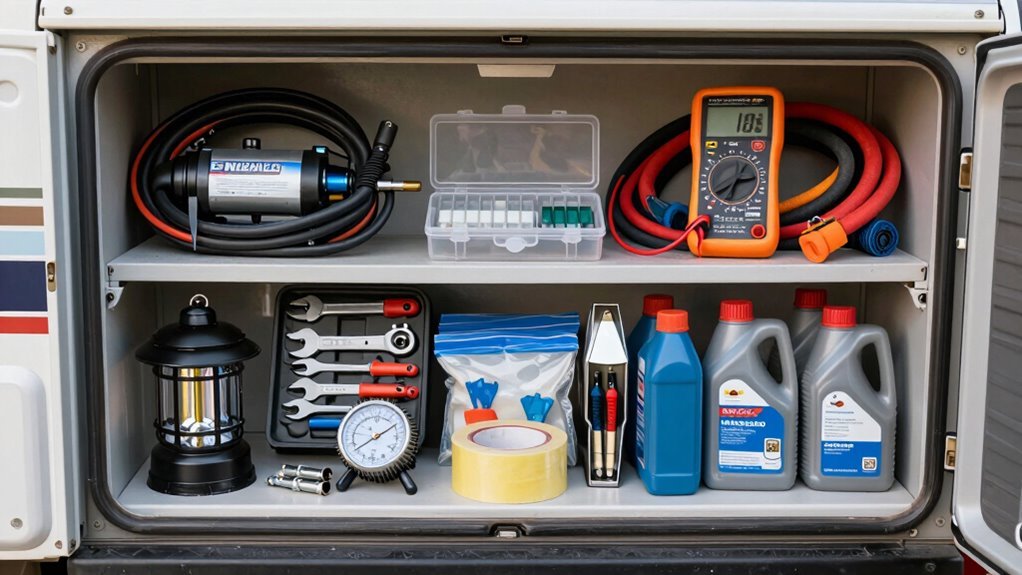
Keep a stash of blade fuses—5A to 30A—because blown ones are RV mood killers. These essential spare parts can save your trip when electrical issues strike, making them a must-have in your RV supplies.
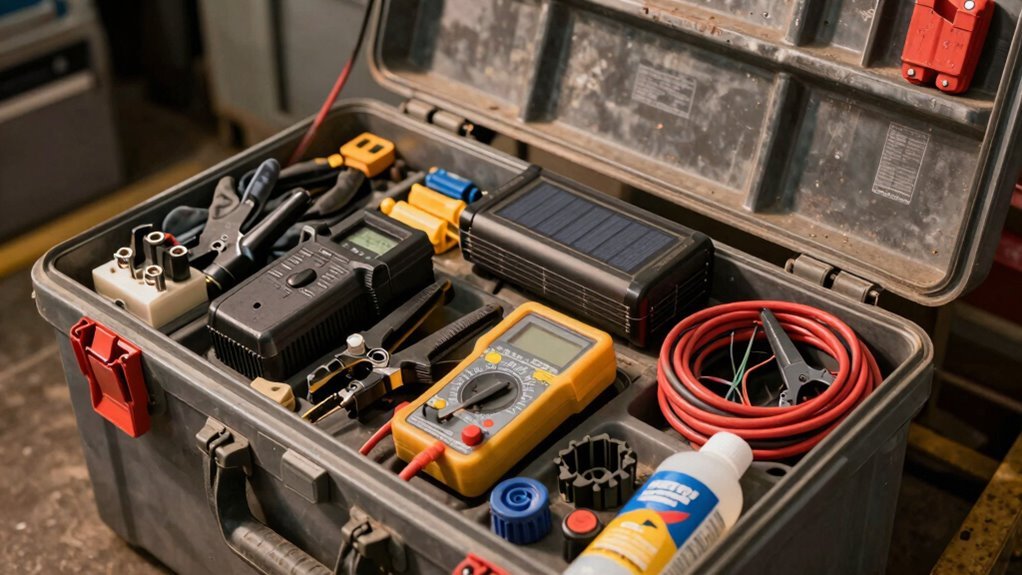
Pack a multimeter, jump starter, and power banks so you’re never left in the dark, literally. These tools ensure you can diagnose electrical problems and keep devices charged, even off-grid.
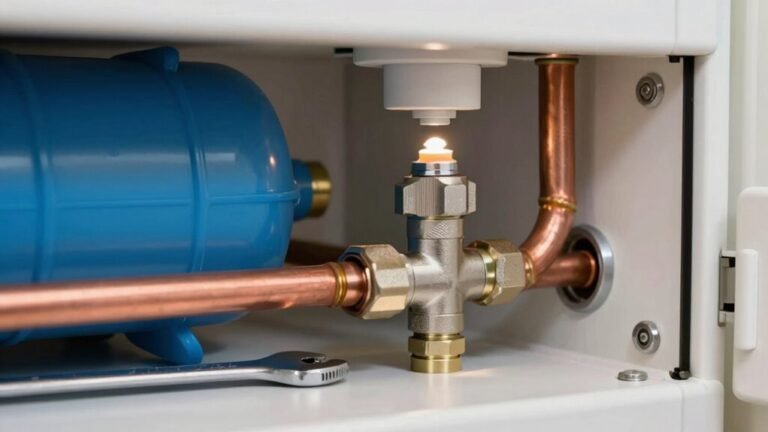
Toss in spare water hoses, Teflon tape, and a trusty adjustable wrench for plumbing drama. Having these RV supplies on hand helps you quickly fix leaks or hookups at campsites.
Don’t forget tire goodies, like a pressure gauge and traction boards—flat tires love bad timing. Being prepared with essential spare parts for your RV’s tires keeps you safe and rolling.
And hey, your future self will thank you when the fridge’s on, the lights are bright, and everything’s humming just right. There’s a whole checklist where that came from.
Electrical System Components and Fuses
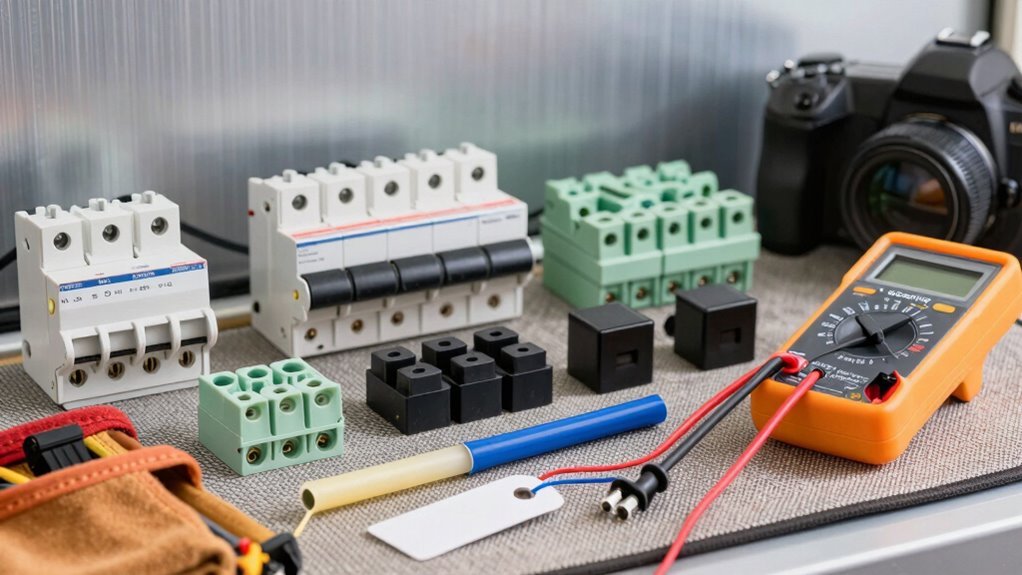
Fuses are the unsung heroes of your RV’s electrical system, quietly standing guard like tiny circuit soldiers ready to take one for the team.
When something shorts or surges, they sacrifice themselves to save your gear—pretty heroic for something smaller than your pinky.
You’ve got 12V basics like lights, fans, and water pumps relying on automotive-style blade fuses, so keep spares handy: 5A, 10A, 15A, 20A, and 30A.
They’re cheap insurance.
Always check the rating—slapping in the wrong fuse is like bringing a squirt gun to a fire.
And don’t forget your multimeter; check voltage before swapping so you don’t get zapped or make things worse.
A blown fuse isn’t a tragedy, just a heads-up.
Replace it fast, and your lights flicker back to life.
Think of it as electrical CPR—quick, easy, and oh-so-satisfying.
These 12V systems are typically powered by batteries, which store electricity for use when shore power or a generator isn’t available.
Plumbing Repair Essentials and Spare Hoses
Now that we’ve got your RV’s nerves—aka the electrical system—running strong, let’s turn the flow to something just as essential: the plumbing.
Keep an adjustable wrench and pipe cutter handy—you’ll laugh less when a pipe bursts and cry more when you can’t fix it fast.
Toss in Teflon tape, spare washers, and pipe fix tape for quick, dry fixes.
Pack a flexible snake and tank backspray tool to outsmart clogs and gunk like a pro.
Bring potable water and sewer hoses, a pressure regulator (your pipes will thank you), and Shark Bite or PEX bits for stress-free swaps.
Toss in toilet kits, pump parts, and an anode rod if your water heater’s looking crusty.
And never forget RV-safe toilet paper—because no one’s laughing when the black tank fights back.
Regularly replacing your water filters ensures clean, safe drinking water and reduces strain on your entire system.
A little prep keeps your flow smooth and your trips hassle-free!
Propane System Safety and Replacement Parts
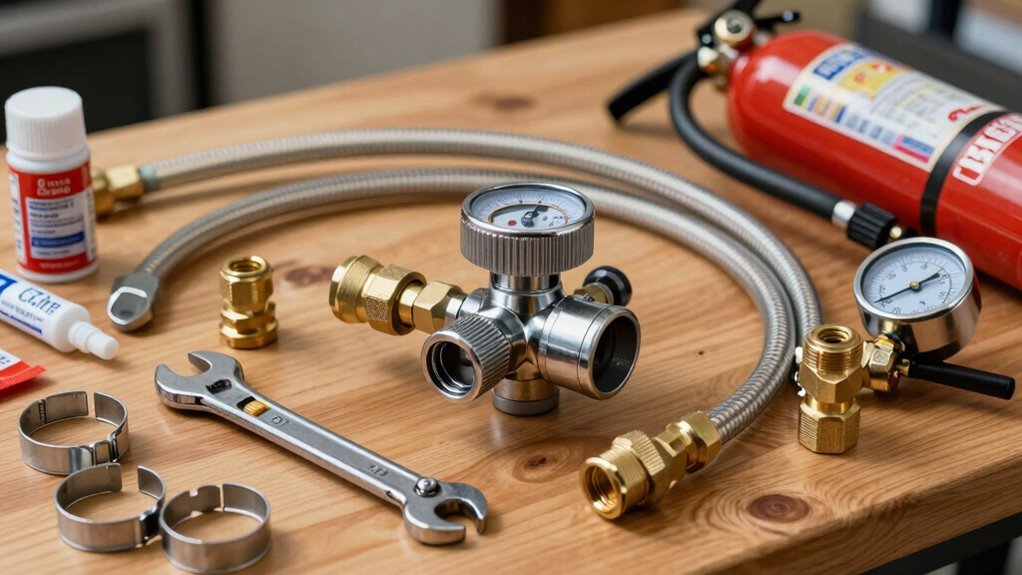
Ever wonder what keeps your morning coffee brewing and your showers toasty on a chilly night? That’s your propane system at work—so treat it right!
Inspect cylinders, hoses, and brackets yearly for rust, wear, or leaks, and replace regulators every 10–15 years.
Use soapy water to test connections—bubbles mean trouble.
If you smell that rotten-egg odor, shut off the tank, ventilate, and get everyone out fast.
Carry a trusty fire extinguisher and working detectors—propane near the stove, CO and smoke near beds.
Store extra tanks upright and ventilated, filled only to 80% (propane hates being cramped).
Clean appliance vents and burners regularly—dust bunnies don’t belong in your furnace!
And please, don’t skip that annual pro inspection.
Exterior vents must be checked regularly and kept free of blockages to ensure proper airflow and safe operation.
A well-maintained propane system is like a good campfire: warm, safe, and totally worth the effort.
Tires, Tools, and Trailer Hardware
You’ve got your propane running smooth and your coffee brewing—now let’s talk about what really gets you from campsite A to campsite B: your tires, tools, and trailer hardware.
Keep these essentials handy, and you’ll roll with confidence no matter the road (or lack of it). Here’s what you can’t skip:
- Tire & Safety Must-Haves: A spare tire, tire pressure gauge, air compressor, and traction boards mean you’re never stranded by a flat or sand trap.
- Go-To Tools: Grab a socket set, torque wrench, multitool, and pliers—these babies tackle nearly any roadside fix.
- Hardware Heroes: Don’t forget hitch pins, ratchet straps, wheel chocks, and leveling blocks—they keep everything tight, stable, and rolling true.
Add PB Blaster for rusty lugs, zip ties for quick fixes, and a work light because nobody enjoys crawling under the RV in the dark. With this crew on board, you’re not just prepared—you’re the campground legend in the making.
Slide-Out and Awning Maintenance Supplies
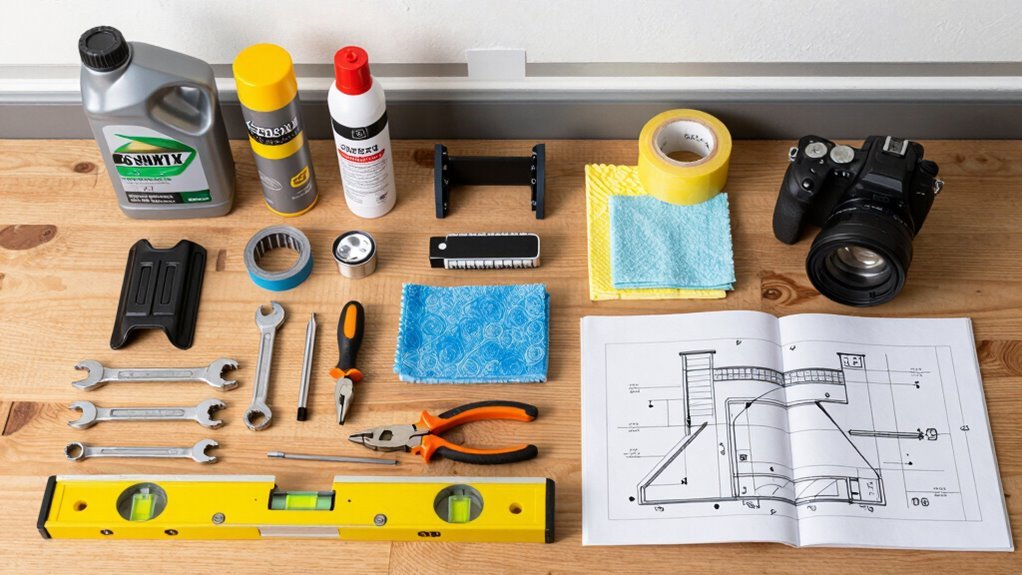
How does your RV stay cozy inside while weathering the wild outdoors?
Your slide-outs and awning have a lot to do with it—so treat ’em right!
Clean seals regularly with mild soap and microfiber cloths, and hit grimy spots with isopropyl alcohol or non-abrasive cleaner.
Don’t forget the bristle brush for those sneaky grooves.
Lubricate gears and rails quarterly using silicone spray or dry Teflon lube—your motor will thank you.
Keep rubber seals flexible with monthly conditioner and a biyearly dose of moisture-restoring product.
Tackle awning fabric with gentle soap and a soft cloth, never a power washer!
Always use a ladder safely, and stash nitrile gloves and eyewear in your kit.
With a flashlight, screwdriver, and small vacuum, you’ll spot issues before they grow.
A little care now saves big headaches later—plus, nobody likes a squeaky slide-out at midnight!
Water and Waste System Backups
When the great outdoors calls, the last thing you want is a backup that turns your adventure into a soggy surprise—so keep your water and waste system running smooth with the right prep.
Stay ahead by stocking up on essentials that handle everything from stinky tanks to surprise leaks.
- RV-specific toilet chemicals and enzyme treatments break down waste and keep odors from throwing a party in your basement.
- Extra sewer hoses with built-in traps and a spare flush hose make dumping drama-free, even when the campsite’s far from the drain.
- A spring-loaded ASTVD and valve seal protectors prevent clogs and gas leaks, so your system breathes easy—just like you should.
Toss in a bottle of tank sanitizer and a gauge for dodgy sensors, and you’ve got a rock-solid defense against the dreaded backup. Your RV (and your nose) will thank you!
Battery Care and Charging Equipment
Keeping your RV’s water and waste systems in check means you’ll never get caught with a stinky surprise, but what powers all that smooth sailing? Your batteries!
Keep them happy with a wire brush and baking soda mix to zap away corrosion—your terminals will thank you.
Don’t forget distilled water for flooded lead-acid types, and always use a stage-charging system to avoid frying them.
A trickle charger’s okay, but only for up to 48 hours.
Solar setups? Perfect for slow, safe top-offs.
Use a voltage meter daily—no snoozing on that 10.5-volt minimum!
Lithium batteries last longer and love staying above 20% charge, while lead-acid ones hate the cold and never want to go below 50%.
Toss in a dielectric grease coat, a disconnect switch, and a battery blanket in winter, and boom—you’re not just surviving, you’re rolling with power!
Interior Fixtures and Common Replacement Items
What keeps your RV feeling like home? It’s the little things—like a quiet fan above your head, a sturdy table for coffee, and lights that flick on when you walk in.
When parts wear out, you’ll want these on hand:
- Ceiling fans and blades – A 42″ oil-rubbed bronze fan cools the cabin, while replacement blades or motors keep it spinning smoothly.
- Vents and registers – Snap-on diffusers and floor vents with 360° airflow stop drafts and boost comfort, no matter the weather.
- Door catches and table bases – A magnetic pocket door catch keeps privacy intact, and a flush-mount pedestal keeps your wobbly table from turning dinner into a circus act.
Swap out cracked shower pans, stiff faucets, or flickering dome lights before they dampen your trip.
Keep a few key spares—because nothing kills the vibe like a creaky shelf or a fan that sounds like a helicopter. Stay comfy, stay ready, and let your RV keep feeling like *you*.
Emergency Safety and Lighting Gear
You’ve got your ceiling fan humming and your table steady, but let’s talk about what happens when the unexpected rolls in—like a flat tire at dusk or a flicker in the electrical panel.
Don’t panic—you’ve got this.
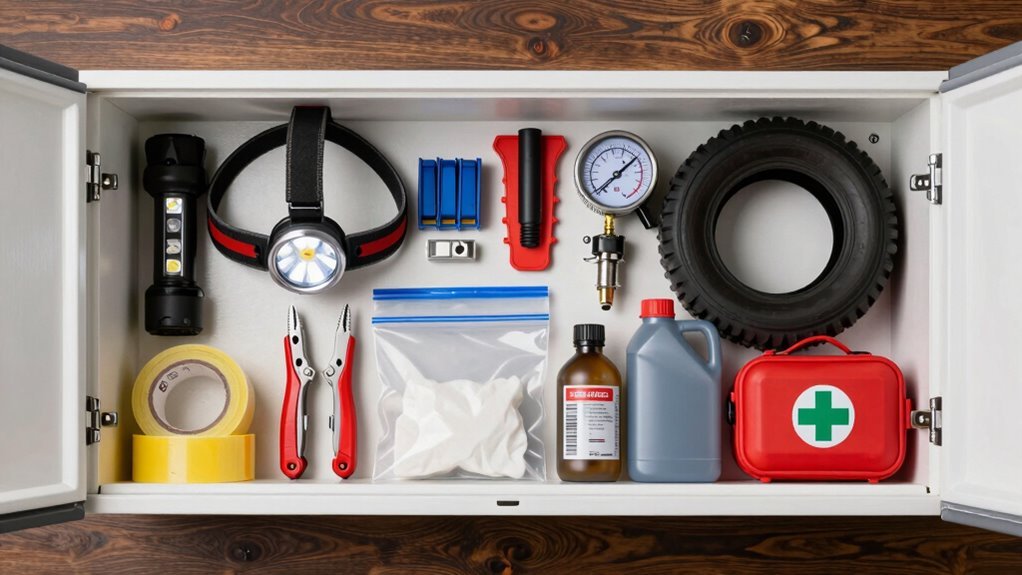
Toss on a reflective vest (one for everyone, even the kids), grab your LED flares or hazard triangles, and make yourself seen.
Keep an ABC fire extinguisher handy, check it often, and don’t forget smoke and CO detectors—your silent safety squad.
Stash a heavy-duty flashlight with extra batteries, or better yet, a hand-crank one that’ll never quit on you.
Your jump starter isn’t just for dead batteries—it’s a mini lifeline.
Toss in a dash cam, solar radio, and power banks, because “off-grid” shouldn’t mean “out of options.”
And hey, if things get wild, your seatbelt cutter and window breaker might just make you feel like an action hero.
Safety’s no joke—but being prepared? That’s peace of mind with a side of confidence.
Frequently Asked Questions
How Often Should I Inspect My Rv’s Roof Sealant?
You should check your RV’s roof sealant every six months at least—it’s quick and keeps trouble at bay.
If you’re out there chasing sunsets monthly, peek at it monthly too.
After storms or big trips, give it a glance; busted seals hate surprises just as much as you do.
Cracks, squishy spots, or dark streaks? Time to act.
Sunny or soggy climates? Check it more—you’ve got a roof, not a wishing well!
Can I Use Regular Household Appliances in My RV?
You can’t use regular household appliances in your RV—here’s why: 80% of RV electrical fires start from incompatible devices.
Your rig’s 120V system can’t handle a standard air fryer’s 1,800 watts, and trust me, your breaker will throw a tantrum fast.
Plus, road bumps turn fragile kitchen gear into flying hazards.
Stick to RV-rated appliances, and you’ll stay powered, safe, and snack-ready on every adventure!
What’s the Best Way to Store an RV Long-Term?
You’ll keep your RV happy and ready by choosing enclosed or climate-controlled storage—it’s like a cozy bunker for your home on wheels!
Clean it thoroughly, drain all water, and add antifreeze so pipes don’t burst.
Inflate tires fully, use covers, and pop in fuel stabilizer.
Crack open cabinets, use moisture absorbers, and your RV will wake up fresh, not moldy.
It’s basically hibernation, but with less snoring.
Are RV Extension Cords Different From Regular Ones?
Yeah, RV extension cords are totally different from regular ones—you can’t just grab a household cord and hope for the best.
They’re built tougher, with heavy-duty insulation and molded ends to handle the elements.
Plus, they’re designed to manage higher amps without overheating.
Think of them as superheroes compared to regular power cords—your RV’s appliances will thank you!
How Do I Prevent Pests From Entering My RV?
Did you know nearly 40% of RVers spot pests during trips?
Yikes!
You seal every tiny gap with steel wool or caulk because mice can squeeze through openings the size of a dime.
You wipe down counters, vacuum often, and stash food in airtight bins.
You drop peppermint oil near vents—it’s like bug bug spray!
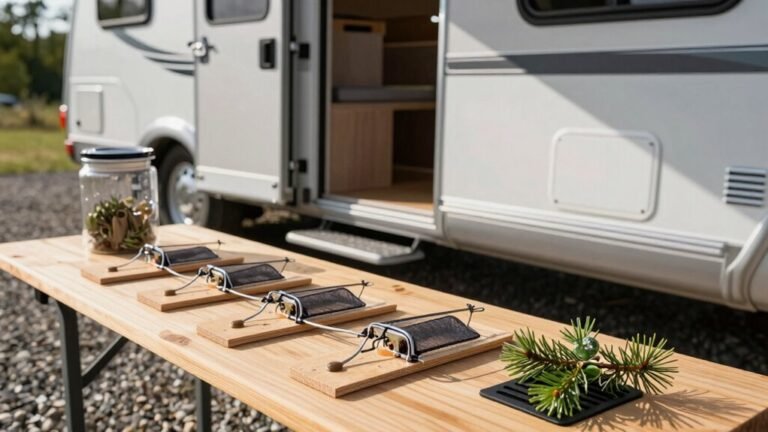
You set snap traps quietly, like a spy, and cheers when you outsmart a sneaky mouse.
Conclusion
Remember that time your RV’s slide-out stuck halfway during a surprise hailstorm? Yeah, not fun. But with the right parts on board, you’re like a Scout—always prepared. Keep these essentials stocked, and you’ll fix hiccups fast, not fret. After all, 80% of breakdowns are solvable with just a few tools and spares. So pack smart, roll easy, and let the open road surprise you—pleasantly.
References
- https://leisurecw.com/rv_repairs/the-basics-of-rv-electrical-systems/
- https://faroutride.com/electrical-system/
- https://ronsautorv.com/understanding-rv-electrical-systems-a-complete-guide-for-rv-owners/
- https://rvshare.com/blog/rv-electrical/
- https://ca.renogy.com/blogs/off-grid-power/typical-rv-wiring-diagram-explained-any-better-solution-available
- https://blog.campingworld.com/learn-to-rv/how-to-rv-ac-dc-power-and-your-rvs-electrical-system/
- https://www.youtube.com/watch?v=oqPZVlM4FQE
- https://www.mosermakes.com/articles/camper-van-standard-electrical-system
- https://wis-tek.com/blogs/knowledge/rv-electricity-basics-a-guide-to-run-your-rv-for-beginner-and-master
- https://certifiedrvsolutions.com/pipe-dreams-tackling-plumbing-problems-in-your-rv-repair-checklist/