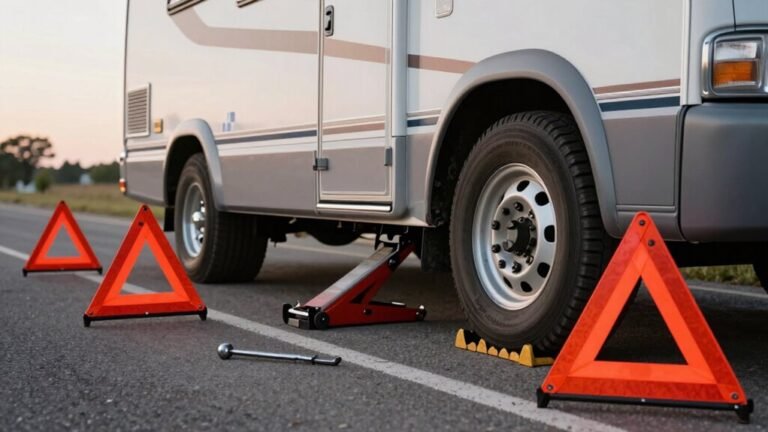
When Should You Replace Your RV Tires?
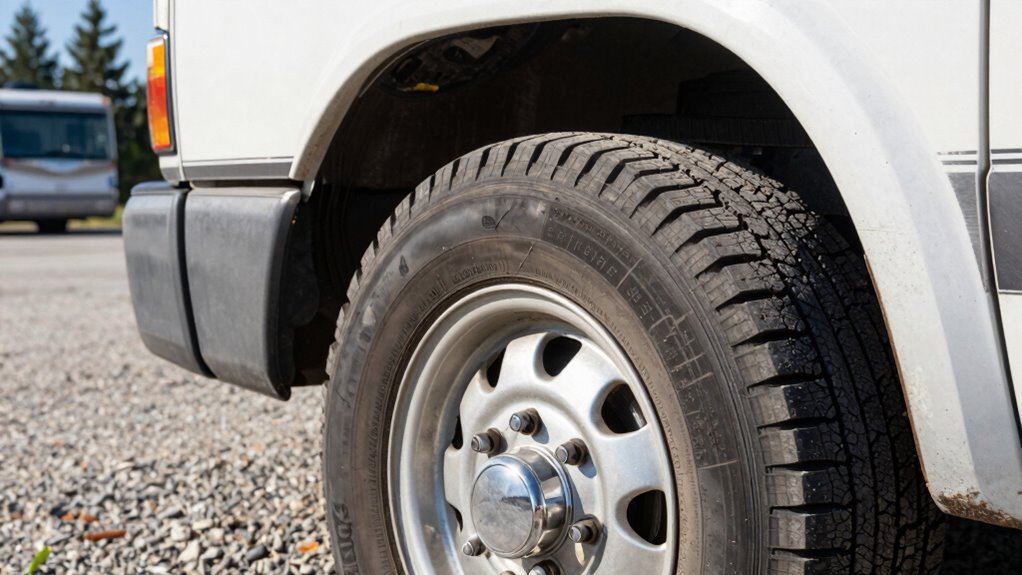
You should replace your RV tires every 6 to 10 years, no matter how good the tread looks—this is a key rule for maintaining safety on the road. Old rubber degrades over time, even if the tires appear to be in good condition, increasing the risk of failure.
Check the DOT code on the sidewall; it tells you the tire’s birthday, helping you track its age. Cracks, bulges, or weathering are signs of dry rot, indicating it’s time for new RV tires.
Underinflated or overloaded tires won’t last, and neither will you if they blow out on the highway. Keep your RV tires properly inflated, evenly worn, and protected from prolonged sun exposure like a forgotten beach toy.
Understanding RV Tire Lifespan
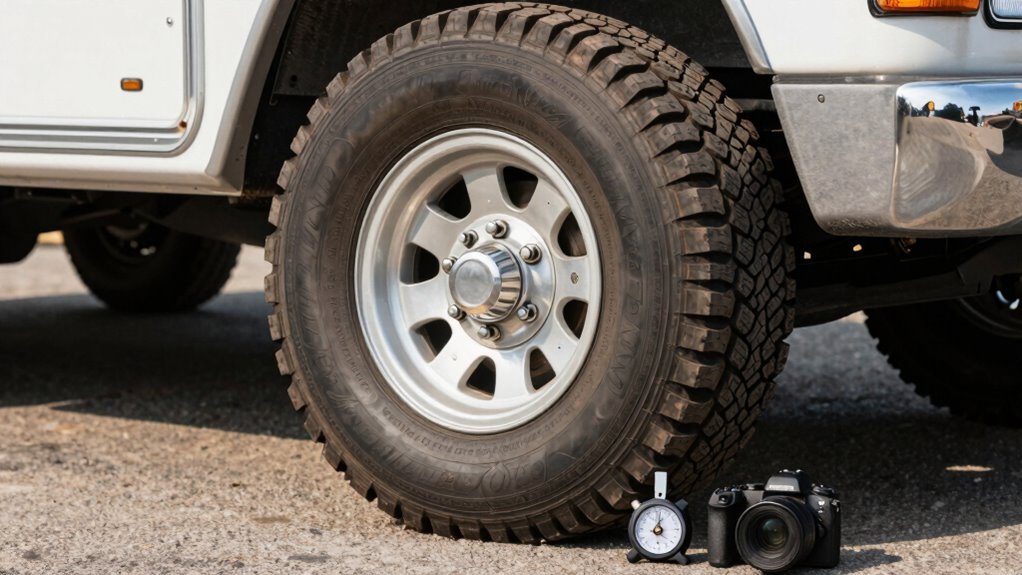
While you might think your RV tires are fine as long as they’ve got tread, the truth is they’re quietly aging whether you’re hitting the road or not.
You’re not alone if you’ve never checked the date code — most folks don’t!
But here’s the kicker: even if your tires look great, they’re likely ready for retirement after 5 to 7 years.
Manufacturers say 6 years is the sweet spot for replacement, and 10 years is the hard stop — no exceptions!
RV tires hate sitting idle, and sun, heat, and time chew them up faster than a squirrel with an acorn.
Low mileage? Doesn’t matter.
Tread depth? Not the hero here.
The real issue is rubber breaking down from the inside.
Well-maintained RV tire life is typically around 4 to 5 years, even with careful use and storage.
How to Check Your RV Tire Age
Ever wonder how old your RV’s tires really are?
Flip on your flashlight and peek at the sidewall—you’re hunting for the DOT code near the rim.
Find the number that starts with “DOT,” then skip to the last four digits.
That’s your golden nugget: the first two digits are the week (like 41 for mid-October), and the last two are the year.
So, 4117 means October 2017—your tire’s birthday!
Some older tires use a three-digit code, but most modern ones are four digits.
Don’t trust the RV’s age; tires can be over a year old before your rig rolls off the lot.
Check every tire, even the spare hiding underneath—yes, even that lonely one no one talks to.
And hey, if math isn’t your thing, plug it into a free online tire age calculator.
Boom—instant clarity!
Keep in mind that tire age is a critical safety factor, and many experts recommend replacing RV tires after 7 to 10 years regardless of tread wear.
Recognizing Sidewall Cracking and Dry Rot
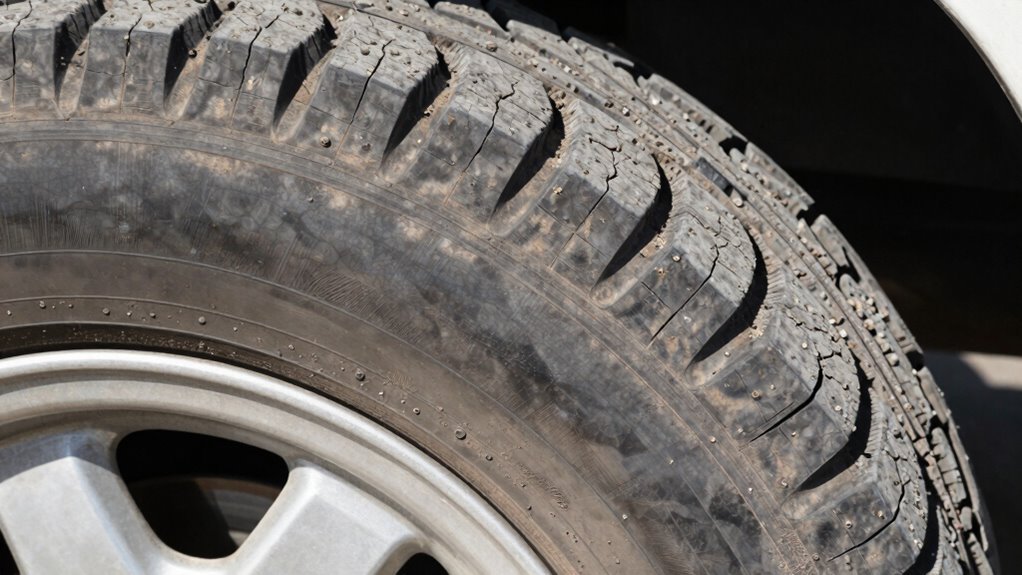
Now that you’ve cracked the code on your RV tire’s age, let’s take a closer look at what those tires are trying to tell you with their appearance.
If you see spiderweb-like cracks along the sidewall, your tires are crying out for help—literally weathering the storm.
The rubber may look faded, feel stiff, or even flake like old paint.
Dry rot creeps in thanks to UV rays, extreme temps, and long stretches of sitting idle—basically, your tires throwing a tantrum from boredom.
When cracks run deep—deeper than 2-3mm or wider than a credit card—it’s time to say goodbye.
Ignoring them? That’s like trusting a popcorn ceiling to hold up a roof.
Blowouts, air leaks, and scary swerves await.
Check regularly, drive occasionally, and don’t let brittle, cracked tires ruin your adventure.
Safety’s no joke—unless you’re into unexpected pit stops!
Tires with compromised structural integrity should be replaced immediately, even if tread appears usable.
The Importance of Proper Tire Inflation
If your RV tires could talk, they’d probably nag you like a backseat driver—especially when they’re running on less air than they need.
You’re risking blowouts, since underinflation causes 90% of them, thanks to overheating and sidewall stress.
Running low also cuts your tire life by up to 30% and hurts fuel economy by increasing drag.
Overinflating isn’t the answer either—too much pressure reduces grip and raises puncture risks.
The sweet spot? Check your RV’s weight, use the manufacturer’s chart, and add a 5 psi safety buffer.
Keep ’em cold-checked and adjust for summer heat.
Properly inflated tires roll easier, save gas, wear evenly, and keep you safer on wet roads.
Think of it as tire TLC—they’ll roll farther, last longer, and won’t stage a meltdown on the highway.
Stay pumped, literally!
Identifying Uneven Tire Wear Patterns
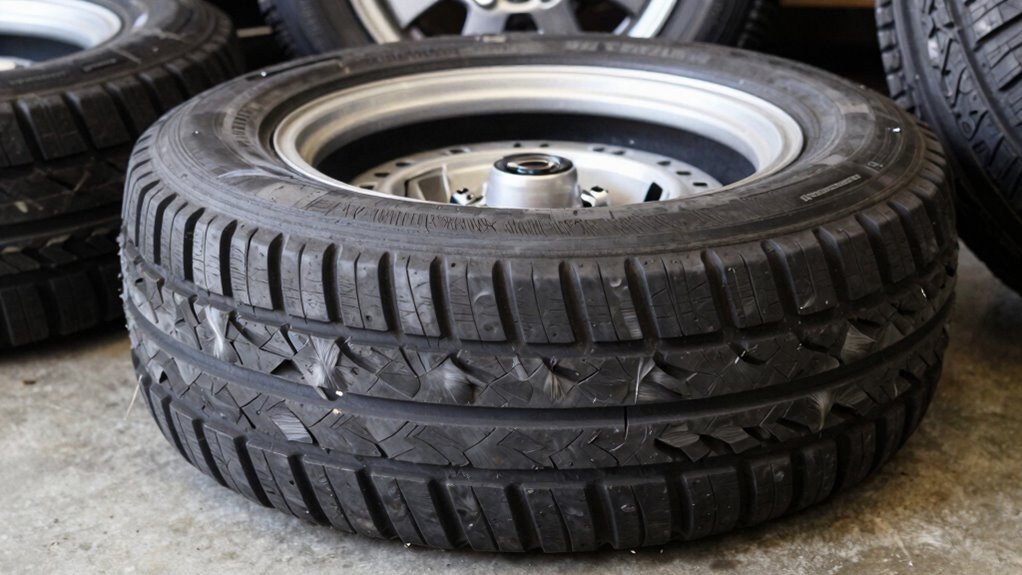
While your RV carries the weight of your wanderlust, your tires bear the actual load—and they’re not shy about showing their stress through wear patterns you can read like a roadmap.
See shiny, bald spots down the middle? That’s center wear, usually from overinflated tires playing superhero and arching too much.
If the outside edges are smoother than a buttered otter, your tires are likely underinflated and slumping at the shoulders.
Feathering—where treads feel smooth one way and rough the other—means your axle’s out of whack, making tires drag like tired feet.
One-sided wear? That’s not a fashion statement; it’s misalignment or worn parts throwing things off balance.
Cupping or flat spots? Think bouncy tires from bad balance or worn shocks.
Grab a flashlight, get down low, and inspect regularly—your tires are talking. Listen, and you’ll keep rolling smoothly.
When Tread Depth Becomes a Safety Issue
You’re rolling down the highway, chasing horizons and making memories, but don’t forget—your tires are your only real connection to the road, and when their tread wears thin, that bond starts to slip.
If your tread’s at 2/32 inch or less, it’s bald, buddy—time to swap!
That’s when hydroplaning risks soar and stopping distances spike, especially in rain.
Even at 4/32 inch, wet traction drops, so experts recommend replacing by then for safety.
Use a penny: Lincoln’s head covered? You’re good.
Fully visible? Time to retire those tires!
Most RV tires start with 10/32 to 11/32 inch, so once you hit 6/32, start watching closely.
Don’t wait until they’re slick—think of it like hiking with worn-out boots: sure, you can go, but one wrong step… yikes.
Stay safe, stay rolling, and keep your treads chunky!
Effects of Sun Exposure and Weather on RV Tires
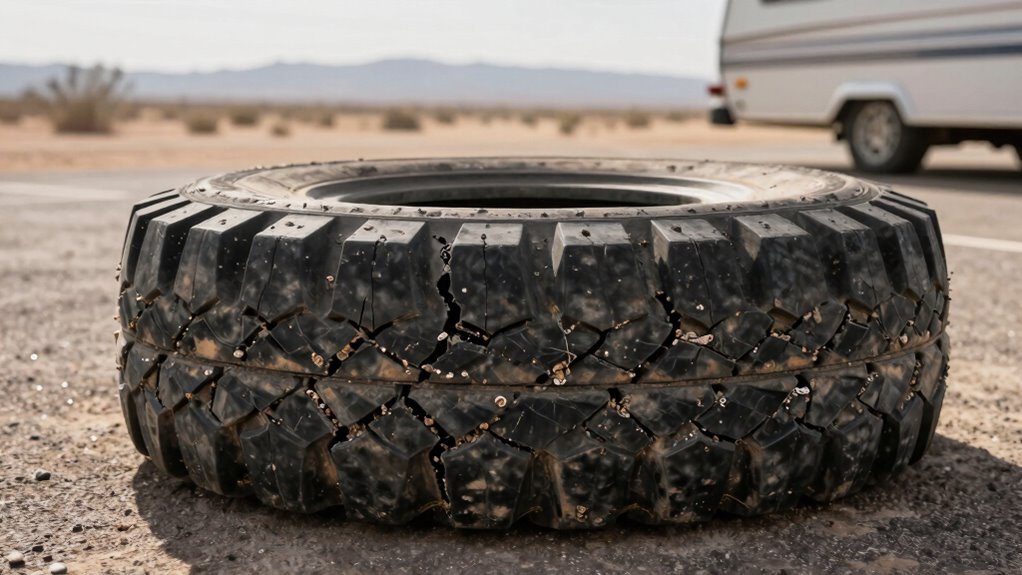
Ever wonder why your RV’s tires look tired even when they’re not?
Sun and weather are sneaky tire troublemakers!
UV rays bake the rubber, making it dry and crack-prone, especially on sidewalls.
Ozone in the air teams up with sunlight to speed up damage, leaving tires brittle and weak.
You’ll spot this as tiny cracks—called weather checking—that deepen over time.
If they’re wider than 2/32 inch, it’s goodbye, not “try again.”
Heat, especially in hot, dry climates, turbocharges this aging.
Even if your RV sits parked, tires degrade because they’re not rolling to renew their protective layer.
That carbon black helps, but it can’t fight forever.
Discolored, cracked tires? They’re crying for replacement.
Regular checks keep you safe, and tire covers are like sunglasses for your RV—simple, smart, and shade helps too.
Don’t let your tires fry—stay sunny-side up, not worn out!
Preventative Maintenance Tips for Longer Tire Life
Keeping your RV tires in top shape starts with a simple habit: checking the pressure.
You’ve gotta inflate ‘em to the PSI the manufacturer recommends—cold tires only, please!
Use a solid gauge monthly and before hitting the road.
Weather plays tricks, dropping pressure in winter and spiking it when it’s hot, so adjust as needed.
Don’t forget tread depth—stick a quarter in there, Washington head down, and if his dome’s peeking out, it’s time to think new tires.
Rotate every 6,000 to 8,000 miles to keep wear even, and balance ‘em too.
Clean tires with mild soap, skip the sketchy dressings, and store your RV with tires off the ground.
Oh, and weigh your rig yearly—overloading’s a sneaky tire killer.
Stay on top of this, and your tires will roll happy for years!
Frequently Asked Questions
Can I Mix Different Tire Brands on My RV?
Nope, you can’t mix different tire brands on your RV—stick with the same brand, size, and type on each axle.
Mismatched tires make your RV handle wonky, wear out faster, and fight each other like siblings on a road trip.
Even if they look alike, differences in grip and flex ruin performance.
Keep things balanced, safe, and smooth by pairing twins—your rig will thank you!
Are RV Trailer Tires the Same as Motorhome Tires?
No, you can’t swap RV trailer tires with motorhome tires—they’re built for totally different jobs.
You haul your trailer, but your motorhome carries itself, so their tires handle weight and stress differently.
Mixing them up? That’s like wearing work boots to a dance—possible, but a bad idea.
Stick to the right tire for your ride, and you’ll roll safer, smoother, and smarter every trip.
How Often Should I Rotate My RV Tires?
You should rotate your RV tires every 5,000 to 7,000 miles—think of it like giving your tires a little spa day to stay balanced and happy.
If you’re hauling heavy loads or chasing adventure off paved roads, rotate ‘em even sooner.
Most folks sync this with oil changes, so it’s one less thing to remember.
Trust me, your tires will thank you with smoother rides, better grip, and way fewer grumpy tread bald spots!
Do I Need Special Tires for Off-Road RVING?
Yeah, you’ll want special tires for off-road RVing—regular ones won’t cut it when the pavement ends.
Think of your RV as a bear: tough, but clumsy on mud without the right paws.
LT or R/T tires grip gravel, mud, and ruts like adventure boots, with chunky treads and rugged sidewalls.
They’re your trusty trail sneakers, keeping you sure-footed where roads quit and fun begins.
Don’t wander wild without ‘em!
Should I Use Tire Covers on All Four Tires?
Yeah, you should absolutely use tire covers on all four tires—it’s like sunscreen for your RV, and trust me, your tires will thank you!
They block harsh UV rays, rain, and grime, keeping rubber flexible and crack-free.
Plus, they help prevent flat spots and nasty pressure swings.
Sure, they’re a tiny hassle to put on, but not nearly as annoying as buying new $220 tires early!
Cover all four, rain or shine, and let your RV nap in style.
Conclusion
Don’t wait for a blowout to steal your adventure! Think of your RV tires like grumpy campfire marshmallows—left too long, they crack and crumble. Check ’em often, keep them pumped, and shield them from sun tantrums. Swap them every 5–7 years, no excuses! Fresh tires mean safer roads, happier travels, and more stories to tell. Stay bouncy, stay safe, and let your journeys roll smoothly—no flat moods allowed!
References
- https://blog.goodsam.com/how-long-do-rv-tires-last/
- https://travelingworkerbees.com/how-many-miles-do-rv-tires-last/
- https://rvfilluck.com/blogs/tutorial/how-long-do-rv-tires-last
- https://www.discounttire.com/learn/tire-aging
- https://www.mtsxpress.com/rv-tires-choosing-maintaining-and-upgrading/
- https://glaciallakesrec.com/how-long-do-trailer-tires-last/
- https://www.michiganrvandcampgrounds.org/rv-tire-durability-life/
- https://www.rv.com/servicing-care/safety-maintenance/rv-tire-safety-checklist/
- https://www.youtube.com/watch?v=Xp6IzbcMjjk
- https://www.youtube.com/watch?v=X7scHIvjyBk