RV Furnace Vs Electric Heat: What to Use in Winter
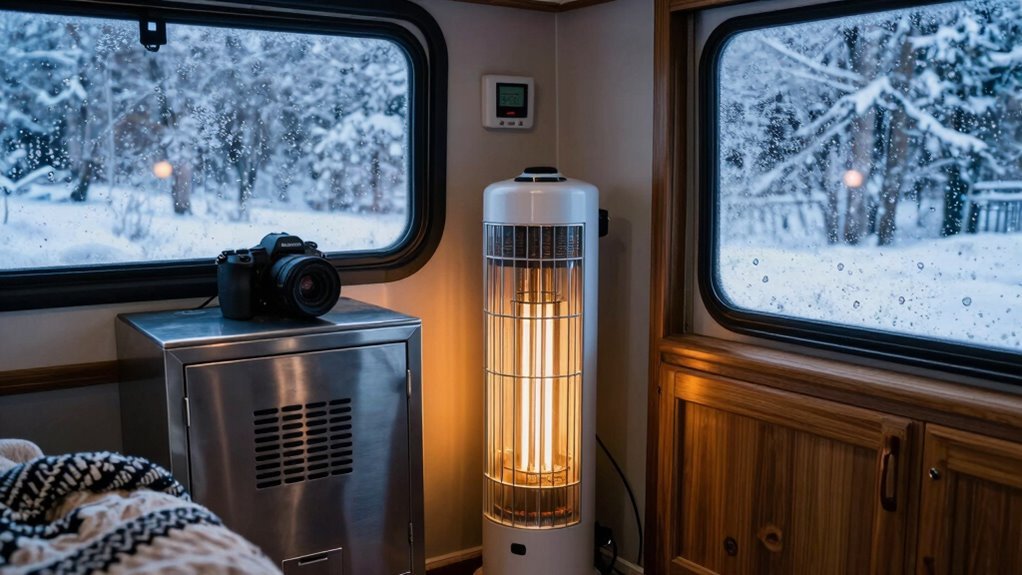
When winter hits, your RV furnace burns propane to blast warm air through ducts, keeping things cozy even at -40°F—electric heaters just can’t compete in the deep freeze. RV furnace vs electric heat becomes a clear choice in extreme cold, as propane systems are designed for consistent, whole-RV warmth.
Ceramic or infrared electric heaters work fine when you have shore power, but they’re better suited as spot warmers rather than heating an entire space. They lack the power to maintain steady heat throughout the RV in freezing temperatures.
Propane runs anywhere, no outlet needed, making it ideal for off-grid adventures during frigid weather. Though it costs more monthly, the RV furnace is the tough, reliable option when snow piles high and the wind howls like a pack of cold-loving coyotes chasing warmth.
How RV Furnaces Work in Cold Weather
Ever wonder how your RV stays cozy when it’s colder than a polar bear’s toenails outside?
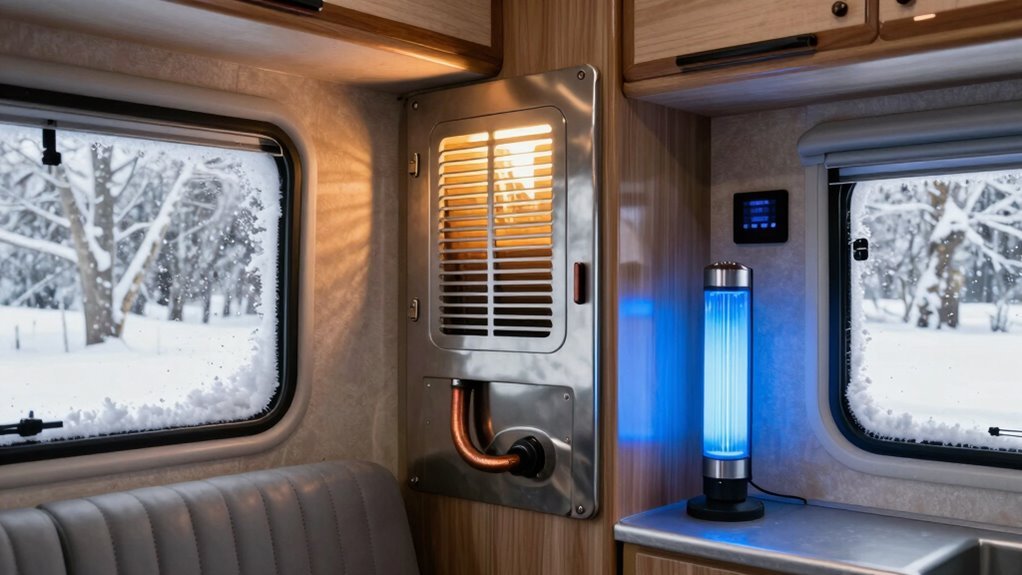
Your furnace kicks in, burning propane to heat the air, while a 12V fan blows warm air through ducts—right down through the belly to warm floors and pipes.
It’s a vented system, so moist air escapes outside, and fresh air gets pulled in, keeping things safe and dry.
Even at -40°F, a strong 20,000 BTU furnace keeps your space at a livable 50-65°F, cycling on and off to hold the temp.
It’s around 60% efficient, yeah, but it’s tough as nails in brutal cold.
You’ll burn more propane, sure, but dual furnaces and big tanks can last a week in deep freeze.
Just keep vents clear, check your thermostat’s set right, and let it run sometimes to fight moisture.
It’s not magic—it’s mechanics, fire, and a little grit.
Two-stage heating strategy can optimize both comfort and efficiency by pairing the furnace with a vent-free heater.
Understanding Electric Heat Options for RVs
Your RV furnace does a solid job battling winter’s icy grip, but sometimes you need a little extra warmth—or want to save propane when you’re plugged into shore power.
No worries!
Electric heat’s got your back.
Ceramic heaters are cheap, easy to use, and blast warmth fast—just don’t mind the fan noise.
Radiant heaters? They’re the quiet type, warming you like sunshine, especially the infrared kind that glows red and hugs your feet.
Heat pumps come built into your AC and run sweet on electricity, though they tap out when temps dive below freezing.
Micathermic heaters heat up quick and hang on walls like art—just keep ‘em away from curtains.
And smart heaters? Total show-offs with Wi-Fi and scheduling, perfect for warming the camper before you crawl out of bed.
Each type brings something cozy to the table—pick your favorite flavor of toastiness!
All electric RV heaters require electricity to function, so make sure you have reliable power access when relying on electric-only operation.
Fuel Efficiency: Propane Vs Electricity
How does your RV stay toasty without guzzling fuel like a hungry beast?
You’ve got options—and efficiency matters.
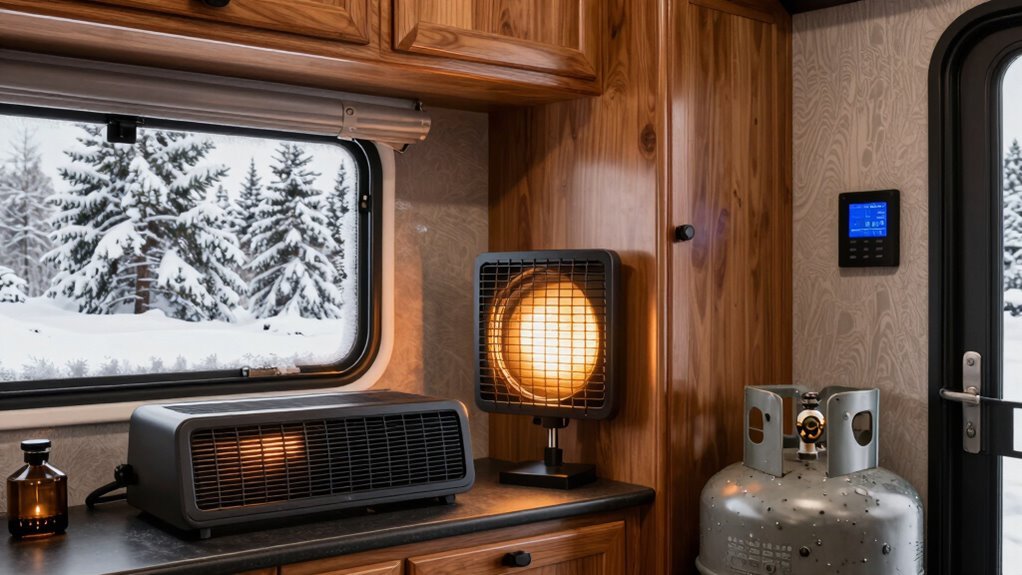
Propane furnaces average just 58.7% efficiency in real-world use, meaning you’re losing nearly half your heat.
But catalytic heaters? They’re the superstars at 99.98%, sipping propane like a sipper, not a chugger.
Your 30,000 BTU furnace burns through about a third of a gallon per hour, but it doesn’t run nonstop—thank your thermostat for that.
Electric heat seems clean, but at $0.13/kWh, it can cost more per 100,000 BTUs than propane, especially if your local rates are sky-high.
70–75% efficiency guess is often used for Suburban RV furnaces due to lack of published specs, though real-world performance may vary.
- Catalytic heaters win on efficiency and safety, no electricity needed.
- Propane costs less per BTU when prices are favorable and efficiency is high.
- Real-world usage beats theory—weather, cycling, and other appliances all play a part.
Play it smart, and keep that cozy without burning cash.
Heating Capacity and Warmth Distribution
What’s the secret to keeping your RV snug as a buzz without turning it into a sauna one minute and an icebox the next?
It’s all about matching heating capacity to your space and climate.
If you’re in a colder zone, aim for 45–60 BTUs per square foot—warmth shouldn’t play hide-and-seek!
A 40,000 BTU propane furnace easily heats most midsize RVs, pumping hot air through ducts like a cozy whisper from winter’s edge.
But don’t oversized it—too much power and your furnace short-cycles, leaving you bundled up or sweating like you’re on a tropical hike.
Electric heaters, like your trusty 1,500-watt buddy, deliver about 5,630 BTUs and are perfect for spot heating—think warming your feet while you sip cocoa.
They’re efficient and quiet, but they won’t heat the whole rig evenly.
Propane warms the whole space; electric warms your favorite chair.
Pick your warm-up strategy wisely!
Energy Source Availability and Reliability
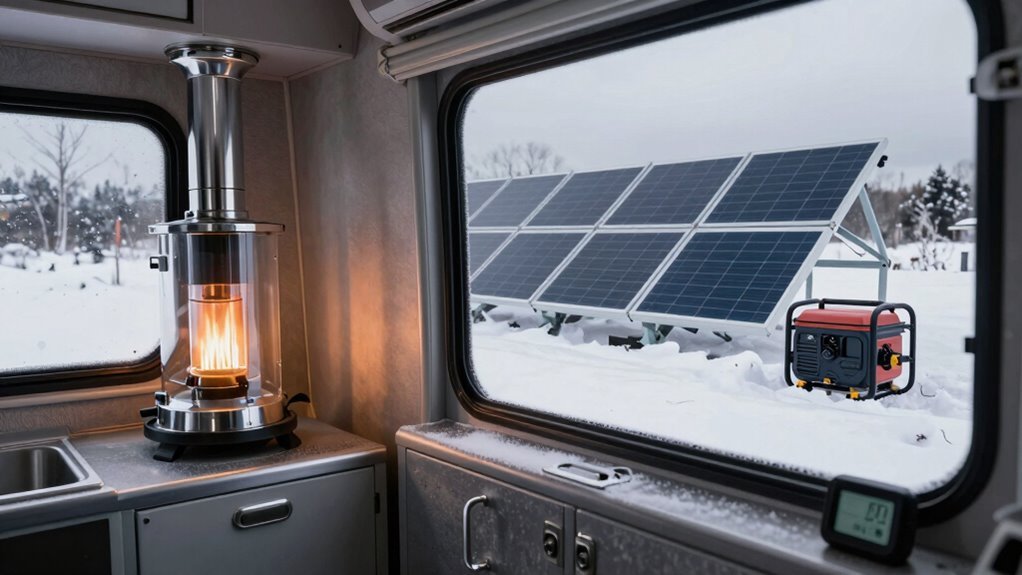
Ever wonder how your RV stays toasty when you’re parked under a sky full of stars, miles from the nearest outlet?
With a propane furnace, you’re golden—no shore power needed, just reliable heat wherever you park.
Propane tanks are easy to refill, widely available, and keep your battery from draining.
Electric heat, though? It’s hungry for power, guzzling juice from generators, solar, or campground hookups—great if you’ve got it, but risky when off-grid.
Plus, in freezing temps, electric heat pumps slow down while propane keeps cranking.
You want real independence? Propane’s your buddy.
- Propane works anywhere, no plug-in required
- Electric needs serious power—plan your setup carefully
- Cold weather loves propane, not so much electric heat
Safety Considerations for Each Heating Method
You’ve got your heat running no matter where the road takes you—propane keeping you warm off-grid or electric holding things down with a solid power source—but now let’s talk about staying safe while you’re cozying up inside.
RV furnaces are safer in winter since they vent all combustion gases outside and keep air circulating, preventing dangerous gas or moisture buildup.
Plus, they help protect your pipes from freezing—no surprise ice bursts at 3 a.m.!
Vent-free propane heaters are quiet and comfy but eat up oxygen and add moisture, so your nose might get a workout from all the condensation.
Good news: they’ve got oxygen sensors that shut them off if things get risky, and they’ll sputter like a grumpy cat to warn you first.
Just crack a window and reboot.
But for long, cold nights, trust the furnace to keep you warm, safe, and dry—because nobody wants a surprise snow globe inside their RV.
Cost Comparison Over a Winter Season
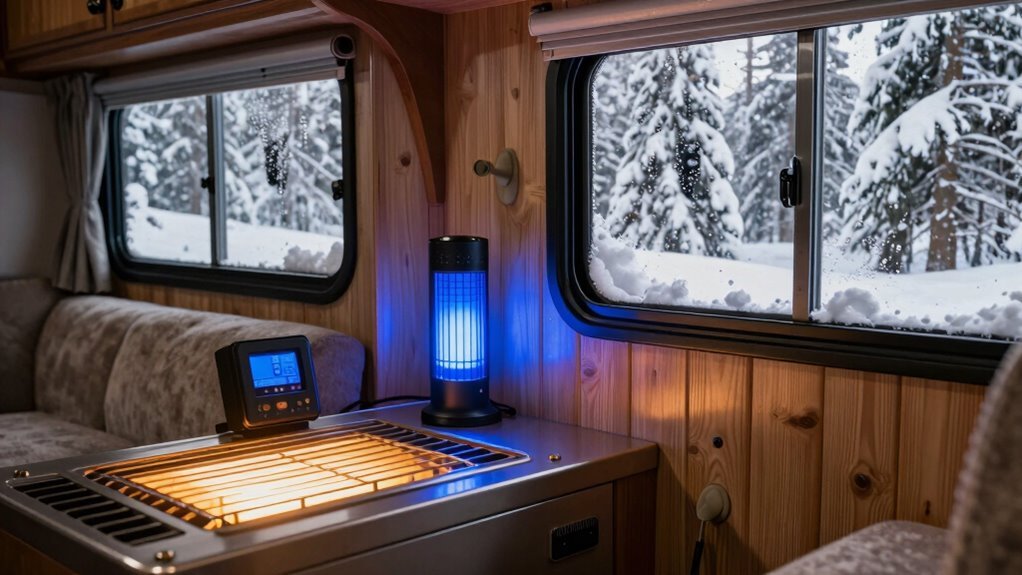
How does your wallet fare when the thermometer plummets? You’ve got choices, and they add up fast.
Running your propane furnace all winter costs about $240 a month, and with only 70% efficiency, you’re tossing some of that cash into the cold air.
Electric heaters? A 1500W model adds $50 to your bill monthly—ouch—but lower-wattage options like the 200W personal heater or 400W EconoHeater keep costs cozy.
Free electricity at your campsite? That’s a game-changer, making electric heat a budget-friendly win.
Boondocking? Propane’s your only buddy.
Here’s how to stay warm without going broke:
- Use electric heat where power’s free or cheap.
- Size your heater to the space—no need to toast the whole RV.
- Keep propane as backup; it’s reliable when the grid drops out.
Smart moves keep you toasty *and* solvent.
Frequently Asked Questions
Can I Use Both Furnace and Electric Heat at the Same Time?
Yes, you can run both at the same time—your system’s smart enough to handle it!
It’ll kick in electric heat first, then add the furnace if it’s still chilly.
They work together smoothly, no awkward stepping on toes.
Just sit back, stay cozy, and let them team up like winter superheroes keeping your RV toasty without missing a beat.
How Long Does a Propane Tank Last When Heating?
You’re wondering how long a propane tank lasts when heating—picture your tank as a cozy campfire, burning bright but finite.
A single 20 lb tank runs about half a day on a 30,000 BTU furnace at 70°F.
Colder weather? It burns faster, like a bonfire in a blizzard.
Two 20 lb tanks can last a month with smart use.
Cooking barely ticks the meter, so you’ve got room to snuggle up and enjoy the warmth without panic.
Do I Need to Winterize With Electric Heat Only?
Yes, you still need to winterize even with electric heat.
Freezing temps can turn water in your pipes and tanks to ice before your heater can save them.
Antifreeze, draining tanks, and bypassing the water heater aren’t optional—they’re your plumbing’s best friends.
Think of electric heat as a cozy blanket, not a force field.
Skip winterization, and you’ll greet spring with a burst pipe and a repair bill.
Yikes!
Will My RV Furnace Work Without Electricity?
Yes, your RV furnace *will* work without electricity—bet you didn’t see that coming!
It runs on propane, not plugs, so as long as you’ve got gas and a charged 12-volt battery for the fan and igniter, you’re golden.
Think of it like a trusty camping grill with a fancy jacket.
Just keep an eye on that battery—it won’t last forever, but hey, neither do great campfire stories.
Are Heated Floors Worth Installing in an RV?
Yeah, heated floors are totally worth it in your RV—they keep your toes warm and the whole space cozy, even when it’s freezing outside.
You’ll love stepping onto a toasty floor instead of icy vinyl.
They run quietly, save energy, and pair perfectly with your furnace.
Plus, no more cold feet while brewing coffee at 6 a.m.—game changer!
Conclusion
You want warmth, not worry, so choose wisely. An RV furnace heats fast, runs on propane, and battles bitter cold like a champ. Electric heat’s quiet, clean, and cozy—but drains power fast. One fuels freedom, the other finesse. Both beat shivering! Grab extra blankets, your favorite soup, and remember: frosty windows mean the heat’s winning. Stay toasty, not frozen—your winter adventure’s just getting warm!
References
- https://roadslesstraveled.us/how-to-heat-an-rv-in-cold-weather-winter-snow-storms/
- https://johnsankey.ca/rvwinter.html
- https://www.youtube.com/watch?v=b_T2SIzcf8Y
- https://www.youtube.com/watch?v=Lf-L1z594Qg
- https://rvshare.com/blog/electric-rv-furnace/
- https://itrheat.com/products/rv-trailer-mobile-heating-system/oasis-chinook/
- https://thevansmith.com/blogs/beginners-guide-to-the-vanlife/best-electric-heater-for-an-rv
- https://www.lippert.com/blog/types-of-rv-water-heaters
- https://www.keystonerv.com/owners/essential-guide-to-understanding-your-rv-heating-system
- https://geotrekvans.com/camper-van-life/the-best-heating-options-for-your-campervan