How to Prevent Mold and Mildew in Your RV
Preventing mold and mildew in your RV starts with stopping moisture before it gets inside. Seal leaks around windows, roof seams, and slide-outs fast—don’t let sneaky moisture crash your RV’s vibe.
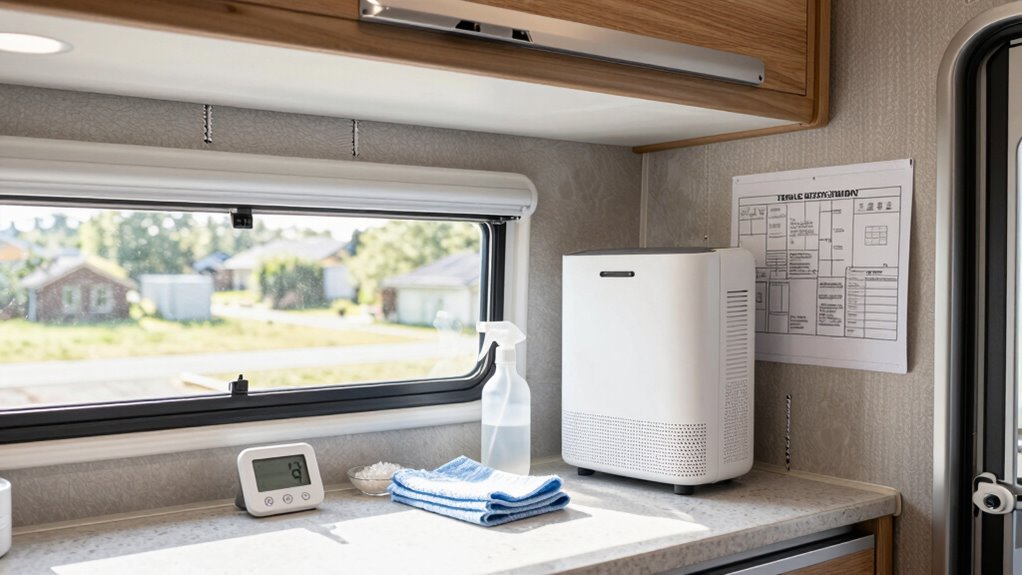
Run vents when cooking or showering, and keep air moving with fans or open windows. Use a dehumidifier to ditch dampness, especially during humid weather or long storage periods.
Clean everything after each trip, focusing on mold-prone spots like bathrooms and under sinks. Tackle early growth with vinegar, a natural solution that helps prevent mold and mildew in your RV from spreading.
Choose mold-resistant fabrics for upholstery and curtains, and replace any water-damaged materials promptly. Check propane appliances and gaskets regularly—stay sharp so your RV stays fresh, not fuzzy.
Identify Common Moisture Entry Points in Your RV
Where’s the sneaky water coming from?
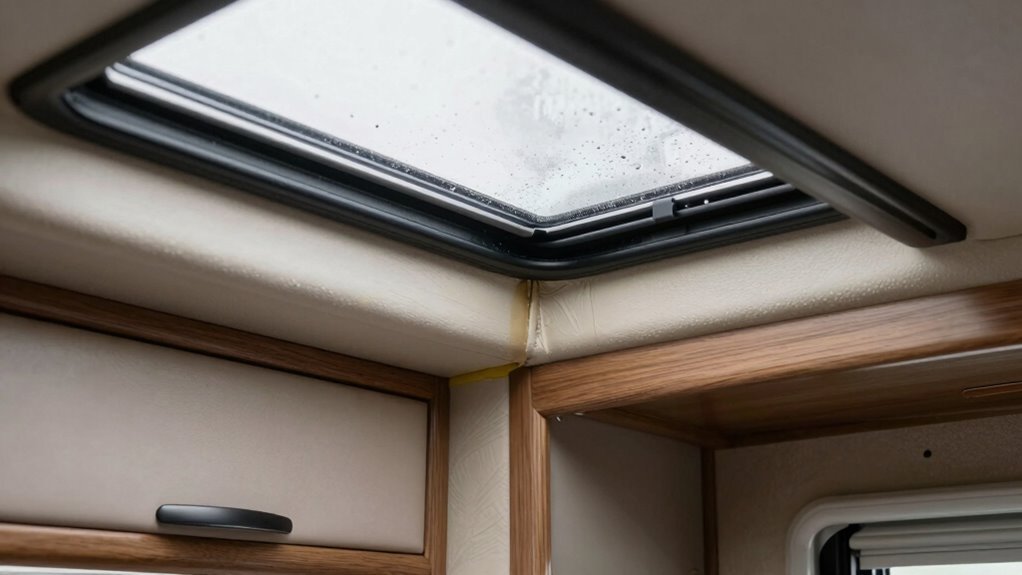
Likely spots are your roof seams and perimeter—superstar entry points for moisture, especially around vents, skylights, and ladder stands.
Those cute little rooftop accessories? Yeah, they can let in more than just fresh air.
Window frames are also common culprits; they sweat like you on a hot day, creating condensation that feeds mold.
Don’t ignore slide-out rails and trim either—those spots love to trap water under toppers and behind panels.
Marker lights and antenna bases? Tiny holes, big headaches.
And your plumbing? Even a pinhole leak above a ceiling fixture can hide mold’s favorite party spot.
Check pipes, connections, and under sinks regularly—because surprise leaks aren’t the fun kind.
Staying ahead of moisture means using a fan to keep air moving and reduce condensation buildup.
Stay ahead of the drip, and your RV stays dry, happy, and mold-free!
Use Proper Ventilation While Cooking and Showering
Steaming up your RV? No worries—smart ventilation’s got your back!
When you’re cooking, fire up that range fan and crack a window to kick steam to the curb.
Keep those kitchen vents open and wipe down any condensation before it overstays its welcome.
Same goes for shower time: run the bathroom fan *during* and *after* your rinse, leave the door open, and dry walls and floors like you’re on a spa mission.
If you can, skip RV showers and hit a campground facility—your vents will thank you.
Post-cooking or post-soap, ventilate like it’s your job: use fans, open windows for cross-breeze magic, and keep air moving.
Don’t forget to peek at vents—clear blockages and keep them shipshape.
A little airflow hustle now saves you a moldy meltdown later.
Running a bathroom fan helps reduce moisture levels and supports mold prevention, especially in enclosed spaces.
Breathe easy—your RV’s staying fresh!
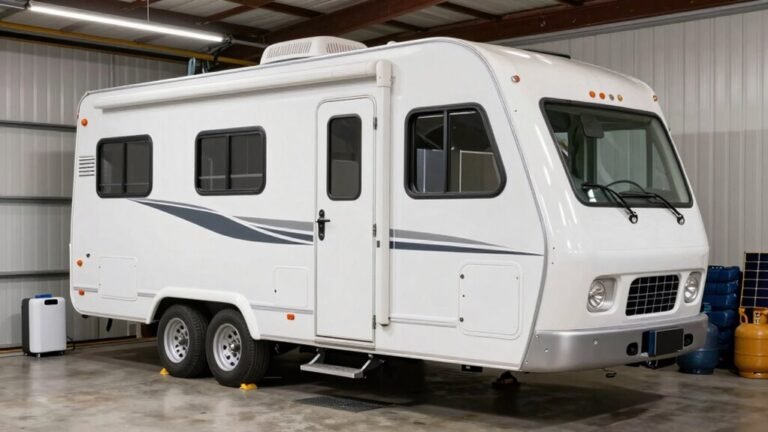
Install and Maintain a Quality RV Dehumidifier
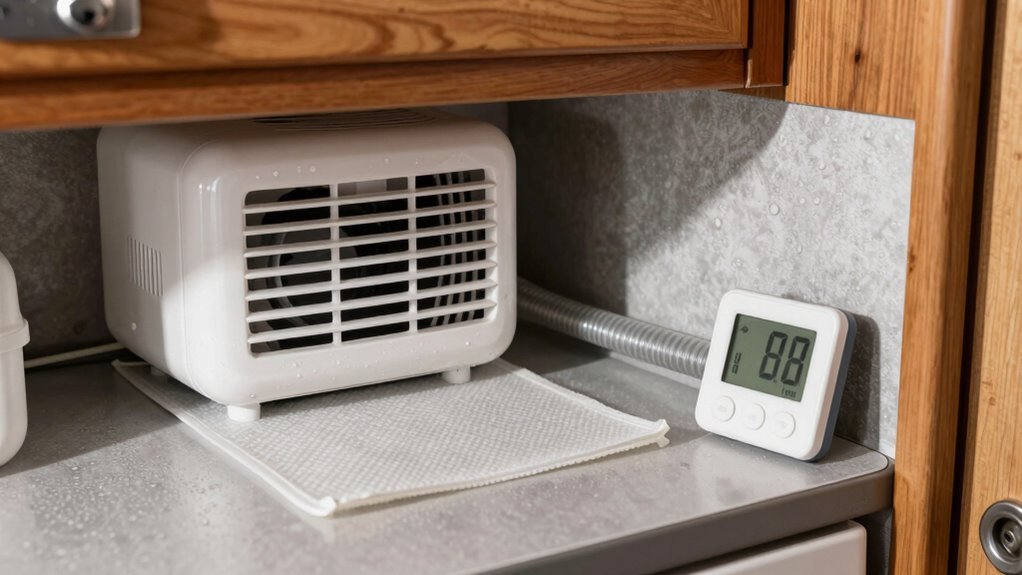
You’ve already tackled steamy showers and foggy cooking sessions by opening windows and firing up the fans—smart move.
Now, take it up a notch with a quality RV dehumidifier.
Pick one that matches your space, runs efficiently, and auto-adjusts to keep humidity between 30–50%.
Place it smack in the middle of your main cabin, give it breathing room, and strap it down so it doesn’t dance around on bumpy roads.
Hook it up with a garden hose for continuous draining—no more soggy reservoir surprises.
Set it, forget it, and let it hum along, especially during damp spells.
Check filters when it pings you, monitor humidity with a trusty hygrometer, and keep cords safe and dry.
Think of it as your RV’s personal bouncer—kicking out moisture before mold can crash the party.
Pair it with DampRid when powered down, and you’ve got a one-two punch against mildew madness.
For long-term storage, consider running a dehumidifier like the EBBA Dry on shore power to prevent condensation buildup.
Check and Seal Window and Roof Gaskets Regularly
Ever wonder why that pesky drip shows up on the ceiling when it rains?
Chances are, your window or roof gaskets are crying out for attention.
Check those seals every 90 days—and always before hitting the road.
Run your hand along the edges; if you feel a draft, it’s time to act.
Look for cracks, peeling caulk, or gaps, especially around windows, vents, and slide-outs.
Clean gaskets gently with mild soap and water, then dry them well—no harsh chemicals!
Apply a rubber conditioner every couple of months to keep them flexible and sun-safe.
Spot a leak? Seal it fast with RV-approved sealant.
Don’t forget to tape roof seams annually and replace worn seals during repairs.
Stay on top of this, and you’ll keep water—and mold—where they don’t belong: outside!
Prevent Condensation With Insulation and Airflow
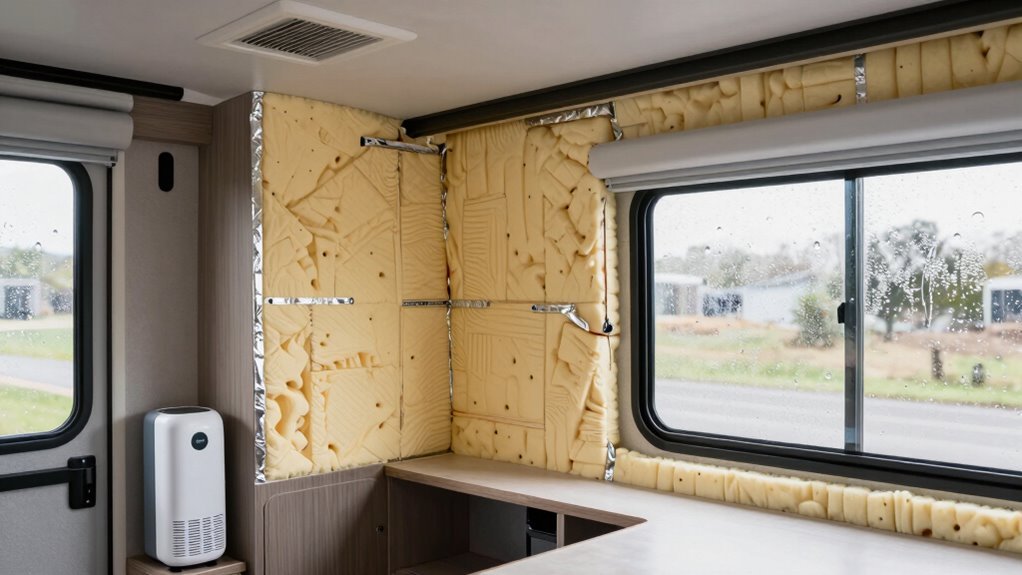
Keep that cozy RV vibe without the soggy side effects by tackling condensation head-on—because nobody signed up for a mobile mushroom farm.
You’ve got the power to stop moisture in its tracks with smart insulation and solid airflow.
- Use window insulation kits to create a warm barrier and cut down on foggy, damp glass—especially in chilly weather.
- Run exhaust fans in the kitchen and bathroom to kick humid air out before it settles on walls and ceilings.
- Open windows and roof vents when it’s safe outside—letting fresh air zoom through keeps stuffiness and moisture on the run.
- Turn on the AC to cool things down and pull excess moisture from the air—it’s like a two-in-one freshness superhero.
Stay dry, stay comfy, and keep your RV feeling like a home, not a greenhouse.
Clean and Dry Your RV After Every Trip
Wipe down, ventilate, and say goodbye to damp hideouts where mold loves to crash after your adventures.
Grab a soft cloth and mild soap to clean any spots—tackle stubborn mold with vinegar or hydrogen peroxide, then rinse.
Found mold? Zap it fast with a light bleach mix before it throws a party.
Scrub top to bottom so gunk doesn’t re-coat what you’ve cleaned.
Then, dry everything like you mean it: crank on fans, crack windows, and run dehumidifiers.
Don’t let moisture nap under sinks or in corners—aim fans right there.
Wipe condensation the second you spot it, and air out cabinets like you’re airing out old grudges.
Open vents and roof hatches to keep air moving, even in rain with vent covers.
Toss in desiccants or silica packs to soak up sneaky dampness.
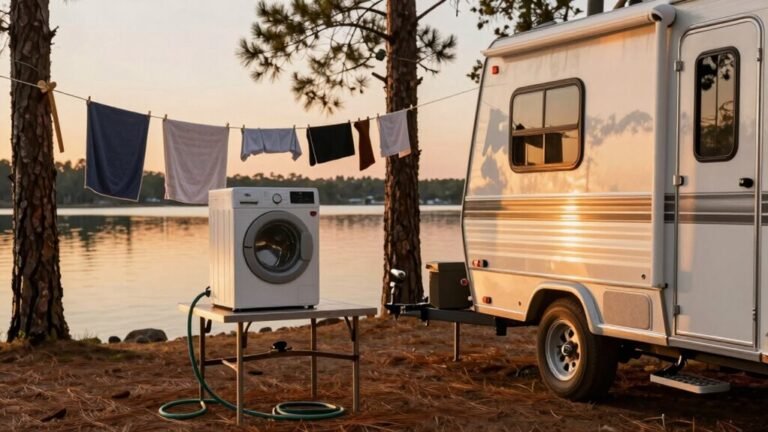
And seriously, never dry wet towels inside—your RV isn’t a swamp.
Stay on top of it, and you’ll keep your ride fresh, fun, and mold-free.
Choose Mold-Resistant Materials for Upholstery and Curtains
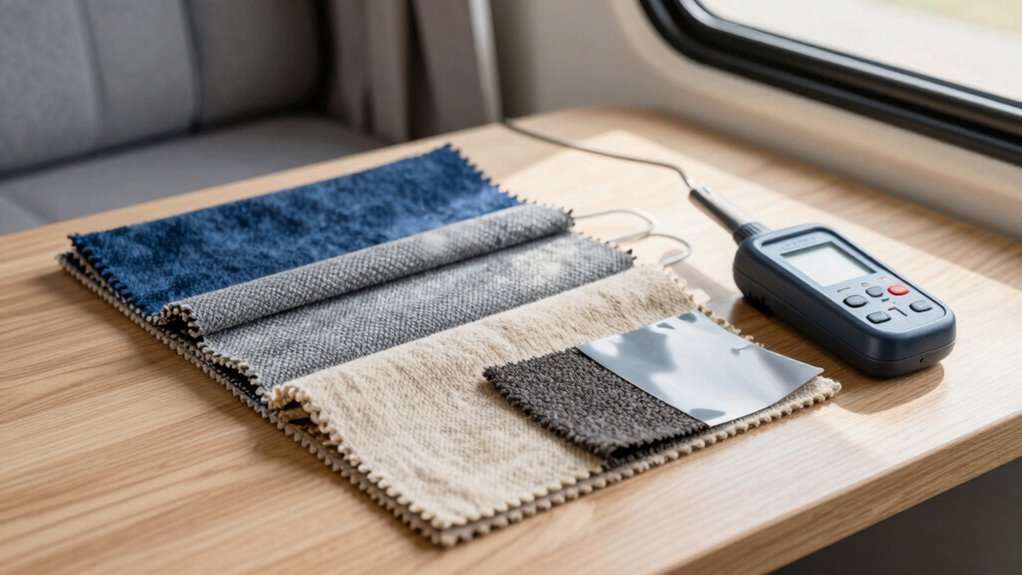
Your RV’s interior should look great and fight mold like a pro—so skip the flimsy fabrics and go straight for materials that won’t cower in the face of damp mornings or accidental spills.
Choose smart, tough textiles that laugh at moisture and shrug off mildew.
- Marine-grade vinyl: Super durable, waterproof, and loves sunshine—perfect for seats and couches.
- Solution-dyed acrylics like Sunbrella: Colorful, breathable, and come with a 10-year warranty—yes, really!
- Synthetic leather: Stylish, wipeable, and won’t break the bank—your future dinner guest’s wine spill won’t ruin the mood.
- Performance curtain fabrics like Revolution or SeaDuck: Fade-resistant, mold-proof, and block light like a champ—privacy with perks.
Upgrade your ride with fabrics that work as hard as you play—your nose (and nosebleed) will thank you.
Keep Propane Appliances in Good Working Order
Fire up your RV adventures the safe way—start with propane appliances that work like a dream and never throw a surprise gas party you didn’t sign up for.
Check your tank for rust or dents before every trip, and make sure hoses are snug and leak-free—just squirt soapy water and watch for bubbles.
Sniff around; if something smells fishy (or gassy), don’t ignore it.
Clean the regulator area and vents regularly, and if flames look yellow instead of blue, it’s time to act.
Vacuum compartments twice a year and clear out pesky spider webs or dust from burners.
Got a weak flame? Reset the excess flow valve by turning things off, waiting, then slowly reopening the tank.
And hey, don’t skip your annual pro check-up—techs will test pressure, service appliances, and keep everything running smooth.
A little care keeps danger away and adventures worry-free!
Conduct Seasonal Deep Cleaning and Inspections
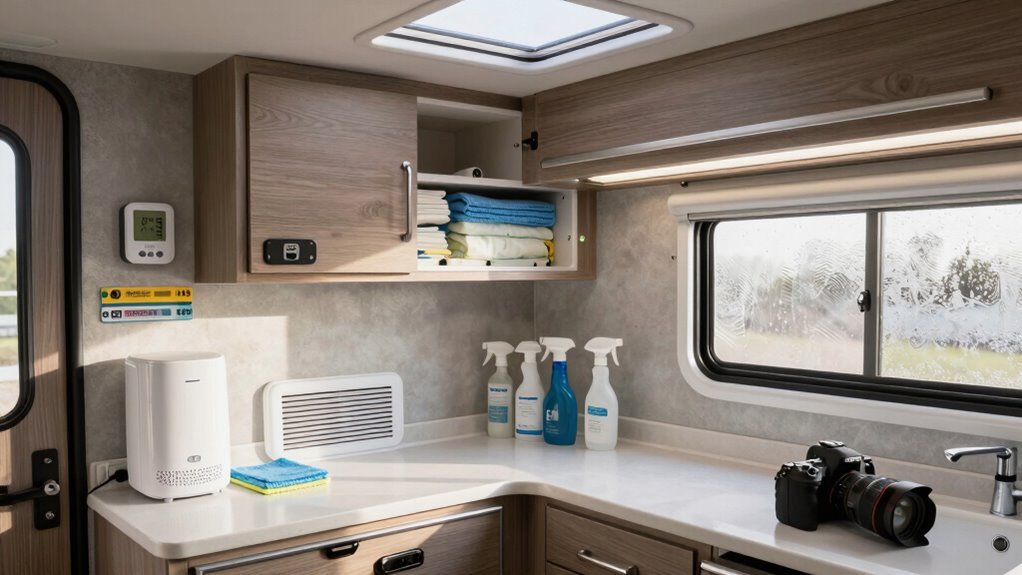
After you’ve made sure your propane system’s running safely and not throwing unscheduled gas parties, turn your attention to giving your RV a proper spa day—because nobody loves a musty interior, not even mold.
- Clean windows, sills, and caulking regularly—mold’s favorite hideouts
- Check under sinks and behind appliances where sneaky leaks love to lurk
- Scrub AC and heating vents to stop mold spores from hitching a ride through your airflow
- Use vinegar or tea tree oil sprays to nuke mildew naturally, without harming your rig
Hit spring and fall hard with deep cleanings.
Don’t skip monthly checkups during storage—especially in damp climates.
Run dehumidifiers, crack open vents, and keep airflow going.
If you catch a musty whiff or see fuzzy spots, act fast.
A little elbow grease now saves a smelly, costly mess later.
Your RV deserves fresh, clean lungs!
Frequently Asked Questions
Can Mold Grow in RVS During Winter Storage?
Yeah, mold absolutely can grow in your RV during winter storage—no doubt about it.
All it takes is moisture, darkness, and a cozy spot, and boom, you’ve got a mold party happening while you’re sipping cocoa.
Even in cold weather, condensation and trapped dampness create a perfect hangout for mold.
Don’t let your RV turn into mold’s winter vacation spot—stay ahead of it with some smart moves.
How Do I Know if Mold Is Behind Walls?
You’ll know mold’s hiding behind your walls if you catch a musty smell, like old socks or wet cardboard, lingering in the air.
Watch for mysterious water stains, warped paneling, or soft spots that squish when you press them.
Headaches or sneezing for no reason?
Could be sneaky spores.
Shine a flashlight along baseboards and near vents—you might spot dark splotches playing hide-and-seek.
Trust your nose, it’s mold’s snitch!
Are Mold and Mildew the Same Thing?
Nope, mold and mildew aren’t exactly the same thing—they’re more like cousins than twins.
Mildew’s the polite houseguest that stays on the surface, usually white or gray and powdery.
Mold’s the uninvited roommate that moves in deep, gets fuzzy, and throws a color party—black, green, red, you name it.
Both love moisture, but mold’s way more mischievous.
Can I Paint Over Mold in My RV?
Nope, you can’t just paint over mold in your RV—it’s like putting a bandage on a leaky pipe, useless and messy.
You gotta kill the mold first, or it’ll laugh at your paint job and keep growing.
Clean it with bleach or a solid mold remover, dry everything completely, then seal it with a mold-killing primer like KILZ.
That way, your RV stays fresh, healthy, and ready for the open road—mold-free and mighty proud.
Is Black Mold Common in Older RVS?
Yeah, black mold’s pretty common in older RVs—unfortunately, it’s like the uninvited houseguest that thrives in damp, dark spots.
If your rig’s got aging seals, sneaky leaks, or poor airflow, you’re basically rolling out a welcome mat for mold.
It hides in walls, lurks under floors, and loves old insulation.
But don’t sweat it—staying on top of leaks and moisture keeps your RV healthy, happy, and way less mold-friendly.
Conclusion
Think of your RV as a sailboat—keep the hatches tight, the breeze flowing, and the sun shining inside. Chase away damp like a squirrel fleeing rain, fluff the curtains like confetti, and let dry air dance through every corner. A happy RV’s not about perfection, just care. With these simple steps, you’re not just preventing mold, you’re throwing a year-round house party for freshness—and nobody’s crashing it!
References
- https://www.braddandhall.com/blog/prevent-mold-in-your-rv/
- https://koa.com/blog/how-to-prevent-mold-mildew-fungus-from-growing-in-your-rv/
- https://www.howardenvironmental.com/boat-dehumidifier-placement-and-rv-leak-sealing/
- https://www.youtube.com/watch?v=89Yv0xP4SdA
- https://www.rvoutfittersoftexas.com/blog/10-tips-for-preventing-mold-in-your-rv–26317
- https://www.rvlifemag.com/how-to-mold-proof-your-rv/
- https://www.mygrandrv.com/threads/condensation-mold-in-337-rls-slide-out-–-need-advice.655409/
- https://tooltroopers.com/blogs/tooltroopers/how-to-prevent-rv-mold-mildew
- https://jimbosdetailing.com/blogs/rv-care/how-to-prevent-mold-in-rv
- https://www.youtube.com/watch?v=I4WE8DUOknE