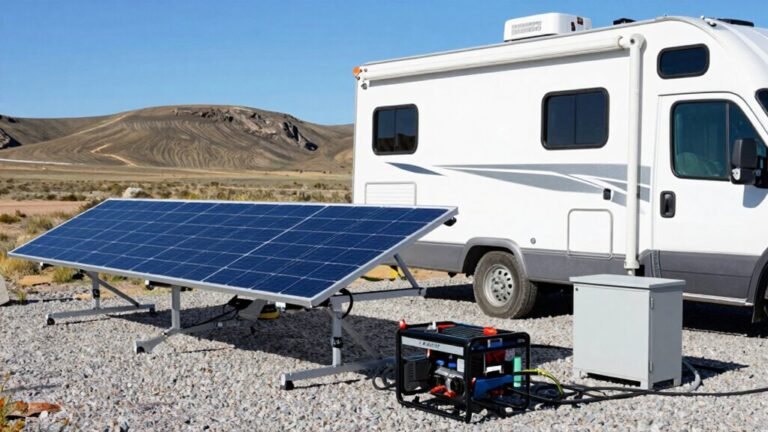
RV Internet Guide: Starlink Vs Cellular Vs Public Wifi
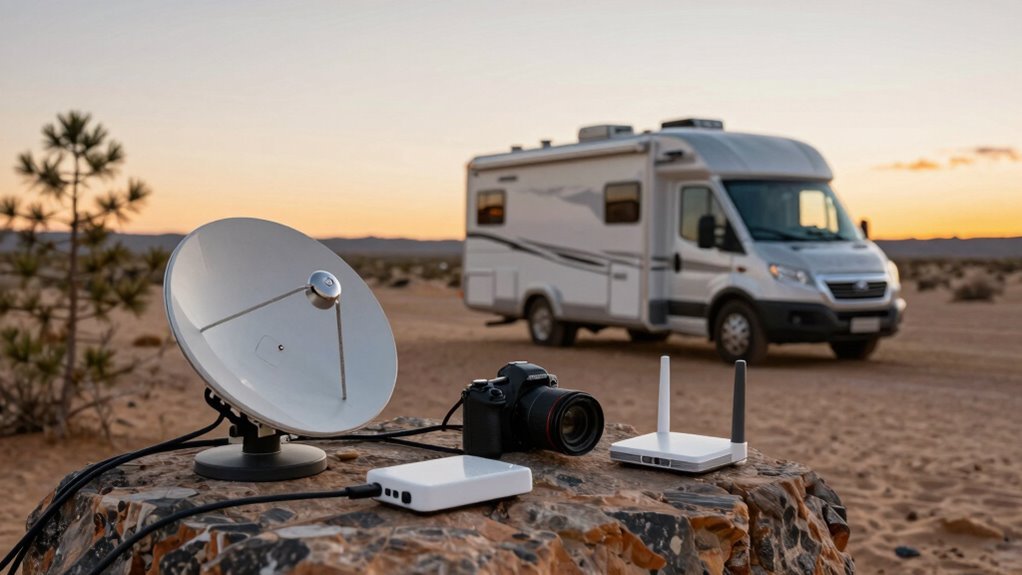
You’re whipping through the backcountry with Starlink beaming rocket-powered Wi-Fi to your roof, streaming like you’re downtown. Starlink dominates in remote areas where other connections fail, making it the top choice for reliable RV internet in the wild.
Cellular works great near towns but fades fast in the wilds, leaving you stranded offline when you need it most. While more affordable near cities, cellular coverage varies by provider and terrain, limiting its usefulness for full-time remote travelers.
Campground Wi-Fi’s usually slow and sketchy, bogged down by too many users and weak infrastructure. Public Wi-Fi should be treated as a backup option—convenient at times but often insecure and unreliable.
Speed, reliability, and cost all stack up differently across Starlink, cellular, and public Wi-Fi. Your perfect match depends on where, how, and how much you wander. The full picture’s even more revealing.
How Starlink Delivers High-Speed Internet on the Road
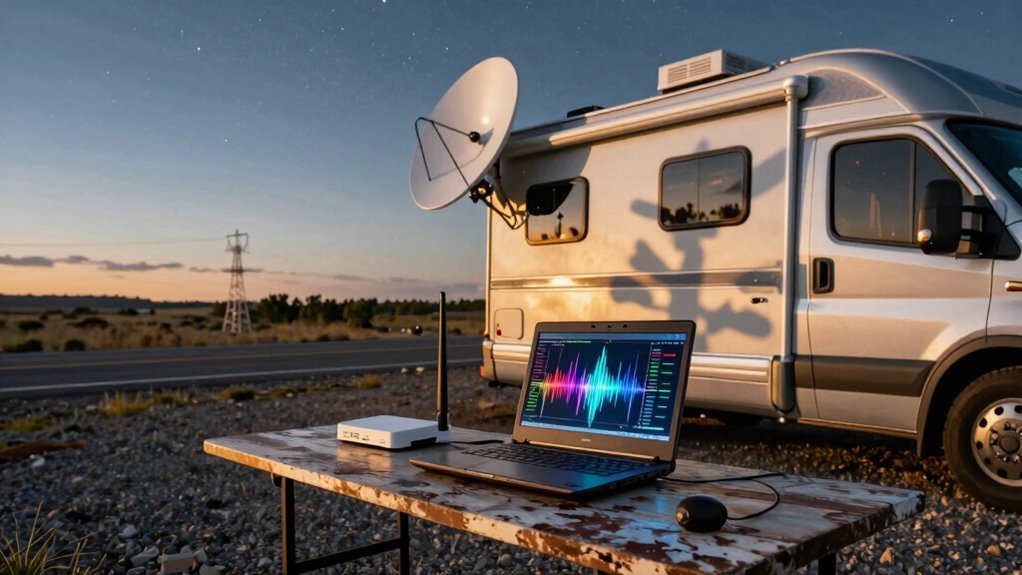
While you’re barreling down the highway with your dog snoring in the passenger seat and a half-eaten sandwich in your lap, Starlink’s got your back with real-time internet that keeps your shows, maps, and Zoom calls running smooth.
You’re plugged into a high-speed web thanks to satellites zipping through low Earth orbit, beaming signals to your sleek Gen 3 dish mounted above.
It’s built for motion—yes, even at 100 mph on bumpy backroads.
You’ll see speeds from 50–100 Mbps, great for streaming NFL games or uploading vacation clips.
Even when deprioritized, your connection stays usable, unlike some spotty cellular rivals.
The Wi-Fi 6 router kicks out snappy local speeds, and nationwide Roam plans mean no data caps, just endless open-road browsing.
Starlink keeps you online so reliably, you might forget you’re even roaming.
Who knew rural internet could feel this fast?
Mobile Priority plans support in-motion use at any speed.
The Pros and Cons of Using Cellular Data for RV Living
You’re cruising through the Rockies with your favorite playlist blasting, and your phone’s still showing full bars—bingo, cellular data’s doing its thing.
You’re covered across most highways, towns, and campgrounds, with fast 4G or 5G speeds that beat satellite near cities.
Your compact hotspot fires up in seconds, links all your devices, and sips power—great for boondocking on solar.
Plans are affordable, especially if you already have a phone hotspot.
But let’s be real: deep in the wilderness, your signal might vanish like your morning coffee.
Remote areas? Often a no-service zone.
Plus, carriers throttle speeds after hitting data limits, and crowded parks mean slower connections.
You’ll get solid performance near civilization, but extreme backcountry life demands more.
It’s reliable, wallet-friendly, and convenient—until mother nature says, “Not today.”
That consistent access relies on cellular network coverage.
What to Expect From Public Wi-Fi at Campgrounds and Cafes
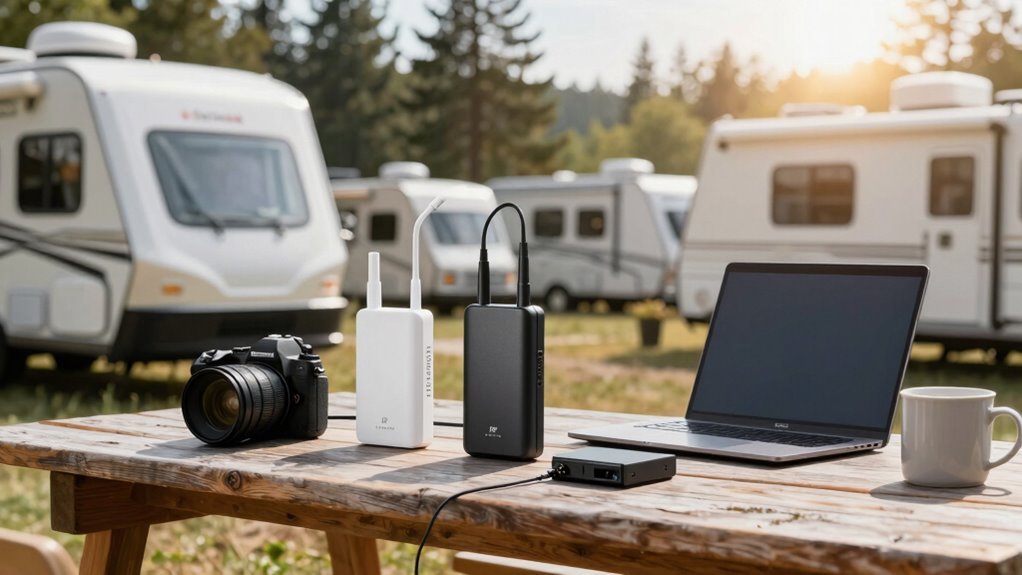
When hunting for a reliable connection at campgrounds or cafes, you’ll find it’s less “log in and go” and more “set up, cross your fingers, and hope.”
Sure, about eight in ten U.S. campgrounds now dish out WiFi—beating out laundry and showers in the popularity contest—but don’t get too excited just yet; many of those signals struggle under their own weight.
You’re up against overloaded networks, spotty coverage, and routers that peaked years ago.
Here’s what you’re really signing up for:
- Evening slowdowns – streams buffer, emails stall, and YouTube fights you when everyone logs on around 5 PM.
- Shady signals – thick walls, trees, or just being too far from the router can kill your connection fast.
- Unsecured networks – free WiFi often means no password, which means hackers might be sipping coffee *and* stealing data.
Pack a backup plan—it’s not paranoia, it’s smart camping. Many RVers now rely on a combination of internet sources to stay connected when public options fail.
Comparing Speed, Reliability, and Coverage Across All Three Options
Forget cross-your-fingers Wi-Fi and hello real answers—let’s break down how Starlink, cellular, and public campground/campus networks actually stack up when speed, reliability, and coverage are on the line.
You’ll love Starlink’s 100–200 Mbps speeds and low 30–50 ms latency, especially on the go with Mobile Priority hitting up to 220 Mbps.
It shines in remote areas where cellular can’t reach, as long as you’ve got sky view—trees? Not so much.
Cellular, with T-Mobile and AT&T, gives solid speeds near 100 Mbps and great responsiveness when you’re near a tower, but dead zones pop up like surprise houseguests.
Dual SIM setups help you stay connected across regions.
Public Wi-Fi? Let’s just say it’s spotty at best.
Starlink wins for speed and remote coverage, while cellular offers reliable, low-power convenience most everywhere else.
Cost Analysis: What Each Option Means for Your Monthly Budget
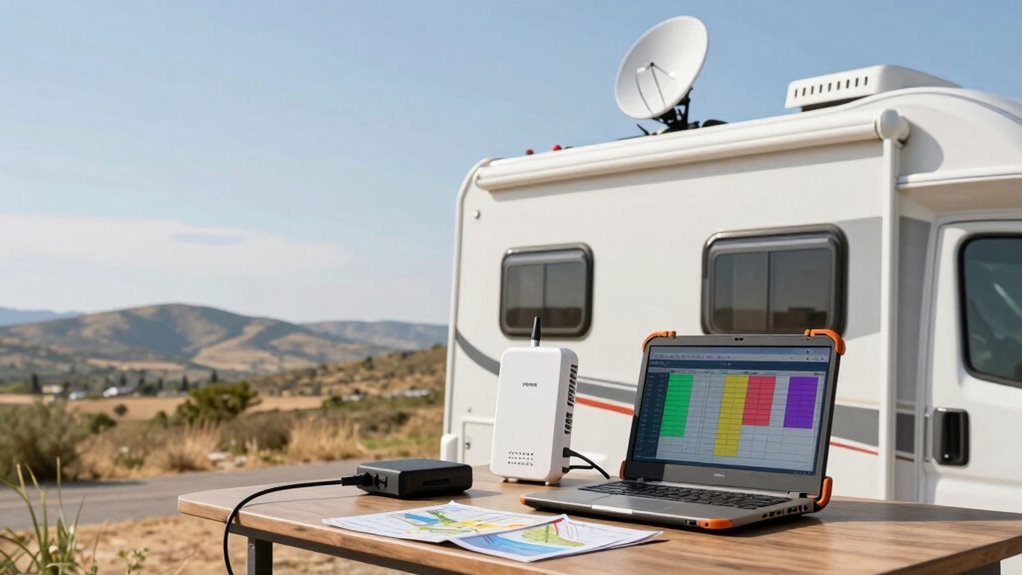
Let’s talk numbers—because nobody hits the open road dreaming of surprise bills.
When it comes to RV internet, your budget will feel the pinch or stay happy depending on your pick.
Starlink’s gear runs $499 and service starts at $50/month, but unlimited plans cost $165—ouch, but reliable.
Cellular hotspots are cheaper starters at $25–$85/month, like Visible or AT&T, but watch that data cap.
Specialized RV services, like TravlFi, charge $129–$159 monthly with no contracts—flexible, but pricier than basic plans.
Check out your options:
- Basic Budget: Visible + portable hotspot = $45/month
- Balanced Pick: AT&T Unlimited Elite + router = $85/month
- Full-On Flex: Starlink Roam Unlimited = $165/month
Pick your plan, save for tacos, not overages!
Frequently Asked Questions
Can I Use Multiple Internet Sources Simultaneously in My RV?
You bet you can use multiple internet sources at once in your RV!
With a Multi-WAN router like Peplink or GL.iNet, you’re combining Starlink, cellular, and Wi-Fi like a connectivity pro.
Bonding software like Speedify boosts speed and stability by merging links seamlessly.
Failover keeps you online when one signal dips—no more panic in remote spots.
It’s like having internet seatbelts and airbags rolled into one!
Is Starlink Portable Enough for Frequent Travel?
You bet, Starlink’s totally portable and ready for your constant moves.
With the Mini, you’ve got a compact, lightweight setup that fits in your backpack and powers right from your camper battery.
You’ll get up and running in minutes, no matter where you park.
It handles rain, wind, and even snow like a champ—just point, connect, and boom, you’re online, anywhere the sky’s clear.
Do I Need a Roof Mount for Cellular Signal Boosters?
You don’t *have* to go to the roof, but it’s where the magic happens.
Elevating your antenna gives you a leg up on spotty signals, dodging roof blockages like a champ.
Sure, you could stick it on a ladder or pole, but why play hide-and-seek with bars?
A roof mount boosts your odds—no crystal ball needed.
Just zip up, aim high, and let clearer calls roll in.
Are Public Wi-Fi Networks in RV Parks Secure?
No, public Wi-Fi networks in RV parks aren’t secure—you’re basically shouting your password to strangers.
Hackers can peek at your info, snag passwords, or swipe bank details in seconds.
It’s like leaving your diary in a public bathroom—don’t do it!
Skip online banking or logging into sensitive accounts.
Instead, use a VPN, stick to HTTPS sites, and keep antimalware running.
Stay safe, savvy traveler!
Can Weather Affect Starlink or Cellular Connectivity?
Yeah, weather can mess with both Starlink and cellular signals.
Rain or thick clouds slow Starlink since it relies on satellites, and heavy storms might briefly chop your connection—annoying, right?
But hey, at least your dish heats itself like a tiny space-age toaster.
Cellular can drop during storms too, especially in remote areas.
So, Mother Nature wins sometimes, but both systems usually bounce back fast.
Stay patient, and maybe blame the clouds, not your tech!
Conclusion
So, you’ve got options—fancy sky magic, trusty phone signals, or that iffy campground Wi-Fi. Starlink zips data from space like a digital comet, cellular keeps you rolling with decent speed, and public Wi-Fi? Well, let’s just say it’s *adventurous*. Each has its charms and quirks—like choosing between a sports car, a bike, and a scooter. Pick your ride, pack your sense of humor, and hit the road connected!
References
- https://www.escapees.com/blog/starlink-for-rvs
- https://thevantasticlife.com/starlink-rv-review-setup-reliability-and-speeds/
- https://www.youtube.com/watch?v=LRGM25Us4nc
- https://www.youtube.com/watch?v=HA9UtocToRU
- https://www.youtube.com/watch?v=ohvxPgfEA6A&vl=en-US
- https://starlink.com/support/article/50e933eb-54f5-1a77-cc85-c6c8325564cf
- https://rvforums.com/threads/starlink-speedtest.16057/
- https://www.thervgeeks.com/rv-internet-options/
- https://www.winnebago.com/lifestyle/winnebagolife/gear/starlink-vs-cellular-internet-for-rvers-staying-connected-on-the-road
- https://unlimitedlteadvanced.com/5g/weighing-your-rv-internet-options-the-pros-and-cons/