Trailer Towing Laws: What RVers Should Know
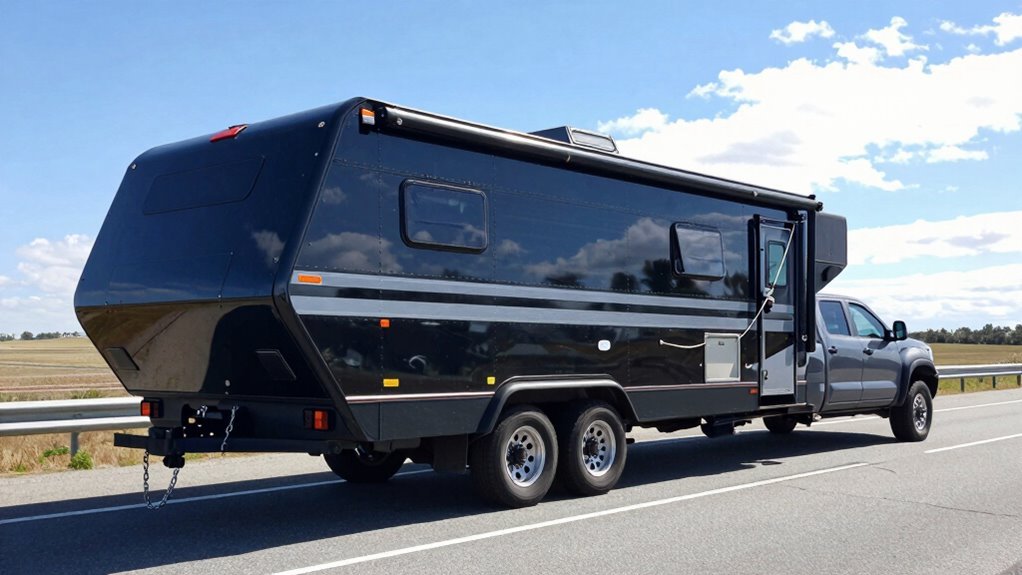
Trailer towing laws are essential for every RVer to understand to ensure safety and avoid fines. You’ve got this, RVer—just don’t overload your rig past its GVWR, or you’ll risk both safety and legal penalties.
Most states allow you to tow with a regular driver’s license if the combined weight stays under 26,000 pounds, but always check local regulations. Some states require special endorsements depending on the size and weight of your trailer and tow vehicle.
Brake requirements vary by state and can apply to trailers as light as 1,500 pounds, such as in California. Be sure your trailer’s braking system meets the rules of the states you’ll travel through.
Always match your hitch to the load and secure all cargo properly before hitting the road. Trailer lights must work every time—you can’t afford to skip this safety step.
Flashing your turn signal isn’t just polite—it’s the law wherever you drive. Knowing trailer towing laws helps ensure smooth sailing on every journey.
Understanding Gross Vehicle Weight Rating (GVWR)
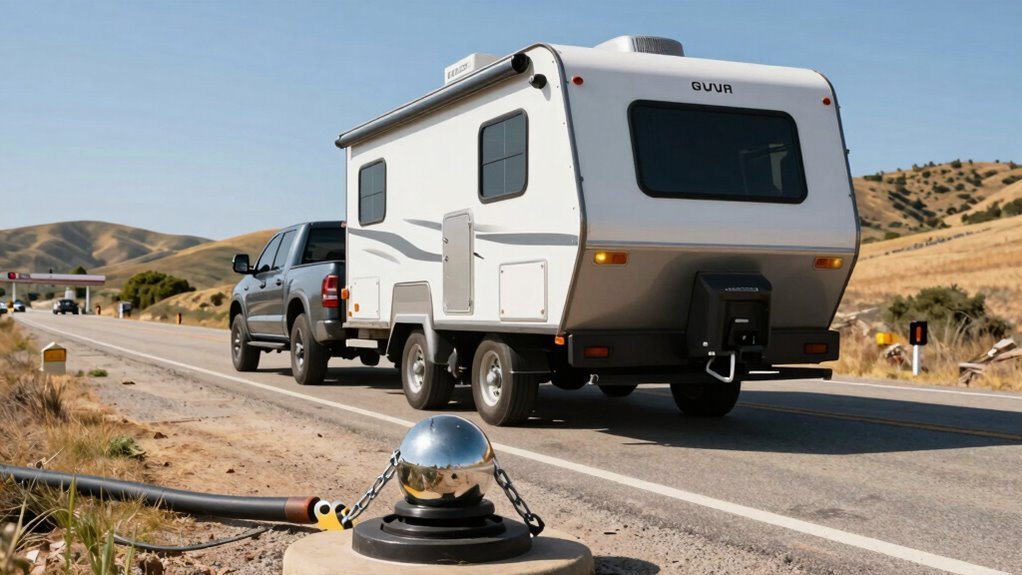
Thinking about hauling a trailer? Let’s start with GVWR—Gross Vehicle Weight Rating—the max weight your vehicle can safely carry when fully loaded.
It’s not just the truck or RV itself, but everything inside: passengers, fuel, gear, your dog, even that giant inflatable taco you bought at the last campsite.
The manufacturer sets this limit based on the frame, brakes, tires, and suspension, so don’t mess with it.
Exceeding GVWR? Hello, unsafe handling, poor braking, and potential damage.
It includes curb weight, fluids, aftermarket goodies, and all your stuff—seriously, pack smart.
And remember, GVWR is for the vehicle alone, not what it’s towing.
Stay within it, and you’ll keep your ride happy, safe, and ready for adventure—nobody wants a bent axle at 2 a.m. on a desert highway.
Includes tongue weight of a dinghy vehicle.
License Requirements for Towing Trailers
Ever wonder if you need a special license just to hit the road with your trailer in tow?
Good news: in most cases, your regular driver’s license is all you need—unless you’re hauling something huge.
Here’s what really matters:
- You’re golden with a standard license for trailers under 26,000 pounds GCWR in most states—no extra paperwork, no stress.
- If your rig’s total weight tops 26,001 pounds, some states want a non-commercial Class A or B license—especially California, Nevada, and Pennsylvania.
- Special endorsements like “R” in Michigan or “J” in Nevada help you legally pull doubles or heavy trailers, so check local rules before you roll.
- Don’t sweat a full CDL for personal trips—even a massive RV usually won’t require one unless you’re hauling commercially.
- Always confirm with your state’s DMV, as CDL requirements depend on weight/size thresholds.
State-by-State Towing Regulations
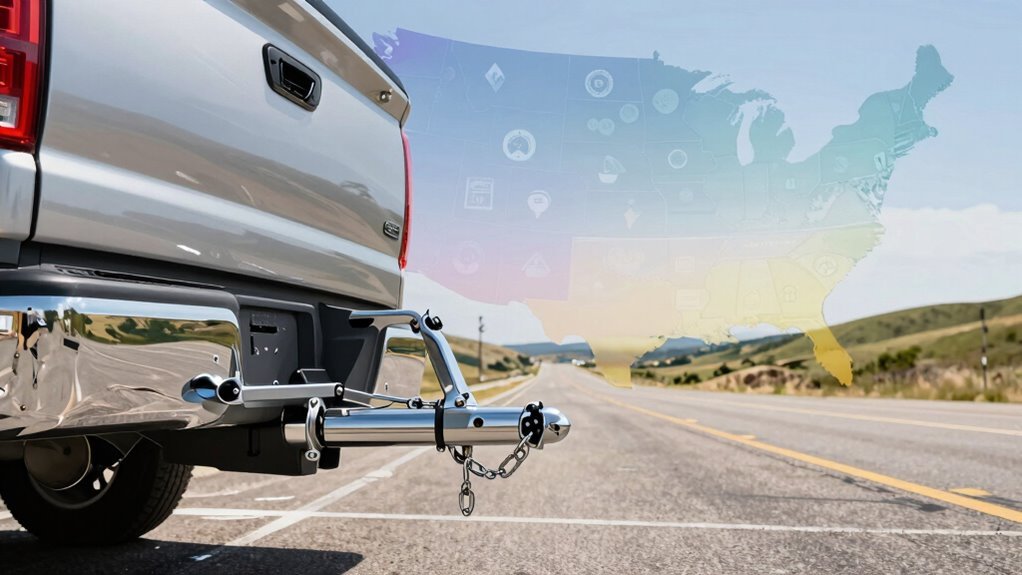
You’re in for a wild ride through state-by-state towing rules—because what’s legal in one state might get you pulled over in another.
Speeds change quick: California caps you at 55 mph with a trailer, but Arizona lets you cruise at 75 mph if your rig’s not swaying like a dance move.
Head into the city, and Arkansas slams the brakes at 55 mph on urban interstates.
Hauling a mobile home? Slow down—Arkansas says 45 mph, Louisiana says 55.
Texas mostly follows the posted signs, while Michigan and Kentucky open the throttle to 65.
Triple towing? Arizona’s cool with it, as long as you’re not wobbling.
Remember, every state’s got its own flavor—some strict, some speedy—so check before you roll.
It’s not paranoia, it’s just smart trailering!
And don’t forget: in California, safety chains may be required during winter months on mountain roads.
Trailer Brake System Rules and Requirements
- Brake laws kick in around 1,500–3,000 lbs GVWR, depending on your state—California starts early at 1,500 lbs, while Texas waits till 4,500 lbs.
- Electric brakes rock with a controller in your tow rig, syncing braking effort smoothly—perfect for heavier loads and long hauls.
- Surge brakes are old-school cool: no wires, just push-and-go mechanical action using forward momentum.
- Great for smaller rigs!
- Don’t skip the breakaway system: if your trailer ditches you mid-drive, it’ll brake itself—because runaway trailers aren’t exactly *en vogue*.
Lighting, Signaling, and Safety Equipment Standards
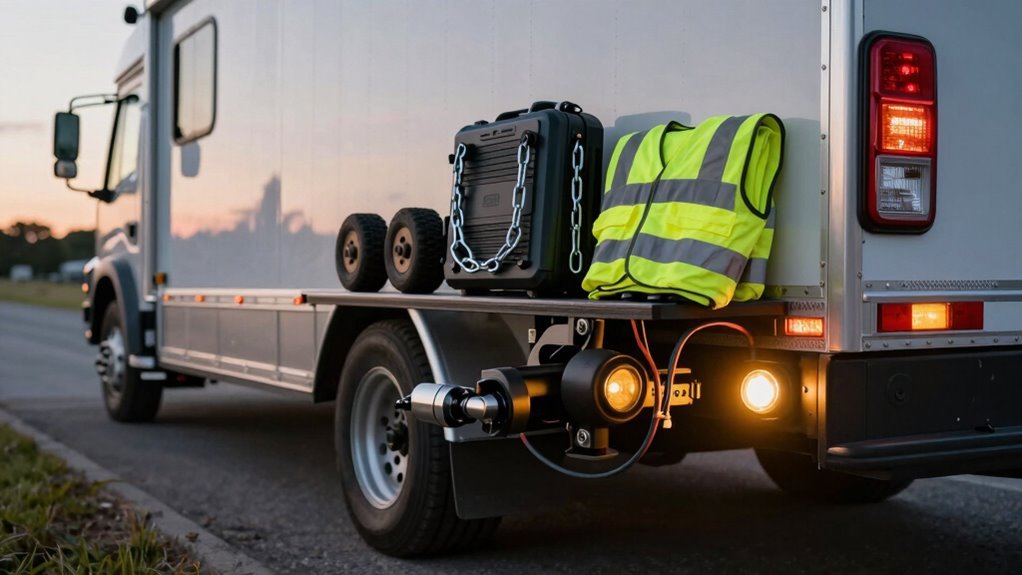
How’s your trailer looking when the sun goes down or the fog rolls in?
You’ll want every light—tail, brake, turn signal, and marker—to be bright and working, because dim or busted lights can spell trouble fast.
Plug that wiring connector snugly into your tow vehicle and keep it lubed with dielectric grease so moisture doesn’t ruin your ride.
If the connection’s faulty, your signals mightn’t flash when they should—awkward at best, dangerous at worst.
Reflectors need to shine too, helping others spot you from the side and rear.
And hey, while you’re checking lights, don’t forget flares, a fire extinguisher, and a stocked first aid kit—just in case Mother Nature throws a curveball.
Stay visible, stay ready, and your trailer won’t just follow—it’ll shine right back!
Hitch Types and Trailer Connection Guidelines
A solid hitch is the unsung hero of every smooth tow, and picking the right one turns a shaky, nerve-wracking ride into a breeze. You’ve got options, so match your ride and rig like peanut butter and jelly.
- Receiver hitches are your go-to, fitting most vehicles and trailers—from bikes to boats—just pick the right class (I to V) for your load.
- Fifth-wheel hitches sit in your truck bed, giving heavy RVs a stable, wobble-free ride with kingpin precision and turn-on-a-dime action.
- Gooseneck hitches handle massive loads like horse trailers with ease, offering top stability and a tighter turn radius (but expect some bed modification).
- Always check connections: match capacities, secure pins, verify tongue weight (10–15%), and give everything a wiggle test—
safety’s no joke, but a loose hitch? That’s a comedy of errors you don’t want.
Frequently Asked Questions
Can I Tow a Trailer With an Electric Vehicle?
Yes, you can tow a trailer with an electric vehicle—many EVs like the Rivian R1T and Ford F-150 Lightning are built for it.
Just check your EV’s towing specs online or in the manual, make sure you’re within weight limits, and use the right hitch.
Towing feels smooth and quiet, plus you’ll skip gas stops.
Just don’t forget brakes, safety chains, and a coffee run—your trailer’s not the only thing that needs a pick-me-up!
Are There Age Restrictions for Towing Trailers?
You’re golden if you’re old enough to drive—no magic age for towing trailers, just your license in hand.
Most states let you hitch up freely, like grabbing the keys to adventure.
But hold up: some spots say passengers gotta be 14 or older, so don’t let little Timmy ride in the back.
Check local rules, ’cause surprises? Never fun on the open road.
Do I Need Insurance for My Trailer?
Yes, you do need insurance for your trailer—sometimes by law, always if it’s financed.
Even when it’s not required, it’s a smart move.
It covers theft, damage, and accidents, giving you peace of mind on the road.
Think of it like seatbelts: not always mandatory, but super helpful when things go sideways—like when Dave tries to back into a tight campsite spot.
Can I Rent a Trailer Without Prior Experience?
Nope, you can’t just hop in and go—rental companies want someone who knows the ropes, not a newbie fumbling with the hitch.
They’ll ask for proof you’ve driven before, like a pro showing off their calloused hands.
Skip the guesswork, save the drama, and get some practice first.
Think of it like baking: you wouldn’t make a cake blindfolded, right?
Learn, prep, then hit the road like a boss.
What Should I Do if My Trailer Sways?
You feel that wobble? Don’t panic!
Ease off the gas, keep your steering smooth, and let the trailer settle.
Never slam the brakes—that’ll make it worse.
If you’ve got a brake controller, tap the trailer brakes to steady things.
And hey, think of it as your RV doing the limbo—how low can it go?
Next time, check your load and tire pressure to keep things tight and right!
Conclusion
You’ve got this, just like riding a bike—once you know the balance, it’s smooth sailing. Remember your GVWR, check those lights and brakes, and hitch up with care. Every state’s a little different, so stay curious. Towing’s a breeze when you’re prepped, and hey, who knew rules could feel this fun? Now go chase open roads and campfire stories—your trailer’s ready, and so are you!
References
- https://www.rv.com/rv/defining-gvwr-gcwr-and-other-rv-weight-ratings/
- https://www.keystonerv.com/owners/understanding-rv-weight-rating-abbreviations
- https://www.lytx.com/blog/gvwr-definition
- https://www.curtmfg.com/towing-capacity
- https://www.escapees.com/blog/weight-and-safety-tip-gvwr
- https://rvsafety.com/weight/glossary
- https://www.natm.com/news/explaining-gross-vehicle-weight-ratings-to-customers
- https://www.inboundlogistics.com/articles/gawr-vs-gvwr/
- https://www.rvezy.com/blog/rv-drivers-license-requirements-usa
- https://www.outdoorsy.com/blog/guide-rv-drivers-licenses-requirements