Tips for Driving an RV in Snow and Ice
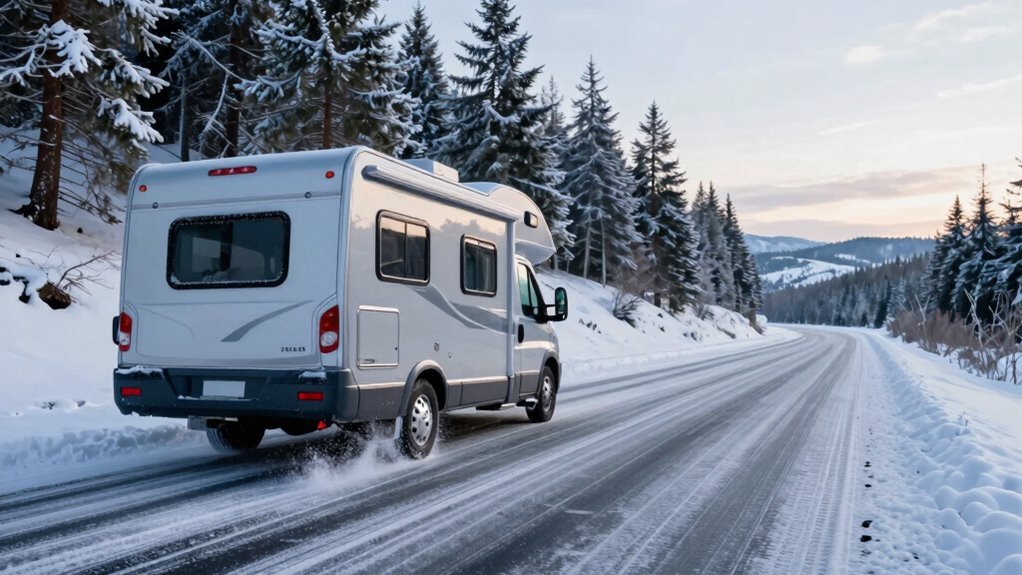
Keep your tires properly inflated and check that tread’s at least 4/32”—bald tires won’t cut it in snow! Practice putting on chains before you need them, and snug them tight on drive wheels.
Slow down, double your following distance, and ease into turns when driving an RV in snow and ice. Shift weight forward, use lower gears, and never slam the brakes.
If you start to skid, stay cool—steer like you’re guiding a shopping cart through a grocery store. You’ve got more slick moves where those came from.
Check and Prepare Your Tires
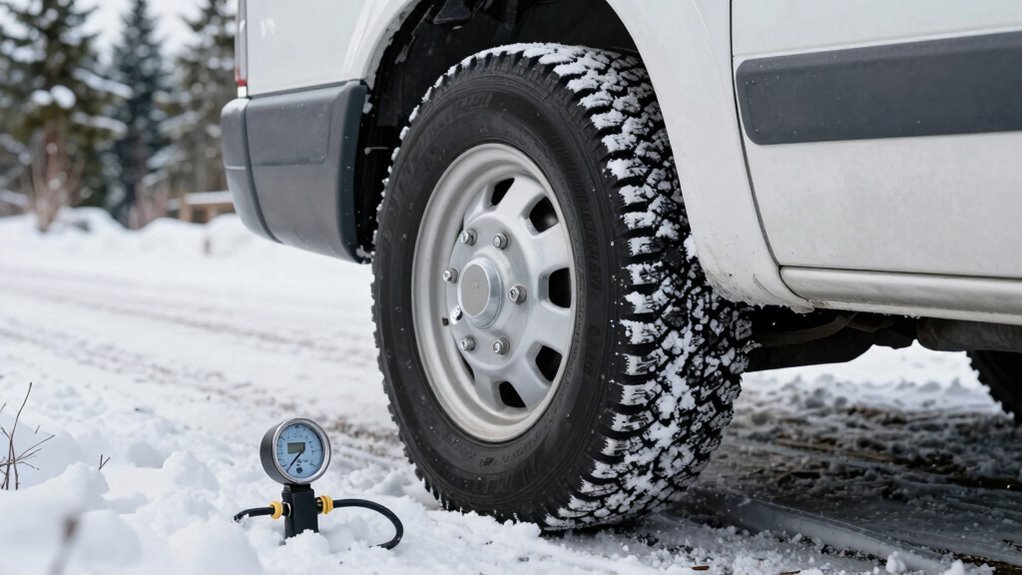
Ever wonder why your RV doesn’t handle quite right when the weather turns icy? Cold temps sneakily drop your tire pressure—about 1.5% for every 10°F drop—making your ride sluggish and unstable.
Don’t let winter fool you: check your pressure often and keep it at the manufacturer’s sweet spot.
Properly inflated tires grip better, brake smoother, and corner safely on slick roads.
Think of them as your RV’s winter boots—underinflated ones are like soggy sneakers, ready to slip!
Tread depth matters too; aim for at least 4/32” to power through slush and snow.
And if your tires look tired or are older than your favorite playlist, replace them.
Most last just 5 to 7 years, even if they seem fine.
A quick pre-trip inspection keeps gunk like stones out of the treads, so you roll clean and confident.
Store in a cool, dry place to prevent tire deterioration during winter months.
Install and Use Tire Chains Properly
You’ve checked your tire pressure and made sure your tread’s up to snuff—now it’s time to gear up for serious winter grip.
Practice putting on chains in your driveway before the snow hits—you’ll thank yourself later. This preparation can make all the difference when tire chains are needed—having the right fit and knowing the steps ensures a safer experience.
Park on level ground, uncoil the chains, and make sure they’re untangled and ready.
Check your RV’s manual to confirm chains are allowed and compatible.
Slide them behind the tire with the yellow cable pointing left, pull the red fasteners forward, and connect the top cables securely.
Spread the chains evenly, form that sweet diamond pattern, and center the cross chains for balanced traction.
Don’t forget to hook the rubber tighteners—they’re your grip’s best friend.
After rolling forward 15 feet, re-tighten everything; chains love to settle in.
And yes, install them on *all* drive wheels—your RV won’t do the cha-cha on ice if you don’t.
Safety’s no joke, but a little chain dance? Perfectly acceptable.
Adjust Your Driving Speed and Following Distance
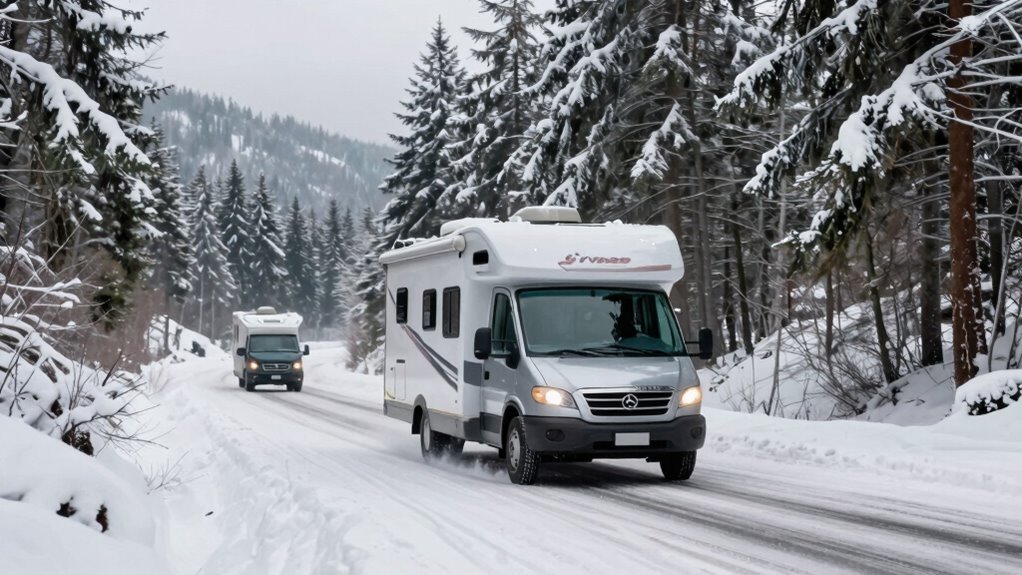
When winter throws its worst at the road, slowing down isn’t just smart—it’s your ticket to staying in control. You’re hauling a lot more than a sedan, so ease off the gas on snow and ice, especially over bridges that freeze first.
Keep a steady, slow pace and avoid sudden moves—your RV needs space and time.
Bump your following distance to 6–8 seconds; that’s double the usual, but it gives you room to stop safely.
Check your mirrors every few seconds while keeping that cushion.
On curves or in fog, slow before you enter, never during.
Use gentle braking or downshift instead of slamming the pedal.
Think smooth, not speedy.
Be especially cautious on bridges and overpasses.
Manage Weight Distribution for Better Traction
Slowing down and giving yourself plenty of space on slick winter roads keeps you in control, but even the most cautious speed won’t help much if your RV’s weight is all out of whack.
You’ve got to balance that beast like you’re packing a giant snowball—distribute weight evenly side to side, and keep heavier stuff slightly forward to help the trailer ride smoothly.
Aim for 10% to 15% of the trailer’s weight on the tongue—too little, and it’ll sway like a wobbly penguin.
Secure all cargo tight so it doesn’t slide around mid-drive and throw you off.
Use a weight distribution hitch for heavy loads, but skip the friction sway controls on ice—they can stiffen things up when you need flexibility.
And hey, a few sandbags over the drive wheels? That’s like traction fairy dust.
Balance it right, and you’ll glide through winter like a champ.
Use Engine Braking and Avoid Sudden Movements
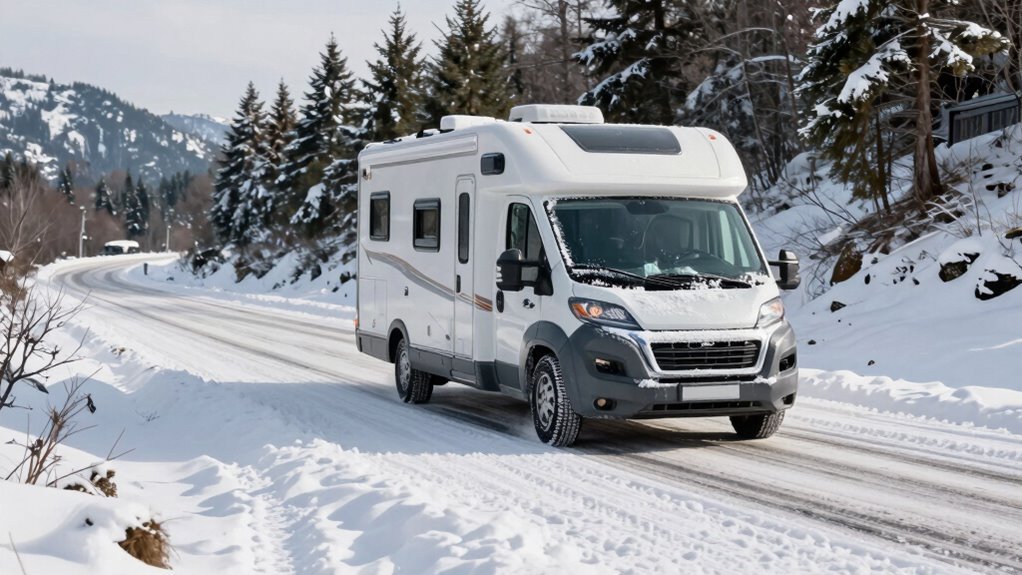
Even if you’re tempted to let gravity do the work, tackling snowy hills in your RV means staying sharp and in control—especially when it comes to slowing down.
Downshift early to let your engine help you decelerate smoothly, which keeps your wheels from locking and your trailer from pushing you like a runaway shopping cart.
Skip the exhaust brake in snow—it’s like tapping the brakes blindfolded.
Use lower gears on descents, but go easy on downshifting all at once; think smooth, not sudden.
On icy roads, gradual is your new favorite word: brake gently, steer softly, and keep extra space—like, “don’t-want-to-scare-the-squirrels” space.
No cruise control, no jerky moves, and definitely no panic stomps.
Keep your hands steady and your cool tighter than your winter scarf.
Your RV isn’t a figure skater, so avoid sharp turns or sudden stops—unless you enjoy impromptu ice dancing.
Know How to Handle Skids and Slips
Feel that wobble? Don’t panic—keep both hands on the wheel and breathe.
Sudden moves make skids worse, so stay calm and focus on where you *want* to go, not what you’re scared of hitting.
If the front slides, gently steer into the skid; if the back fishtails, turn slightly toward the slide.
Smooth inputs win every time—no jerky turns!
Slamming brakes or gas only digs you deeper, so ease off the pedal and pump brakes lightly if needed.
Never stab those trailer brakes on ice!
Keep a 6–7 second gap from other cars—your big rig needs room to stop.
And hey, winter tires or chains? Awesome traction boosters.
If you *do* slip, don’t yank the wheel—recover slow and steady.
Oh, and if you’re stuck, a little sand or a traction mat can be your new best friend.
Drive cool, stay safe, and rock that winter adventure with confidence!
Frequently Asked Questions
Can I Use All-Season Tires for Snow Driving?
You *can* use all-season tires in light snow, but you’re cutting it close.
Below 45°F, they stiffen up like a sleepy sloth, losing serious grip.
Winter tires chew through snow and ice like a snowplow with confidence, stopping faster and cornering better.
If you’re just zipping through a dusting, you’ll probably survive—but for real winter adventures, don’t tempt fate.
Swap to winters, and hello, peace of mind!
How Often Should I Check My Antifreeze Levels?
Check your antifreeze levels like a drumbeat—steady and sure—before every trip, just like your morning coffee.
You’ll want to verify every three to six months, or sooner if you’ve hit rough roads.
After filling, take a spin and recheck—it settles like a grumpy cat after a nap.
Don’t wait for frosty whiskers on your radiator; stay ahead and keep that engine purring happily through winter’s chilly surprises.
Are Snow Tires Worth the Investment for RVS?
Yeah, snow tires are totally worth it for your RV—you’re not just buying rubber, you’re buying peace of mind.
They grab icy roads like mittens on a snowball, stop faster than all-seasons, and handle freezing temps like pros.
Think shorter stops, better grip, and fewer “oh-no” moments.
Plus, you might snag insurance discounts.
Sure, they cost a bit upfront, but safer slides into driveways beat costly wipeouts every time.
Sweet deal, right?
What Temperature Is Too Cold for RV Travel?
When the mercury plummets below -20°F, you’re skating on thin ice—just don’t do it.
That’s way too cold for RV travel, even if you’re tough as nails.
Your furnace can’t keep up, pipes freeze fast, and one glitch could leave you out in the cold—literally.
Stick to milder temps, keep the heat on, and save the polar expeditions for someone with a heated underbelly and a death wish.
Should I Carry an Emergency Heating Source?
Yes, you should carry an emergency heating source—don’t get caught shivering like a snowman in a blizzard!
A portable propane heater or electric heating pad gives backup warmth when systems fail.
They’re small, easy to stash, and save the day if your furnace quits.
Pair it with warm layers and skirting, and you’ll stay toasty even in a freeze.
Smart prep means cozy adventures, no matter how icy it gets outside!
Conclusion
Think of your RV as a moose in mittens—big, brave, but a little wobbly on ice. You’ve checked your tires, chained up like a holiday gift, and slowed down like you’re sneaking past a sleeping bear. Now you’re gliding, not grinding. Every gentle turn, every patient stop, is a quiet win. Snow isn’t a foe—it’s just nature’s way of saying, “Hey, slow down and enjoy the view.” You’ve got this, moose.
References
- https://rvbusiness.com/rv-owners-dont-forget-tires-when-winterizing-your-rv/
- https://www.sunoutdoors.com/blog/safe-rv-driving-in-winter
- https://mevertauto.com/rv-tire-maintenance-tips/
- https://www.harvesthosts.com/blog/tips-driving-rv-winter-conditions
- https://www.carvillesautomart.com/blog/winter-driving-tips-for-motorhomes-and-rvs/
- https://horizontransport.co/2024/12/12/navigating-winter-weather-tips-for-safe-rv-transport-in-cold-conditions/
- https://www.gorving.com/tips-inspiration/expert-advice/guide-winterizing-your-rv-tires
- https://lacledechain.com/blog/how-to-install-tire-chains/
- https://www.lesschwab.com/article/driving/how-to-put-on-snow-chains-and-drive-safely.html
- https://www.youtube.com/watch?v=aFrdH8NoeoU