RV Water Hookups 101: Connecting at Campgrounds
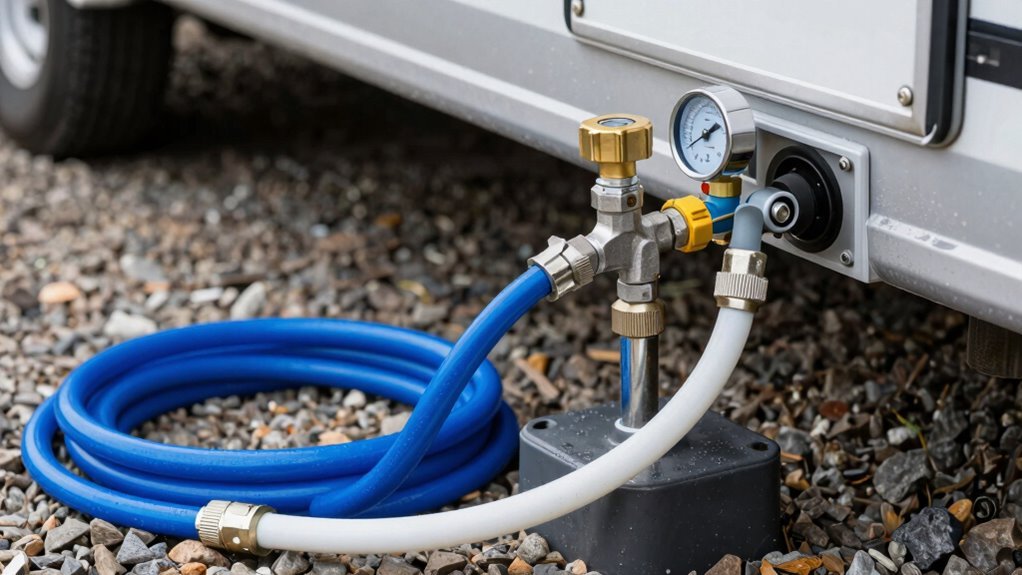
Turn that shiny spigot and voilà—fresh, drinkable water flows right into your RV like magic! Just screw a pressure regulator onto the campground hose bib, connect your clean, food-grade hose, and snap it to your RV’s city water inlet. This simple setup ensures a safe RV water hookup at nearly any campground.
Don’t forget the inline filter—it’s your water’s best friend. Keep the RV’s fresh water pump off during this process, and inspect your hose connections and O-rings regularly to prevent leaks. A secure RV water hookup keeps your system running smoothly and contamination-free.
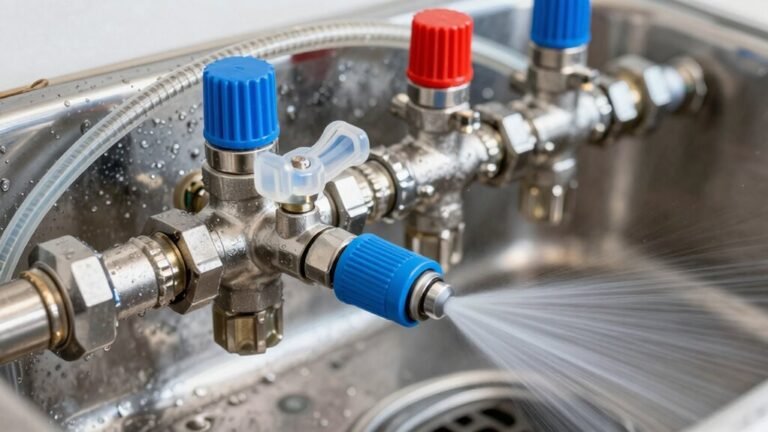
Boom: hydration station activated. Just watch the water pressure, because nobody likes a surprise indoor waterfall. Oh, and there’s a slick trick with the Y-valve that makes switching between water sources even easier.
Understanding Campground Water Hookups
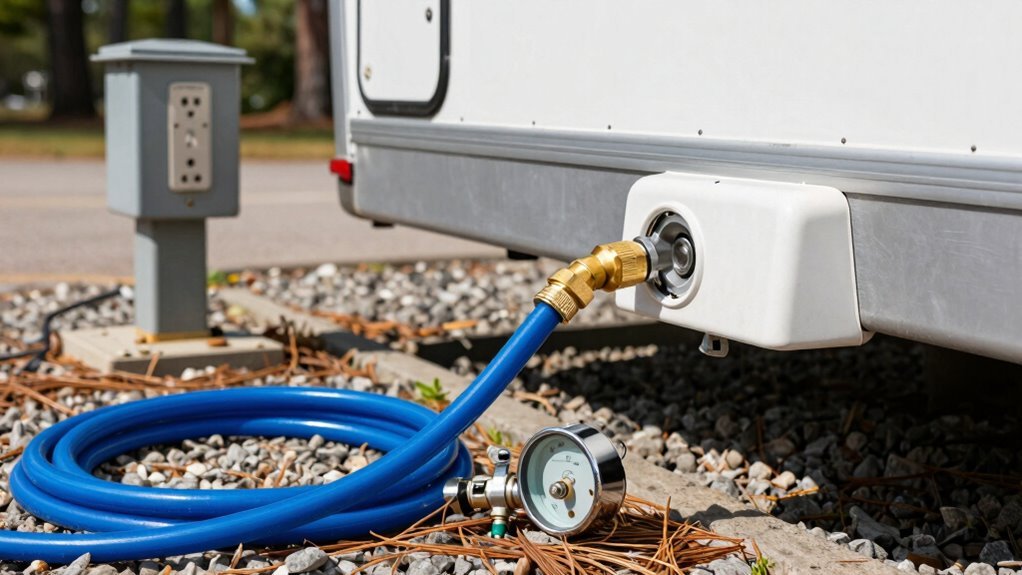
Ever pulled into a campsite wondering where your water’s coming from? Good news—you’re not on spring duty like a pioneer.
Most campgrounds give you instant access to clean, drinkable water straight from a handy spigot, just like your backyard faucet.
It’s potable, so yes, you *can* finally stop drinking stale bottled water.
These hookups are part of full or partial sites, often paired with power and sometimes sewer.
No more lugging heavy tanks or guessing how much you’ll need.
Just hook up, turn it on, and boom—endless water for coffee, showers, even that dramatic dishwashing scene from the movies.
The spigot’s usually right there, waiting for your hose like it’s at a first date.
Just make sure it’s labeled potable—no one wants a surprise swamp smoothie.
You’ll want to use a BPA-free water fill hose to keep your water safe and tasting fresh.
Welcome to modern camping: hydrated, happy, and totally hassle-free.
Essential Gear for Connecting to Water
You’re all set to tap into that sweet, fresh campground water—just don’t wing it like a DIY plumbing experiment gone wrong.
Start with a water pressure regulator; it’s non-negotiable.
Snap it onto the spigot first to block surges and dial pressure down to a safe 40–50 PSI.
Next, add an inline water filter to catch gunk and make your coffee taste like coffee, not campground mystery.
Got a Y-valve splitter? Perfect if you want to run a garden hose for the dog while filling your tank.
Don’t forget snug fittings and adapters—they seal the deal at both ends and keep leaks at bay.
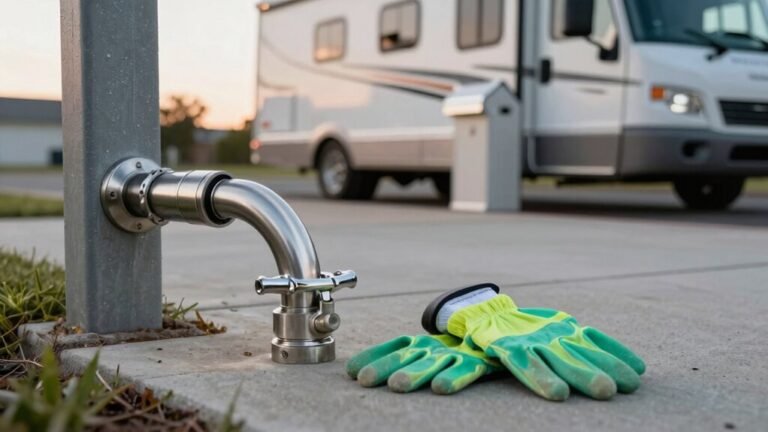
Toss in gloves for clean hands, wheel chocks for stability, and a mini toolkit for quick fixes.
Always attach potable freshwater hose to ensure clean drinking water flows into your RV.
With the right gear in play, your RV stays happy, hydrated, and ready for adventure—all without a single plumbing panic.
Choosing the Right Freshwater Hose
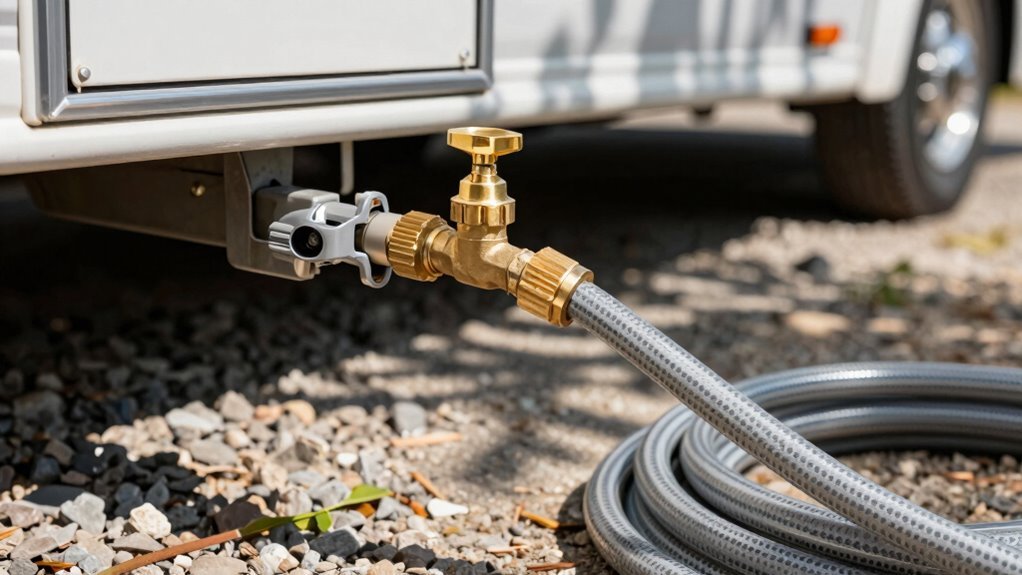
How do you keep your RV’s water fresh, flowing, and free of gunk?
You pick the right freshwater hose—no garden hose hand-me-downs allowed!
Make sure it’s made from potable PVC, lead-free and safe for drinking, ideally in white or blue so no one mistakes it for a yard hose.
Go for 1/2-inch or 5/8-inch diameter—both work great, though 5/8-inch handles longer runs like a champ.
Most folks dig a 50-footer for campground flexibility, but 33 feet (10 meters) often does the job just fine.
Look for kink-killing tech like NTS Reflex Mesh or Zero-G lightness—it’s like magic for tangles.
Brands like Camco TastePURE and Teknor Apex NeverKink? Total game-changers.
With brass fittings, UV resistance, and no weird tastes, your water stays clean, crisp, and totally you-should-drink-it.
NSF/ANSI 61 certified hoses ensure your water is safe to drink by meeting strict health-based standards for contamination.
Trust us, your morning coffee will thank you.
The Importance of a Water Pressure Regulator
That shiny new freshwater hose you just picked out?
It’s great, but without a water pressure regulator, you’re playing plumbing roulette.
Most RVs handle up to 100 PSI, but experts say you shouldn’t go above 60—and ideally stay between 40 and 55 PSI.
Campground water spigots can blast out way more than that, risking burst pipes, leaky faucets, or a toilet that suddenly won’t stop running.
Yikes.
A pressure regulator saves your system by cutting that intense flow down to a safe level. It screws right between the spigot and your hose, works automatically, and keeps pressure steady even if the source fluctuates.
Think of it as a bodyguard for your plumbing—small, tough, and totally worth it.
Without one, you’re risking hundreds in repairs for the price of a cheap burger. Don’t skip it!
Using an Inline Water Filter
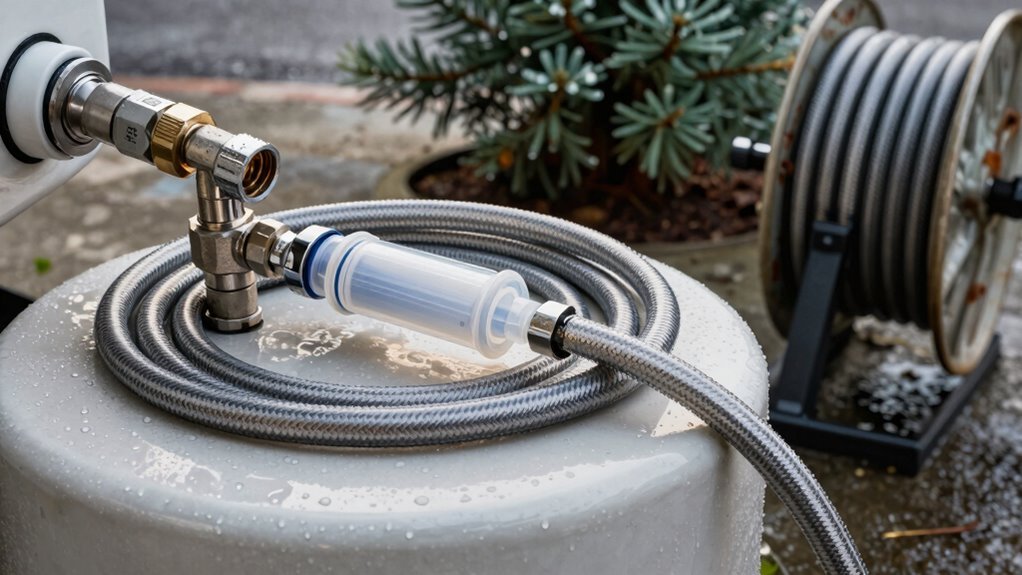
Ever wonder why your morning coffee tastes a little off at the campground?
Chances are, it’s the water.
An inline water filter hooks right onto your hose and cleans the water as it flows into your RV—super simple and effective.
You’ll cut down on chlorine, bad tastes, and pesky sediment that can mess with your plumbing.
Most use carbon and sediment layers to keep things clean, and they screw on in seconds between your spigot and hose.
They’re affordable (usually under $30!) and perfect for weekend warriors or part-timers.
Just don’t expect pro-level flow—they can slow things down a bit, especially with fine 0.5-micron filters.
Replace them every 3 to 6 months, depending on how much you roam.
Think of it like changing your toothbrush—gross if you don’t, smart if you do!
Step-by-Step Connection Process
Ready to get the water flowing without a hassle?
First, find the freshwater spigot at your site—it’s usually hanging out near the electric and sewer connections.
Grab your white or blue potable hose (50 feet is a safe bet), and screw the pressure regulator onto the spigot to keep your RV’s pipes happy.
Attach the hose to the regulator, then connect the other end to your RV’s city water inlet—look for the label, not the black tank flush hole (that one’s a trickster!).
Use a 90-degree or flexible connector at the RV end to avoid strain.
Double-check that the O-rings are in place and not smashed.
Keep your RV’s water pump off—city water’s doing the work today.
Now all you need is that sweet sound of water running through your faucets—cha-ching!
Avoiding Common Water Hookup Mistakes
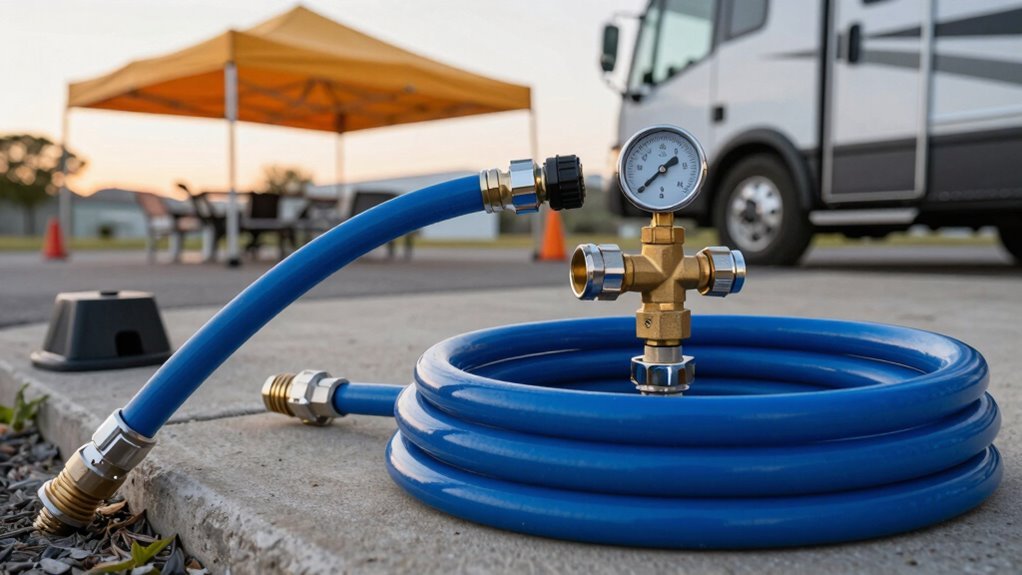
Wondering why your RV’s water tastes like a rubber garden hose after a weekend getaway? That’s probably because you’re using the wrong hose—regular garden hoses aren’t safe for drinking water and can leach funky flavors. Always use a dedicated potable water hose, clearly labeled and never shared with other uses.
Skipping a water pressure regulator? Bad idea—campground pressure can spike, wrecking your plumbing. Keep it under 50 psi.
Don’t forget an inline filter; it catches gunk and keeps your water tasting fresh.
Make sure your hose reaches the spigot—nobody likes a tug-of-war with fittings.
Avoid kinks by choosing a flexible, RV-safe hose.
Flush it first, connect snugly, and turn on the water slowly.
Check for leaks—small drips can mean big trouble later.
A little prep saves headaches (and thirst).
Maintaining Water Quality While Traveling
While you’re busy chasing sunsets and campfire skies, don’t let your RV’s water quality take a backseat.
Keep your water safe and tasty with these easy habits:
- Flush and sanitize your freshwater system regularly—especially before trips or after storage—using a bleach solution, then rinse well so your morning coffee doesn’t taste like a pool.
- Install an inline filter like Tastepure or use UV treatment to zap bacteria and improve taste—because no one’s got time for funky showers or questionable ice cubes.
- Test water quality at campgrounds and check for odd smells or discoloration; think of it as a spa day for your plumbing, keeping everything fresh and flowing smoothly.
Your RV’s system works hard—so treat it right.
Stay hydrated, and keep the adventures (and water) clean!
Disconnecting Safely After Use
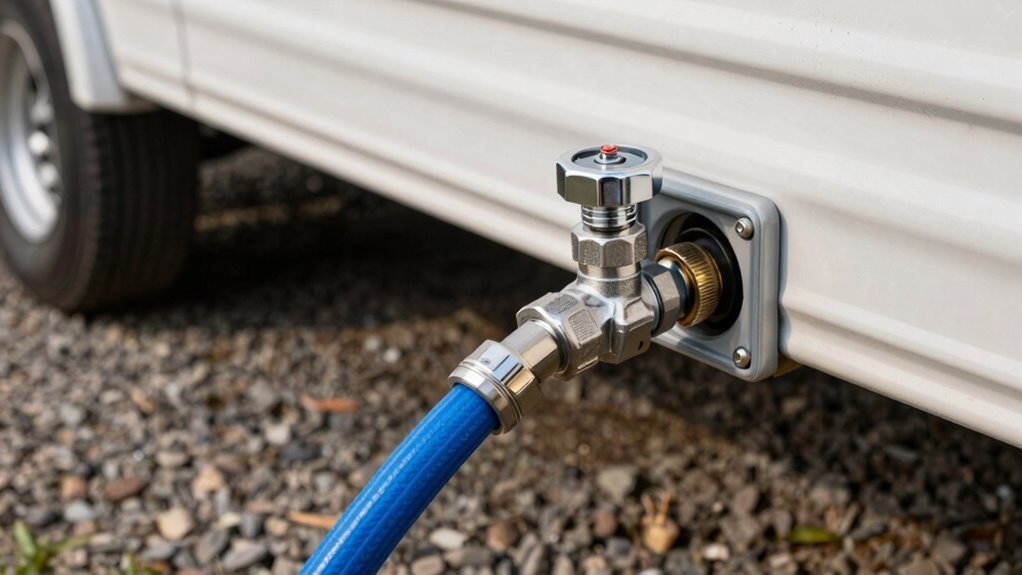
Once you’ve soaked up the last of the camp vibes and it’s time to hit the road, don’t just yank that hose like you’re pulling off a bandage—disconnecting your RV water hookup is a quick dance of steps that’ll save you from a soggy surprise.
First, shut off the water at the campground spigot—no pressure, no problems.
Then, head inside and open a cold faucet to relieve any leftover pressure; you’ll hear the air hiss and the last drops trickle out.
Now, back at the RV, unscrew the hose from the city water inlet and pop on the protective cap—don’t leave it bare, that’s asking for gunk.
Coil the hose neatly, rinse it if it’s been near sewer connections, and stash it in its proper spot.
Quick check for cracks or leaks while you’re at it.
Store everything tight and tidy—your future self will high-five you.
Frequently Asked Questions
Can I Use My RV Water Hose for Drinking?
Yes, you can drink from your RV water hose—if it’s certified for potable water.
Regular garden hoses? Nope, they leach yucky stuff.
But a good drinking-safe hose is BPA-free, lead-free, and won’t give your water a funky aftertaste.
Look for NSF/ANSI 61 labels, pick a flexible, UV-resistant one, and skip the vinyl—trust us, your taste buds will thank you!
Stay hydrated, not toxified!
How Often Should I Replace My Water Filter?
You’ll want to replace your water filter every 3–4 months, even if it seems fine—because here’s the kicker: over 60% of RVers wait too long and end up sipping nastiness without realizing it.
Change it regularly, especially if water feels slow or tastes off.
If you’re a weekend warrior, swap it twice a year; full-timers, every 2–3 months.
Sediment filters?
Every few months.
Keep it fresh, keep it clean, and hey, your morning coffee will thank you!
Is It Safe to Leave the Water Running Overnight?
Nope, you shouldn’t leave the water running overnight—it’s a risky splash!
Even small leaks can turn into soggy surprises by sunrise.
Plus, critters or shifting rigs might kink your hose while you snooze.
Instead, hook up when needed and shut it off at the source.
Your RV’s happier when you play it safe, and hey, you’ll sleep better knowing you’re not watering the campground lawn at 2 a.m.
Smart moves keep things dry and fun!
What Causes Low Water Pressure in My RV?
Low water pressure’s driving you bananas?
Yeah, it’s a full-blown plumbing mystery!
You’ve probably got a clogged filter, kinked hose, or gunk in the faucet aerator slowing things to a snail’s pace.
Maybe your RV’s pump’s acting up or the campground’s supply’s weaker than week-old coffee.
Don’t forget those sneaky closed valves or a full freshwater tank when using city water.
Check each spot—you’ll crack the case in no time!
Can I Connect to Water Without a Regulator?
Nope, you can’t safely connect without a regulator—don’t risk it!
Campground water pressure can blast past your RV’s limits and turn your plumbing into a sprinkler system.
Imagine soaking your cabinets like a surprise indoor rainstorm—fun for plants, not so much for your wallet.
Pop on a regulator first, keep things under 60 PSI, and save yourself a soggy, costly mess.
Easy fix, big peace of mind!
Conclusion
Now you’re ready, key in hand, to open the campground’s flowing lifeline. Think of your hose as a friendly garden snake—harmless, helpful, and always thirsty for adventure. With the right gear, clean water dances into your rig like morning sunlight. Don’t let a pressure spike rain on your parade—stay safe, stay sane, and keep the faucet fun. Happy camping, water wizard!
References
- https://www.transwest.com/rv/blog/rv-hookups-explained-electricity-water-sewage-tv/
- https://pismosandsrv.com/rv-hookup-beginners-guide/
- https://www.outdoorsy.com/blog/rv-hookups-a-comprehensive-guide
- https://www.lambcity.com/blog/full-hookups-vs-partial-hookups-understanding-your-camping-needs
- https://taosrv.com/rv-blog/rv-hookups-the-basics-and-what-you-need-to-know/
- https://www.authentikusa.com/us-en/faq/electricity-water-rv
- https://www.jellystonemillrun.com/water-and-electricity-understanding-rv-park-hookups/
- https://www.jayco.com/blog/rv-hookup-guide/
- https://www.gorving.com/tips-inspiration/expert-advice/rv-systems-101-setting-up-water-sewer-and-electricity-campground
- https://www.carefreeofcolorado.com/blog/rv-essentials-for-beginners/