How to Handle a Tire Blowout in an RV
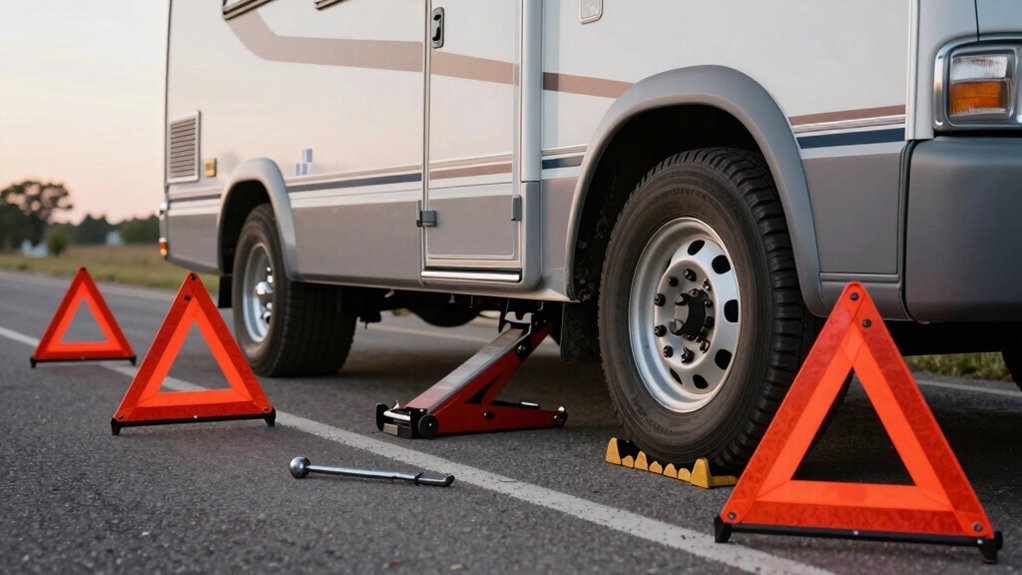
You hear a loud bang, feel a thump-thump-thump, and your RV starts jerking—stay cool, it’s just a tire blow ch. Handling a tire blowout in an RV requires immediate focus and calm action to maintain control.
Grip the wheel tight, steer smoothly, and ease off the throttle without slamming the brakes. Slow down gradually while keeping the vehicle stable.
Turn on your hazards and carefully glide to the shoulder or a safe area off the road. Avoid sudden movements that could worsen the situation.
Once stopped, check the damage and assess whether it’s safe to proceed. Call for professional help, as handling a tire blowout in an RV often requires expert assistance.
Recognize the Signs of a Tire Blowout
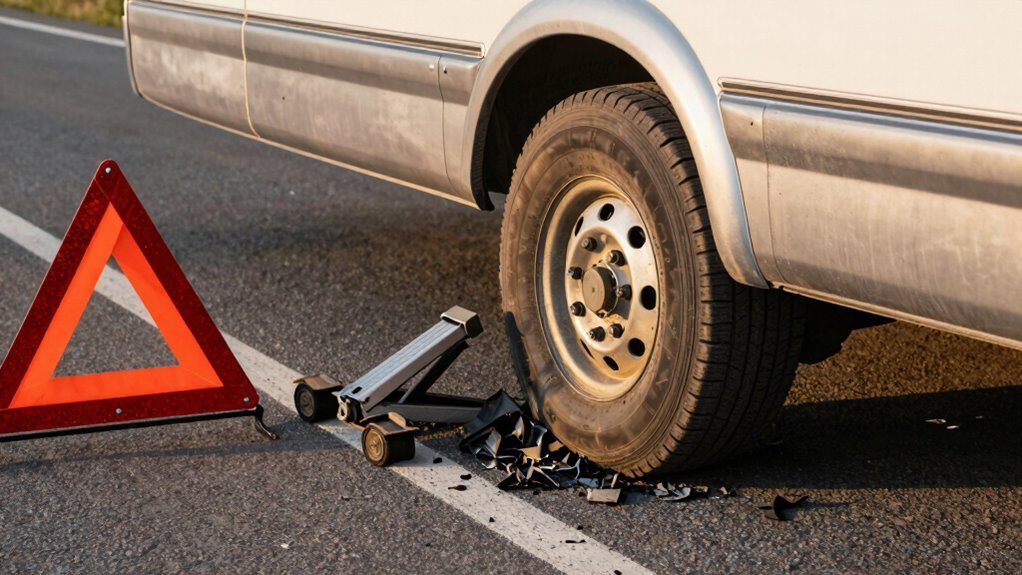
You’re cruising down the highway, coffee in hand and the open road ahead—when suddenly, *BANG!* That loud pop isn’t fireworks or a backfiring engine; it’s your tire blowing out.
You’ll hear a sharp explosion, followed by a fast whoosh of air and a steady thump-thump-thump as the deflated tire drags.
The RV might jerk hard to one side, like it’s suddenly craving the shoulder.
If the rear blows, you’ll feel fishtailing—annoying wiggles that aren’t dance moves.
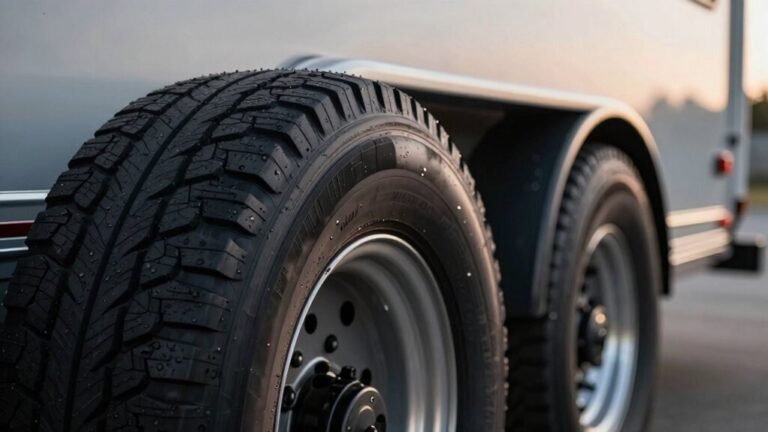
Vibrations run through the floor and wheel, and you might see bulges, cracks, or shredded tread if you check.
TPMS pings, the vehicle leans, and hazard lights should blink.
You don’t need Sherlock to spot this—just quick eyes, ears, and common sense.
Stay cool, stay alert, and remember: it’s not a flat, it’s a full-on tire tantrum.
The first few seconds are critical, so act quickly and maintain steering control.
Maintain Control of the Steering Wheel
That loud bang and sudden tug mean you’ve lost a tire, but you haven’t lost control—yet.
Grip the steering wheel like it owes you money; that firm hold keeps your RV from jerking toward the blowout side.
There’s a good chance the wheel will jerk hard—thanks to uneven rolling resistance—so don’t let it wrestle you into a wild swerve.
Keep it steady, focus like a hawk, and ignore the panic gremlin on your shoulder.
Gently steer opposite the blown tire to balance the pull, but no yanking—smooth moves only.
A quick, slight press on the gas helps shift energy back to forward motion, keeping you stable.
Think of it as dancing with your RV: you lead, it follows.
Stay calm, keep your eyes on the road, and remember—heroes don’t overreact.
You’ve got this.
This technique works because during a steer-tire blowout, proper reaction is to accelerate.
Avoid Slamming on the Brakes
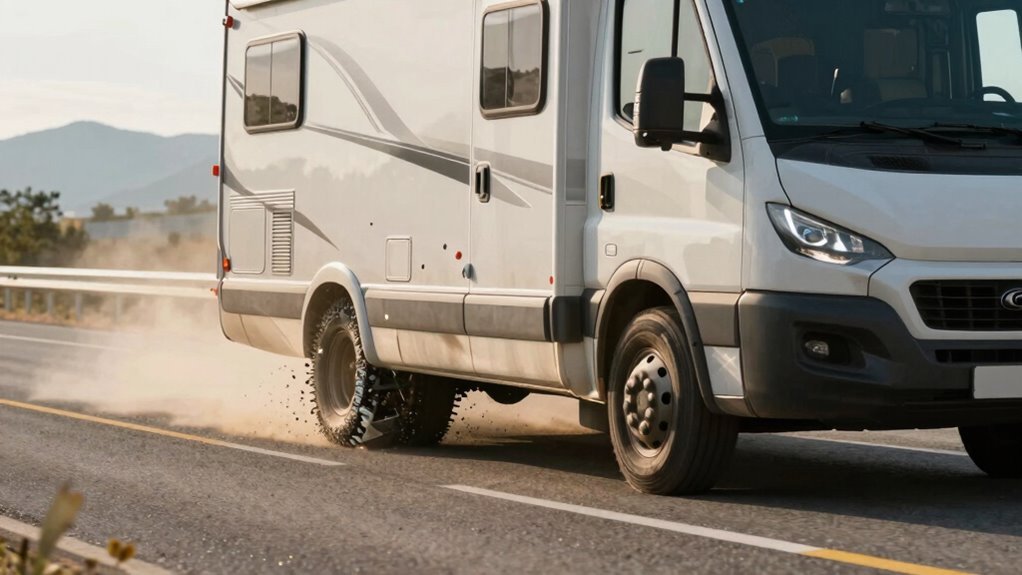
Feel that sudden jolt? Your first instinct might be to slam the brakes—but don’t!
Hard braking during a blowout can lock the affected wheel, especially since the blown tire’s lost traction.
Without grip, your RV skids, steering goes mushy, and you risk fishtailing or worse.
Think of it like ice: no grip, no control.
A locked wheel won’t help you steer, and that wobbly side can’t handle the stress.
Remember, your tires aren’t superheroes—they can’t brake well when one’s flat.
Instead of panicking, stay cool and keep off that brake pedal.
Let your steady hands on the wheel do the talking.
You’ve got this!
Just resist the urge to stomp, and give yourself space to respond the right way—smooth and safe.
Every year, 78,000 wrecks occur due to tire blowouts, highlighting the critical need for proper response and prevention.
Gradually Reduce Your Speed
Now that you’ve resisted the urge to hit the brakes like you’re swatting a bee, it’s time to focus on bringing your rig down to a safer speed—without spooking it.
Keep both hands tight on the wheel, gently correcting any drift as the RV tries to play its own game of tag.
Ease off the throttle slowly—no sudden moves—letting the natural drag do the work.
This keeps the weight balanced and your remaining tires happy.
Watch your speedometer like a hawk, aiming for a smooth, steady drop.
Flash those hazard lights right away so others know you’re in control, just taking it slow.
Remember, you’re not racing—this is more like a graceful exit from the highway stage.
Let momentum help you, not hurt you.
And hey, no need to panic—your cool head and steady hands are already winning this showdown.
Safely Pull Over to the Shoulder
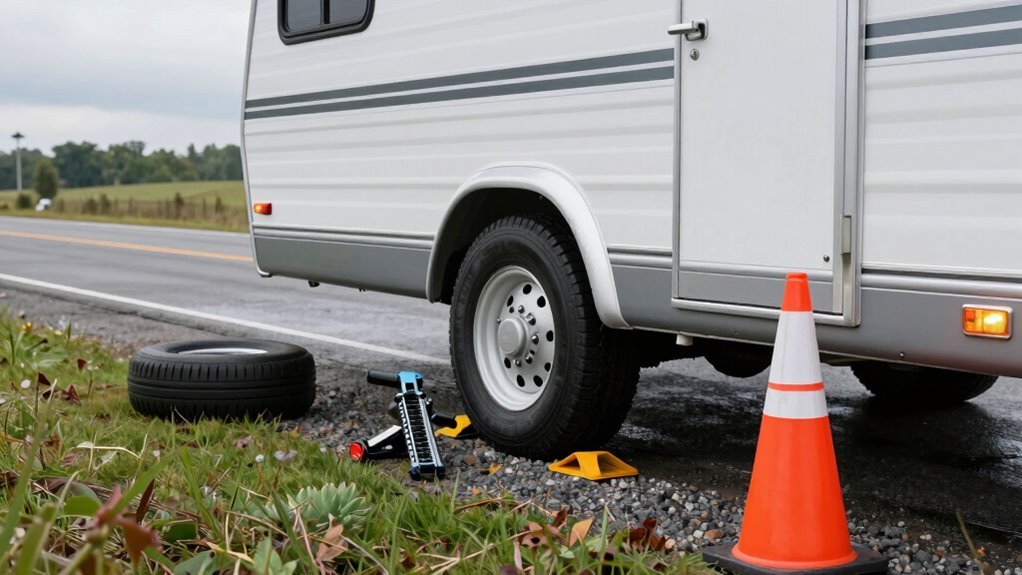
Grip that wheel like you’re holding onto your last slice of pizza—because right now, it’s your best friend.
Keep both hands at 9 and 3 o’clock, steer straight, and don’t yank the wheel, even if the RV tugs sideways.
Stay cool, stay steady.
Flip on those hazard lights right away—let others know you’re in trouble without honking or yelling.
Now, peek at your mirrors: check for cars, trucks, or that overly keen cyclist.
When it’s safe, ease toward the shoulder like you’re parking a giant toaster—smooth and deliberate.
Aim for flat, solid ground, not a sketchy gravel edge that could swallow your tires.
Pull all the way off, parallel to traffic, with plenty of space between you and the road.
Keep scanning, keep calm, and don’t stop until you’re fully clear.
You’ve got this—safety’s just one steady move away.
Assess the Damage and Call for Assistance
Take a deep breath and play detective—your RV’s got a story to tell, and it’s time to listen.
Start by checking the blown tire: look for cuts, bulges, or shredded tread, and don’t forget to peek inside for separated cords or dry rot.
Flip a quarter into the tread—less than a quarter visible means it’s time for a new tire.
Circle the RV and scan for damage: dents, cracked fiberglass, bent rims, or busted fenders.
Peek under the trailer—damaged leaf springs or loose U-bolts are sneaky troublemakers.
Check the spare while you’re at it—no surprise flat tires later!
Then call your roadside assistance, because let’s face it, you’re not lifting this beast solo.
Tell them everything—tire carnage, suspension doubts, even that wobbly wheel.
They’ll send help, and hey, maybe a snack.
Write it all down for the tech—it’s like a mystery novel, and you’re the star detective.
Frequently Asked Questions
Can I Drive an RV on a Flat Tire Temporarily?
No, you can’t drive your RV on a flat tire—even short distances spell trouble.
It’s like running a marathon on a broken ankle; your tire’ll overheat, flex too much, and could blow out or damage the wheel.
You’re risking control, safety, and expensive repairs.
Pull over safely, don’t push it.
Trust me, your RV will thank you—and so will your wallet!
How Often Should I Inspect My RV Tires?
You check your RV tires way more than you’d check a snack stash on a road trip—before and after each drive, daily on adventures, and monthly when parked.
You peek at pressure when they’re cold, spin them every 5,000 miles, and treat yourself to a pro checkup yearly.
You don’t skip spare tire love, and yeah, even your tires wear sunscreen—covers keep them safe while resting.
Are RV Tire Blowouts More Dangerous Than Car Ones?
Yeah, RV tire blowouts are way more dangerous than car ones—you’re dealing with tons of extra weight, a top-heavy build, and way more momentum.
A blowout can turn hairy fast, risking rollovers or major damage.
Those big tires also hide trouble until it’s too late.
And trust me, hearing a bang at 60 mph in a 30,000-pound rig? Not the time for a snack break.
Stay sharp, keep calm, and always check your tires.
Should I Carry a Spare Tire for My RV?
Yes, you should carry a spare tire for your RV—it’s like an insurance policy you hope to never use.
You’ll feel more confident exploring remote spots, knowing you’re not stranded by a flat.
Sure, it adds weight and takes space, but imagine changing a tire under a blazing sun without one—yikes!
A full-size spare keeps you moving, protects your rims, and turns a potential disaster into just a quick fix.
What Causes RV Tires to Blow Out Frequently?
Tire blowouts in your RV happen more often than a popcorn kernel in a microwave, and you’re usually the one to blame—just kidding!
Underinflated tires, which you’re likely ignoring, build up crazy heat and fail fast.
Overloading your rig stresses tires like a backpack full of bricks.
Aging, worn treads, and road hazards like potholes or debris? They’re sneaky troublemakers too, all teaming up to ruin your trip.
Conclusion
You’ve got this—handling a tire blowout is like riding a bike with a wobbly wheel: scary at first, but totally manageable. Stay calm, keep your hands steady, and ease off the gas like you’re sneaking out of a quiet house. Once safely stopped, give yourself a high-five—you handled it like a pro! Then, just call for help and turn a roadside hiccup into a great “remember that time?” story later.
References
- https://www.mainstreetrv.com/what-to-do-if-you-have-a-front-tire-blowout-on-your-rv/
- https://www.coachspecialists.com/blog/rv-tire-blowouts-causes-consequences-and-preventative-tips/
- https://technorv.com/blogs/articles/rv-tire-blowout-cause-and-prevention
- https://superspringsinternational.com/common-problems-with-travel-trailers-tire-blowout/
- https://www.youtube.com/watch?v=TXLVFJCDfZE
- https://tooltroopers.com/blogs/tooltroopers/rv-tire-blowouts-prevention
- https://community.goodsam.com/discussions/rvtipstricks/blow-out-what-to-expect/1064369/replies/1064375
- https://blog.joemorten.com/risk-analysis-steer-tire-blowout
- https://technorv.com/blogs/articles/our-rv-steer-tire-blowout
- https://www.youtube.com/watch?v=JVMWoClo7Eg