RV Tire Safety Tips to Prevent Blowouts
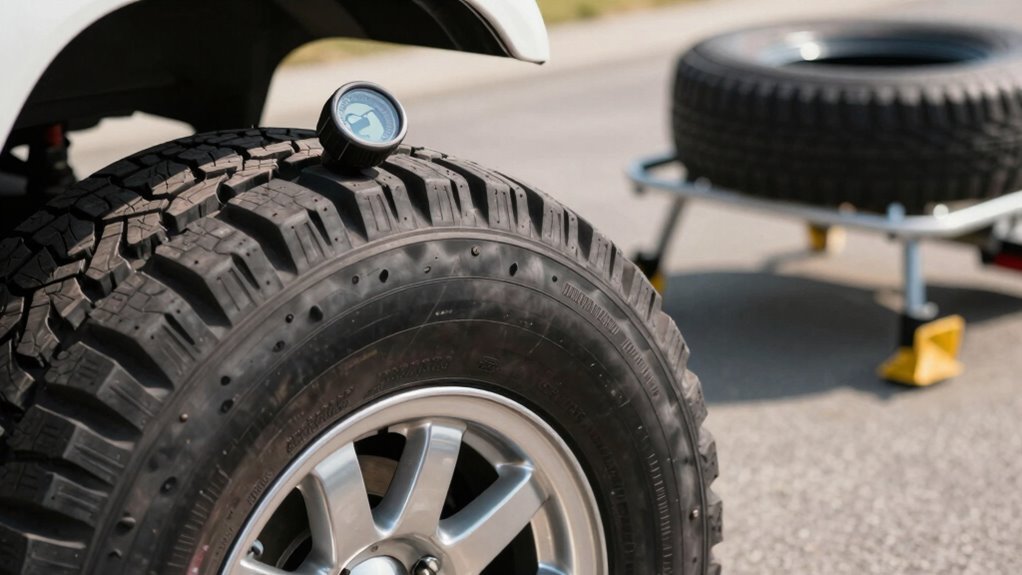
Check your RV’s tire pressure weekly—or daily on long trips—using a good gauge when tires are cold, and never forget the spare. Proper RV tire safety starts with maintaining correct pressure to prevent blowouts and extend tire life.
Know your load limits and match tires to your RV’s weight to avoid stress and heat buildup. Overloading is a leading cause of tire failure, so always follow manufacturer guidelines for safe RV tire safety.
Inspect tread with a penny, scan for cracks or bulges, and replace tires every 5 to 7 years, no matter how they look. Regular inspections help catch wear and damage early, ensuring continued RV tire safety.
Store smart, rotate often, and keep them clean—your road warrior deserves it. Oh, and there’s more where that came from.
Check Tire Pressure Regularly
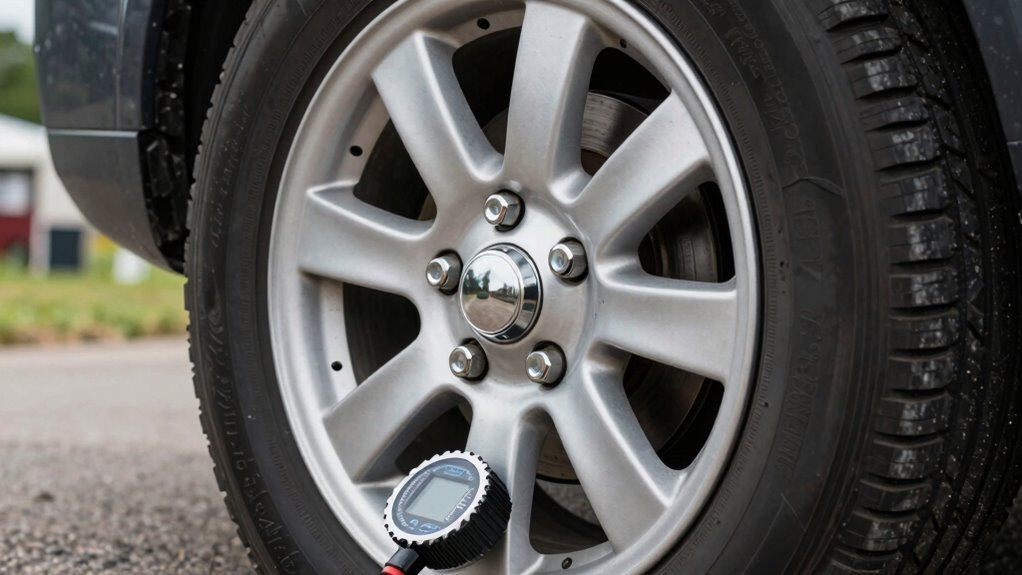
Grab your tire gauge and let’s talk pressure—your RV’s tires will thank you!
You should check tire pressure at least once a week, but if you’re on a long trip, do it every single day.
Make it a habit: cold tires, before driving, every driving day.
Don’t skip the spare—it’s easy to forget, but it’s part of your escape plan.
Use a solid, high-quality gauge from your emergency kit; they’re more accurate and easier on the valve stem than air hose gauges.
Find the correct PSI on your door jamb sticker or owner’s manual—if you haven’t weighed your RV, fill to the max cold pressure on the sidewall.
Skip this, and you risk blowouts, poor handling, or frying your suspension.
Think of it like brushing your teeth—quick, simple, and way better than the alternative.
Your tires hate surprises, so keep them happy, cool, and properly inflated! Trailer tires should be 10 PSI higher than your tow vehicle’s tires to ensure balanced performance and safety.
Understand Your RV’s Load Capacity
While your RV mightn’t come with a “How Much Can I Stuff In Here?” label, knowing its load capacity is the secret to safe, stress-free adventures.
Overloading leads to tire failure and blowouts, so don’t treat your RV like a game of Tetris with your junk! Keep these key tips in mind:
- Check the sidewall: Find the load index and load range letter (like E for heavy-duty) to know how much each tire can handle—don’t guess!
- Weigh your RV as packed: Load up fuel, water, snacks, and your entire wardrobe, then weigh each wheel position to match real-world conditions.
- Use inflation tables: Match tire size and load index to recommended PSI, add 5 PSI for safety, and never exceed the max on the sidewall.
- Always ensure your tires are rated for your RV’s total weight, as exceeding the load capacity can lead to dangerous blowouts.
Inspect Tires for Wear and Damage
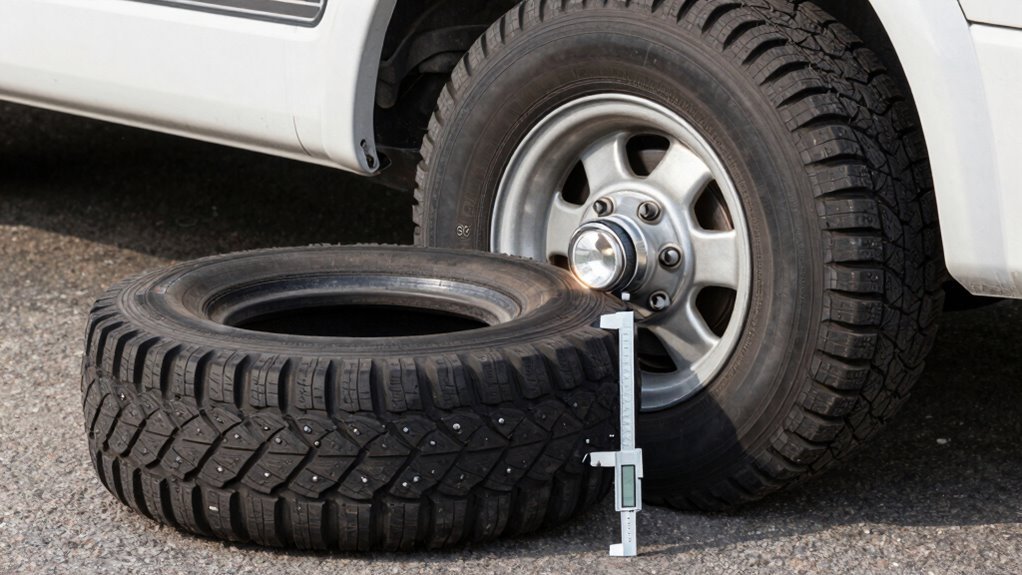
You’ve loaded up smart and stayed within your RV’s limits, so now let’s turn that good planning into safe miles by giving your tires a good look—because even the toughest rubber can’t last forever.
Grab a penny and check the tread: if Lincoln’s head shows, it’s time to swap. Look for wear bars even with the tread or depths under 1/16 inch—both mean trouble, especially in the rain.
Run your hands over the rubber too; any bubbles, cracks, or flaking? That’s dry rot waving hello.
Bulges mean internal damage, and missing chunks bigger than a dime? No second chances.
Spot cupping, one-sided wear, or wobbling? They’re clues something’s off—maybe alignment or balance.
And hey, pull out those rogue nails or rocks playing hide-and-seek in the grooves.
A quick weekly once-over keeps nasty surprises at bay.
Your tires are your only contact with the road, so treat them like trusted co-pilots—inspect often, stay sharp, and roll with confidence! It’s also smart to replace tires every 6-7 years to stay in line with NHTSA guidelines and avoid age-related failure.
Replace Tires Based on Age, Not Just Tread
Ever wonder why your RV’s tires might need replacing even when they still look plenty treaded?
It’s because age sneaks up like a silent saboteur—rubber breaks down over time, no matter how good the tread looks. Sun, weather, and just plain old time make tires brittle and risky, even if they’ve barely rolled.
- Check the DOT code on the sidewall: the last four digits reveal the week and year your tire was born (like 4817 = 2017).
- Replace tires every 5–7 years, and never hang on past 10—even if they appear healthy.
- Don’t trust tread depth alone; internal damage is the real party crasher.
Your RV’s safety isn’t a game of chance—tire age matters way more than you think. When in doubt, swap ‘em out and roll easy!
Practice Proper Tire Storage and Maintenance
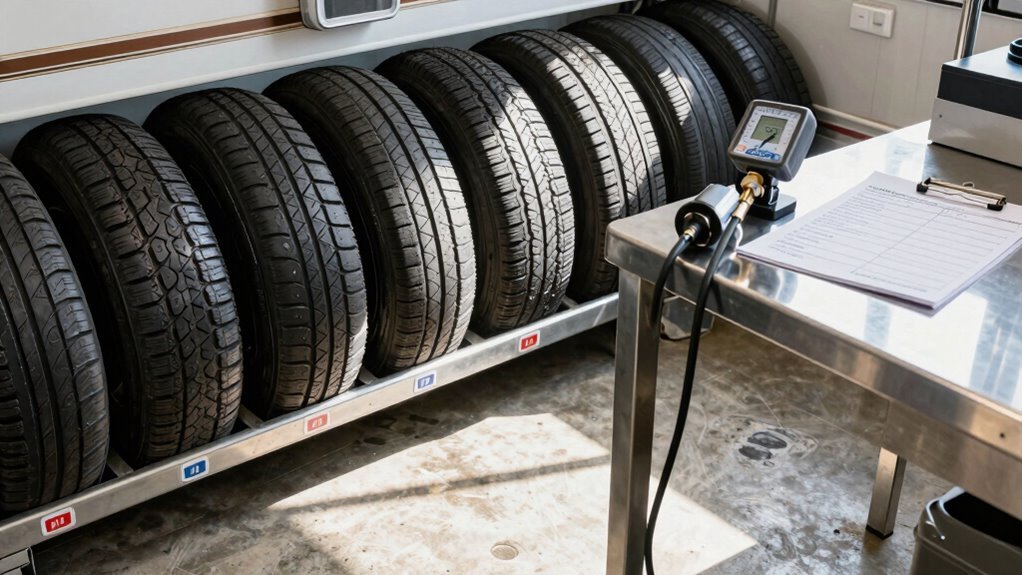
When your RV takes a nap for the off-season, its tires shouldn’t be left to weather the storm like forgotten beach toys.
Keep them properly inflated—you’re dodging blowouts *and* flat spots by checking pressure before stowing away.
Store your rig in a cool, dry spot out of direct sun; UV rays love to wreck rubber faster than kids in a candy store.
Toss on tire covers—they’re like sunglasses for your tires, blocking harmful rays and rain.
Clean them first with a gentle brush and RV-safe cleaner, then wipe down with a microfiber cloth.
Lift some weight off the tires if you can—less squish means less strain.
Rotate them every few thousand miles and inspect tread regularly; it’s like a spa day that also saves lives.
With a little love, your tires will wake up ready to roll!
Frequently Asked Questions
Can I Mix Different Tire Brands on My RV?
No, you can’t mix different tire brands on your RV—well, not if you want a smooth, safe ride!
Think of it like wearing two different shoes: one’s a sneaker, the other’s a boot.
Wonky, right?
Mismatched brands mean uneven wear, wobbly handling, and extra stress on your RV.
Stick with identical tires on each axle.
Your RV will thank you, and so will your peace of mind every mile down the road.
Should I Use Tire Covers When Driving?
Nope, don’t use tire covers while driving—they’re not made for speed!
They’ll flap, fly off, and maybe even become roadside litter (or a hazard for others).
Save them for when your RV’s parked.
They’re superheroes when you’re stationary, blocking UV rays, rain, and gunk.
Think of them like sunglasses for your tires—awesome protection, but only when you’re parked and chilling!
Are TPMS Systems Necessary for RVS?
You absolutely need a TPMS for your RV—it’s like having a co-pilot for your tires!
You get real-time alerts if pressure drops or temps spike, so you dodge blowouts before they happen.
Plus, you’ll save on fuel and tires while driving safer.
Let’s be honest, guessing tire pressure by eyeballing it? That’s like baking a cake without measuring—cute, but a total disaster waiting to happen!
How Often Should I Rotate RV Tires?
You should rotate your RV tires every 6,000 to 8,000 miles—it’ll save them from wearing down faster than a cheetah on a treadmill!
Most folks do it with an oil change, so it’s easy to remember.
If you’re hauling heavy loads, rotate every 3,500 miles.
Check tread, align wheels, and keep air pressure right.
Trust your manual, but don’t overthink it—happy tires mean smooth, worry-free adventures!
Do Electric RVS Need Special Tires?
Yeah, electric RVs do need special tires—regular ones just won’t cut it!
You’re hauling heavy batteries, so you need XL or load range E/F tires to handle the weight.
Plus, electric motors deliver instant torque that chews through rubber fast.
Go for strong, low-rolling-resistance tires to save energy and extend range.
Think of it like putting superhero boots on your RV—it’s gotta be tough, efficient, and ready to roll!
Conclusion
You’ve got this! Keep your tires happy with regular checks, know your RV’s limits, and don’t ignore cracks or bald spots. Remember, even if your tires look fine, old rubber’s a sneaky risk—replace them before they throw a tantrum on the highway. Store smart, roll safe, and your RV will thank you. Blowouts? Not on your watch! Your next adventure’s gonna be smoother than a pancake stack at a truck stop breakfast!
References
- https://brauniglakervresort.com/tips-to-keep-your-rv-tires-from-blowing-out/
- https://www.keystonerv.com/keystone-life/the-ultimate-guide-to-rv-tire-safety
- https://technorv.com/blogs/articles/how-do-i-determine-the-correct-psi-for-my-rv-tires
- https://jacosuperiorproducts.com/blogs/news/the-complete-guide-to-managing-your-rvs-tire-pressure
- https://knowhow.napaonline.com/a-guide-to-rv-tire-pressure-for-safety-and-longer-tire-life/
- https://www.aimclub.org/rv-tire-safety/
- https://rvsafety.com/rveducation/rv-tires
- https://www.rvtravel.com/rv-tire-safety-more-information-on-proper-tire-inflation/
- https://recstuff.com/trailer-parts-bloga-guide-to-understanding-trailer-tire-sidewall-information/
- https://www.doublecointires.com/the-abcs-of-tire-load-capacity/