Summer RV Trip Preparation Checklist
Check your tires—tread, pressure, and spare—before your summer RV trip. Nobody wants a flat tire 100 miles from nowhere, so this is a crucial part of summer RV trip preparation.
Top off engine oil, brake fluid, and coolant, and inspect hoses for cracks or leaks. These fluid checks ensure your RV runs smoothly during your summer RV trip.
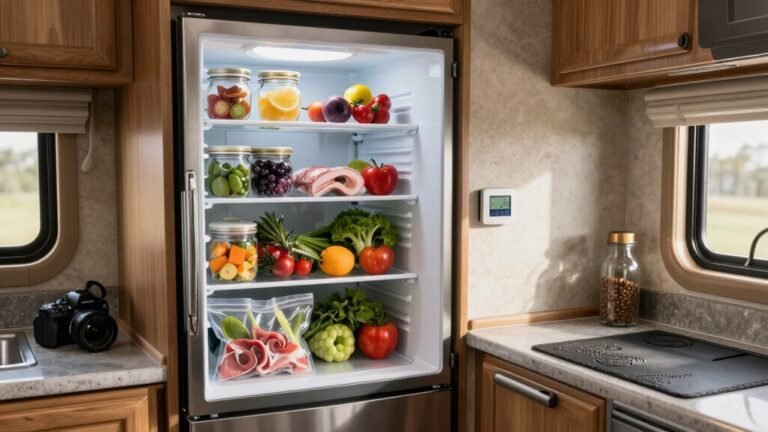
Turn on the A/C, clean or replace the filter, and verify the fridge and electrical systems work properly. A comfortable interior makes your summer RV trip much more enjoyable.
Change the generator oil and test the battery to avoid power issues on the road. Keep essential supplies like staples, snacks, and emergency duct tape within reach.
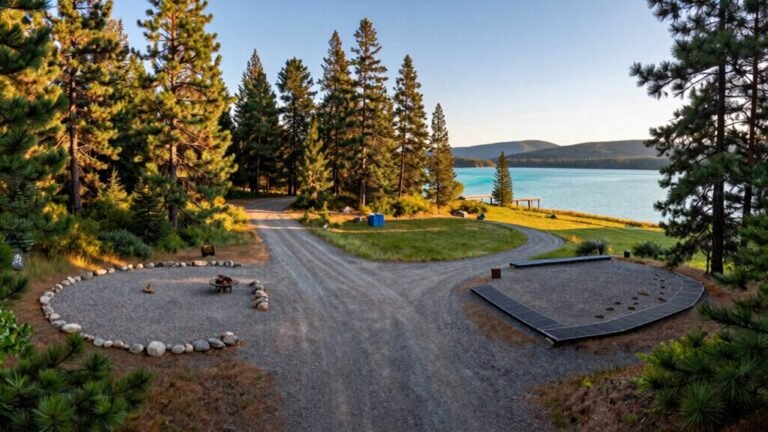
Confirm your campsite reservation is set and review arrival details. Double-check all safety gear, including fire extinguishers and smoke detectors, just in case.
Inspect Tires and Brakes
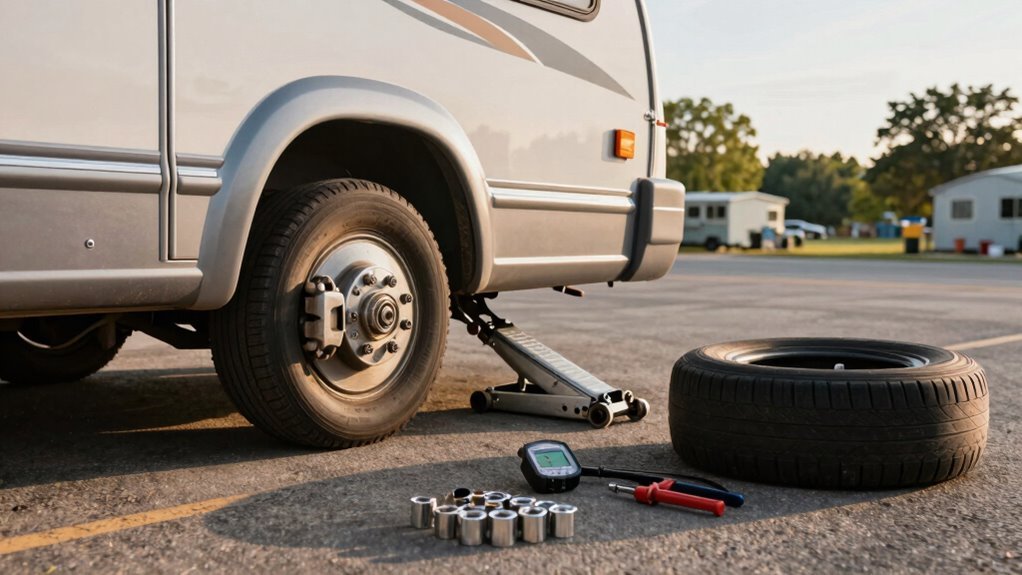
While you’re dreaming about open roads and campfire nights, don’t forget your RV’s first line of defense—its tires and brakes.
Check tire pressure early in the morning with a quality gauge, pumping them to the recommended PSI—even new tires lose air over time.
Don’t forget the spare; it’s no help if it’s flat when you need it.
Look for bulges, cuts, or dry rot, especially after winter storage or sun exposure.
Use the quarter test: if Washington’s head shows, it’s time for new tires.
Measure tread depth with a gauge—replace at 2/32-inch, or 4/32-inch up front if you’re heavy-duty.
Inspect sidewalls for cracks or weathering, and don’t skip checking inside duals.
Test brakes, guarantee connections work, and verify lug nuts are snug.
After all, nobody wants to trade freedom for a roadside fender bender!
Also, inspect suspension components for rust, wear, or leaks to ensure a smooth and safe ride—suspension components.
Check Engine and Fluid Levels
Now that your tires are rolling strong and your brakes are up to snuff, it’s time to peek under the hood and show your RV’s engine some love before you hit the summer road.
Check your oil level and top it off—don’t wait for a warning light to remind you!
Change the oil and filter every 3,000 to 4,500 miles, and swap out air, fuel, and coolant filters too.
That keeps everything running smooth and stops overheating before it starts.
Inspect hoses and clamps for leaks, especially in summer heat, and give the cooling system some extra attention.
Don’t forget brake and transmission fluids—low levels mean big trouble.
Peek underneath for drips after letting the engine idle.
And hey, your generator likes oil changes too, every 75–100 hours.
Treat it right, and it’ll keep your AC humming when the heat’s on!
Fluid levels and oil changes should be checked every 3,000-5,000 miles for motorhomes to ensure optimal performance.
Test Air Conditioning and Electrical Systems
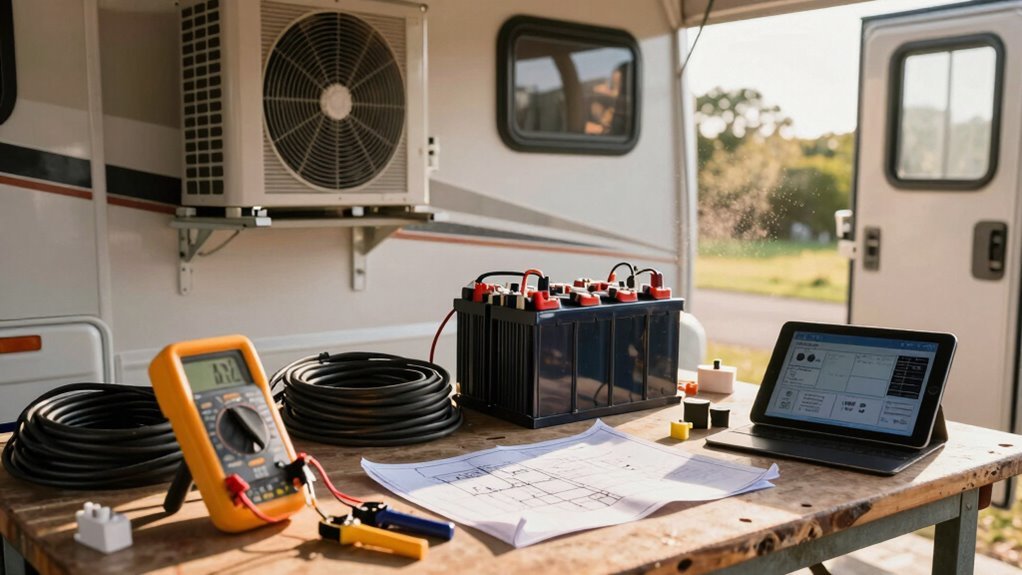
Beat the heat before it beats you—your RV’s air conditioning and electrical systems are about to get their star moment in the summer spotlight!
Start by cleaning or replacing the filter—go for Merv 6 or 9 to trap dust and allergens, especially if you’re hitting dusty trails.
Pull off the rooftop shroud and check for cracks, gunk, or sneaky nests; give those coils a vacuum and a gentle rinse, then straighten bent fins with a fin comb like a pro.
Don’t forget the gasket and seal—no gaps means no leaks!
Clear the drain hole so condensation doesn’t throw a mini indoor pool party.
Test electrical connections safely—skip disassembly (that capacitor’s got bite!)—and check amp draw and volt readings.
Listen for odd sounds, feel the airflow, and celebrate when cold air blasts just right.
You’re not just prepped—you’re summer-ready!
Regularly inspect the exterior unit for signs of damage or obstructions that could impair performance.
Service the Generator and Battery
Fire up your prep routine—your RV’s generator and battery deserve some serious TLC before summer hits full throttle!
Change the oil and filter even if you haven’t hit 100 run hours—treat it like a yearly spa day.
Clean or replace the air filter, and don’t forget to check the air inlet for gunk.
Run the generator monthly under load (like powering your AC) for about an hour—it keeps things running smoother than a cold lemonade on a hot day.
Let it warm up and cool down like a proper athlete.
Have a pro check it yearly, just to be safe.
Test your house battery too: it should read 12.7 volts or higher.
Clean the terminals, check water levels if it’s not AGM or lithium, and tighten connections.
Healthy batteries mean no surprise power crashes.
Your RV’s heart and lungs are counting on you—give ’em love!
Stock Up on Provisions and Supplies
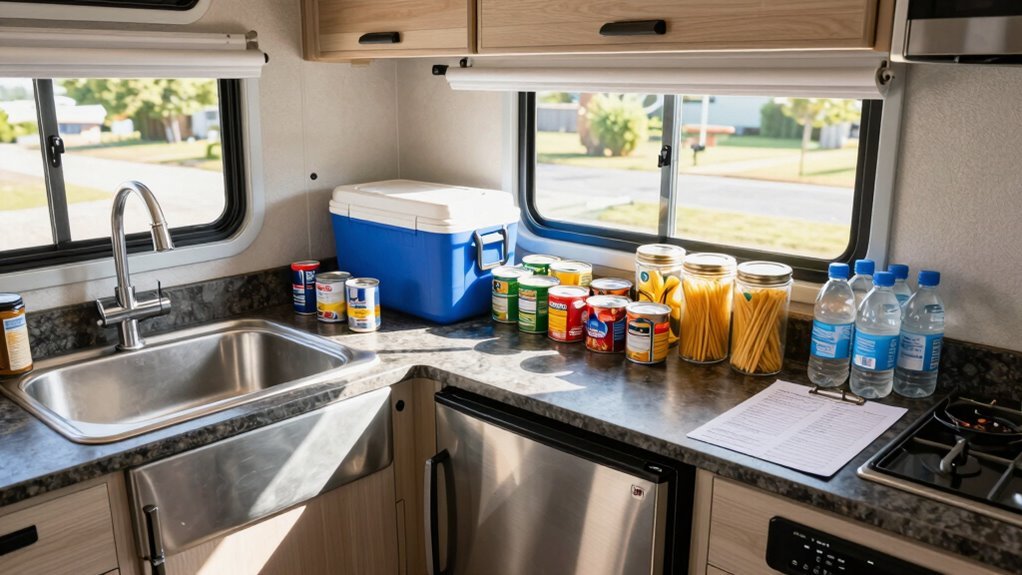
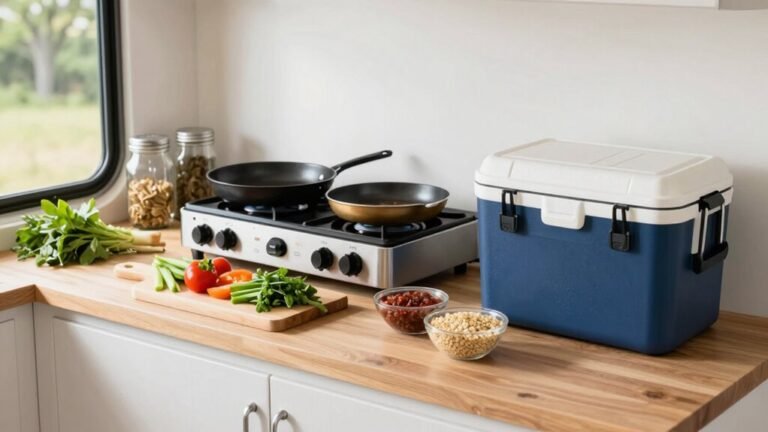
While you’re busy dreaming of campfire skies and sunny highways, don’t forget your kitchen’s about to become the star of the show—stock it right, and every meal feels like a win. Pack rice, pasta, and oats for hearty meals, and grab canned beans, tuna, and soup for quick protein fixes. Don’t skimp on seasonings—nobody wants bland chili at midnight.
Toss in dried goods to dodge spoilage and plan meals ahead so you don’t end up eating toast for three days. Load up on fresh meat, cheese, and pre-chopped veggies, and marinate that chicken now—your future self will high-five you.
Bring a cooler with ice packs, stash in dairy or non-dairy milk, and don’t forget the portable coffee maker—survival depends on it. Pack cast iron, tongs, and reusable containers, and throw in biodegradable soap and a sturdy camp sink.
Cleanup’s no party, but hand sanitizer and trash bags make it bearable. Oh, and label your snacks—your travel buddy won’t share if they find the chips first.
Verify Campsite Reservations and Routes
Double-checking your campsite reservations and routes isn’t just smart—it’s your golden ticket to stress-free adventures.
Don’t show up only to find your spot’s gone or get lost in a maze of RVs—been there, done that, got the T-shirt!
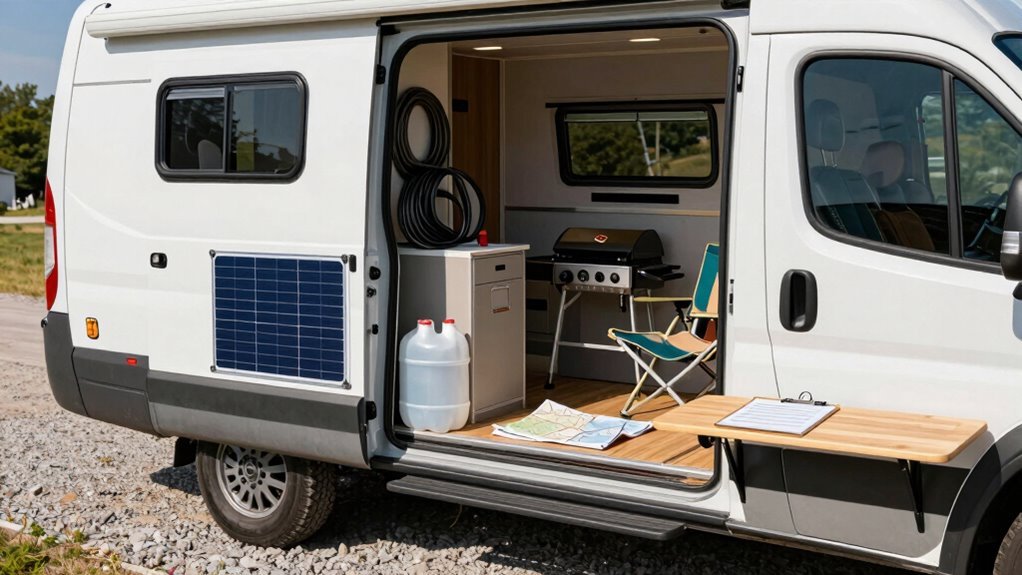
- Call the campground 30 minutes before arrival to confirm your site number, check-in time, and drop any updates to your arrival plans.
- Verify your hookup needs and site fit—say yes to 50-amp power and a spot that fits your rig without a three-point turn.
- Grab a detailed map and directions to your site and key spots like dump stations (because nobody wants a midnight Wi-Fi hunt).
- Save all confirmations and policies—dates, rules, contacts—in one easy spot, so you’re ready to roll, rain or shine.
Perform a Full Safety and Emergency Review
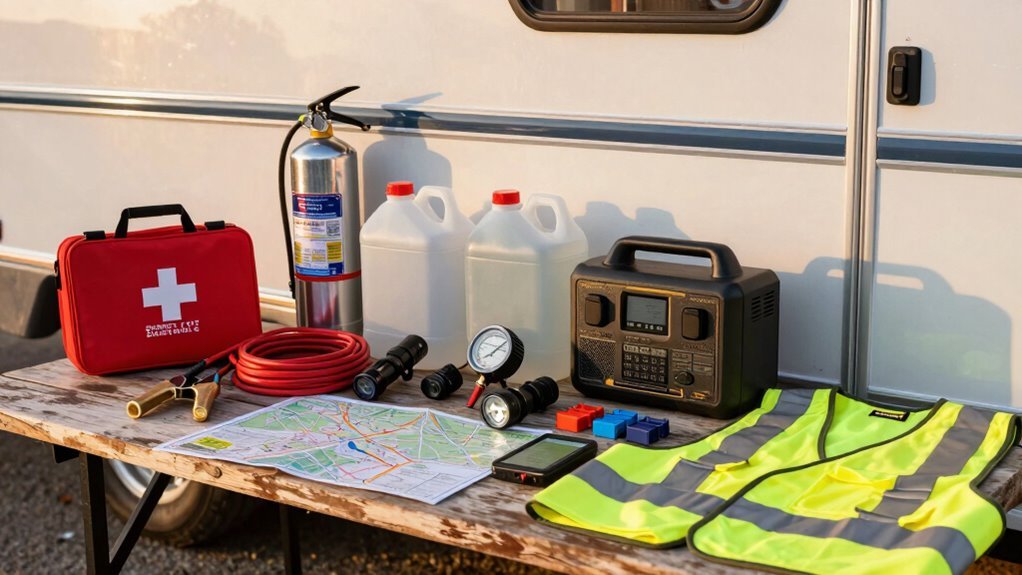
Getting your RV safety-ready isn’t just a quick once-over—it’s your chance to dodge surprises and keep the good times rolling.
Check tire pressure, tread, and damage, then inspect brakes, suspension, and lights so everything’s road-sharp.
Don’t forget the undercarriage—look for leaks, critter nests, or sneaky rodent souvenirs.
Test smoke and CO detectors, replace weak batteries, and confirm your fire extinguisher’s charged and ready.
Slide-outs? Seal-tight.
Roof? Crack-free.
Awning? No holes, please.
Hitch it right—verify ball size, chains, and breakaway cable.
Stow a stocked first aid kit, tools, and spare tire.
Pack an emergency kit with contacts, meds, weather alerts, and roadside help info.
Review escape plans, storm shelters, and evacuation routes.
Walk through one last time—tighten connections, secure furniture, turn off gear.
Your RV’s not just prepped—it’s *excited* to roll.
Safety first, fun right after!
Frequently Asked Questions
Can I Use Regular Household Appliances in My RV?
You can, but you really shouldn’t—those household gadgets pack a power punch your RV wasn’t built to handle.
Your air fryer might surge past circuit limits, blow a breaker, or drain batteries fast.
Plus, they’re clunky and fragile for bumpy roads.
Swap in RV-rated gear—it’s tough, efficient, and fits just right.
Your fridge will thank you, and hey, no one wants a flying toaster at 60 mph!
How Do I Prevent Motion Sickness During Long Drives?
You prevent motion sickness by focusing on the horizon, not your phone or book.
Keep cool air flowing, especially in the back.
Sit up front if you can—back seat vibes aren’t always kind.
Avoid heavy meals, skip loud music, and sleep well before hitting the road.
Drive smooth, brake easy, and let GPS pick a comfy route.
Try ginger or wrist bands if needed.
Stay alert, stay fresh, and laugh—no one wants to barf on vacation!
What’s the Best Way to Store Unused RV Hoses?
You won’t believe 68% of RVers lose or damage hoses yearly—don’t be one!
Store them in a bumper-mounted carrier; it’s smart, hidden, and totally easy.
Slide your hose in, snap the cap, and bam—protected from leaks and sun.
It’s like giving your hose a cozy, secret hideout.
Plus, it keeps your setup looking clean and saves space.
Smart, simple, and kinda fun!
Should I Cover My RV During Extended Stops?
Yeah, you should definitely cover your rv during extended stops—it’s like giving your rig a spa day while saving you cash.
It blocks uv rays, keeps gunk off, and scares away pests looking for a free vacation.
Toss it on if you’re not using your rv for two weeks or more.
Just make sure it fits nice and snug, so it doesn’t flap around like a startled bat.
Smart move, savvy traveler!
How Often Should I Clean the Rv’s Exterior?
Did you know 73% of RV owners who wash monthly report fewer exterior repairs?
You should clean your RV’s exterior every month—it keeps grime from turning into damage.
If that’s too much, aim for every three months.
You’ll spot leaks, seal issues, and gunk before they grow.
Use soft sponges, rinse well, and don’t forget the underbelly.
Your rig will look sharp, stay protected, and turn heads like a pro on parade!
Conclusion
You’re all set—your RV’s ready to roll, smooth as a roller rink on a summer afternoon. Tires? Checked. Cool air? Flowing. Snacks? Piled high. You’ve nailed the prep, so now it’s time to chase sunsets and laugh at campfire s’more disasters. Hit the road with confidence, because adventure’s waiting just beyond the next turn. Let the open road be your guide, and remember: you’ve got this!
References
- https://roadside.goodsam.com/resources/pre-trip-inspection-checklist-for-rv-owners
- https://www.rv.com/servicing-care/safety-maintenance/rv-tire-safety-checklist/
- https://www.nohrsrv.com/blog/travel-trailer-maintenance-checklist-for-worry-free-road-trips/
- https://wmt.solutions/preparing-your-rv-for-summer-road-trips-a-complete-checklist/
- https://nashvillervrentals.com/summer-rv-maintenance-checklist-keep-your-rv-running/
- https://graydiesel.com/rv-travel-requires-close-attention-to-tire-health/
- https://www.lafayettervpark.com/uncategorized/the-ultimate-guide-to-rv-tire-care-from-inflation-checks-to-road-trip-safety/
- https://435locals.com/keep-your-adventure-rolling-essential-rv-maintenance-checklist-from-the-pros-at-camping-world-st-george/
- https://timbuckturv.com/rv-repair-summer-checklist-before-you-hit-the-road/
- https://www.lippert.com/blog/rv-maintenance-checklist