Winter RV Camping Safety Tips
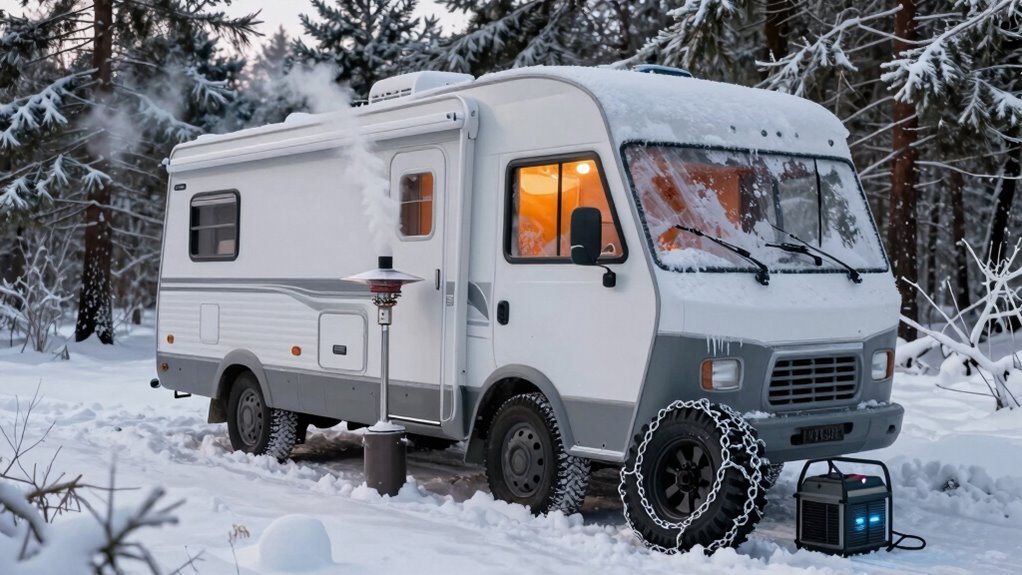
When planning winter RV camping, pick a winter-ready RV with good insulation and a heated underbelly to stay safe and comfortable in cold temperatures. Seal drafts using weatherstripping and Reflectix to retain heat and improve energy efficiency.
Winterize your plumbing system by using non-toxic antifreeze to prevent frozen, burst pipes—this is a critical step for winter RV camping safety. Without proper winterization, you risk water damage and an uncomfortable, icy surprise in the morning.
Keep your RV warm with a reliable furnace, but always crack a vent to reduce condensation and prevent foggy windows and mold growth. Install working carbon monoxide detectors and check them regularly to ensure safe indoor air quality.
Stock a complete emergency kit with blankets, food, water, and essential tools tailored for winter conditions. Drive slowly and cautiously on snowy or icy roads, increasing following distances for better control.
Keep your batteries warm by storing them inside the living compartment, as cold temperatures can drastically reduce battery performance. Following these winter RV camping tips helps ensure a safer, more enjoyable cold-weather adventure.
Choose the Right Winter-Ready RV
Ready to turn the great frozen outdoors into your cozy backyard?
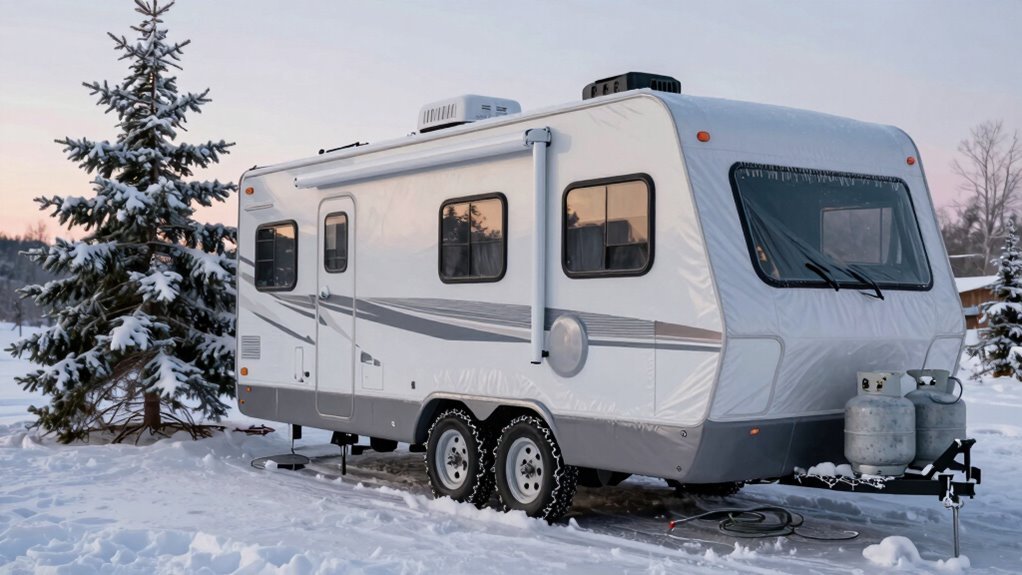
You’ll want a certified winter-ready RV that laughs at -30°C like it’s nothing.
Look for the Arctic Package—it’s like a parka for your rig, with beefed-up insulation and dual-stage water heating.
Go for a Class-C motorhome, which handles icy roads and colder temps like a champ.
Don’t skimp on power: four AGM batteries and a heated underbelly keep everything running smooth.
Bigger propane tanks? Yes, please—they mean longer hot showers and cozy nights.
Heated tanks and frost-proof plumbing mean no frozen surprises.
And with 30,000+ BTU furnaces, optional fireplaces, and even backup diesel heat, you’ll be toasty even if Jack Frost crashes the party.
Pick the right rig, and winter camping feels less “survival mode,” more “ahhh, this is the life.”
Your RV should also come with all-season tires rated for Mud & Snow.
Insulate and Seal Against the Cold
Stopping winter’s icy fingers from sneaking into your RV starts with a good defense—sealing every crack and gap like you’re protecting your last slice of pie.
Check all windows and doors for worn seals, and replace anything that’s cracked or limp—no draft should stand a chance.
Slap on weatherstrip tape around doors and use shrink wrap or Reflectix on windows to keep warmth in and frost out.
Don’t forget the roof—cover vents and skylights with insulated pillows since heat loves to escape upward like a runaway balloon.
Skirt the underbelly to block chilly winds, and toss down rugs or foam boards to stop cold from creeping up through the floor.
Line cabinets and storage bays with foam or Reflectix, especially under beds.
Inflatable skirting options offer a lightweight, quick-to-install solution for blocking cold air under the rig.
Winterize Your Plumbing System
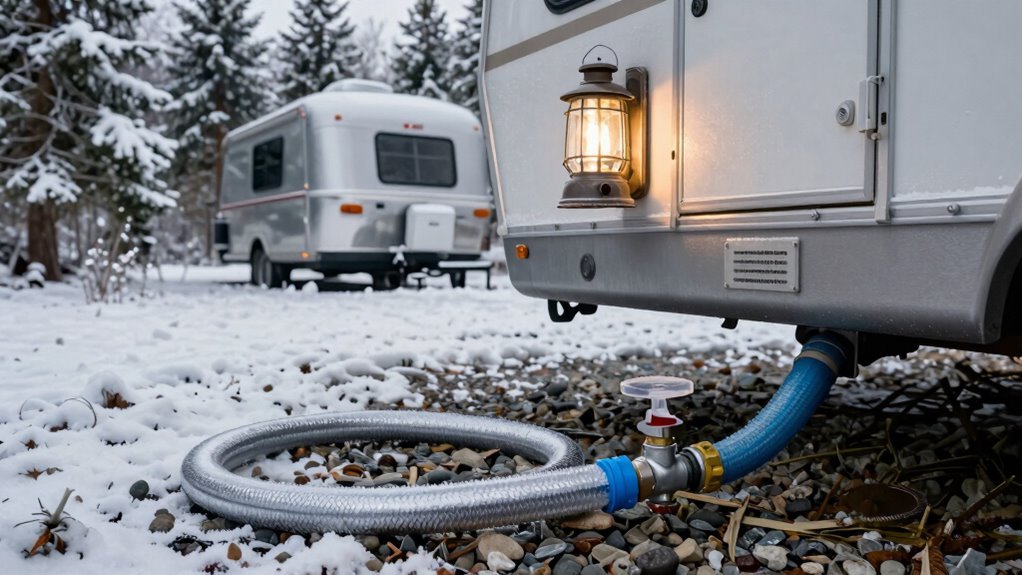
Keeping your RV’s plumbing from turning into an icy science experiment starts with a solid drain crew—you’ve got this!
First, empty your freshwater tank, then pop off those low-point drain caps and open all faucets to flush out leftover water.
Don’t forget the outside shower or sprayer—every drop counts!
Drain your hot water heater (after it cools) and flip it into bypass mode.
Next, use compressed air—just 30 PSI max—to blow out the lines and clear any sneaky water hiding in the pipes.
Then, pour pink RV antifreeze into the freshwater tank and run it through every faucet until you see that cheerful tint.
Don’t skip the toilet—flush it with antifreeze to protect the seals.
Finally, pour some antifreeze down each drain and trap to keep things from freezing shut.
Use only RV non-toxic antifreeze to safely protect your potable water system.
Your pipes will thank you when it’s 20 below and you’re still flowing smoothly!
Maintain a Reliable Heat Source
Now that you’ve locked down your plumbing and kept the pipes from turning into icy popsicles, it’s time to turn up the heat—literally.
Start by testing your furnace: the pilot should light in 15–30 seconds, followed by a steady flow of warm air.
Check that the flame is blue—yellow means your regulator’s on the fritz.
Turn off the propane and power before giving the burner a good brush-down, and vacuum out dust from grills and ducts.
Clean or swap filters regularly so air moves freely, and make sure vents aren’t blocked by your weekend clutter.
Propane tanks deplete fast in winter, so keep them topped up—20-pounders are easier to swap.
Consider a portable propane or electric heater for backup, especially if you’re off-grid.
With a clean system, clear airflow, and full tanks, you’ll stay toasty all season.
Winter camping’s a blast when you’re not sleeping in an igloo!
Prevent Carbon Monoxide Buildup
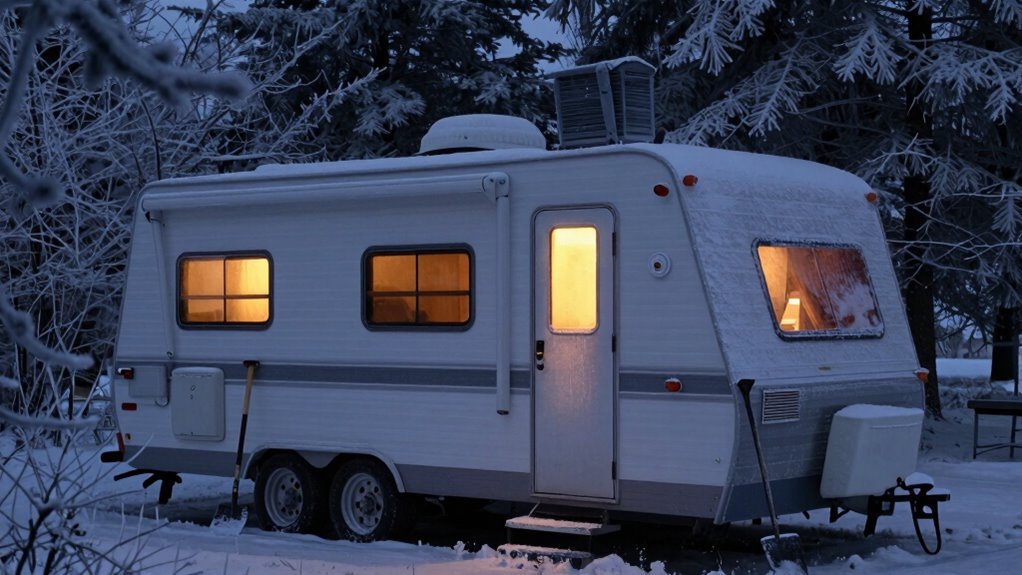
Breathing easy in your cozy RV starts with keeping carbon monoxide, that sneaky “silent killer,” from crashing your winter adventure.
You can’t see or smell it, but it’s no party crasher you want around.
Install CO detectors—most newer RVs have them, but grab a portable one if yours doesn’t—and test them weekly, especially after storage.
Check batteries like you’d check your phone’s charge: often.
Never run your generator while sleeping, and keep roof vents open, even when it’s chilly.
Never use your stove or oven to heat the RV—yep, not even “just for a minute.”
Park smart: avoid snowbanks and idling trucks, and keep exhaust paths clear.
If the alarm blares, you bail—get outside fast and call for help.
Stay safe, stay warm, and don’t let CO steal your good time.
Prepare for Icy Driving Conditions
When winter turns your favorite backroads into icy obstacle courses, hitting the highway in your RV means gearing up for more than just a scenic ride—so don’t treat slick roads like a joyride in a go-kart.
Stay sharp and in control with these three essentials:
- Gear your rig right: Winter tires, proper pressure, and tire chains make a world of difference, especially when ice sneaks up on bridges and shaded stretches.
- Drive like you’re carrying a full mug of hot cocoa: Slow down, ease into turns, and keep lots of space between you and the vehicle ahead—6 to 8 seconds gives you time to react.
- Stay smart and smooth: Use lower gears on hills, avoid sudden moves, and keep your eyes peeled for black ice and snow drifts.
With calm hands and a clear head, you’ll glide through winter’s challenges like a pro—no icy tantrums required.
Stock a Comprehensive Emergency Kit
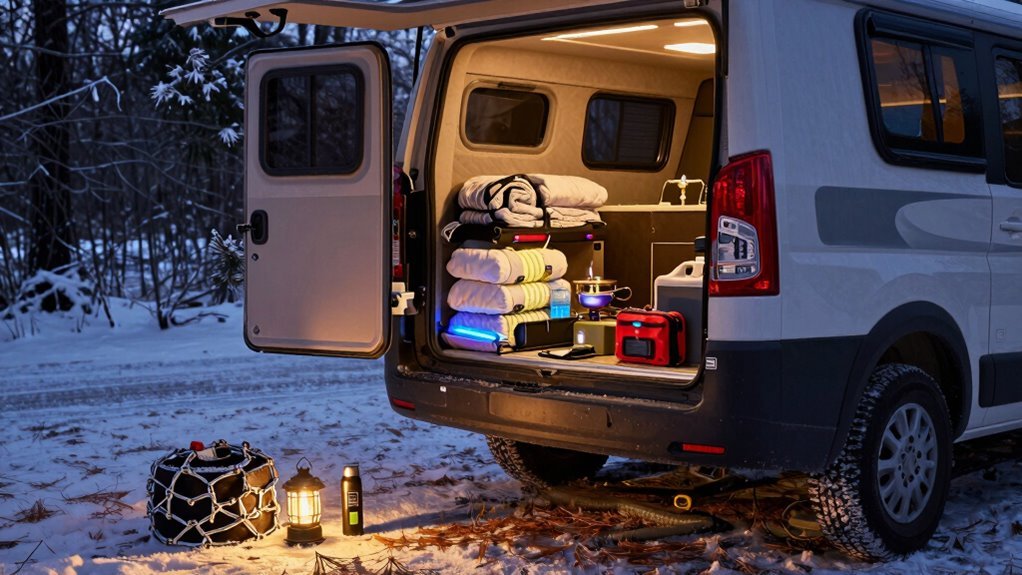
You’ve armed yourself against icy roads and white-knuckle drives, so why stop now? Time to pack a killer emergency kit—because “oops” hits harder in winter.
Toss in extra blankets, thermal underwear, hats, gloves, and hand warmers to stay toasty if the heat quits. Don’t forget those shiny thermal survival blankets—they’re like emergency hugs for your body.
Pack a solid first aid kit with bandages, meds, and even your prescriptions, just in case. Keep flashlights, extra batteries, and a whistle handy—because flashing your phone at a snowbank won’t help.
Toss in flares, a shovel, kitty litter for traction, and a tire repair kit. Oh, and add snacks, water, a manual can opener, and a power bank—hunger and dead phones make grumpy campers.
Throw in a neon vest and emergency contacts. Boom—now you’re not just ready, you’re *smart*.
Manage Power and Battery Performance
How’s your RV’s power holding up when the mercury drops?
Cold weather can turn your battery into a sleepy bear—slow, sluggish, or totally zonked out.
Don’t let Jack Frost steal your juice!
Keep your power game strong with these smart moves:
- Warm ’em up right – Use heating pads or insulated boxes to keep batteries cozy, especially lithium ones that hate charging in the cold.
- Store smart – Disconnect batteries, clean terminals, and stash them in a cool, dry spot (not freezing!) with a full or near-full charge.
- Check in often – Peek at your state of charge every few weeks; a quick top-off every three months keeps them from ghosting you later.
Your RV’s not just surviving winter—it’s thriving, one charged-up adventure at a time.
Just don’t ask your battery to do math. It’s already cold enough!
Stay Safe With Proper Ventilation and Humidity Control
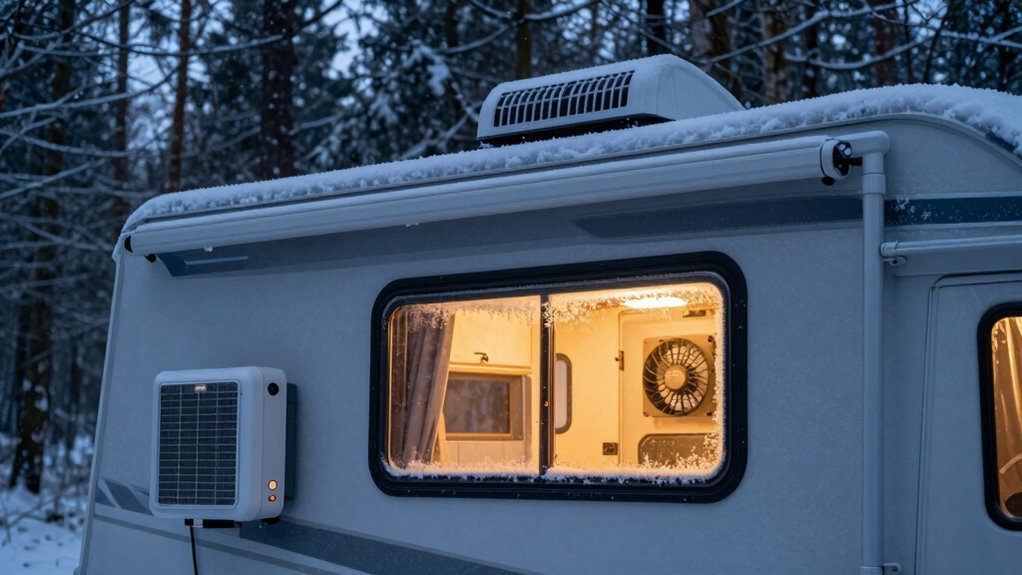
While winter camping wraps your RV in cozy charm, trapping too much moisture inside can turn your home-on-wheels into a damp dungeon faster than you can say “foggy windows.”
Cold air holds less humidity, and all that steam from cooking, showering, and even breathing piles up fast—leading to slippery condensation, musty smells, and mold’s favorite party spot: your walls.
Don’t let your RV throw a moldy rave—stay in control.
Grab a hygrometer to keep humidity below 50–60%, and run your Furrion roof fan or crack a vent (with a cover!) to let steam escape.
Use fans to circulate air and warm up cold spots—those sneaky condensation zones love chilly corners.
Insulated vent cushions and weather stripping block drafts while keeping surfaces warm.
Toss in a dehumidifier or run the heater to dry things out, and never skip exhausting air while cooking.
With smart airflow, you’ll stay cozy, safe, and gloriously mold-free—because nobody likes sharing their bunk with mildew.
Frequently Asked Questions
Can I Use Regular Tires for Winter RV Camping?
Nope, don’t even think about it—regular tires turn into hockey pucks when it’s cold!
They stiffen up below 45°F and lose grip fast, making your RV slippery and hard to control.
Winter tires stay flexible and chew through snow like it’s snack time.
For safer, more fun winter camping, switch ’em out.
Your future self—and your RV—will thank you when you’re gliding smoothly instead of sliding sideways!
How Often Should I Check My Rv’s Roof for Snow?
You should check your RV’s roof for snow every single day—it’s like brushing your teeth, but for your camper!
Clear it fast before it gets heavy and squishes down.
After big storms? Get up there right away.
Don’t play “roof Jenga” with ice buildup!
A quick sweep with a soft broom keeps things safe and your roof happy all winter long.
Is It Safe to Use a Portable Heater Overnight?
Nope, it’s like inviting a ghost to sleep beside you—risky and sneaky.
You’re better off ditching portable heaters overnight—they can overheat, trip fuses, or worse, spew carbon monoxide.
Even if it feels cozy now, skip the drama.
Bundle up in thermal layers, chug water, and snack on nuts for warmth.
Try a hydronic heater instead; they’re like warm hugs that don’t fight back.
Stay safe and awake, not sorry!
Do I Need Special Insurance for Winter RV Trips?
Yeah, you’ll want special insurance for winter RV trips—regular policies might leave you out in the cold.
Winter brings sneaky risks like frozen pipes and snow-heavy roofs, and not all coverage handles those.
Double-check that your plan covers ice damage, battery fails, and roadside wrecks.
Don’t gamble with Mother Nature; upgrade to extensive, storage, or winter-specific coverage.
Peace of mind’s way cozier than a surprise bill!
Can I Leave My RV Plugged in All Winter?
You really shouldn’t leave your RV plugged in all winter—60% of RV battery failures happen from overcharging during cold storage.
You’ll fry your battery, ice up the fridge coils, and risk electrical damage.
Think of your RV like a hibernating bear; it needs rest, not constant juice.
Unplug it, store batteries indoors, and give your rig some well-deserved winter zzz’s.
Your wallet—and camper—will thank you!
Conclusion
Bundle up, brave traveler, and beat back the bitter cold with clever, careful camping chops. Your cozy rig’s ready, warm, and working wonders. Watch for windy woes, slippery spots, and sneaky snowdrifts. Stay safe, stay smiling, and savor those sparkling winter sunrises. Pack smart, plan playfully, and don’t let icy odds outshine your joyful journey—because with a little prep, you’ll be the king—or queen—of the frosty road!
References
- https://www.canadream.com/rv-sales/certified-winter-ready/
- https://roadtrippers.com/magazine/rig-roundup-best-four-season-rvs/
- https://www.marsrvs.com/winterized-off-road-travel-trailer-buyers-guide-2025.html
- https://koa.com/blog/best-rvs-for-winter-camping/
- https://taxaoutdoors.com/blogs/articles/best-cold-weather-travel-trailer
- https://www.lippert.com/blog/your-guide-to-rving-in-winter
- https://blog.indiecampers.com/prepare-campervan-for-winter/
- https://www.rvnetwork.com/topic/136478-suggestions-for-a-cold-weather-travel-trailer/
- https://www.fulltimefamilies.com/how-to-insulate-a-camper-for-winter/
- https://www.adventureincamping.com/blog/winter-in-an-rv-camper/