How to Plan RV Routes to Avoid Low Bridges and Low Clearances
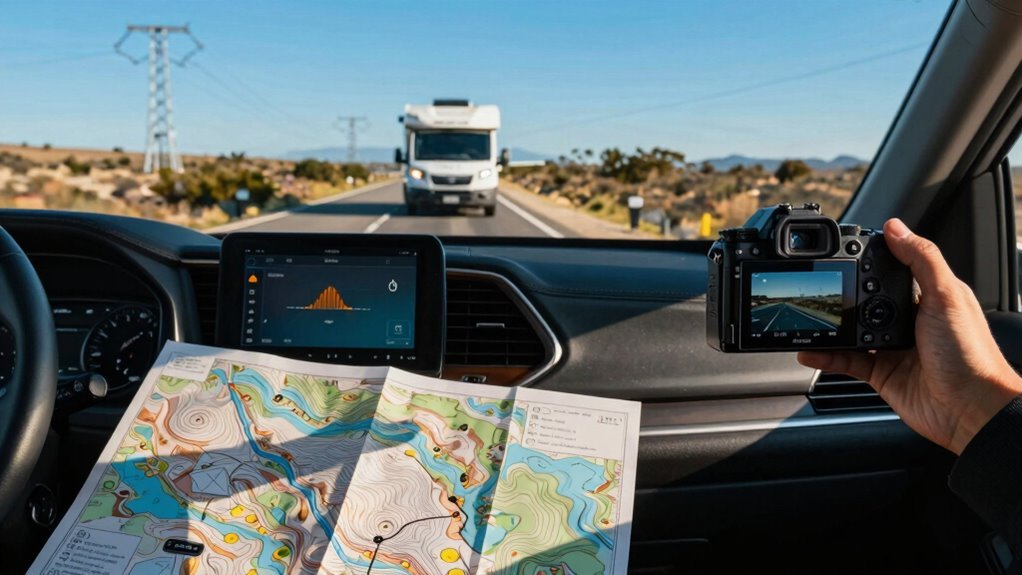
To plan RV routes and avoid low bridges and low clearances, start by using an RV-specific app like RV LIFE or CoPilot. Input your rig’s exact height, width, and length, including added features like AC units and solar panels that affect clearance.
These smart tools automatically reroute you around low bridges, narrow roads, and tight turns based on your vehicle’s dimensions. Pay close attention to warning pins and real-time alerts built into the app for maximum safety.
Download offline maps to stay on track even in areas with poor or no signal. Always subtract at least six inches from posted clearance signs to account for uneven roads or elevation changes and ensure a margin of safety.
Choose RV-Specific GPS Navigation Apps
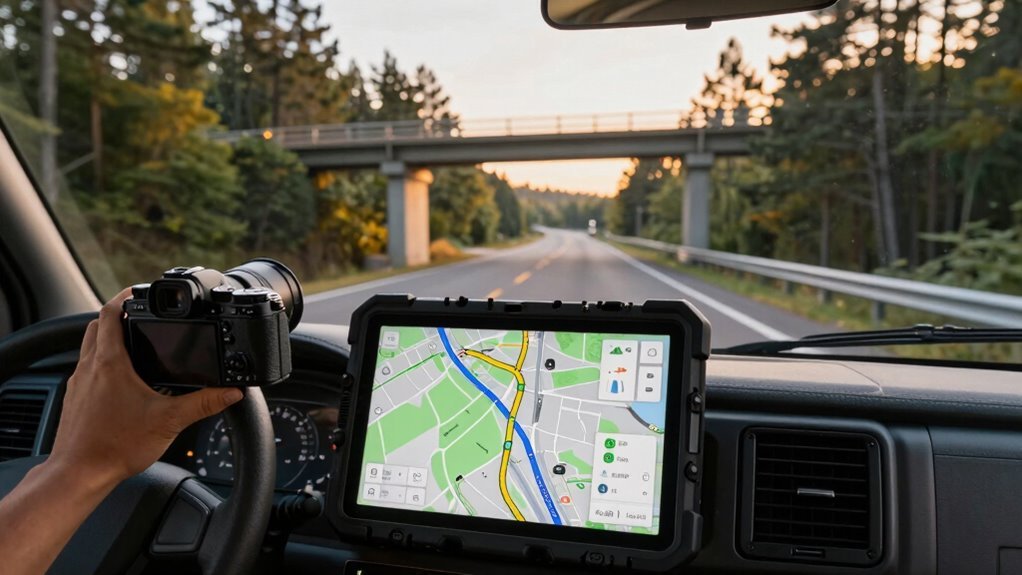
While you’re not exactly piloting a spaceship, maneuvering your RV does require a little more smarts than your average road trip—so skip the standard GPS and grab a navigation app built for big rigs.
Apps like RV LIFE GPS and CoPilot know exactly how tall your rig is and steer you clear of low bridges, tight turns, and weight-restricted roads.
You get real-time alerts, offline maps, and even campground databases with over 20,000 spots to park for the night.
CoPilot lets you plan up to 50 stops—perfect for chasing sunsets or tracking down the best roadside BBQ.
inRoute adds a smart twist by factoring in elevation and curvy roads, so you’re not white-knuckling mountain passes.
Garmin apps pair with your device and talk to you hands-free, because who’s got time to squint at a screen while driving a house-on-wheels?
These tools aren’t just smart—they’re RV-smart RV-specific routing.
Input Your RV’s Exact Dimensions
- That sick thud? Could’ve been avoided with accurate height.
- One inch too wide means scraped mirrors and a ruined mood.
- Imagine backing out of a narrow alley—tight fits scare even pros.
- Getting stuck under a bridge is embarrassing and expensive.
- A quick measure now beats a tow truck later.
- Always measure overall length including hitch and protrusions to avoid clearance issues.
Understand and Use Map Symbols and Warnings
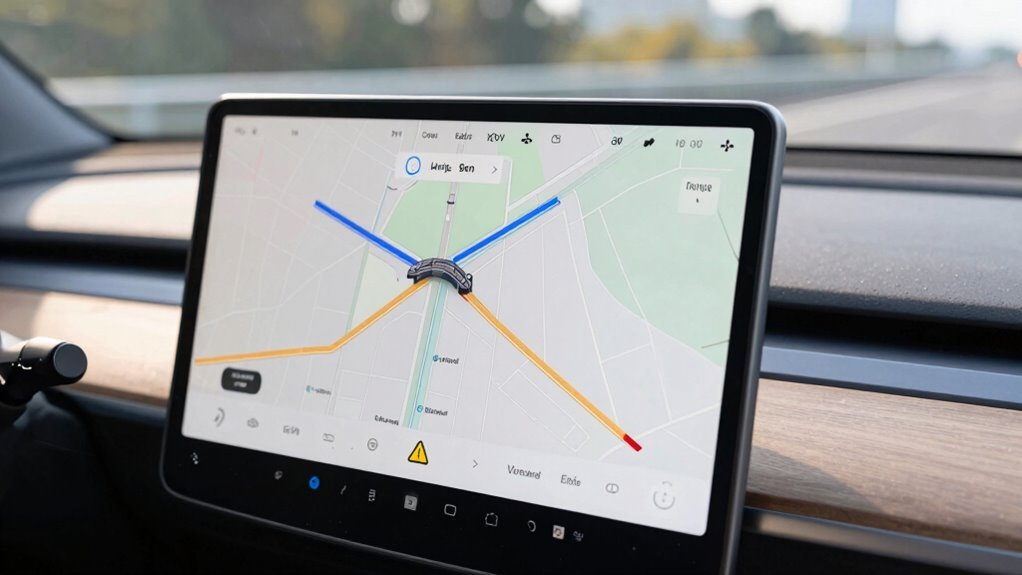
You’re on the open road, cruising toward your next adventure, when suddenly a tiny icon on your screen saves the day—low bridge ahead, and you’re clear by just inches.
Smart map symbols are your co-pilot.
RV LIFE pins flag low clearances with exact heights, direction, and notes, so you never guess.
Garmin chirps in too, flashing height, weight, or turn warnings like a know-it-all friend who’s always right.
Watch for “no trailer” signs on maps—they’re not suggestions.
Dirt road? Low fuel? Pins warn you first.
Remember, repaving sneaks up, shaving inches under bridges without updating signs.
Crowd-sourced updates keep info fresh, because real drivers like you prove what’s accurate.
Federal rules suggest 14–16 feet, but rural or private roads? They play by their own rules.
Always subtract 6 inches from posted clearances—better safe than roof-scraped.
Stay alert, trust the symbols, and let the map drama unfold—minus the actual drama.
This is why using a system with 23,000+ verified entries makes all the difference.
Leverage Offline Maps and Real-Time Alerts
Grab your phone, hit download, and say goodbye to sketchy cell signals—offline maps have your back when the pavement runs thin and the towers disappear.
You’ll keep rolling with apps like Copilot RV, Sygic, and RV Life, which store maps on your device so guidance never quits, even in the middle of nowhere.
Plug in your RV’s height and weight, and these smart tools reroute you around low bridges, steep hills, and narrow roads—before you’re stuck or worse.
Real-time alerts from RV Life or Google Maps integration keep you in the loop on traffic, closures, and weather, so surprises stay off the road and stress stays low.
- Never crawl under a bridge meant for cars
- Skip the white-knuckle detours at dusk
- Feel proud, not panicked, when service drops
- Sleep easy knowing your route’s clear
- Arrive smiling, not sweating, at your campsite
Learn From Experienced RVERS and Community Tips
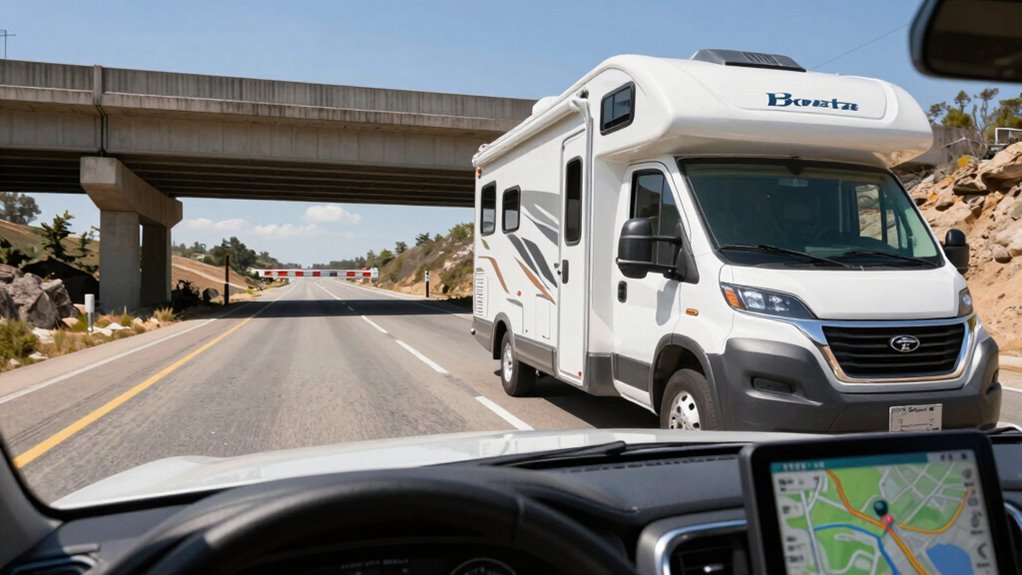
Ever wonder how seasoned RVers dodge those sneaky low bridges that seem to pop up out of nowhere?
They lean on hard-earned wisdom and community know-how.
You should too!
Use RV LIFE Trip Wizard to plug in your rig’s height and weight—avoid tolls, ferries, and sketchy underpasses with ease.
Keep a trusty Trucker’s Road Atlas as backup; it’s gold when GPS flakes out or you’re deep in the sticks.
And hey, don’t just trust your Garmin—users say it sometimes shrugs at low bridges without warning.
Play it safe: subtract six inches from posted clearances (repaving happens!), drive slow, and let a co-pilot eyeball tight spots.
Measure your RV’s true height—AC units and solar panels count!
Write it on a sticky near the dash.
Smart, simple moves keep you rolling smoothly, bridge after bridge.
Frequently Asked Questions
What if My RV Exceeds Legal Height Limits?
You’ll need a special permit if your RV exceeds legal height limits—states like Pennsylvania require one over 13’6”.
Don’t sweat it, though; permits are totally doable and keep you legal.
Just imagine showing up to a bridge like, “Oops, my bad!” Not cool.
Always measure your full height, include AC units or solar panels, and plan smart.
Safety first, fun right after!
Are Tunnels Treated the Same as Low Bridges?
Yep, you bet—tunnels are basically low bridges with a mood!
You treat ’em the same when planning your route, but here’s the twist: tunnel ceilings arch, so hugging the center gives you extra wiggle room.
Watch for sneaky signs, ’cause some lowball clearance numbers.
And remember, no propane in certain tunnels—so shut it off, play it safe, and cruise through like a pro!
How Do I Report a Missing Clearance Sign?
You report a missing clearance sign fast by calling 911 if it’s dangerous—better safe than sorry, right?
If it’s not an emergency, use 311 in cities like San Francisco or hit up your local transportation department.
Snap a photo, note the location, and describe the sign clearly.
Out-of-towners can dial 415-701-2311 for SF issues.
On state highways? Call Caltrans or 1-800-TELL-CHP.
You’re helping keep roads safe—awesome job!
Can Weather Conditions Affect Bridge Clearances?
Yes, weather can totally mess with bridge clearances!
Rain swells rivers, wind pushes water higher, and storms pile on surges that shrink the space under bridges.
Even waves and boat wakes make your ride bounce up closer to disaster.
Think of it like high tide in a bathtub with waves—suddenly, your tall rig’s playing limbo.
Check real-time water levels, plan smart, and keep that air draft drama-free!
Do Drawbridges Have Variable Clearance Heights?
Yes, drawbridges change height like magic bridges that lift, swing, or tilt to let boats pass, then settle back down.
You’ll see them stretch high—often over 178 feet—when boats come through, then close to let cars roll.
They’re not stuck at one height like regular bridges; they move on demand, making them smart, flexible gatekeepers over water.
Pretty cool, right?
Conclusion
You’re cruising down the highway, coffee in hand, when suddenly your RV GPS dings—“Low clearance ahead!” Funny how that alert pops up just like your buddy warned you last week over s’mores. Thanks to your smart planning, you smoothly reroute, laughing. Coincidence? Maybe. But matching your rig’s size with the right tools makes every journey safer, smarter, and way more fun. Happy trails, and keep that roof intact!
References
- https://blog.founders.illinois.edu/best-rv-gps-app-for-android/
- https://koa.com/blog/best-gps-options-for-rvs/
- https://www.gorving.com/tips-inspiration/expert-advice/8-best-rv-navigation-apps-smooth-and-safe-road-trip
- https://rvshare.com/blog/best-navigation-apps-rv-travels/
- https://www.rv.com/archive/motorhome-gps-face-off/
- https://www.youtube.com/watch?v=Xr3mPtVHY1I
- https://www.mygrandrv.com/threads/best-trip-planning-apps-for-rvers-rv-trip-wizard-the-dyrt-roadtrippers-compared.1116050/
- https://rvfilluck.com/blogs/tutorial/how-to-measure-your-rv
- https://rvshare.com/blog/rv-dimensions-explained/
- https://www.recnationstorage.com/blog/rv-dimensions-trailer-length-width-and-height-explained/