How to Safely Use Propane Appliances in Your RV
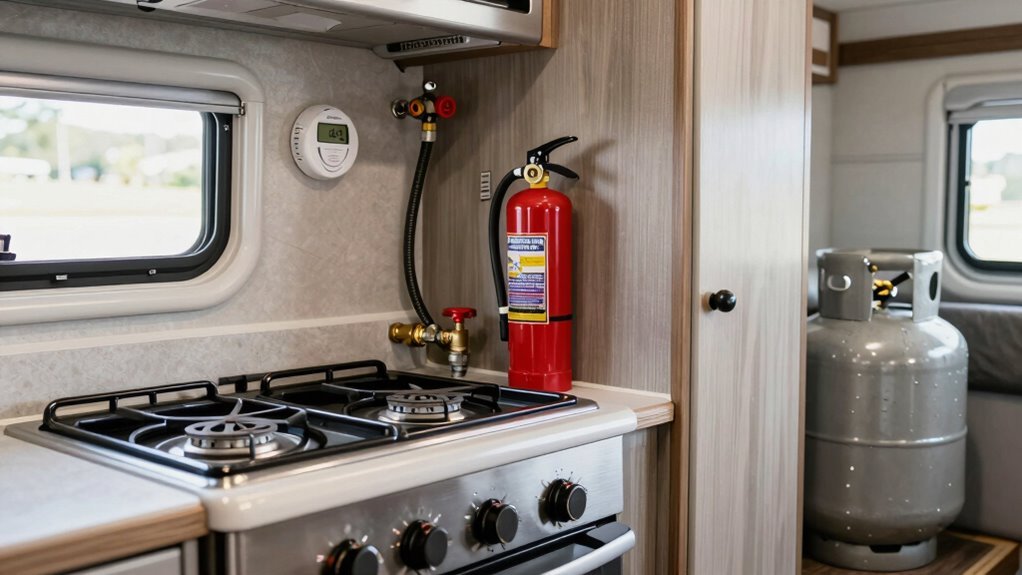
Always check your propane system before every trip to ensure safe operation of propane appliances in your RV. Look for rust, dents, or loose connections, and confirm your tank’s recertification date is current.
Install propane and carbon monoxide detectors near the floor, as gas settles low. Keep a window cracked when using propane appliances to ensure proper ventilation.
Shut off all appliances and the tank valve when not in use. If you smell gas, exit the RV immediately and avoid creating sparks—do not operate switches or electronics.
Inspect Propane Systems Before Each Trip
Before you hit the road with your trusty RV, make sure your propane system’s in tip-top shape—because nobody wants a surprise gas leak while they’re cooking up pancakes.
You inspect your tires, right?
Don’t skip the propane tank.
Look closely at the cylinder and its holder—no rust, dents, or shaky brackets.
Make sure it’s snug and protected.
Got an ASME tank?
Check those mounting straps.
Find the date stamped on the collar—recertify every 10 years.
Use only OPD valves with that handy triangle shape.
Hoses and fittings?
Scan for cracks, frays, or loose ends.
Test the regulator’s vent—it should face straight down and stay clear.
Check pressure with a manometer—11 inches WC is gold.
And please, no pipe dope—just Teflon tape.
A little love now keeps the flames (and fun) going safely.
If a leak is found during inspection, repairs must be made before using the coach.
Install and Maintain Carbon Monoxide and Propane Detectors
Now that you’ve given your propane system the once-over and made sure everything’s shipshape, it’s time to talk about your RV’s silent guardians—carbon monoxide and propane detectors.
Grab an RV-specific model like the Safe-T-Alert 35-742—it’s got your back with dual sensors and runs on 12-volt power, so no more hunting for spare batteries.
Mount it 4 to 18 inches off the floor near the kitchen, but keep it away from windows, vents, or that oddly placed coat rack blocking airflow.
Wire it right—match the colors, secure splices, and don’t forget to test the voltage first.
Hit the test button and bask in the glorious beep: both sensors are alive and working.
Check those lights, keep it clean, and replace it every 5–6 years—or when it starts chirping like a confused bird.
These little alarms aren’t just smart; they’re your RV’s unsung heroes.
Keep ‘em happy, and they’ll keep you safe.
CO detectors use electrochemical sensors for accurate, continuous monitoring of dangerous gas levels.
Ensure Proper Ventilation During Appliance Use
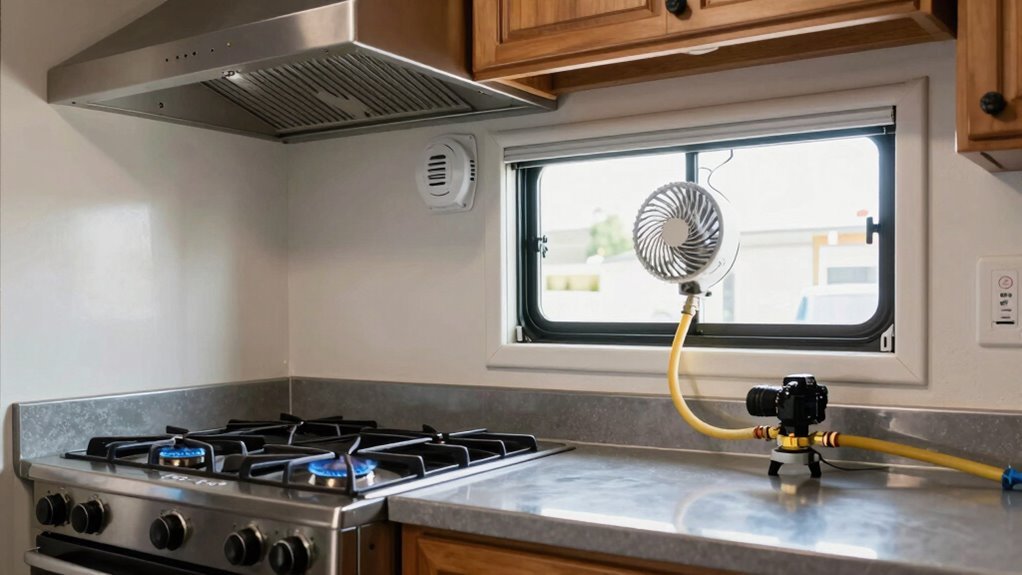
When you fire up that propane stove or crank the heater on a chilly morning, dose of clean air becomes your RV’s best friend—so crack a window or spin up a fan, even if it feels like you’re letting all the warmth escape.
Proper ventilation keeps combustion clean, prevents soot, and stops carbon monoxide from sneaking up on you.
Think of it as giving your appliances a dose of clean air—because, well, you are!
A fresh air inlet ensures the burner has consistent oxygen for efficient combustion, reducing the risk of incomplete burning and harmful byproducts venting provides fresh air directly into the propane burner box.
- Keep exterior vents clear of leaves, bugs, or curious squirrel stashes—especially the fridge’s side vents.
- Use vent fans while cooking to clear fumes and dodge that smoky kitchen haze.
- Guarantee intake and exhaust vents are unblocked; they’re the unsung heroes keeping your air safe and your heater happy.
A little airflow goes a long way—don’t let cozy turn into risky. Your RV (and your nose) will thank you!
Handle Leaks and Malfunctions Immediately
You’ve just cracked a window to keep the air fresh while your pancakes sizzle on the propane stove—good call—but what if you suddenly catch a whiff of something funky, like a rotten egg doing a backflip in your nostrils? That’s propane’s telltale sign, and it means you’ve gotta act fast.
Turn off the tank right away, open every window, and get everyone out.
Don’t flip a switch, light a match, or even chuckle—sparks are no joke.
Call 911 or your local fire crew from outside.
No DIY fixes here—wait for a pro to inspect everything.
Use soapy water to check for bubbles at connections if you’re feeling curious later, but never restart until it’s all cleared.
Keep detectors handy, check hoses and regulators regularly, and remember: when in doubt, shut it out and call it in.
Safety’s not glamorous, but neither is flying backward from an explosion.
Turn Off Appliances and Close Valves When Not in Use
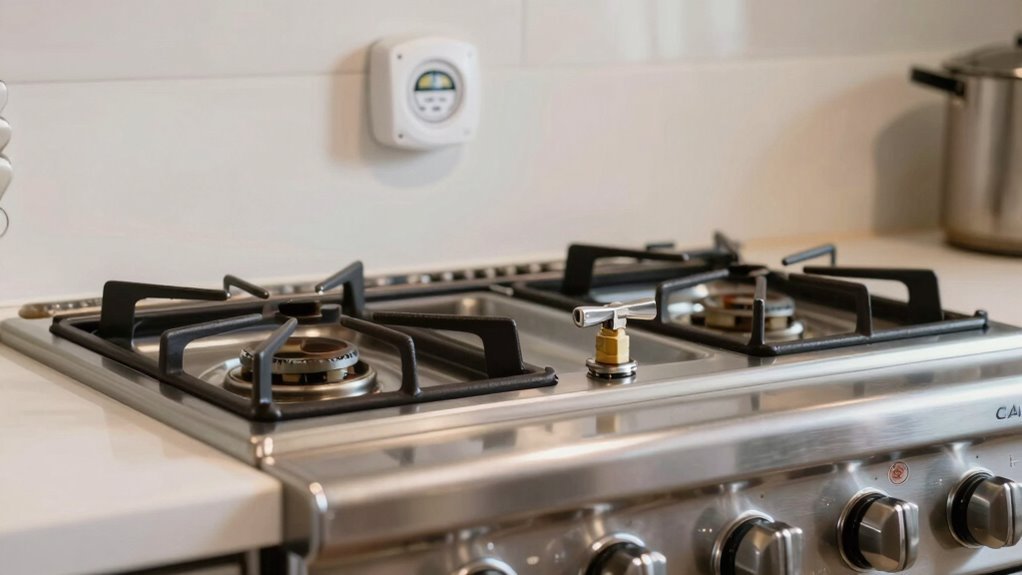
Even if your RV’s appliances try to play it safe on their own, you’re the real boss when it comes to shutting things down right.
To keep everything running smoothly—and safely—follow these simple steps every time you’re done using propane:
- Turn off all propane appliances manually, like your fridge, furnace, and water heater, before closing the tank valve
- Shut the propane tank’s service valve to cut off gas to the whole system—this is your main safety move when storing or traveling
- Wait a few moments before reopening the valve later; it lets pressure stabilize so your system doesn’t throw a tantrum
It’s kind of like putting your RV to bed—tuck it in properly, and it’ll wake up without grumbling.
Skipping this? That’s how you invite leaks, lockouts, or worse.
Close that valve, be the propane whisperer, and travel or park with peace of mind. Safety never sleeps—so make it a habit!
Frequently Asked Questions
How Often Should I Replace My Propane Hoses and Connectors?
You should replace your propane hoses every 5 years, but if you’re parked in sunny spots like Arizona, swap ’em yearly—sunlight loves to bake them into brittleness.
Even if they look fine, cracks can hide like ninjas.
Use soapy water to check for bubbles—it’s like a mini science experiment!
And hey, better to replace a cheap hose than risk a fiery surprise picnic. Stay safe, stay proactive!
Can I Use Household Propane Appliances in My RV?
No, you can’t use household propane appliances in your RV—it’s a safety no-go.
They’re not built for bumpy roads or tight spaces, and they lack RV-specific certifications.
Think of it like wearing flip-flops to hike Everest: wrong tool, risky move.
Stick to RV-rated gear, ’cause your rig’s safety system is picky for a reason.
Plus, avoiding fires sounds like a win, right?
Is It Safe to Transport Spare Propane Tanks Inside the RV?
No, you can’t stash spare propane tanks inside your RV—it’s a big no-no.
They’re like grumpy dragons: safe outside, but risky indoors.
Heat and motion on the road can make them unstable, and a leak in an enclosed space? Yikes.
Instead, keep them upright and strapped outside in a ventilated compartment.
It’s smarter, safer, and keeps you from accidentally turning your RV into a science experiment gone wrong—no flame throwers on vacation!
What Should I Do if My Propane Smell Disappears but Reappears Later?
You smell gas, it vanishes, then sneaks back?
Don’t brush it off—propane’s playing hide-and-seek, and you’re not safe.
That rotten egg whiff means trouble, even if it comes and goes.
Wrap up sniffing and call a pro now.
Tiny leaks act shy until they aren’t.
Trust us, your RV’s no game show.
Get it checked fast—because surprise gas isn’t a party trick anyone wants.
Are Propane-Powered Refrigerators Safe to Run While Driving?
No, you shouldn’t run propane fridges while driving—it’s risky and just not worth it.
A bump, gust, or jostle could kill the flame and leak gas, turning your ride into a rolling science experiment gone wrong.
Instead, switch to 12V or pre-chill your fridge; it’ll stay cold for hours.
Think of it like packing a cool lunch: plan ahead, play it safe, and keep the drama (and explosions) off the road!
Conclusion
You wouldn’t wrestle a dragon in your kitchen, so don’t mess around with propane! A quick check, a sniff for leaks, and those trusty alarms working mean you’re golden. Crack a window, shut things off like a pro, and boom—no surprise fireworks. Stay safe, stay cozy, and keep your RV adventures wild in all the right ways!
References
- https://www.venture-rv.com/maintenance-tips/propane-system-leak-inspections/
- https://www.cenex.com/expert-advice-and-insights/rv-propane-safety
- https://myrvworks.com/wp-content/uploads/2019/04/RV-Inspection-Checklist.pdf
- https://blog.campersinn.com/blog/used-rv-inspection-list
- https://roadside.goodsam.com/resources/pre-trip-inspection-checklist-for-rv-owners
- https://fuelsonline.ca/wp-content/uploads/2015/09/propane-inspection-form.pdf
- https://www.agtegra.com/getmedia/46f54f2a-e857-4d11-89c3-91d8d21fac09/checking-your-propane-system.pdf
- http://www.airgear.store/blogs/maintenance-and-inspection/quick-guide-to-rv-propane-maintenance
- https://beachtruckrvcenter.com/blog/how-to-inspect-and-maintain-your-rvs-propane-system
- https://axonator.com/terms/rv-propane-system/