Staying Safe While Boondocking
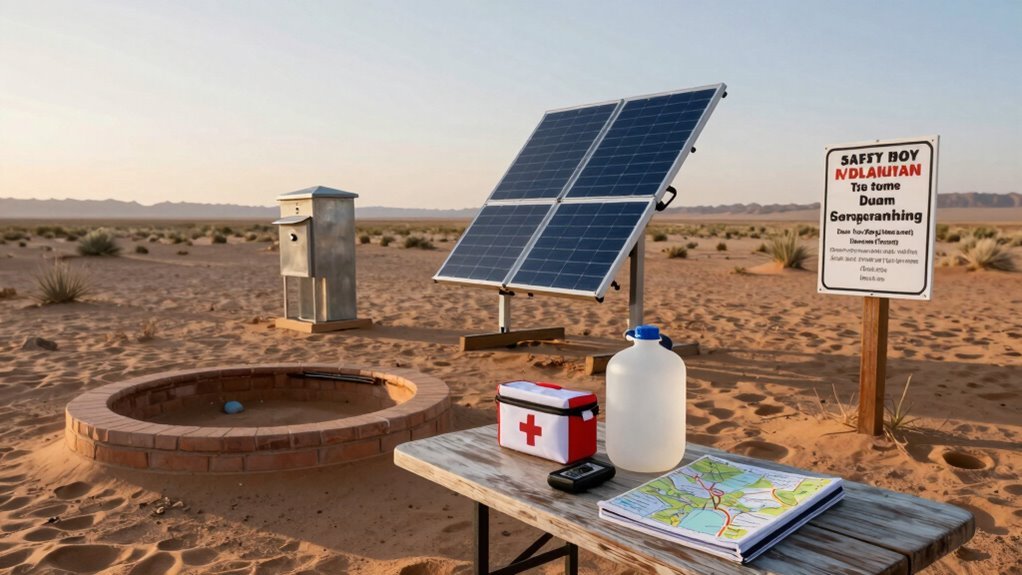
When boondocking, always pick your spot wisely and check local regulations to avoid unwanted encounters with rangers or landowners. Knowing who owns the land is essential for staying safe while boondocking.
Stay alert and secure your rig with locks, keeping valuables out of sight. Watch the weather closely and keep your devices charged to maintain communication.
Always have an exit plan and trust your instincts—if something feels off, it’s time to leave. Stay safe, stay smart, and let the adventure unfold just the way you want it.
Assessing Your Campsite Location
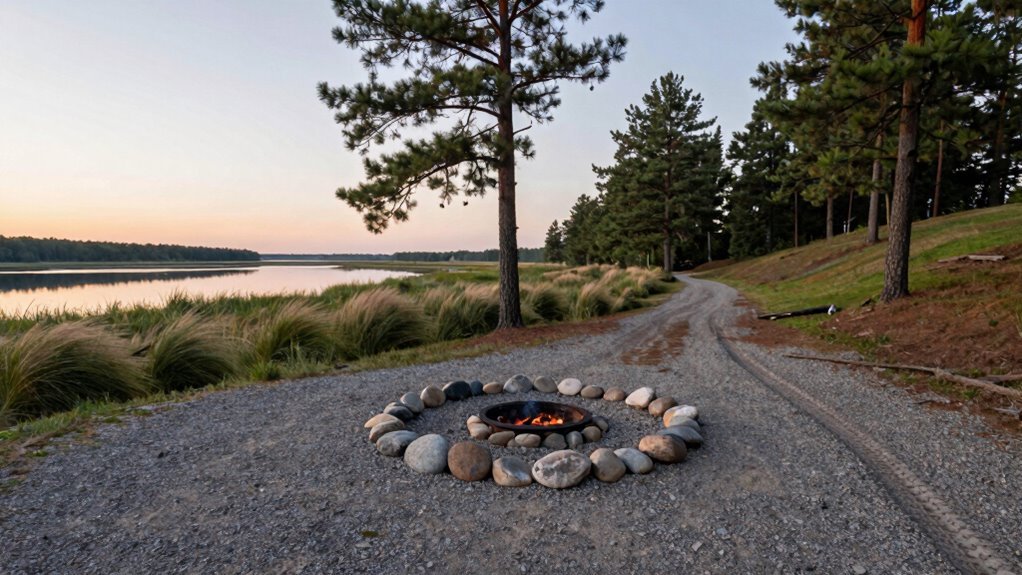
Ever wonder how to pick the perfect spot to park your rig and call it home—just for the night or a few days?
Start by researching the location—you’re not just finding a place to sleep, you’re solving a little adventure puzzle.
Use apps like iOverlander or Campendium to find solid spots with real reviews.
Check the rules, weather, and even wildlife gossip—yes, does this place host bear parties in July?
Look into permits, road access, and how far you’d have to run if you needed help (kidding… mostly).
Make sure there’s cell service or pack a satellite lifeline.
You’ll want level ground, good drainage, and no surprise holes or dead branches looming like bad decisions.
Avoid cliffs unless you’re into drama.
And please, skip the swampy spots—your boots will thank you.
Assessing these factors helps in identifying potential hazards early, so you can plan accordingly and stay safe, especially by understanding wildlife habits in the area.
Pick smart, stay safe, and hey—you’ve just nailed boondocking like a pro.
Maintaining Situational Awareness
Why wait for trouble to knock when you can see it coming?
Stay sharp out there by keeping your wits about you and your senses tuned in—like nature’s own alarm system, but way more reliable.
You don’t need superhero powers, just a little mindfulness and a curious eye.
Here’s how to stay alert without stressing out:
- Keep a relaxed but alert posture so you notice changes without looking like a nervous squirrel
- Scan your surroundings regularly, spotting both deer and dodgy behavior with equal ease
- Listen closely—cup your ears if you must—and tell whether that crunch was a raccoon or footsteps
- Position yourself with your back covered and eyes on exits, like a tactical game of hide-and-seek
- Trust your gut; if something feels off, it probably is—your instincts are your best camp buddy
- Maintain condition yellow to stay aware without becoming anxious or overwhelmed
Stay curious, stay safe, and enjoy the quiet—without the surprises.
Securing Your Vehicle and Gear
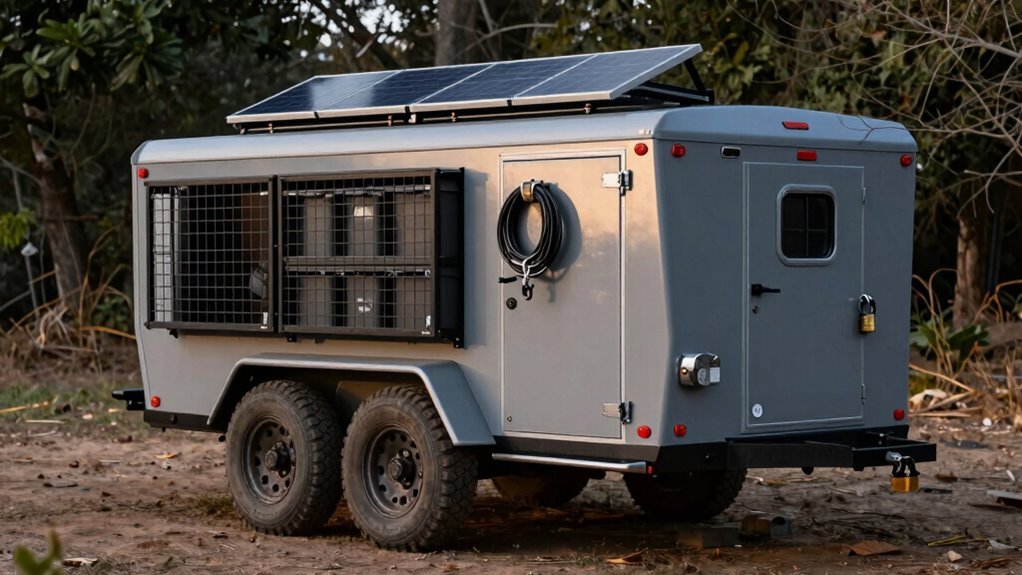
While Mother Nature’s usually pretty kind, she’s not the only one wandering around out there—so it pays to keep your ride and gear locked down tight.
Reinforce your RV’s doors with heavy-duty deadbolts and window locks—those flimsy factory ones won’t stop a determined snooper.
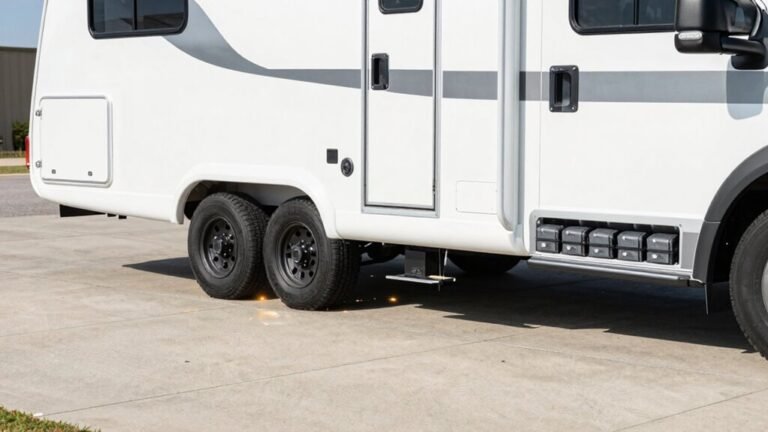
Pop on a steering wheel lock or tire clamp so your rig won’t go anywhere without you.
Use hitch locks for trailers, cable locks for coolers, and shrouded padlocks for propane tanks—thieves hate hassle.
Tuck valuables out of sight, close the curtains, and park under a light or near other campers when you can.
Install a motion-sensing alarm or GPS tracker so you’ll know if your RV decides to take a surprise trip.
Dash cams and smart alarms give you eyes on your ride from your phone.
Go ahead and lock it like you’re protecting a fridge full of snacks—because let’s be honest, you basically are.
Modern RV alarm systems often include GPS tracking for added security.
Managing Power and Water Supplies
You’ve locked up tight and made sure your rig’s ready to stand guard while you sleep—now let’s keep it running like a happy little basecamp.
Power and water don’t last forever, but with a little smarts, you’ll stretch every drop and volt like a boondocking pro.
Here’s how to stay charged and refreshed without hookups:
- Run solar panels to recharge house batteries fast—they pair perfectly with a 2200W generator for cloudy days.
- Size your inverter right so it handles your TV, laptop, or CPAP without hiccuping.
- Switch to LEDs—they sip power, and motion-activated ones last months on tiny batteries.
- Track your juice with a DC meter so you never wake up to a dead battery surprise.
- Unplug what’s not in use; even small drains add up like sneaky energy vampires.
Stay powered, stay clever, and keep the lights (and laughs) on.
Preparing for Extreme Weather
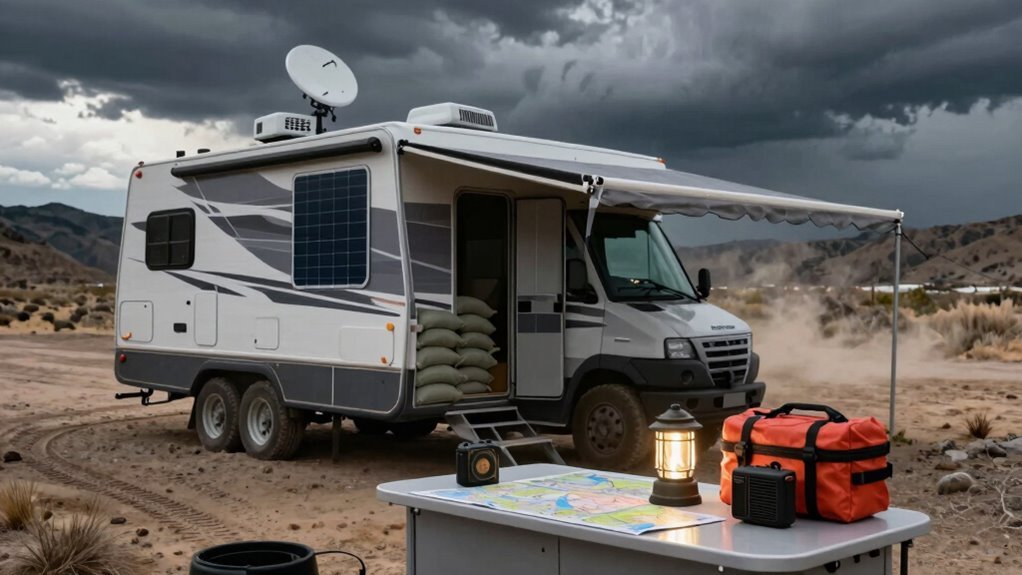
When storms roll in faster than you can pack up your camp chair, being ready for extreme weather means the difference between a thrilling adventure and a soggy disaster.
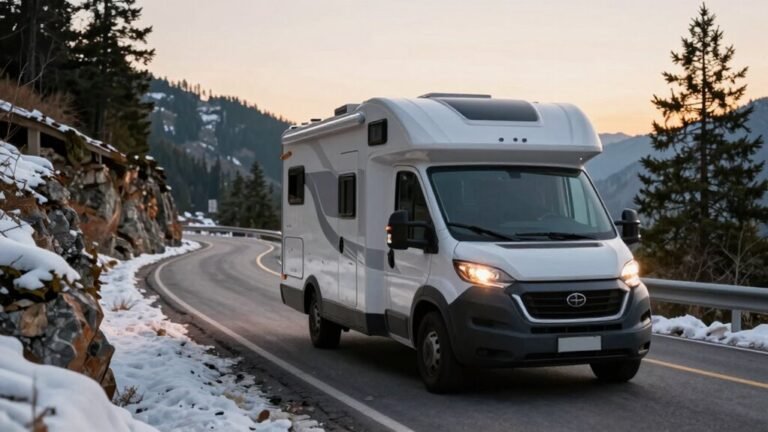
Check forecasts before you go, especially nighttime temps and elevation changes—mountain weather flips fast.
If you’re above 7,000 feet, your propane might sputter and carbon monoxide can sneak up, so install detectors and bundle up.
Avoid dry riverbeds and narrow canyons—flash floods strike fast, and six inches of rushing water can sweep your rig away.
Thunderstorms? Head downhill fast and skip the tall tree selfie.
Afternoon storms are common, so hike early.
No cell service? Bring a weather radio.
Avoid peak tornado or hurricane seasons like the plot twist in a bad movie.
Always map escape routes—when nature throws a tantrum, you’ll want options.
Stay sharp, stay dry, and laugh your way through the thunder—it’s just the sky clearing its throat.
Storing Food to Avoid Wildlife
Keeping critters out of your camp kitchen isn’t just smart—it’s part of the wild camping dance, and you’ll love nailing it.
- Pack smart with odor-resistant containers and skip the smelly foods like fish or ripe fruit
- Use bear canisters or hang bags 10–15 feet high and 4 feet from tree trunks
- Stash food 50–100 feet from your tent, never inside—bears sneak up, but raccoons are sneaky too
- Store everything scented—yes, even toothpaste—in secure bins or campground lockers
- Follow local rules: some parks require bear boxes, and fines are no joke
You’re not just feeding yourself—you’re protecting wildlife from becoming food addicts.
Plus, waking up to a bear sniffing your breakfast burrito? Not the adventure you wanted.
Stick to these steps, and you’ll keep the snacks yours, the animals wild, and your boondocking bliss intact.
Using Reliable Communication Tools
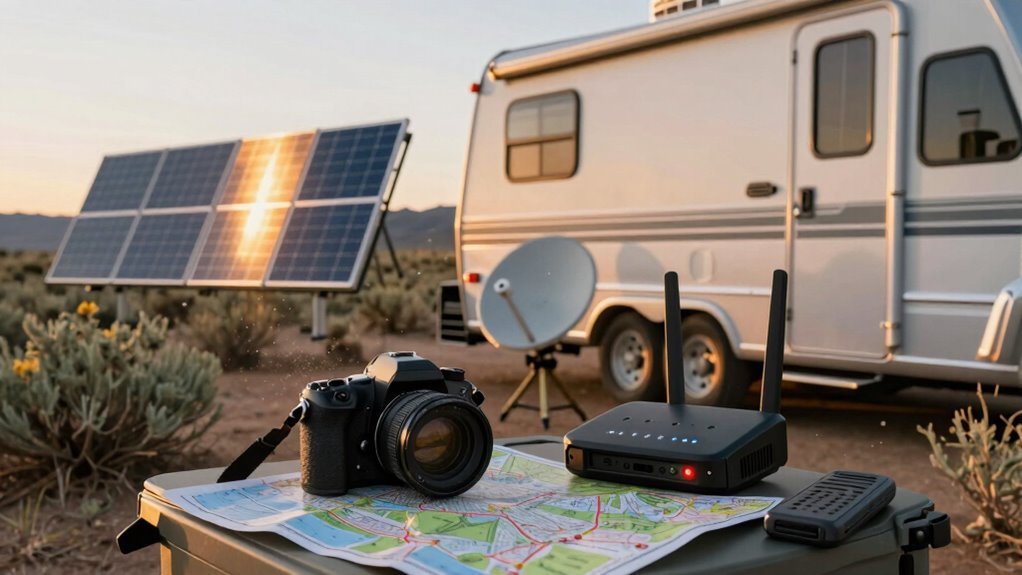
What if your phone suddenly dings “No Service” just as the sun dips behind the mountains and your campsite gets cozy?
Don’t panic—you’ve got backup!
Grab your walkie-talkies; they’re cheap, no-subscription lifesavers for group chats over a few miles.
If you’re wandering deeper, pack a satellite messenger like the SPOT Gen4—it texts help and your GPS spot from nowhere land.
Ham radios? They’re the long-distance champs, though you’ll need a license and some nerdy enthusiasm.
CB radios work great for short-range chatter, especially when the trail gets chatty or squirrely.
Always tell someone your plans first—no “surprise survival” stunts!
Toss in a GPS, booster, or even an air horn for fun flair.
Practice with your gear before you’re stuck yelling into the wind.
Stay connected, stay smart, and let the wild stay wild—but not *too* wild.
Practicing Fire Safety
- A well-built campfire warms your hands, cooks your dinner, and turns a regular night under the stars into pure magic—
- but only if it’s tamed like the friendly beast it should be.
- To keep that magic from turning into mayhem, follow these fire-safe steps:
- Check local fire danger signs and avoid fires if conditions are high-risk or windy
- Use established fire rings, clear a 10-foot safety zone, and dig a shallow pit if needed
- Build small fires with dry, local wood—no accelerants, ever (yes, not even a splash of lighter fluid!)
- Stay close, keep water or a shovel handy, and never leave flames unattended
- Drown the fire completely, stir the ashes, and feel for heat—cool to the touch means it’s truly out
Respect the flame, and it’ll stay your friend, not become your camp’s worst surprise guest.
Locking Up at Night
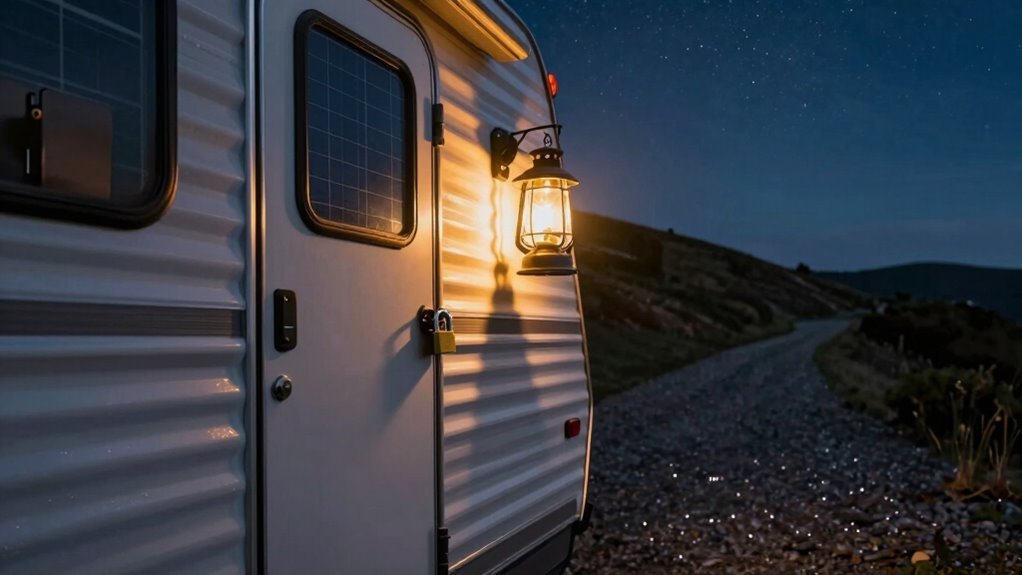
Sleeping under the stars doesn’t mean leaving your safety out in the cold—locking up at night is your low-key way of saying, “This is my fortress, and I’m not playing games.”
Park nose-out in a well-lit spot near other campers, not tucked away like a secret stash, and give yourself a clear escape route just in case Mr. Sketchy decides to wander by.
Lock every door, window, and compartment—yes, even the tiny one under the bed.
Toss wheel and hitch locks on for extra attitude.
Keep keys, pepper spray, and your favorite snack within reach.
Stow valuables in a safe, activate alarms or GPS, and don’t open the door after dark unless it’s your mom—or a bear (then run).
Trust your gut: if it feels off, you’re not stuck.
Move.
Safety’s not paranoia; it’s peace of mind with a side of sass.
Knowing Local Regulations and Risks
While you’re chasing sunsets and hunting for that perfect spot to park under the stars, don’t forget the fine print.
Knowing the local rules keeps your adventure bold, not busted.
- Check land ownership, because BLM and USFS land is fair game, but national parks usually say “hard pass” (except Death Valley—lucky you!).
- Respect stay limits: 14 days on most federal land, though Inyo lets you chill for 42.
- Scoot at least 25 miles after maxing out, or risk a friendly ranger chat.
- Permits? Some states want ’em, especially on state trust lands or in popular forests.
- Watch for private inholdings—no one wants to wake up on a rancher’s doorstep!
A little research keeps you out of hot water and deep in nature’s good graces. Safe camping, happy trails!
Frequently Asked Questions
Can I Boondock on Private Land Without Permission?
No, you can’t boondock on private land without permission—it’s trespassing, and cops can show up faster than your coffee brews.
Get approval from the owner, whether it’s a quick text or signed note.
Try apps like Boondockers Welcome for hassle-free spots.
Respect goes a long way; charm landowners with your manners, not your exhaust noise.
When in doubt, check maps—you’ll avoid surprises and keep your adventure drama-free.
How Do I Find Boondocking-Friendly Public Lands?
You just *love* getting turned away from No Parking spots, so grab a map and head straight to BLM and National Forest lands—there’s tons of free boondocking just waiting for you!
Check onX or the US Public Lands App, spot that yellow BLM shading, look for forest roads, and boom: you’re camping legally. Just don’t forget to verify local rules—nobody wants a surprise 14-day eviction!
Is It Safe to Boondock Alone as a Woman?
Yeah, it’s totally safe to boondock alone as a woman—seriously, you’re more likely to get startled by a curious raccoon than meet trouble.
Crime’s super rare on public lands, and most dangers are natural, like weather or terrain.
Just pick spots with other campers nearby, trust your gut, and keep your phone charged.
You’ve got this—nature’s your co-pilot, not your threat!
What Should I Do if Someone Approaches My Camp?
If someone approaches your camp, stay calm and don’t panic—you’ve got this!
Lock the door, peek through the window, and yell “I’m fine, thanks!” like you’re expecting company.
Keep your pepper spray handy, keys close, and dog barking (real or sticker-powered!).
If they don’t leave, start moving around so it looks like you’re packing up.
Trust your gut—you’re in charge here.
Are There Apps to Locate Nearby Boondocking Sites?
Yeah, there are apps you can use to find boondocking spots nearby—super handy!
Try Campendium for free spots and real reviews, or The Dyrt for detailed filters and offline maps.
iOverlander’s great for crowd-sourced vibes and wild camping tips, while OnX Offroad shows legal spots on public land.
Just drop a pin, check reviews, and make sure you’re not parking on someone’s lawn—whoops!
Conclusion
You’ve picked a safe spot, locked up tight, and got your gear secure—smart moves! Think of your campsite like a cozy turtle shell, safe and snug against the wild. You’ve powered up, prepped for weather, and stayed in touch, all while respecting nature’s rules. Boondocking’s your adventure, your rhythm. So shine bright, stay sharp, and laugh easy—every sunset’s a high five from the world. Now go make memories!
References
- https://crrhospitality.com/blog/risk-assessment-techniques-for-campsite-location-choices/
- https://adventistrisk.org/Adventist_Risk/media/ARMSiteContent/Insurance/Pathfinders/FRM_Campsite_Inspection_IADENG.pdf?ext=.pdf
- https://www.battlbox.com/blogs/camping/is-boondocking-safe-a-comprehensive-guide-to-safe-outdoor-adventures
- https://safetyculture.com/library/hospitality/camping-inspection
- https://www.scouting.org/health-and-safety/safety-moments/campout-safety-checklist/
- https://rinsekit.com/blogs/news/campsite-safety-checklist-everything-you-need-in-case-of-disaster-3
- https://rvshare.com/blog/accident-free-campsite/
- https://roadside.goodsam.com/resources/rv-safety-tips-a-complete-guide-to-safe-and-stress-free-travel
- https://girlcamper.com/your-essential-boondocking-checklist-for-rv-camping/
- https://hazlicollection.com/blogs/news/7-must-know-family-camping-safety-checklist-tips