How to Choose the Right RV Insurance Coverage
You’ve got a rolling home, so don’t let the wrong RV insurance coverage leave you stranded. Match your policy to your RV type—bigger rigs usually require more comprehensive protection.
Decide whether you’re full-timing in your RV or using it for occasional weekend trips, as this affects your coverage needs. Your lifestyle determines the level of RV insurance coverage that’s right for you.
Bump up liability limits beyond state minimums to ensure better financial protection. Adding medical payments coverage helps cover injuries, no matter who’s at fault.
Include valuable endorsements like emergency roadside assistance and personal property protection. These extras enhance your RV insurance coverage and prepare you for the unexpected.
Understanding the Types of RVs and Their Insurance Needs
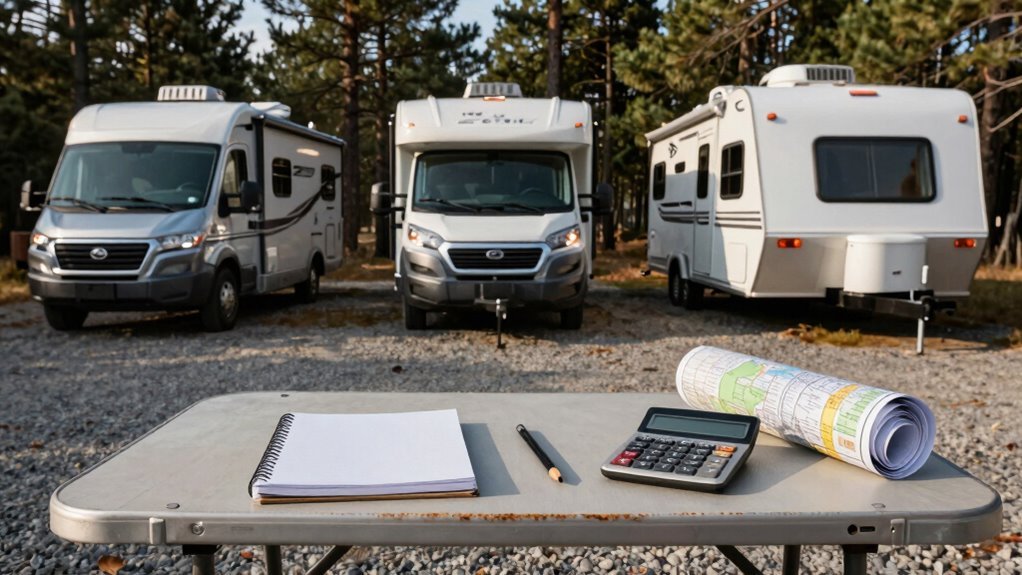
Whether you’re dreaming of cross-country road trips or weekend getaways under the stars, getting to know the different types of RVs is your first step toward hitting the open road with confidence. You’ve got options: Class A motorhomes are the big rigs of the RV world—luxurious, spacious, and hard to miss, but they guzzle fuel like a thirsty camel.
Class C’s? They’re the friendly middle child, with that cool over-cab bunk and decent mileage.
Class B campervans are compact and nimble, perfect for two to four adventurers who like to keep it simple.
Then there are towables—fifth wheels and travel trailers—that turn your truck into a home on wheels.
Each type drives differently, costs differently, and yes, insures differently.
Bigger RVs often mean higher premiums, but your choice shapes your coverage needs.
Know your rig, and you’ll know what protects it best.
These classifications are based on motorhomes with engines.
Evaluating Coverage Options for Full-Time Versus Part-Time Use
Now that you’ve picked your perfect rig—whether it’s a sleek Class B van or a palatial fifth wheel—it’s time to think about how you’ll actually use it, because your adventure schedule shapes your insurance needs more than you might think.
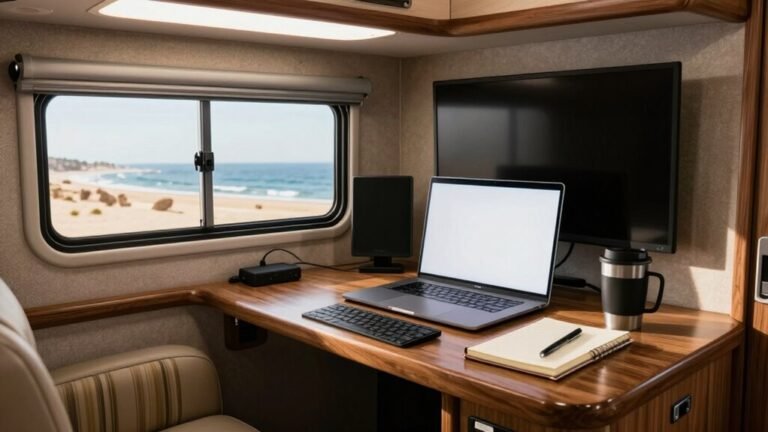
If you’re living full-time in your RV—hello, six months or more on the road—it’s basically your home, and you’ll need coverage to match.
Full-time plans act like homeowners insurance with higher limits, extra liability, and even living expenses if your ride becomes unlivable.
But if you’re just weekend-tripping or logging fewer than 150 days annually, part-time coverage keeps things simple and affordable, focusing on driving risks and storage.
Just don’t stretch part-time too far—insurance companies notice.
Be real about your plans, or you might end up explaining to your insurer why your “part-time” home has a vegetable garden and mail delivery! Coverage should align with actual use, not registration.
Determining Adequate Liability and Medical Payments Protection
How tough would it be to face a lawsuit because your RV insurance didn’t cover the full cost of an accident?
You’d be on the hook for medical bills, repairs, and legal fees out of pocket—yikes!
Most states require at least minimum liability coverage, like Texas’s 30/60/25, but those limits mightn’t cut it when real-life RV crashes get messy.
Bumping up your liability protects your savings and peace of mind.
And don’t forget medical payments coverage—it covers your crew’s ER visits, rehab, or even funeral costs, no fault needed.
Think of it as a safety net for spontaneous adventures gone sideways.
Liability coverage similar to standard auto insurance ensures you’re protected in at-fault incidents involving bodily injury or property damage.
Seeing your best friend hurt and not knowing how to pay
Getting sued because your coverage ran out fast
Worrying about bills while recovering from an injury
Realizing your trailer isn’t covered like your motorhome
Watching your life savings vanish over one mistake
Adding Endorsements for Towing, Personal Property, and Full-Timer Benefits
You’ve got your liability and medical payments locked in, so now let’s talk about the extras that make RV life not just safer, but way more fun—like having a backup plan when things go sideways on the open road. Add a towing endorsement and you’re covered for flat tires, dead batteries, or needing a lift back to pavement—usually up to 100–200 miles. Just don’t expect a winch out of the Mojave if you’ve wandered way off-road.
Tote your favorite gadgets and gear? A personal property endorsement protects your stuff if it’s stolen or damaged, with options to cover high-value items like laptops or jewelry.
And if you live full-time in your RV, full-timer benefits give you home-like coverage for liability and belongings.
These add-ons aren’t just smart—they’re peace of mind with extra horsepower.
Comparing Quotes and Discounts Across Top Insurance Providers
While your dream rig might turn heads on the highway, the real showstopper is finding an insurance deal that works as hard as you play—and let’s be honest, saving a few bucks while getting first-rate coverage feels almost as good as landing the perfect campsite.
- Imagine getting $530 back every year—just for comparing quotes like a pro
- Picture bundling policies and watching your rates drop faster than your jaw at a mountain vista
- Think about earning discounts just for being safe, smart, or a member of your favorite RV club
- Feel the relief of snagging roadside help that covers meals and a cozy hotel when breakdowns strike
- Know you’re protected with pet injury or full replacement coverage—because your furry co-pilot deserves the best
Snap quotes in minutes from Progressive, Good Sam, or RV America, and start saving without sacrificing peace of mind.
Frequently Asked Questions
Can I Use My Auto Insurance for an RV?
No, you can’t fully rely on your auto insurance for an RV—it’s not like tossing a bike in the back and hitting the road.
Auto policies cover basics for towed trailers, sure, but RVs need their own protection.
You’ll want personal stuff covered, campsite liability, and vacation coverage, which standard auto plans skip.
Think of it like upgrading from a scooter to a spaceship—you need the right gear.
Don’t get caught stranded without proper RV insurance!
Does RV Insurance Cover International Travel?
Yes, your RV insurance might cover international travel, but don’t assume it does!
In Canada, most policies work across the border, but in Mexico, you’ll need extra insurance—Mexican law isn’t kidding.
Outside North America? It’s a whole new ball game.
Always check with your provider, get the right add-ons, and carry proof.
You don’t want your dream trip turning into a paperwork nightmare—adventure smart!
What Happens if I Lend My RV to a Friend?
You lend your RV to a friend? Cool move—but heads up!
If they wreck it, your insurance usually covers them *only* if they’re an occasional, permitted driver.
No endorsement? Boom—claim denied.
They cause damage? You’re on the hook, and your rates might spike.
Want peace of mind? Add them to your policy or get a temporary pass.
Safety first, fun second!
Is There Coverage for RV Park Stays?
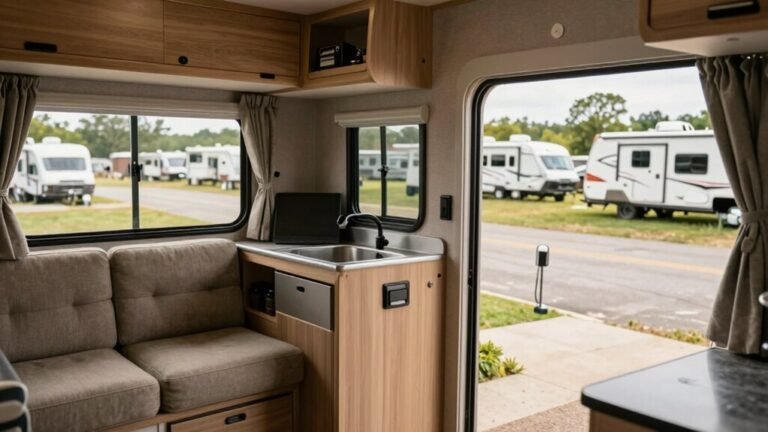
Yes, your RV’s got you covered during park stays—you’re not on your own!
Most policies protect you while parked, especially with full-time coverage.
You’ll enjoy liability, medical payments, and theft protection right at the campsite.
Just double-check with your provider when crossing state lines—some rules shift like campfire chairs.
And hey, at least your marshmallows won’t sue you!
Do I Need Insurance if My RV Is in Storage?
Yep, you absolutely need insurance even if your RV’s hibernating like a disco-loving bear from the ’70s.
Storage doesn’t stop fires, thieves, or rogue squirrels throwing ragers in your engine.
Weather, falling trees, and vandalism don’t clock out, and neither should your coverage.
Plus, skipping insurance risks big repair bills, coverage gaps, and angry insurers denying claims.
Stay protected, save cash, and keep your shiny home-on-wheels safe—now that’s groovy peace of mind.
Conclusion
You’re not just buying insurance—you’re gearing up for the open road, like putting on your superhero cape before a cross-country adventure. Don’t let the fine print rain on your parade; pick a plan that’s got your back, your stuff, and your wandering spirit covered. Boom: peace of mind, packed and ready. Let’s roll, sunshine—your dream trip’s waiting!
References
- https://www.rvezy.com/blog/rv-classes
- https://en.wikipedia.org/wiki/Recreational_vehicle
- https://rvshare.com/blog/rv-classes/
- https://www.fhwa.dot.gov/policyinformation/tmguide/tmg_2013/vehicle-types.cfm
- https://www.progressive.com/answers/types-of-rvs/
- https://koa.com/blog/rv-classes-guide/
- https://www.thorindustries.com/rv-types
- https://www.youtube.com/watch?v=LF3u2uoIMYk
- https://www.ashevilleinsurancecenter.com/blog/full-time-vs-part-time-rv-coverage-explained/
- https://www.primetimeis.com/blog/full-time-vs-part-time-rv-coverage-whats-the-difference/