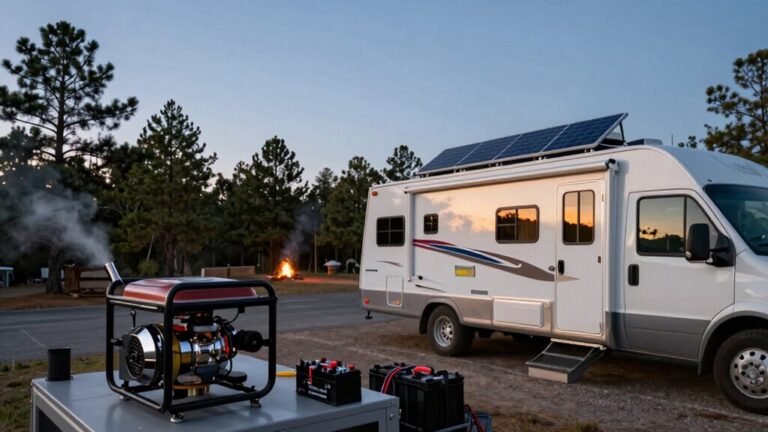
Lithium Vs AGM: Which RV Battery Is Better?
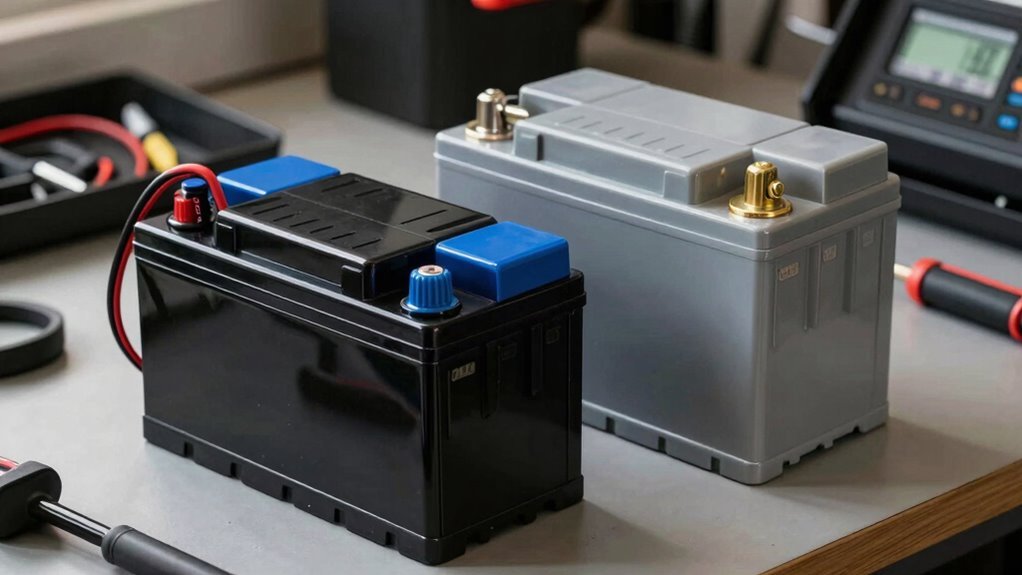
Lithium RV batteries are changing the game for campers who want reliable, lightweight, and long-lasting power. With lithium, you get twice the usable capacity and cut battery weight in half compared to AGM.
Lithium charges faster, handles deep discharges without damage, and typically lasts much longer than AGM. While AGM performs slightly better in very cold temperatures, lithium technology—especially models with self-heating—now addresses this gap.
You’ll save money over time thanks to lithium’s longer lifespan and higher efficiency. When comparing lithium vs AGM, lithium proves to be the smarter, more durable choice for modern RV adventures.
Weight and Portability Comparison
Ever tried lifting a 60-pound battery and thought, “There’s got to be a lighter way”?
Good news—you’re not stuck with bricks anymore.
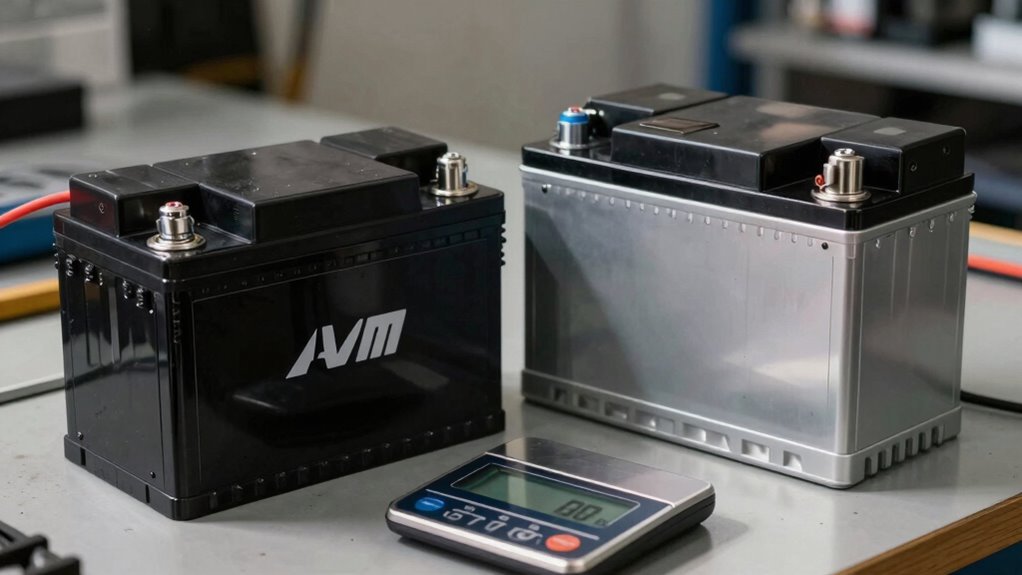
Switching to a 12V 100Ah lithium battery cuts the weight in half, tipping the scales at just 25 to 30 pounds.
That’s like swapping a full backpack for a light lunchbox!
Whether you’re installing it in your RV or hauling it for marine use, lithium makes life way easier.
AGM batteries, on the other hand, still weigh in at a hefty 60 to 70 pounds—ouch.
Imagine doing that lift every time you camp.
Lithium’s light frame also helps your RV handle better and even improves fuel efficiency.
Plus, it’s a breeze to carry and install solo—no grunting, no drama.
For portability, convenience, and a little back-saving magic, lithium just wins.
Seriously, why lift more when you can enjoy the same power with way less strain?
This dramatic reduction is possible because lithium is the lightest metal, enabling high energy storage with minimal mass.
Lifespan and Durability Factors
- Lithium laughs at deep discharges, handling 80-100% use without a hiccup
- AGM taps out fast past 50%, cutting your usable power in half
- You’ll replace AGMs every 3-5 years, while lithium goes 10-15 without breaking a sweat
- Lithium survives thousands of cycles; AGM fades fast without perfect care
- Cold weather? AGM handles it better, but lithium wins on almost every other front
- Some advanced lithium models even offer self-heating capability for improved performance in freezing conditions
Sure, AGM’s tough in extremes, but lithium’s the long-haul champ—like swapping a flip phone for a smartphone and wondering why you waited so long
Charging Speed and Efficiency
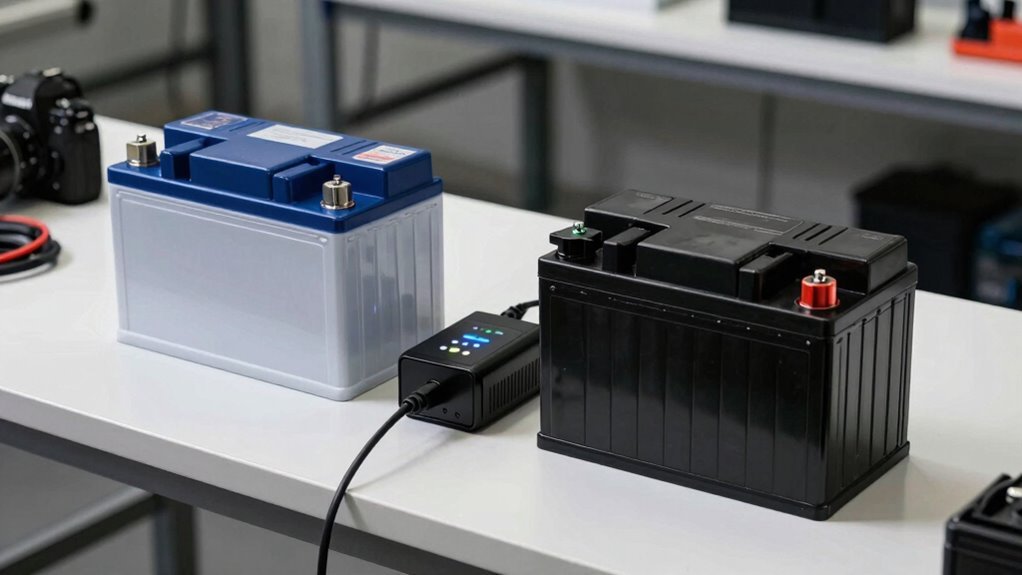
While your morning coffee brews, a lithium battery can go from empty to nearly full—something your AGM battery could only dream of.
You’ll wait 8 hours or more to fully charge AGM, but lithium zips to 80% in under an hour.
With a dedicated charger, that’s a full charge in about two hours—faster than most TV marathons.
AGM grumbles into the final stretch, slowing way down, while lithium happily accepts charge the whole way.
It’s 95% efficient, so less energy’s wasted as heat—unlike AGM, which runs hot and slow.
And guess what? Lithium doesn’t care much if you’re topping it off after a small drain or a deep one.
It just. Keeps. Going.
You’ll spend less time plugged in and more time on the open road.
Lithium charges fast, stays efficient, and frankly, makes charging drama-free.
Plus, you can safely use a charger sized at up to 30% of capacity without overheating concerns, unlike AGM which risks damage at higher rates.
Pretty cool, right?
Depth of Discharge Differences
- You can safely drain lithium to 80–100% without frying it—AGM?
- Nope, stay at 50% or risk a meltdown.
- One 100Ah lithium gives you 90Ah of usable power; your AGM buddy’s only got 50Ah, even if they’re twins.
- Need power for days? Lithium runs longer per charge, so you’re not babysitting outlets.
- Deep discharge won’t kill lithium—it laughs and gives you 3,000+ cycles. AGM taps out fast.
- You’ll replace AGMs twice (or thrice) before lithium even yawns.
Lithium’s deeper dive means more freedom, less stress—and way more camping fun.
Maintenance Requirements and Ease of Use
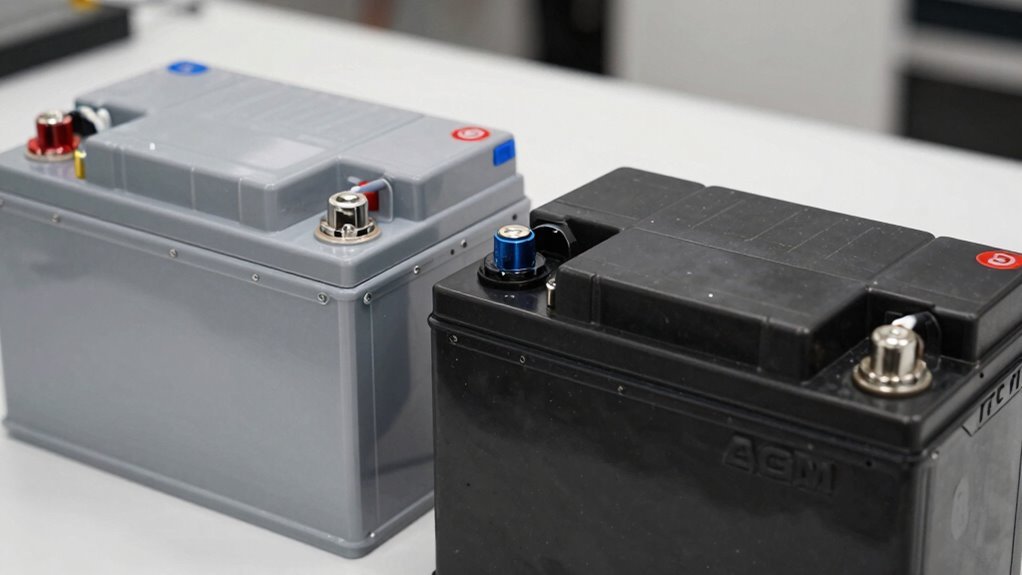
Ever wonder how much babysitting your RV battery actually needs? With lithium, it’s way less than you’d think! Just charge it after each trip—no need to drain it first like those old AGM batteries.
Keep it between 20-80% most of the time, and you’re golden. Oh, and don’t forget: always use a lithium-specific charger, unless you enjoy risking damage (and drama).
Store it cool and dry at about 50% charge if you’re not using it for a while. Heat’s worse than cold for lithium, so park it somewhere with decent temps.
Check the terminals every few months—clean any gunk with baking soda and water. The BMS does most of the work, but a monthly voltage peek keeps things honest.
It’s basically the low-maintenance friend who still shows up ready to party. Swelling or leaks? Time to say goodbye. Easy, right?
Cost Analysis Over Time
So, what’s the real deal when it comes to dollars and sense?
You might flinch at first seeing lithium prices, but stick with me—your wallet might thank you later.
Sure, lithium costs 2–3 times more up front, but over 10 years, you’re actually saving cash.
AGM batteries wear out faster, so you’ll replace them 2–3 times while your lithium is still going strong.
Plus, you get more usable juice and better charging efficiency.
Think of it like buying a pricier coffee maker that never quits, instead of cheap ones you toss every year.
Here’s the breakdown:
- Lithium lasts 3,000–5,000 cycles vs AGM’s 200–400
- 10-year costs: lithium $800–$1,000, AGM $1,200–$1,800
- You double effective capacity with lithium
- Fewer replacements mean fewer headaches (and trips to the store)
- Less charging time and energy waste add up quietly
Performance in Extreme Weather Conditions
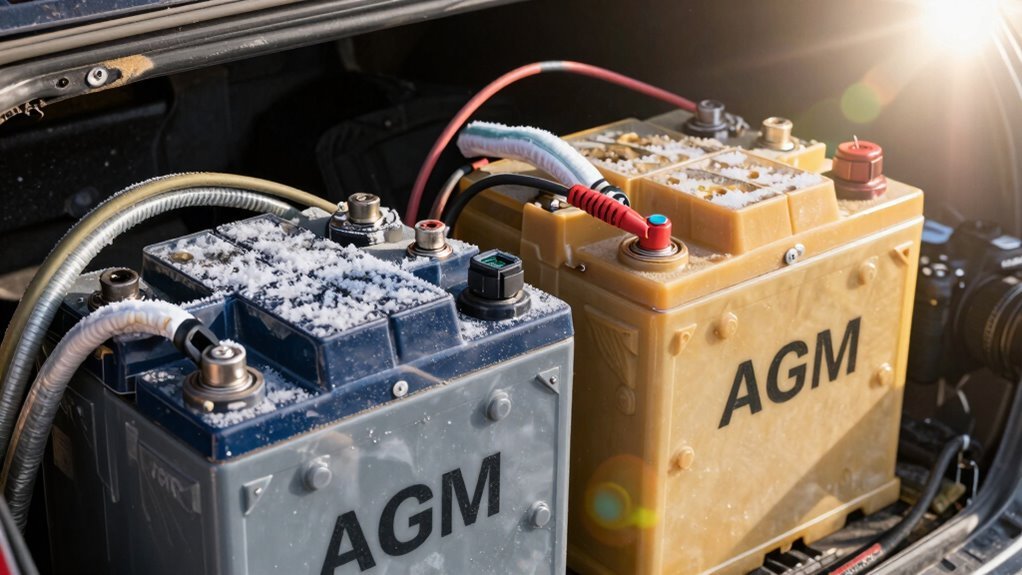
When the weather throws a tantrum—whether it’s a deep freeze or a sizzling heatwave—your RV battery’s performance can make or break your adventure.
You’ll love how AGM batteries start strong in cold weather, offering reliable cranking power when temps drop below freezing.
But don’t count out lithium just yet—LiFePO4 handles cold like a champ *with* self-heating, and it absolutely shines in scorching heat where AGMs fade fast.
While AGMs lose capacity and life in extreme heat, lithium keeps cool, literally, thanks to built-in protections.
Sure, cold slows charging for both, but heated lithium bridges the gap.
AGMs hold charge well in winter storage, but long-term, lithium wins in temperature stability.
So, whether you’re braving snowbanks or desert ovens, your battery choice shapes your comfort.
Pick smart, and let Mother Nature rage—your adventures don’t need a timeout.
Frequently Asked Questions
Can I Mix Lithium and AGM Batteries in the Same Bank?
Nope, you can’t mix lithium and AGM batteries in the same bank—your system’ll throw a fit!
Different voltages and charging needs cause chaos, like one battery hogging power while the other overheats.
It’s like pairing a sports car with a tricycle—both go, but not together!
Use isolators if you absolutely must, but really, keep ’em separate and save yourself the headache (and possible fireworks!).
Are Lithium RV Batteries Safe for Indoor Installation?
You bet they’re safe—when you play it smart, “better safe than sorry” isn’t just a saying, it’s your setup.
Lithium RV batteries with UL1973 certification are made for indoor use, thanks to iron phosphate chemistry, flame-retardant cases, and a built-in BMS.
Just skip counterfeits, follow installation rules, and keep things cool and dry—you’ll be golden (and spark-free!).
Do AGM Batteries Leak Acid if Tipped Over?
No, you don’t have to worry about AGM batteries leaking acid if tipped over—they’re designed to stay sealed and safe.
The electrolyte’s trapped in glass mats, so there’s no free liquid to spill.
Even if you knock it sideways or upside down, it won’t leak, making it perfect for bumpy roads.
Just avoid crushing or overcharging it, or Mother Nature might throw you a sour lemon.
Smart, right?
How Do I Dispose of Old Lithium or AGM Batteries?
You toss old lithium or AGM batteries right into regular trash?
Nope—don’t even think about it!
Take them to a recycling center, hazardous waste drop-off, or retailer with take-back programs.
Both types can spark trouble if mishandled, so wrap terminals in tape and store them safely.
You’re not just dodging fines—you’re saving the planet, one charged decision at a time.
Go ahead, be the eco-hero your RV adventures deserve!
Can I Upgrade My AGM System to Lithium Easily?
Sure, you *can* swap your AGM for lithium, but it’s not quite caveman-simple.
You’ll need a lithium-ready charger, beefier wiring, and a compatible converter—think 14.4V charging, no float.
Toss in a lithium-savvy monitor and solar controller, and you’re golden.
While you’re at it, skip the old solenoid; go for a Li-BIM.
It’s like upgrading from a flip phone to a smartphone—totally worth the effort!
Conclusion
You’ve got options, but lithium’s the rocket ship compared to AGM’s trusty bicycle. Sure, it costs more up front, but you’ll fly through seasons with less charging, zero maintenance, and crazy durability. Lithium handles heat and cold like a boss, and that deeper discharge? It’s like getting a bigger gas tank for free. Bottom line: go lithium, and never look back—you’ll wonder how you ever lived without it.
References
- https://www.ufinebattery.com/blog/how-much-does-a-lithium-battery-weigh-a-complete-size-by-size/
- https://www.redodopower.com/blogs/learn-about-lithium/group-27-battery-dimensions
- https://manlybattery.com/rv-camper-battery-size-guide-group-24-vs-27-vs-31/
- https://jmhpower.com/rv-battery-size-chart/
- https://ipowerqueen.com/blogs/knowledge/what-does-a-12v-battery-for-boat-weigh
- https://battlebornbatteries.com/product/12v-lifepo4-deep-cycle-battery/
- https://dakotalithium.com/product/dakota-lithium-12v-100ah-deep-cycle-lifepo4-marine-solar-battery/
- https://ipowerqueen.com/blogs/compare-batteries/agm-vs-lithium-which-is-better-for-rvs-and-marine
- https://www.redodopower.com/blogs/learn-about-lithium/agm-vs-lithium-batteries-which-is-better
- https://www.sinexcel-re.com/blog/agm-vs-gel-vs-lithium-which-rv-battery-type-is-best-for-you/