RVING With Pets: What You Need to Know
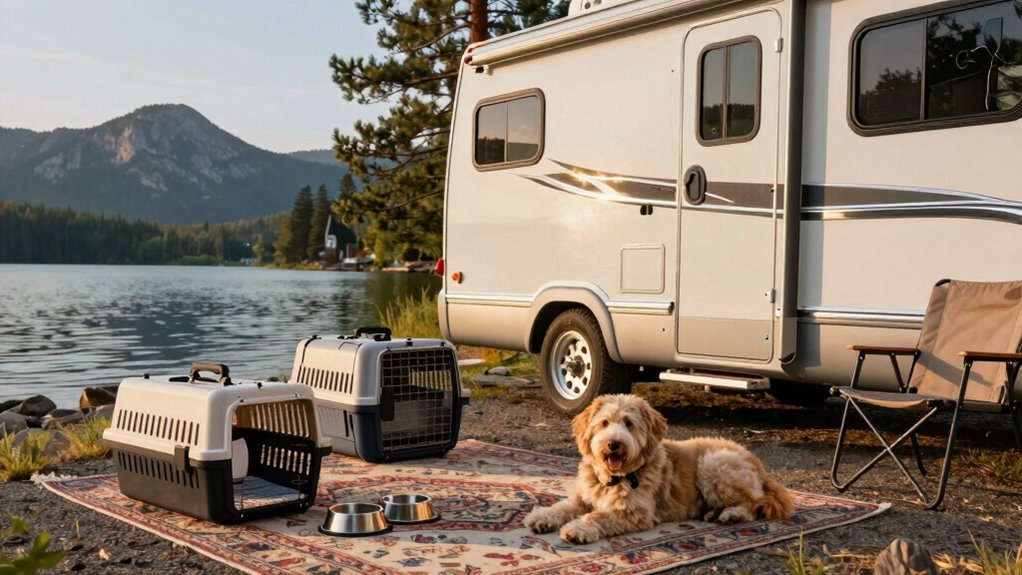
Bringing your pet along on an RV adventure can make the journey even more enjoyable. Be sure to pack essentials like your pup’s favorite bed, snacks, toys, collapsible bowls, waste bags, and a snug harness—these items are a must for happy trails.
A first-aid kit, updated ID tags, and a GPS tracker are crucial for safety while RVing with pets. Choose pet-friendly campgrounds that offer off-leash areas so your furry companion can stretch and play.
Keep your pet secure inside the RV during travel and maintain their regular routines as much as possible. Plan frequent bathroom breaks and always have emergency supplies on hand—because adventures go smoother when your pet’s needs are covered. There’s plenty more where that came from.
Essentials to Pack for Your Pet
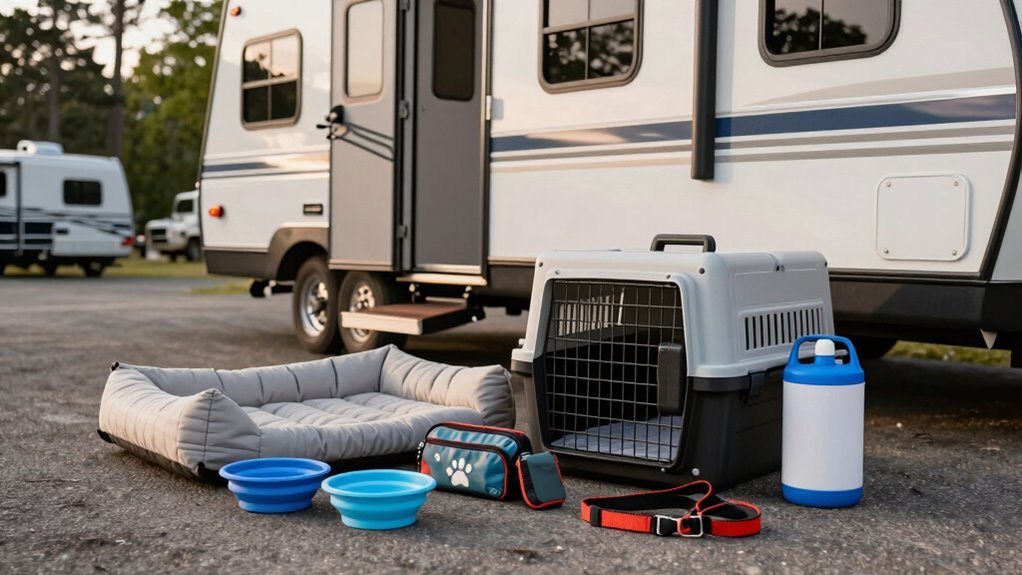
Packing for your pet isn’t just about tossing a bowl and a squeaky toy into the RV—nope, you’re building a comfy, safe little home on wheels, and it’s way easier than it sounds.
You’ll want enough food for the whole trip—plus a bit extra, ’cause hey, traffic happens.
Toss in collapsible bowls and a spill-proof mat, especially if your pup eats like a tornado.
Don’t forget treats—they’re gold for good behavior and happy vibes.
Bring their favorite bed or blanket so naptime feels like home, and pack toys to beat boredom.
Keep them safe with a snug harness, updated ID tags, and a GPS tracker—just in case Fido dreams of freedom.
A window screen stops escape attempts, and an LED collar keeps them visible at night.
Stock a first aid kit, meds, and waste bags—because clean-up duty doesn’t take vacations.
Make sure to bring veterinary records in case of an emergency.
Choosing Pet-Friendly Campgrounds
You’re not just picking a place to park—you’re hunting for the ultimate home base where your pup (or curious kitty) can thrive under the stars.
With over half of campers bringing dogs, you’re in great company—especially in pet-loving Washington.
Start by checking for dedicated pet zones, not just mixed areas, and look for off-leash parks or trails where your dog can zoom like a furry tornado.
Places like Rovers RV Park in Oregon offer two-acre off-leash zones, while Four Paws Kingdom in NC boasts agility playgrounds and even swimming ponds.
Don’t skip the little perks: dog washes, drinking fountains, and coops (yes, coops for dogs—we’re living in the future).
Use platforms like The Dyrt to filter 70,000 spots by pet policies, and always confirm pet limits and nearby vet access.
RV camping has 20.8% higher likelihood of bringing pets compared to other camping types, making pet-friendly planning even more essential for RVers.
Your fur buddy deserves a vacation too—make it pawsome.
Keeping Your Pet Safe on the Road
Thinking of your pet as co-pilot isn’t just cute—it’s a roadmap to safe adventures on four wheels.
Before you roll, make sure your pet’s vaccines and rabies paperwork are up to date—you’ll need proof at some spots.
Pack a copy of their medical records, just in case.
Chat with your vet about parasites and any meds for chronic issues.
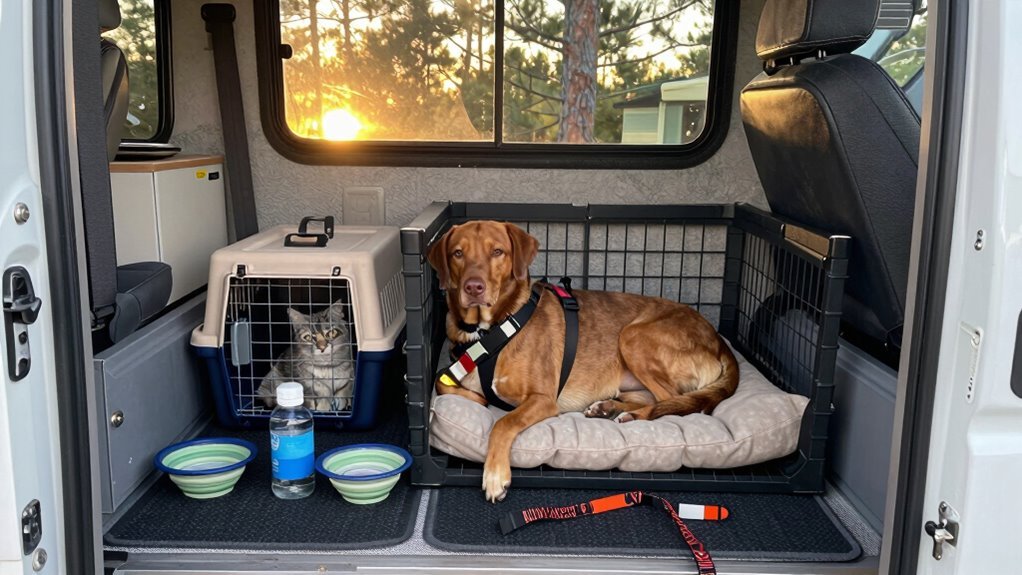
During travel, secure your dog in a kennel inside the towing vehicle—never in the trailer, where it’s unsafe.
It’s like seatbelts for pups!
Stop often so they can stretch, drink, and do their business.
Keep the AC running, even on quick breaks—hot rigs are dangerous.
And hey, your pet isn’t a hood ornament, so leash them before opening doors.
A little prep keeps your furry first mate safe, happy, and ready for the next exit sign.
RVers are 20.8% more likely to bring pets than other campers, making pet-safe practices essential for this growing group.
Managing Pet Behavior in Tight Spaces
While your pup might dream of sprawling across a king-sized bed, life on the road means everyone—furry friends included—learns to cozy up in compact corners.
You can help by setting up a designated pet zone with their favorite bed, toys, and that well-chewed squirrel they refuse to part with.
Keep it away from foot traffic but where they can still see you—this gives them security without being underfoot.
Use non-slip mats and secure gear so they don’t go sliding during sudden stops.
Crate them or use harnesses while driving to keep things calm and safe.
Foldable furniture and pet gates help carve out personal space, even in tight quarters.
Stick to routines, offer window seats for curious cats, and reward calm behavior with treats.
A little prep turns your cozy rig into a happy, tail-wagging home.
Handling Bathroom Breaks and Outdoor Time
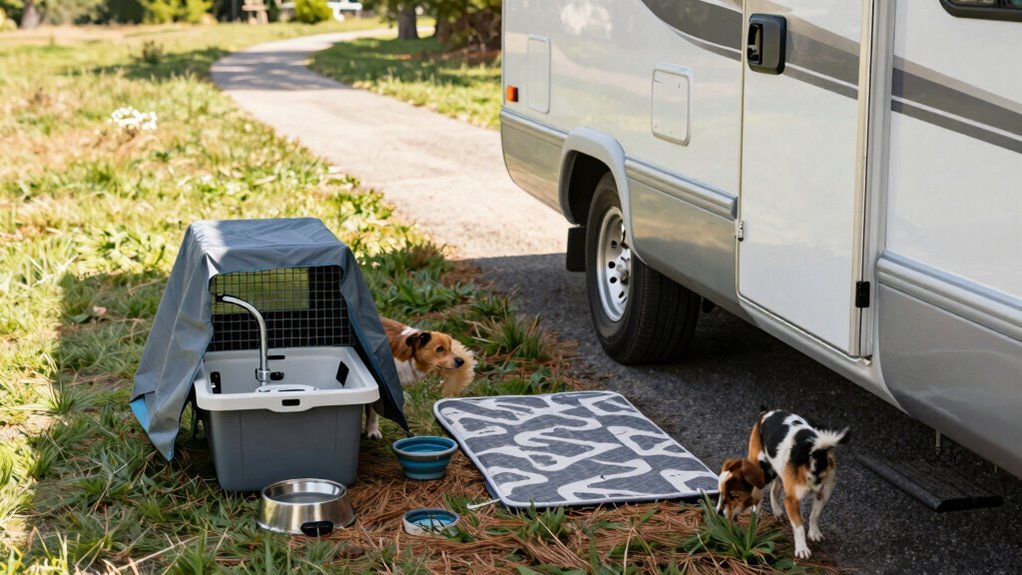
How often should you hit pause on the open road for your pup’s potty parade?
Every 2–3 hours, ideally—especially for puppies or seniors with tiny bladders.
Even if your pet seems chill, don’t wait; accidents happen fast.
Watch for telltale signs like sniffing, circling, or sudden restlessness—it’s nature’s emergency alert.
Use a leash and harness at every stop to keep them safe in unfamiliar spots.
For long stretches, doggy grass pads or litter boxes (cats, we see you!) can be lifesavers—just keep them stable and accessible.
At campsites, stick to shaded, leashed zones and clean up messes fast.
Always bring water and a collapsible bowl—hydration rules!
Plan routes with pet breaks in mind, and wipe muddy paws before reentry.
With smart prep, potty chaos turns into happy, tail-wagging adventures.
Who knew pee breaks could be this fun?
Preparing for Emergencies and Vet Care
When the unexpected hits—because let’s face it, life loves a plot twist—being ready keeps your pet safe and saves you stress.
Pack a pet emergency kit with 3–7 days of food in waterproof containers, a week’s water (1 oz per pound daily), and a two-week supply of meds, including flea, tick, and heartworm preventatives.
Don’t forget a first-aid kit: antibiotic ointment, bandages, saline, and even cornstarch for tiny bleeds.
Label crates with your info and keep collars, leashes, and carriers handy.
Practice loading your pet calmly—because panic-packed pups aren’t cute.
Store vet records, microchip numbers, photos, and emergency contacts in a waterproof folder.
Add a rescue sticker to your home and stash temporary ID tags.
Scout pet-friendly hotels and vets ahead of time.
Bring sanitizing supplies, and evacuate fast when told—no heroics.
You’ve got this, road warrior.
Your fur baby’s counting on you!
Frequently Asked Questions
Can I Leave My Pet Alone in the RV During Errands?
Yes, you can leave your pet alone in the RV during errands, but only if you’ve got the right setup.
Keep the AC running, set up a backup fan, and pop in a temp monitor that alerts you by phone.
Limit trips to an hour, stash water out, and secure loose stuff.
Throw on some tunes to calm them down—and never skip the visual check before you dash out.
Safety first, fun always!
Are There Weight Limits for Pets in RV Parks?
Yeah, most RV parks have weight limits—don’t let that sneak up on you like a surprise vet bill.
Some cap pets at 40 pounds, others allow up to 70.
Always check ahead—Watts Park lets heavier pets in with manager approval.
Wilder? Two small dogs, but together they can’t tip the scales past 35 pounds.
Know the rules, pack the treats, and keep tail wags over weight limits!
How Do I Handle Pet Allergies While Traveling?
You tackle pet allergies on the road by staying sharp and proactive.
Wipe your pup’s paws after walks, keep their meds handy, and stick to their routine.
Watch for itching or sneezing—those are telltale signs.
Bring vet-approved Benadryl, use hypoallergenic shampoo, and vacuum often.
Think of your RV as a sneeze-free sanctuary, not a petri dish.
With a little prep, you both stay happy, healthy, and ready for adventure—no sniffles allowed!
Can My Pet Stay in the RV During Hot Weather?
Nope, you can’t safely leave your pet in the RV during hot weather—even for a quick errand.
It heats up fast, like an oven on low, and your furry buddy can’t handle it like you can.
They pant to cool down, but that only goes so far.
Use shades, AC, and monitors if they’re inside, but better yet, take them with you or ensure constant supervision.
When in doubt, paws off!
Are Emotional Support Animals Allowed in All Campgrounds?
No, you can’t take your emotional support animal to all campgrounds—only long-term RV parks that qualify as housing must allow them.
Short-term spots usually treat them like pets and can say no.
But don’t panic!
If you’re staying 30+ days, the Fair Housing Act’s got your back.
Just bring that ESA letter from your provider, and you’re golden—no extra fees, just good vibes and wagging tails.
Conclusion
You’re all set for a tail-wagging adventure! Did you know 85% of pet owners say camping with their furry friends reduces their stress? Pack the essentials, pick a pet-friendly spot, and keep your pal safe and happy. With a little prep, even tight spaces and bathroom breaks become breeze. Throw in some laughs, a leash, and trust me—your pet’s next outdoor escapade will be paws-itively unforgettable!
References
- https://www.lubbockrvpark.com/Blog/essential-packing-list-for-rv-camping-with-pets.html
- https://www.adventureincamping.com/blog/rv-camping-with-dogs-tips-checklist-and-must-haves/
- https://www.microair.net/blogs/news/rving-with-dogs-and-cats-essential-checklist
- https://www.marktwainlakejellystone.com/items-to-pack-when-you-bring-your-dog-camping/
- https://www.hipcamp.com/journal/camping/guide-camping-with-dogs/
- https://roadside.goodsam.com/resources/rv-camping-checklist
- https://mywaggle.com/blogs/rving-hacks/essential-checklist-for-rving-pet-travel-what-every-pet-owner-needs-to-know
- https://moderncampground.com/usa/more-than-half-of-campers-opt-for-pet-friendly-vacation/
- https://www.campgroundmembershipoutlet.com/blog/dog-friendly-rv-parks/
- https://millercreekrvpark.com/how-to-choose-the-right-pet-friendly-rv-park/