Tips for Driving an RV in Strong Winds
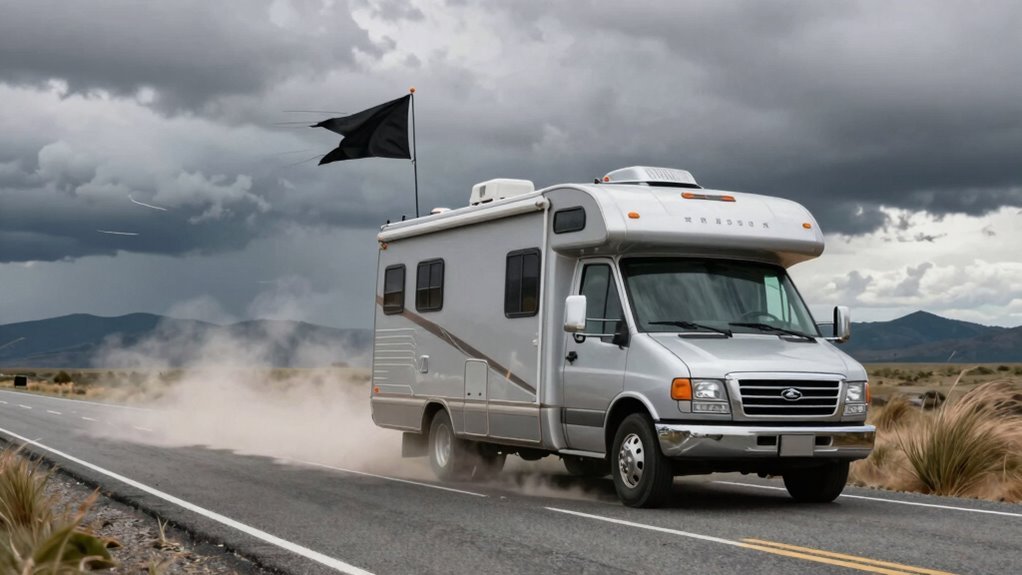
When driving an RV in strong winds, it’s crucial to act smart and stay prepared. Check weather forecasts using reliable tools like RV Weather or WILMA to avoid being caught off guard.
Slow down to 55 mph or less, especially if your RV is tall or lightweight, as these are more vulnerable to wind gusts. Always grip the steering wheel with both hands and make smooth, controlled movements to maintain stability.
Keep a safe distance from other vehicles to allow extra reaction time during sudden wind shifts. Avoid windy highways when possible and choose routes shielded by terrain, such as those near hills or natural windbreaks.
Remember, when driving an RV in strong winds, stay calm and don’t fight the gusts—it’s not a tug-of-war with Mother Nature.
Check Weather Conditions Before You Drive
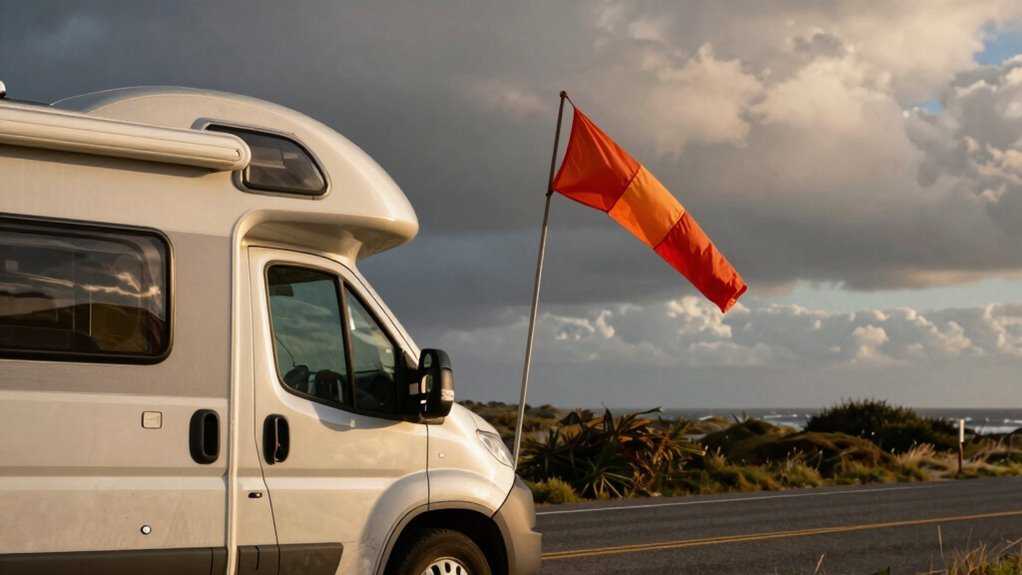
Before you hit the road, especially when strong winds are in the forecast, taking a few minutes to check the weather can save you a white-knuckle ride—or worse.
You’ve got tools like RV Weather and WILMA giving you real-time, animated maps of wind, rain, and road hazards across the U.S.—updated every hour!
SureRoute even plans your route around bad weather based on your RV’s size and your comfort level.
These forecasts pull data from up to 171 models, so they’re not just guessing.
NOAA’s point forecasts and weather radios keep you alert without needing Wi-Fi—perfect for remote spots.
Full-timers swear by them, dodging storms like weather ninjas.
Think of it as your RV’s crystal ball: accurate, reliable, and kinda magical.
Skip the surprises, stay safe, and let Mother Nature know you’re not messing around—checked, prepared, and ready to roll.
Rear Admiral Dave Titley’s forecasting experience helped shape the precision behind these tools.
Reduce Your Speed in High Winds
When the wind starts howling like a pack of coyotes, you’ll want to ease off the gas—fast. High winds turn your RV into a sail, especially if it’s tall or boxy, so slow down to stay in control. At 30 mph winds, drop below 55 to reduce rollover risk, and don’t even think about highway speeds. On secondary roads, aim for 30–40 mph—less wind push and more stability. If gusts hit 40–50 mph, just pull over; no sandwich is worth the tumble. Light RVs get bossed around easiest, so treat them like a nervous dog in a storm—calm and cautious wins the day. Slowing down also saves your nerves, making the drive safer and way less sweaty. Think of it as dancing with the wind, not fighting it—grace over speed, every time. 50-60 mph brings a significant risk of destabilization, especially for taller trailers.
Maintain a Secure Grip on the Steering Wheel
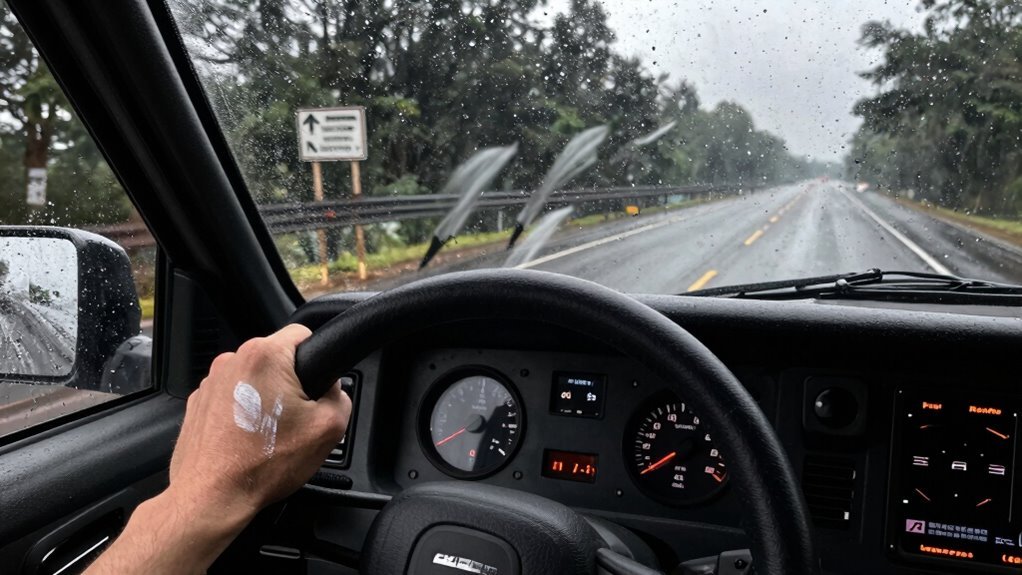
Grab that wheel like you mean it—but not like you’re trying to crush it.
Keep both hands on the steering wheel at all times, so you’re ready when the wind tries to play bumper cars with your RV.
Hold firm, but stay relaxed—think “friendly handshake,” not “death grip of doom.”
That light, steady touch helps you counter sudden wind spikes without over-correcting into the next lane.
When gusts hit—especially near bridges or big trucks—gently steer into the wind, like you’re nudging a swinging door shut.
Smooth moves keep you stable and centered.
Jerky turns? Nope.
Stay calm, press steadily, and let your firm grip do the work.
It gives you the split-second edge you need to react without panic.
Think of it as steering with confidence, not force.
You’ve got this—hands down, you’re in control!
Be especially alert when passing large vehicles, as these moments often bring sudden wind spikes.
Increase Following Distance From Other Vehicles
You’ve got a solid grip on the wheel—awesome.
Now, give yourself more breathing room.
In strong winds, you need space—like, *a lot* more.
Triple your usual following distance, especially since gusts can shove your RV sideways or trigger sudden sway.
The bigger your rig, the more wind loves to push it around.
Keep extra space not just ahead, but on all sides.
If a truck zooms past or the breeze kicks up near an overpass, that buffer gives you time to react.
Aim for 45–60 mph, slower if winds hit 30+ mph—this combo of speed control and space keeps you stable.
And hey, if winds go wild (think 80 km/h or more), just pull over safely.
No shame in waiting out the storm.
You’re not just driving—you’re flying low, and even pilots need room to maneuver!
Stay smart, stay safe, and keep that gap wider than your morning YAWN.
Avoid Wind-Prone Areas and Large Trucks
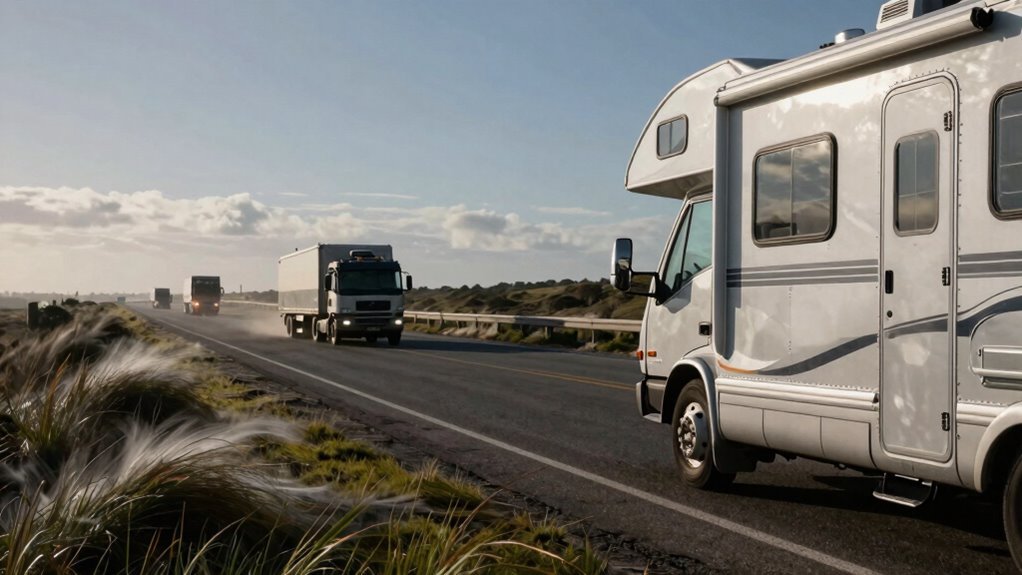
Skip the white-knuckle ride—steer clear of wind tunnels on wheels by dodging those towering semis and sketchy stretches of interstate when gusts pick up.
You’re not just driving; you’re dodging invisible bulldozers in a top-heavy camper.
Big rigs wobble just like you, and when they do, they create sneaky wind currents that can shove you sideways.
Why fight it? Slip onto quieter two-lane roads where trees and hills act like nature’s guardrails.
You’ll breathe easier with fewer 18-wheelers playing bumper cars in the breeze.
Plus, pulling over’s a breeze when you need a sec to regroup.
Stay away from open plains and long bridges—they’re wind’s favorite playgrounds.
Think of it as outsmarting the storm, not just surviving it.
Drive smart, stay small, and let the semis take the beating while you cruise calm.
Your nerves will thank you.
Stay Calm and Steady During Sudden Gusts
When the wind decides to play bumper cars with your RV, staying cool and in control makes all the difference.
You’ve got this—just keep your cool and your hands busy.
Think of your RV as a big sail, and you’re the captain dodging nature’s sneaky gusts.
- Keep both hands on the wheel, white-knuckle tight if you have to, to counter sudden shoves
- Ease off the gas and slow down—speed wobbles make wind push harder
- Watch for flags flapping, tree limbs swaying, or debris flying; they’re nature’s warning lights
- If you feel the RV rocking like a boat, don’t yank the wheel—smooth moves only, no drama
Stay alert, stay loose, and remember: calm drivers beat the wind every time.
Who’s steering? You are—and you’re doing great.
Frequently Asked Questions
Can I Use Cruise Control in Strong Winds?
No, you shouldn’t use cruise control in strong winds—it’s like letting the road take the wheel when things get shaky.
Wind gusts hit your RV like invisible waves, and you’ll need quick reactions to stay steady.
Cruise control keeps your speed locked, so you can’t ease up when a sudden blast pushes you around.
Keep your hands on the wheel, feet ready, and speed in check.
Stay in control, not the cruise!
Should I Lower My Rv’s Awning Before Driving?
Yes, you should lower your RV’s awning before driving—every single time.
It’s not just a good idea, it’s your ticket to avoiding a flapping, flailing disaster.
Wind turns that cozy shade into a giant sail faster than you can say “uh-oh.”
Retract it smoothly, secure it tight, and save yourself hours of stress—and hundreds in repairs.
Think of it like buckling a seatbelt: quick, smart, and totally worth it.
Do Tire Pressure Levels Affect Wind Stability?
Yes, your tire pressure levels definitely affect wind stability—you’re counting on those tires to keep you steady!
Properly inflated tires grip the road just right, helping you stay in control when gusts hit.
Under-inflated tires wobble and overheat, while over-inflated ones bounce like basketballs.
Keep ‘em balanced, check them often, and let your TPMS be your co-pilot—safety’s a team effort, and your tires are the real MVPs on windy roads.
Is It Safe to Drive at Night in High Winds?
Nope, it’s not safe to drive at night in high winds—you’re basically playing RV roulette.
Visibility’s low, gusts sneak up like surprise party poppers, and your tall rig wobbles like a tipsy giraffe.
Crosswinds? Sneaky lane-changers.
Slow down, stay parked, or skip the midnight joyride.
Your future self (and your tires) will thank you.
Stay comfy, not crash-y—safety’s always in style.
What if My RV Starts Swaying Heavily?
If your RV starts swaying heavily, don’t panic—you’ve got this!
First, take your foot off the gas, but don’t slam the brakes; that’ll make it worse.
Grip the wheel firmly and steer straight, resisting the urge to jerk it side to side.
Slow down gently, let the momentum settle, and if you’ve got sway control, trust it to help.
Think of it like dancing with the wind—don’t fight, flow!
Conclusion
You’re gliding down the open road, sun dipping behind the hills, wind whispering through the pines—then *whoosh!* A gust nudges your RV like a playful giant. Stay calm, hands steady, slow and sure. Picture yourself as a leaf riding the breeze, not fighting it. Keep space, keep cool, and remember: you’ve got this. Adventure’s calling, and you’re built for it—one smooth, windy mile at a time.
References
- https://rvweather.com/our-story/
- https://rvweather.com
- https://www.wxforum.net/index.php?topic=38118.0
- https://www.acurite.com/blogs/why-weather-matters/rv-weather-station-benefits-uses
- https://rvweather.com/products/
- https://vansairforce.net/threads/best-tools-and-apps-for-rv-flight-planning-and-weather-briefings.234892/
- https://ambientweather.com
- https://blackhawkcreekrvpark.com/how-much-wind-can-your-parked-rv-withstand/
- https://blog.goodsam.com/how-much-wind-is-too-much-for-your-rv/
- https://customskirting.com/how-much-wind-can-a-travel-trailer-withstand-parked/