Can I Run My RV Fridge on Propane While Driving?
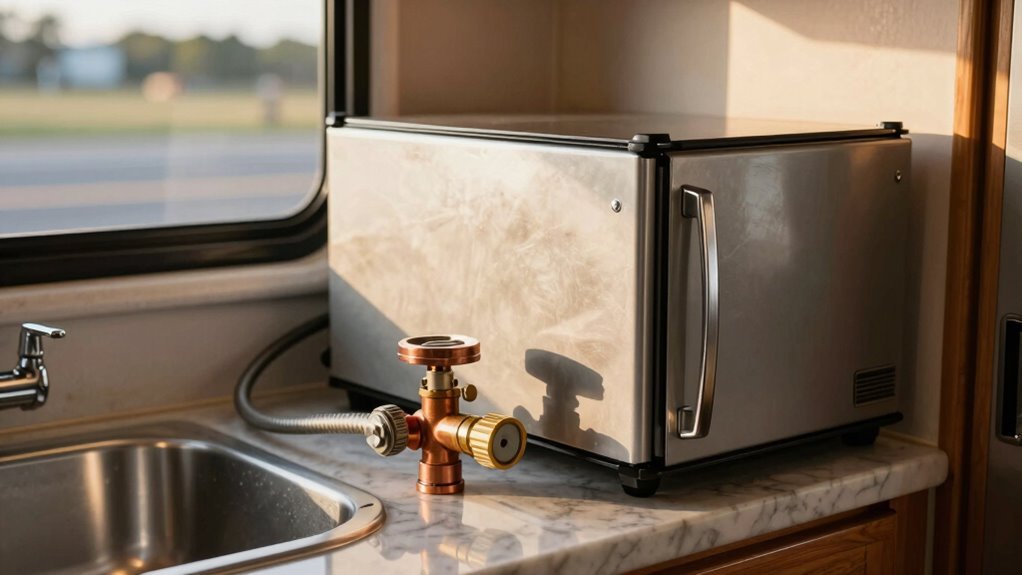
You can run your RV fridge on propane while driving, but it comes with risks. It’s like bringing a tiny campfire along for the ride—cozy if things stay stable, but potentially dangerous if they don’t.
Bumps and vibrations on the road can loosen propane connections, increasing the chance of leaks or fumes entering the cabin. Most RV manufacturers don’t officially approve of running your RV fridge on propane while driving, and safety experts often recommend turning it off during travel.
That said, some travelers do run their RV fridge on propane while driving by ensuring all connections are tight, ventilation is adequate, and gas detectors are working. With proper precautions, the risk can be minimized, but alternatives may offer greater peace of mind.
How RV Refrigerators Use Propane
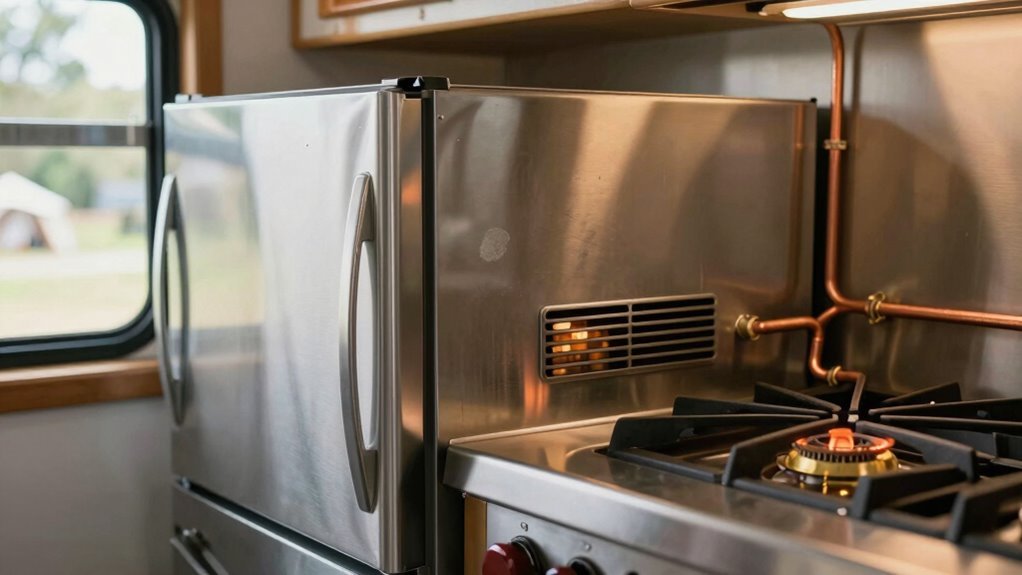
Ever wonder how your fridge stays cold out in the middle of nowhere, with no power hookups? You’ve got propane to thank!
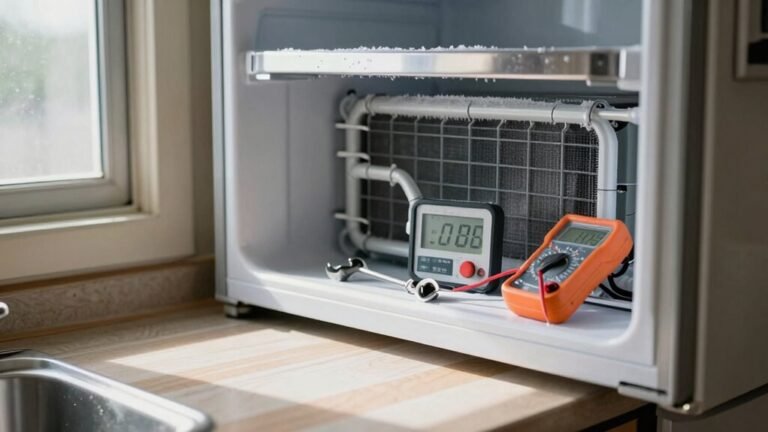
It fires up a tiny flame inside your RV fridge, heating a mix of water and ammonia.
That little boiler sends ammonia gas soaring upward, leaving water behind—kind of like a science experiment you’d ace on the first try.
The gas then cools in the condenser coils, turning back into a liquid so it can sneak into the evaporator.
There, it teams up with hydrogen gas and—boom!—instant chill mode.
This cool duo slurps up heat from your snacks and drinks, keeping last night’s leftovers as frosty as a mountain stream.
The cycle repeats, nonstop, using nothing but your propane tank’s steady flame.
It’s smart, simple, and honestly? Kind of a quiet hero of your road trips.
And remember, this entire cooling magic relies on gravity and circulation, so keeping your RV level is key for it to work properly.
Safety Risks of Running Propane Appliances While Driving
While your RV fridge hums along on propane, keeping your soda frosty and your cheese cool, hitting the road with it running turns that convenience into a risky game of chance.
Bumps and vibration can loosen lines, sparking leaks you won’t smell until it’s too late.
That invisible gas mixes with air, and boom—any spark, even from a light switch, could light up your ride like a campfire (not the fun kind).
Worse, accidents might rupture tanks, spray freezing liquid propane, or ignite hidden carbon monoxide sneaking through your cabin.
Your detectors help, but they’re not superheroes—especially if overdue for replacement.
And let’s be real: no cheese platter is worth turning your cozy camper into a rolling science experiment.
Play it safe, shut off the propane, and save the chill for when you’re parked and relaxed.
Your snacks—and your crew—will thank you.
Traveling with propane appliances is discouraged for safety, and switching to electric power while driving aligns with the best practice of minimizing risk on the road.
Manufacturer Guidelines on Propane Use During Travel
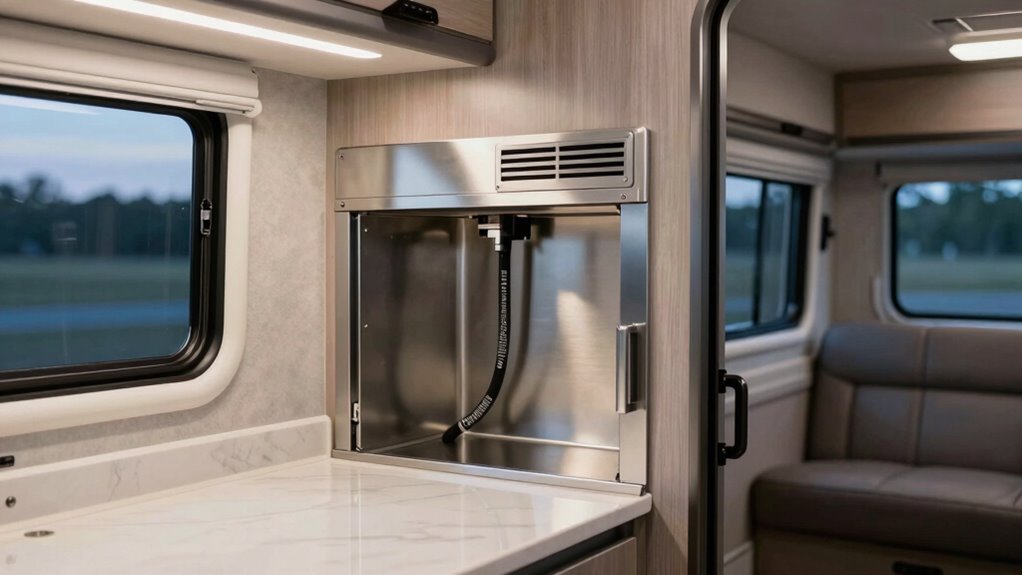
You wouldn’t toss a lit match into a gas station just to save time, so why roll down the highway with your RV fridge burning propane?
No manufacturer tells you it’s okay—none.
Companies design your absorption fridge to cool while you drive, sure, but they all say: turn off the propane.
Safety comes first, and they’re clear—when moving, skip the flame.
Even RVSEF research agrees: shut it down while rolling.
Manuals stress leveling when parked, but stay mum on driving with propane, which speaks volumes.
You might hear fellow travelers say, “I do it all the time,” and maybe they’ve had no issues, but that doesn’t mean it’s approved.
Trust the folks who built it: they’ve got your back, not your grill.
Play it smart, not risky—your rig’s worth more than a shortcut.
Propane options while driving come with serious safety and regulatory concerns, making them inadvisable despite convenience.
Potential Dangers of Propane Leaks on the Road
Imagine this: your RV humming down the highway, coffee brewing, tunes playing—everything’s perfect until a silent, invisible threat starts creeping through the cabin.
That’s right—a propane leak could turn your happy road trip into a scary situation fast.
Leaks can happen when bumpy roads loosen connections or appliances shift, letting gas escape.
And since propane is highly flammable, any tiny spark from a light switch or engine could ignite it instantly.
Yikes!
Even worse, the gas can push out oxygen, leaving you dizzy or worse without warning.
Liquid propane leaks bring frostbite risks—ouch!
Plus, you can’t smell carbon monoxide if a burner goes bad.
It’s like a sneak attack.
While the odds might seem low, the stakes are sky-high when you’re moving.
So, while your fridge *can* run on propane, ask yourself: is that cold butter worth playing gas-leak roulette?
Safety first, adventurer!
Legal Regulations and State-Specific Restrictions
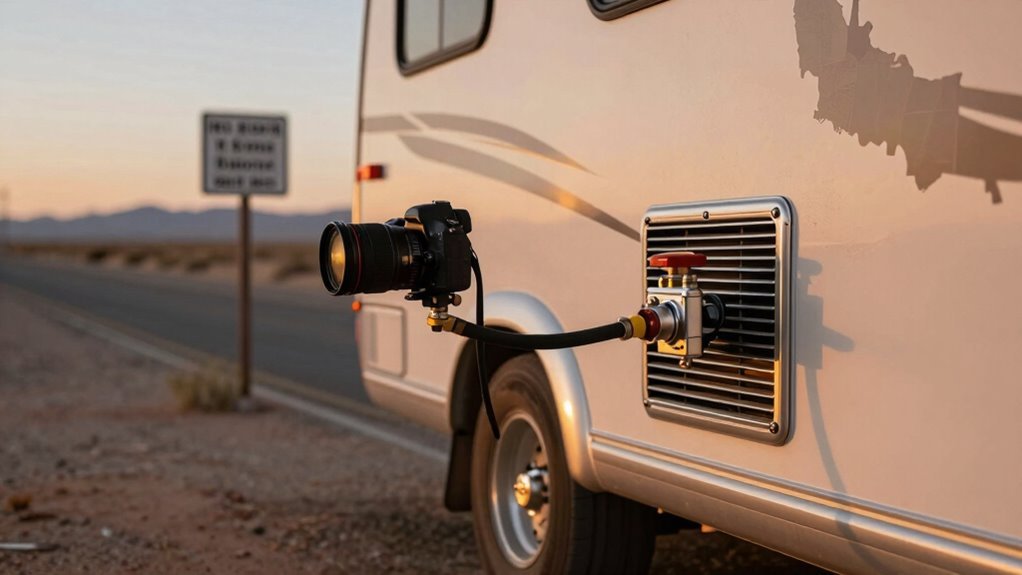
You’re cruising down the road, fridge humming along on propane, and everything feels just right—until you wonder, “Wait, is this even allowed?”
Good news: most states say yes, but with a few important rules you’ll want to keep in mind.
The feds don’t ban running your fridge, but they *do* insist your propane tank is secured outside, never inside the cabin.
Sounds smart, right?
But watch out—some states play hardball.
New Jersey? No open propane on highways.
New York tunnels? Forget it.
Virginia and Texas let you roll with tanks but demand shutoffs in tunnels.
Massachusetts says “not in mine” to I-90 and I-93.
Laws change faster than a road trip playlist, so check before you go.
Yeah, most places are cool with a lit fridge, but when you hit a tunnel or bridge, play it safe—click it off.
Your snacks will survive, we promise.
Ventilation Requirements for On-the-Go Operation
While your RV rolls down the highway, that propane fridge humming away in the background needs more than just a full tank to stay safe and efficient—proper ventilation is key.
You’ve gotta let those fumes escape, not cozy up inside your rig.
Ventilated compartments keep gas from pooling around your fridge or tanks—because nobody wants a surprise whoopee cushion with explosive consequences.
Make it a habit to check vents before hitting the road; a quick peek can save a major headache.
Poor airflow turns small leaks into big dangers, especially while bouncing down winding roads.
Think of your vents like tiny superheroes, always on duty.
Keep them clear, keep them open, and your fridge (and you) will breathe easier—literally.
A well-vented system means cool food, clean air, and peace of mind, so don’t skip this critical step.
Safe travels start with a little fresh air!
Comparing Propane vs. Electric: Efficiency and Impact
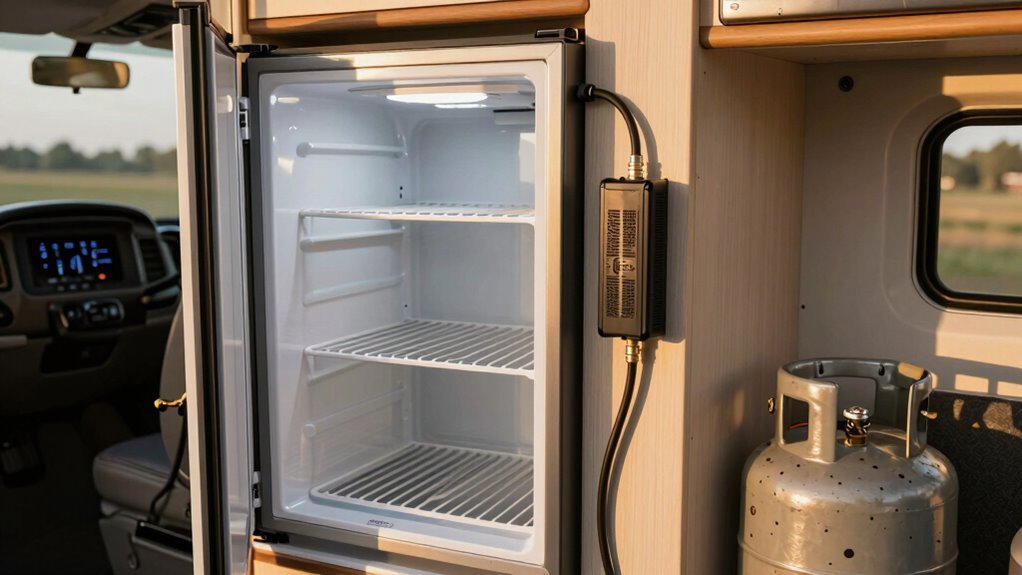
So, which keeps your cold drinks colder without draining your power or peace of mind—propane or electric? If you’re plugged in most trips, electric’s your buddy.
12V compressor fridges cool faster, run quieter, and sip power instead of guzzling it.
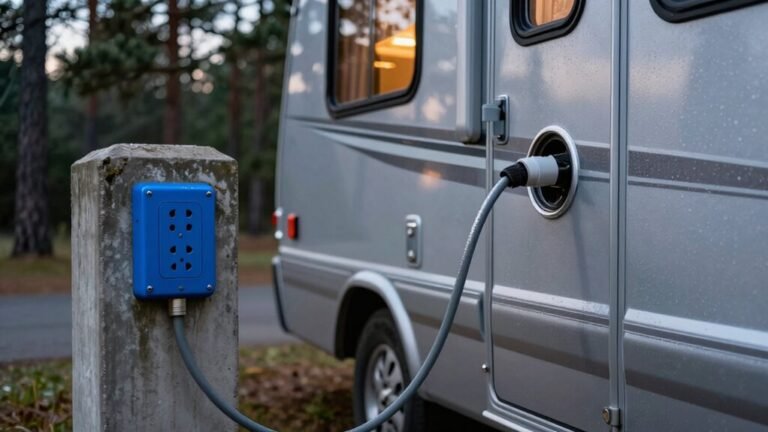
They switch smoothly between shore power and battery, so your drinks stay frosty without killing your house battery.
Propane? It’s great off-grid, sure—but absorption units are slower, less efficient, and drain your 12V faster than you’d think.
Plus, they sputter in hot weather like a camel in a sauna.
Electric compressors? They laugh at 30-degree heat.
You also skip the gas leaks, fire risks, and constant vent checks.
Bottom line: electric wins on efficiency, safety, and solid cooling.
Propane’s handy when you’re truly off the grid, but electric? It’s like giving your fridge a smart upgrade—cooler, calmer, and way less drama.
Tips for Safely Using Propane While Traveling
Propane mightn’t win every round in the fridge fight, but when you’re chasing remote trails and dry camping under starlit skies, that little blue flame still brings serious charm.
Just keep it safe, not sorry—turn off your propane while driving, even if most states allow it.
Skip the risks: tunnels, bridges, and ferries often say “valves closed, please!”
Store tanks outside only—never in the cab or on the roof, unless you enjoy playing chicken with gravity.
Make sure they’re OPD-equipped and professionally installed—no DIY magic here.
Check connections after bumpy roads, test smoke and CO detectors monthly, and know how to shut things down fast in an emergency.
It’s not paranoia; it’s peace of mind.
And hey, if your propane system were a campfire, you’d want it cozy, not crazy—so keep it cool, certified, and under control.
Safety’s the best sidekick for adventure.
Alternative Cooling Solutions for Road Trips
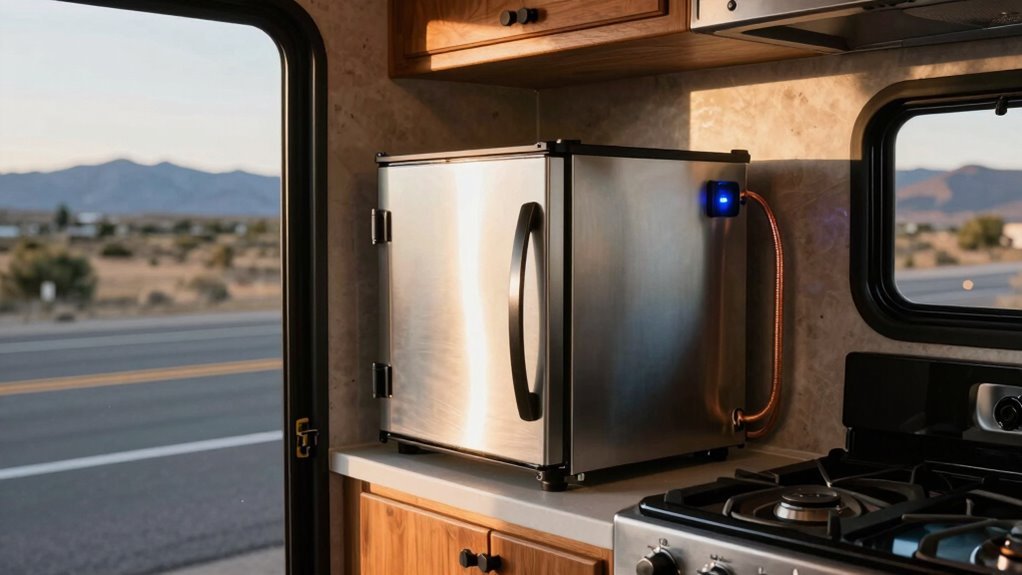
If you’re not all in on propane, no worries—your RV fridge can still stay frosty with a few smart tricks and upgrades.
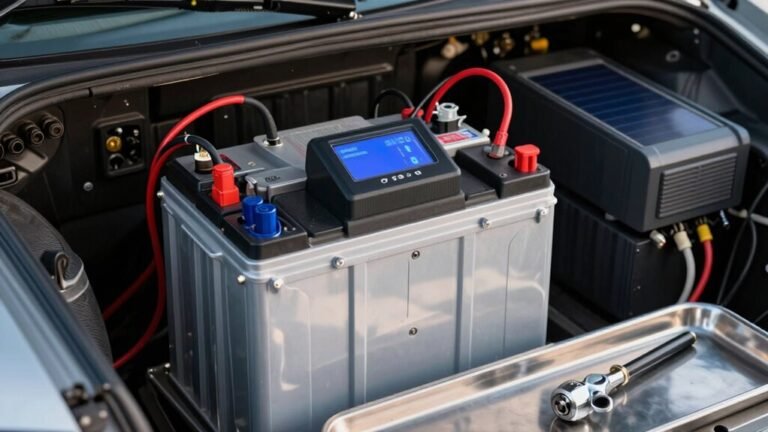
Plug in an inverter to your fully charged deep-cycle battery, and let it power your fridge on the go—just keep an eye on those levels so you don’t get stranded without cold snacks.
Pre-cool your fridge, pack it tight with chilled goodies, and toss in some ice packs or frozen water bottles to fight the heat.
Use a little fan to boost airflow around vents, and make sure seals are tight and clean.
In dry climates, a swamp cooler can be your best buddy.
And hey, when in doubt, a few strategic ice cubes and minimal door peeking can stretch cold temps for hours.
You’ve got this—coolness is totally within reach!
Frequently Asked Questions
Can I Run My RV Fridge on Propane in Tunnels?
Nope, you can’t run your RV fridge on propane in tunnels—sorry!
Most states ban it outright for safety, like in New York’s tunnels or Virginia’s bridges.
Propane’s a no-go in tight, enclosed spaces where gas could build up.
You’d need to shut it off before entering.
But hey, your food won’t mind!
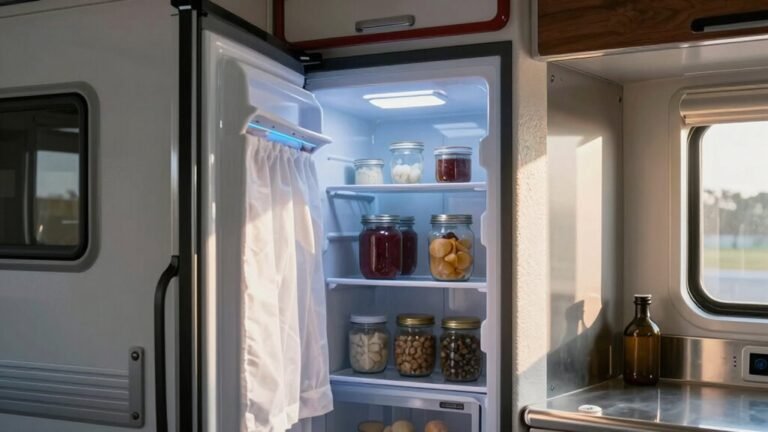
Fridges stay cold for hours, especially with some ice packs and pre-chilling.
Just flip the propane back on once you’re through—simple as that!
Does Driving Affect Propane Fridge Cooling Performance?
Yeah, driving totally messes with your propane fridge’s cool groove—imagine winds howling, bumps bouncing, and your poor flame doing a nervous dance.
One rough turn, and *poof*, it’s out like a candle in a hurricane.
Even if it stays lit, air chaos inside kills efficiency.
But hey, pre-chill it, keep the door shut, and you’re golden for hours.
Pro tip: treat it like a drama queen—minimize the stress, and it’ll behave just fine.
Will Propane Use Void My RV Warranty?
No, running your RV fridge on propane won’t void your warranty by itself—you’re good there.
But skipping annual maintenance? That’ll do it fast.
Keep those service records like treasure, since proof of checkups is a must.
And hey, don’t turn your RV into a science lab with sketchy mods—warranty poof!
Just treat it right, and you’ll stay covered, cool, and grilling cheese sandwiches worry-free.
How Often Should I Inspect My Propane System While Traveling?
You should check your propane system like it’s your RV’s pulse—keep it strong and steady.
Do a quick soapy-water leak test after every refill, it’s easy and fun—bubbles mean trouble!
Give hoses and connections a once-over monthly, and don’t forget to flirt with your tires and fluids too.
Annually, let a pro dive deep with tools that actually *speak* propane.
Stay sharp, stay safe, and let the road treat you right!
Can I Use Propane if My RV Is on Uneven Terrain?
No, you shouldn’t use propane if your RV’s on uneven ground—leveling matters more than you’d think!
The fridge’s cooling system can go haywire, risking overheating or even damage.
Plus, bumps and slopes might snuff out the flame mid-drive.
It’s like trying to cook pancakes on a rollercoaster—messy and risky.
Play it safe, skip the tilt, and save the propane fun for when you’re parked and stable!
Conclusion
You can run your RV fridge on propane while driving, but it’s a gamble—like playing fridge Jenga with safety. Manufacturers often say “hold up,” and some states flat-out ban it. Leaks? Big no-no on bumpy roads. If you do, keep vents clear and nose sharp for gas smells. But hey, why risk it? Electric or portable coolers might just be your cooler sidekick. Stay safe, stay cool, and let’s keep the adventure rolling—without the gas drama!
References
- https://artofrv.com/all-you-need-to-know-about-rv-propane-refrigerators/
- https://www.youtube.com/watch?v=32pPaso0k6E
- https://www.ecoflow.com/us/blog/how-to-run-rv-fridge-on-propane
- https://www.escapees.com/blog/rv-refrigerator-part-2-lp-gas-operation
- https://www.youtube.com/watch?v=cy1W-uWvR9U
- https://www.youtube.com/watch?v=npINrvUyiCc
- https://www.harvesthosts.com/blog/safe-usage-propane-rv
- https://gasstopusa.com/propane-tank-safety-heres-what-every-rv-owner-should-know/
- https://www.youtube.com/watch?v=4qOjEiteZxA
- http://www.amerigas.com/amerigas-blog/propane-safety/rv-propane-safety