Propane Safety Tips for RV Owners
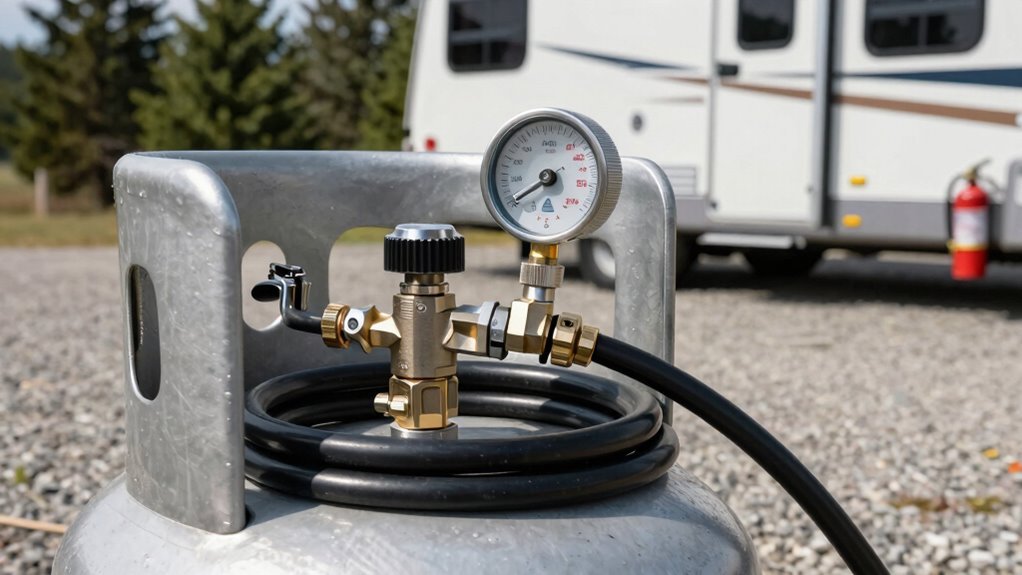
Propane safety is essential for every RV owner. Keep your hoses in good condition—check for cracks, kinks, or leaks with a bubble test, and replace them like you would expired snacks.
Check your propane tank regularly for rust, dents, or damage. Install propane detectors near the floor, since propane is heavier than air and settles low.
Always shut off the propane supply when traveling or not in use. Store tanks upright and secure them to prevent tipping or damage.
Never use outdoor camp stoves or grills inside your RV—this creates a serious propane safety hazard. If you smell gas, turn off the supply immediately and ventilate the area.
Check Propane Hoses and Connections Regularly
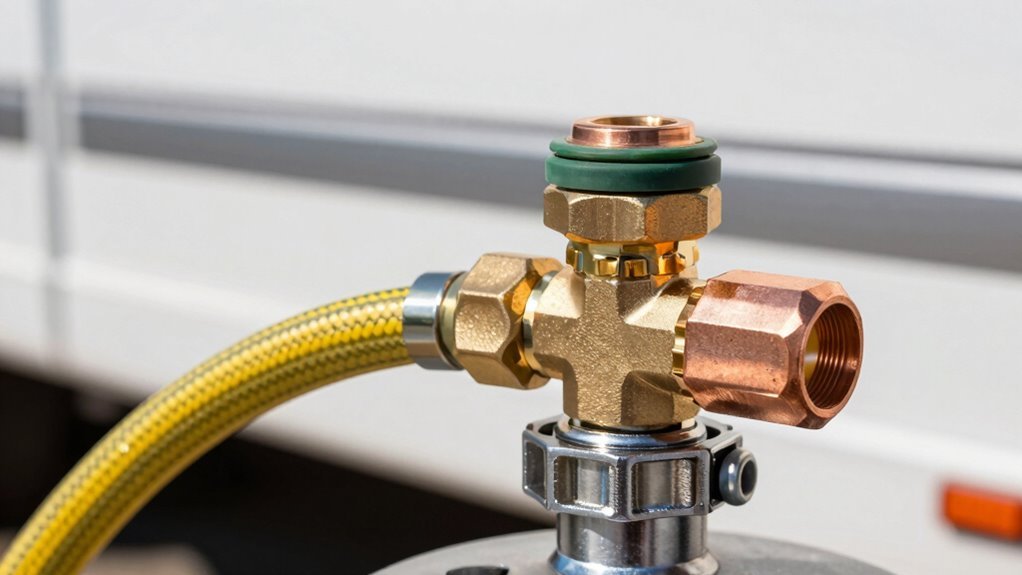
Keeping your rig running safely starts with a little hose TLC—because nobody wants a surprise propane party they didn’t plan!
You grab your soapy water or leak solution and smear it on every connection, hose end, and fitting—bubbles mean trouble, and you fix it fast.
You check for cracks, kinks, or stiffness in the hoses; sun, road grit, and time can make them brittle.
If they feel crunchy or look worn, it’s swap time.
You snug down fittings—but don’t over-tighten, or you’ll mess up the threads.
Rubber hoses usually last 2–3 years, so you track age like a pro.
Before every trip or tank swap, you give everything a once-over.
You keep vents clear of bugs and nests too—nature loves to crash your setup.
And hey, no tape on those threads!
Just clean, tight, and leak-free.
Expire dates matter—check your propane tank’s certification date stamped on the collar, because an expired tank can’t be refilled and could cut your trip short.
Safety’s not boring when it saves your bacon!
Inspect Your Propane Tank for Damage and Corrosion
While you’re checking your rig for road-readiness, don’t forget the star of your outdoor cooking—your propane tank—because even the toughest-looking cylinder can hide a case of the rusties.
A quick once-over could save you a world of trouble down the road (literally).
Here’s what to look for:
- Scan for rust, corrosion, or pitting, especially on the bottom—think of it as a spa day where you’re hunting for blemishes.
- Check that the footring, neckring, and valve cover are intact—no missing parts allowed!
- Hunt for leaks, dents, bulges, or cracks—anything fishy means no fill-up.
- Shine a flashlight around valves and labels; use a mirror to peek at tricky spots.
- Peek at the date stamped on the collar—recertify every 10 years, then every 5.
- Portable DOT cylinders require recertification by certified professionals using specialized equipment, so make sure your tank is up to date with its DOT recertification.
Install and Test Propane and Carbon Monoxide Detectors
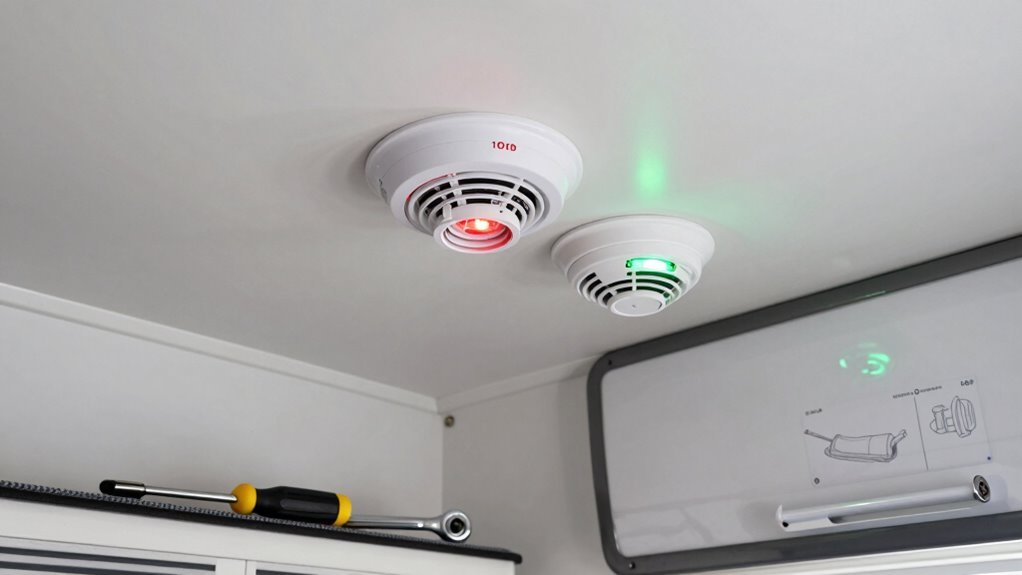
You’ve given your propane tank the once-over, hunted down rust like a pro, and made sure it’s in tip-top shape—great job!
Now, let’s get smart about sniffing out sneaky gas leaks.
Install propane detectors near the floor in the kitchen, within 4–18 inches of appliances—propane’s heavier than air, so it sinks like your socks after a long road trip.
Keep them clear of furniture and drapes.
Before swapping the old unit, cut the 12-volt power—safety first!
Match red to red, black to black, cap those wires tight, and tuck them neatly behind.
Screw in the new detector, flip the power back on, and hit the test button.
If it beeps? Perfect!
Check the blinking light too.
Test the sensor with a quick puff of gas (no flames, please—don’t go *up in smoke*).
Replace detectors every 5–7 years, even if they’re still playing deadpan.
Enclosed space helps trap propane near the detector for faster leak detection.
Turn Off the Propane System When Not in Use
When the road calls and you’re ready to roll, flipping off your propane system isn’t just a smart move—it’s your RV’s safety seatbelt.
You wouldn’t drive with the stove on, right?
Turning it off keeps things safe, simple, and stress-free.
- Shut off propane during travel to stop leaks from turning into disasters
- Depressurizing the system reduces wear and gives seals a break—because even your RV needs a vacation
- Automatic shutoffs like GasStop kick in if you forget, like a helpful co-pilot with zero patience for gas leaks
- No pressure means fewer surprises—especially when you’re hours from home
- Peace of mind? Priceless. Plus, your family stays safe without lifting a finger
Make it a habit, and you’ll wonder how you ever drove without it—safety has never been this easy.
Properly Store and Secure Propane Tanks During Travel
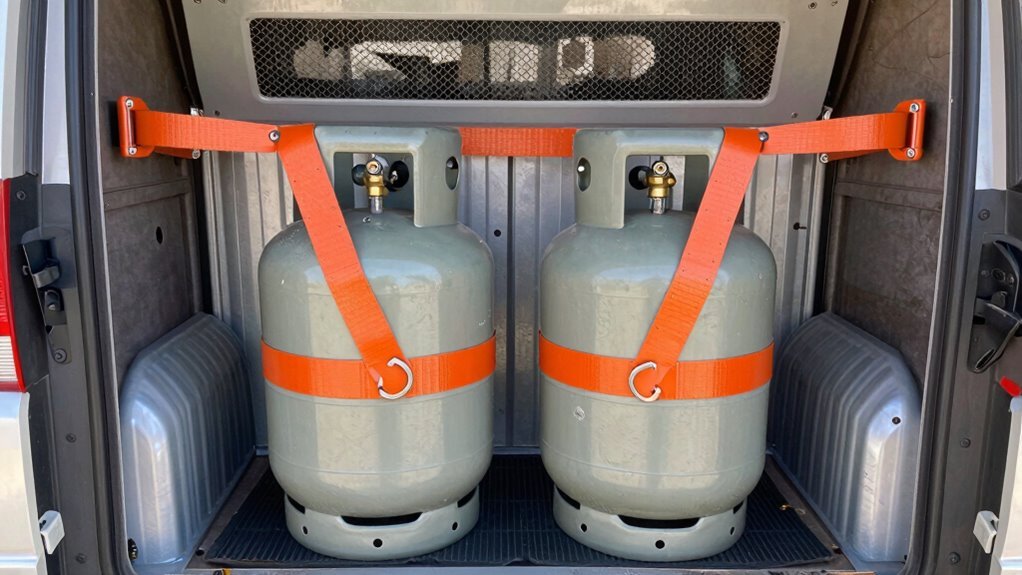
Keep your propane tanks happy and secure on the road—because a wobbling cylinder is a one-way ticket to chaos.
Always store them upright so liquid propane doesn’t mess up your system or leak dangerously.
If you’ve got a travel trailer or fifth wheel, use those built-in holders—they’re perfect for keeping things stable.
No bed space? Wedge tanks safely between seats or use a milk crate in the trunk.
Invest in a Tankfoot or EZGO holder; they’re tough, rust-resistant, and hold two tanks like a pro.
Never lay them down or upside-down—seriously, that’s asking for trouble.
Keep them out of blazing sun, too, since heat makes propane expand (80% fill is ideal).
Secure valves in the OFF position, toss on a protective cover, and double-check straps for wear.
And remember—four small tanks max in your SUV, but never超过90 pounds.
Safety never takes a vacation!
Never Use Outdoor Propane Appliances Indoors
While it might seem like a quick fix on a chilly night, firing up your outdoor propane heater inside the camper or garage is a terrible idea—like inviting trouble to a slumber party.
You’re playing with fire—literally and dangerously.
Outdoor propane gear isn’t built for indoor use, and using it inside puts you at serious risk.
Keep yourself and your crew safe with these quick tips:
- Outdoor heaters and stoves can poison you with invisible, deadly carbon monoxide—no sneaking them inside!
- Propane vapor chokes your lungs by pushing out oxygen—breathe easy by using gear where it belongs: outside.
- These appliances lack indoor safety features—don’t risk a spark that could turn your RV into an inferno.
- It’s actually illegal to use large propane tanks indoors—skip the fines and the danger.
- Proper ventilation? Outdoor units don’t cut it—stick to equipment made for life inside your RV.
Know How to Respond to a Propane Leak
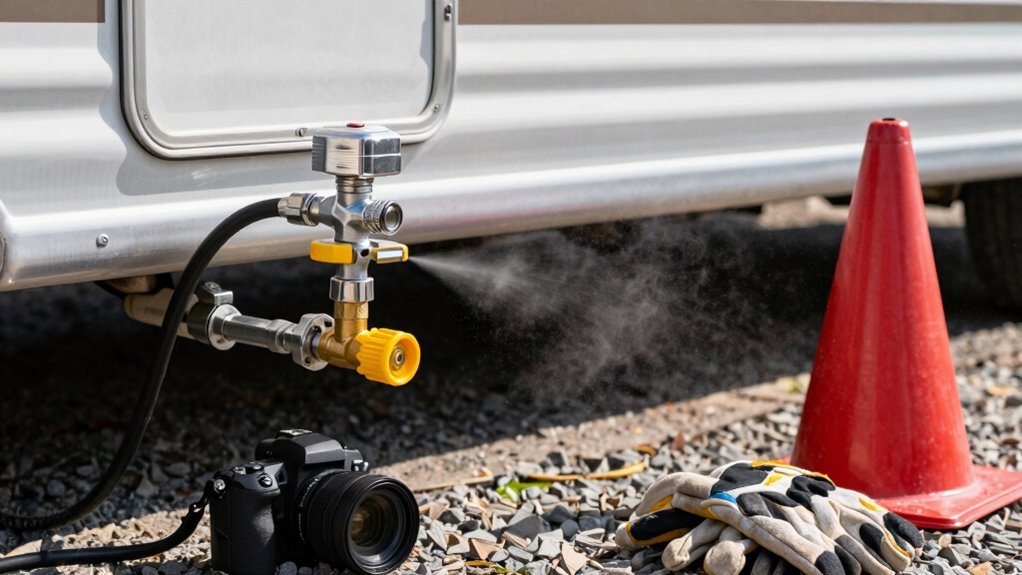
What if you suddenly catch that rotten egg smell—or your detector starts beeping like it’s throwing a tantrum? Don’t panic—just act fast!
Turn off the propane tank valve clockwise and get everyone out of the RV ASAP. No selfies, no grabbing snacks—just go.
Once you’re safely away, call 911 and your propane guy.
No lighters, phones, or even a sneeze near the RV—propane’s no joke.
After the all-clear, open all windows and doors to let that stink fade.
Want to play detective? Mix dish soap and water, then slather it on connections—if bubbles pop up, bingo, you’ve got a leak.
Tighten fittings or swap hoses, then retest.
When in doubt, call a pro.
And hey, a GasStop gadget can help monitor pressure like a mini security guard.
Stay safe, savvy traveler—your cozy camper’s only fun when it’s leak-free!
Frequently Asked Questions
How Often Should I Have My RV Propane System Professionally Inspected?
You should get your RV propane system professionally inspected every year—it’s a must-do, not a maybe.
Spring’s the perfect time to knock it out before road trips heat up.
Trust me, those certified techs catch sneaky stuff you can’t, like hidden leaks or wonky regulators.
It’s like a checkup for your RV’s heart.
Stay safe, save headaches, and keep your adventures worry-free!
Can I Use My RV Propane Fridge While Driving?
You *can* run your RV propane fridge while driving, but you really shouldn’t—safety first, right?
Bumps, crashes, or even just a tilt can turn that cozy chill into a chilly disaster.
Frostbite from leaks? No, thanks!
Instead, switch to 12V power or pre-cool with ice packs.
Most experts say, “Propane off, tunes on!”
Keep cool—literally *and* figuratively—so your road trip stays fun, not frightful.
What Should I Do if My Propane Detector Keeps Chirping?
You’re hearing that chirp again—annoying, right?
First, don’t panic, but don’t ignore it either.
Check if the battery’s low or if the unit’s past its 5-year life span.
Could a propane leak be lurking?
Better safe than sorry.
Inspect connections, sniff for gas, and test the alarm.
Cleaners or old wires might trick it.
Still chirping?
Time for a swap—quick, easy, and way cheaper than a campfire mishap!
Is It Safe to Refill Disposable Propane Cylinders?
No, you shouldn’t refill disposable propane cylinders—they’re not built for it, and trust me, you don’t want a surprise fireworks show on your campsite.
They lack safety valves for refilling and can crack or explode under pressure.
It’s like trying to pump air into a juice box—things will go sideways fast.
Just swap ‘em out at a refill station.
Safe, simple, and no drama.
Can Extreme Temperatures Affect My RV Propane System?
Yeah, extreme temps really mess with your RV propane system.
Hot days make propane expand fast—like a shaken soda—so keep tanks shaded and never roast them in full sun.
In freezing weather, propane slumps like you on a Monday—barely vaporizing, so wrap your tank and monitor levels.
Stay on top of it, and you’ll keep cooking, heating, and adventuring without drama.
Your propane’s got drama, but you’ve got the plan!
Conclusion
You’re cruising down the open road, wind in your hair, when—wait—do you smell that funny odor? Don’t panic, but now’s the time to act. Knowing these propane safety tips means you’re ready, not rattled. Stay sharp, stay safe, and keep adventures fun, not frantic. Because nobody wants their dream trip turning into a hissing horror story. Stay smart, stay smiling, and let the good times roll—safely.
References
- https://bluemoonrv.com/how-to-safely-maintain-your-rvs-propane-system/
- https://gasstopusa.com/propane-tank-safety-heres-what-every-rv-owner-should-know/
- https://www.youtube.com/watch?v=QwvxC6XN5AA
- https://beachtruckrvcenter.com/blog/how-to-inspect-and-maintain-your-rvs-propane-system
- http://www.airgear.store/blogs/maintenance-and-inspection/quick-guide-to-rv-propane-maintenance
- https://www.rvtravel.com/inspect-your-propane-rubber-hoses-regularly-or-risk-disaster/
- https://www.kz-rv.com/maintenance-tips/propane-system-leak-inspections/
- https://reelmind.ai/blog/travel-trailer-propane-hose-essential-safety
- http://www.amerigas.com/amerigas-blog/propane-safety/rv-propane-safety
- https://www.outdoorsy.com/blog/rv-propane-tanks-guide