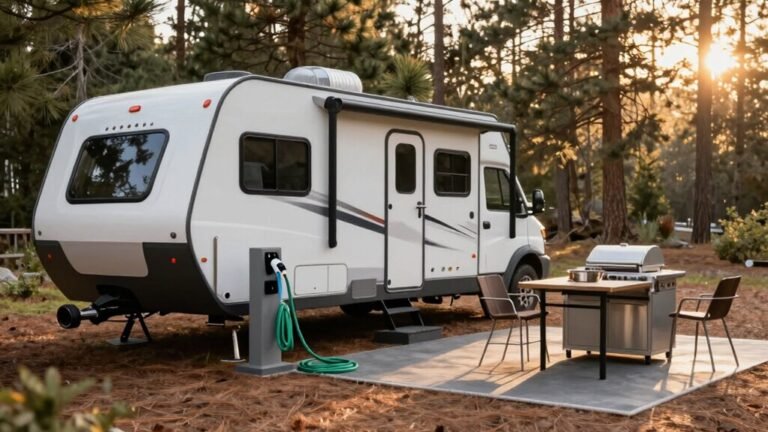
How to Find Free Boondocking Campsites
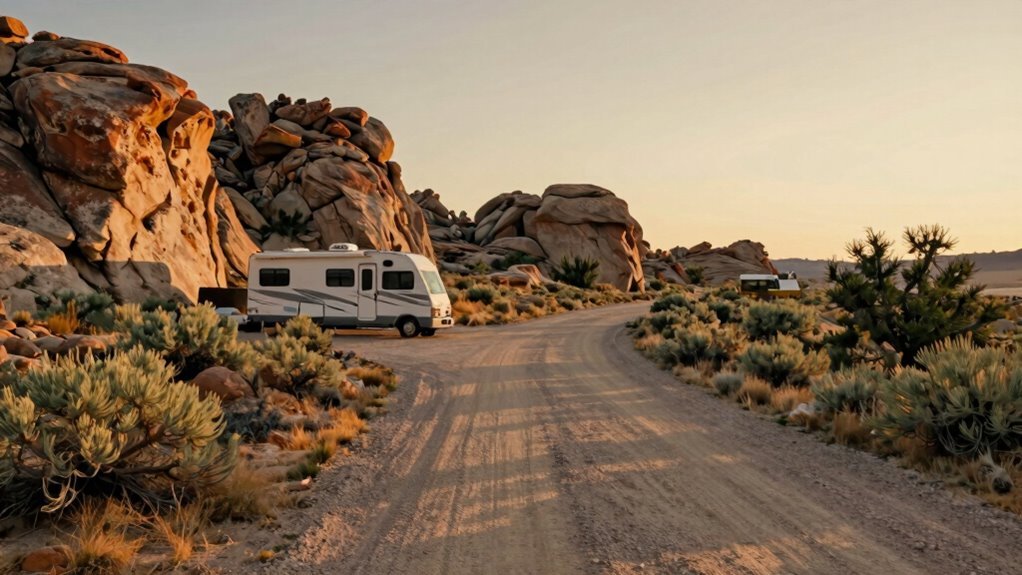
You can find free boondocking spots by exploring BLM and national forest lands—just park within 150 feet of a road and stay 100 feet from water. Use apps like iOverlander or FreeCampsites.net to discover hidden gems, and always check local rules to avoid surprises.
Most free boondocking locations allow stays of up to 14 days, but limits vary by area. Pack out all trash, respect natural surroundings, and leave no trace to help preserve these spaces.
With a little planning, your next epic sunrise is totally free. And the best part? There’s even more free boondocking to explore beyond your first stop.
Understand the Difference Between Boondocking and Developed Campgrounds
While you might think all camping is just about throwing a tent in the woods or parking an RV somewhere scenic,
there’s actually a big difference between boondocking and staying at a developed campground—and knowing it can save you money, boost your adventure level, and maybe even keep you from accidentally showering in a gas station restroom.
Boondocking means going solo—no hookups, no flush toilets, no crowds.
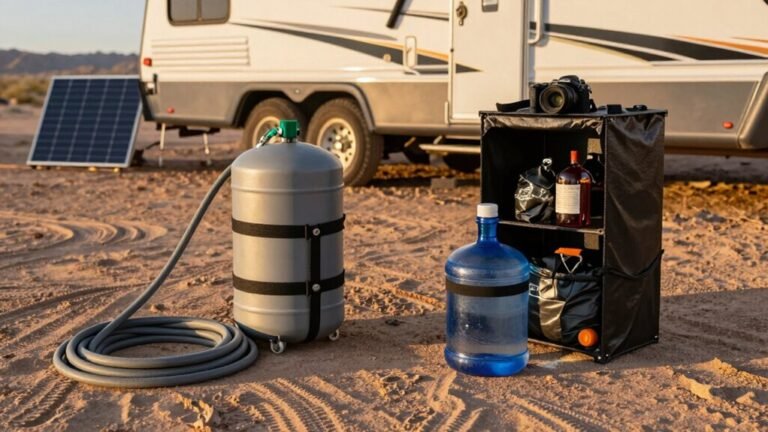
You’re totally self-reliant, powered by solar or batteries, hauling your own water, and packing out waste.
It’s camping on public land, like BLM or national forests, often free and far from the hustle.
Meanwhile, developed campgrounds?
They’ve got electricity, water spigots, showers, and sometimes even little stores or Wi-Fi.
Great for comfort, but pricier and busier.
Boondocking’s your ticket to quiet, solitude, and wilder sunsets—all while saving hundreds a month.
Efficiency-first mindset helps stretch your power and water to stay off-grid longer.
Ready to go off the grid?
You’ve got this.
Explore National Forests for Scenic and Secluded Spots
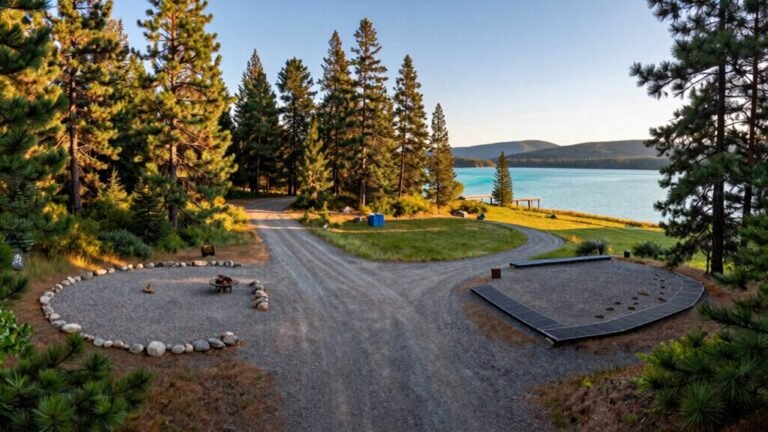
If you’re craving peace, quiet, and a front-row seat to nature’s greatest hits—think misty mornings, towering pines, and stars so bright they look Photoshopped—then national forests are your go-to playground.
Managed by the U.S. Forest Service, these 154 forests span nearly every state and offer free, dispersed camping galore.
Just grab a map, search your chosen forest’s name plus “dispersed camping,” and you’re golden.
Places like Pisgah, Coconino, or Olympic are scenic hideouts begging to be explored.
Park within one vehicle length of a road, walk in, and set up camp at least 100 feet from water or trails.
Stay 14–21 days max, depending on the forest, then move on.
Always pack out trash, bury waste properly, and use only dead wood for fires.
Grab a free fire permit, store food like a bear’s on the loose, and leave no trace—because Mother Nature hates roommates who don’t clean up.
Most National Forests allow camping outside developed areas, so be sure to follow forest-specific rules for dispersed camping regulations.
Utilize Bureau of Land Management Lands for Free Overnight Stays
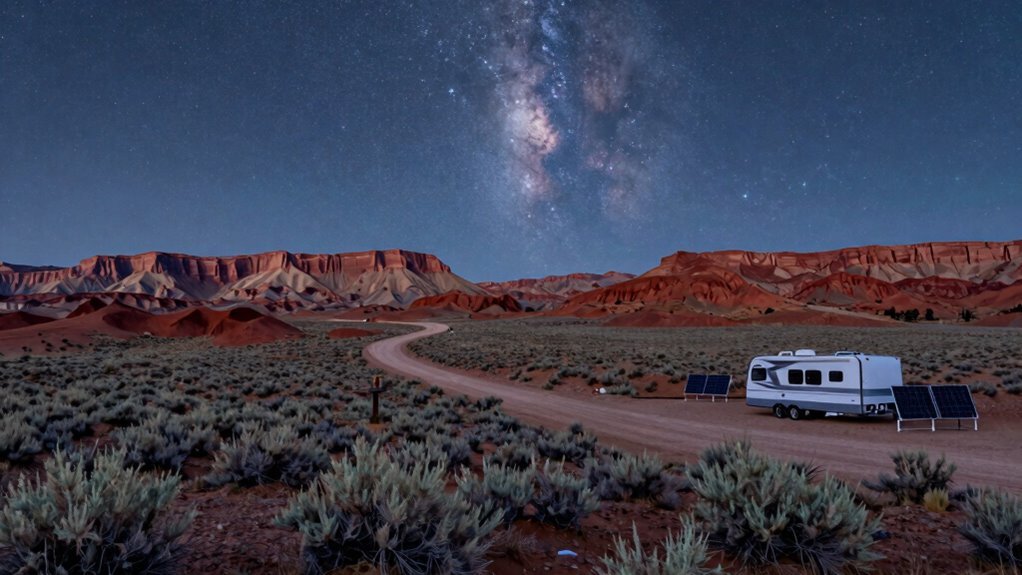
Roll into Bureau of Land Management (BLM) lands and you’ve just struck gold—free, open-to-all overnight camping with endless desert sunsets, red rock vistas, and star-filled skies as your backdrop.
Just don’t overstay your welcome: you can camp 14 days in any 28-day window, then you’ll need to scoot at least 25 miles away for 28 days.
Park within 150 feet of roads, stay 100–200 feet from water, and never disrupt nature—use existing sites, pack out trash, and bury waste properly.
Fire pits? Use old rings or a pan, never cut live trees, and douse flames completely—smoldering embers won’t win you friends.
Stoves are safer anyway.
Avoid spots near developed campgrounds or where signs say “no camping,” and remember, group size over 10 or 2 rigs needs special sites.
Some zones require permits (Cedar Mesa, we’re looking at you), but otherwise, it’s first-come, first-served freedom.
Just leave it better than you found it—Mother Nature’s counting on you.
With BLM managing 247.3 million acres, opportunities for boondocking are vast across the western U.S.
Discover Hidden Gems on U.S. Army Corps of Engineers Property
Where can you pitch your tent or park your rig for free with a view of sparkling water and tall trees, all without dodging crowds or digging into your wallet?
Right on U.S. Army Corps of Engineers land!
Hidden gems pop up near rivers and reservoirs where primitive sites give you front-row seats to nature’s best scenery—no fees, no fuss.
Though most spots charge, plenty of free options blend in near the paid campgrounds.
Use the Boondocker’s Bible map or search Corps district websites by lake or state to find them fast.
You’ll often score picnic tables, fire rings, water, and boat launches, plus trails and clean restrooms.
Just don’t overstay—14 days within 30 is the rule.
And guess what? You don’t need a badge or membership.
Just roll in, relax, and enjoy lakeside serenity without spending a dime.
Who knew Uncle Sam could be such a great camping buddy?
Leverage State and County Parks With Free Dispersed Camping
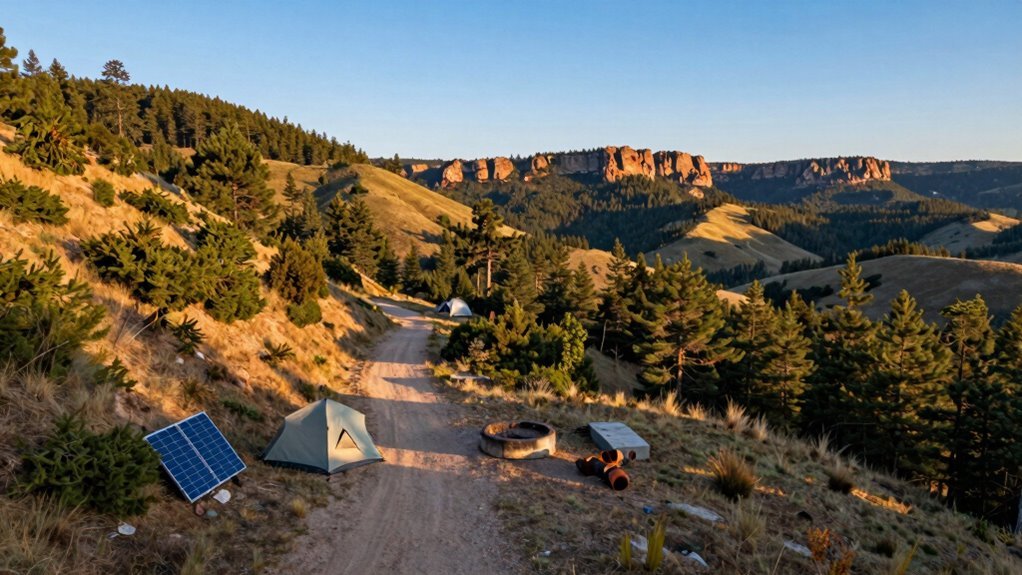
You’ve already scored some sweet lakeside spots on Army Corps land, but guess what?
State and county parks are hiding free dispersed camping gems too!
In Missouri, over 300 conservation areas let you camp free—just hike 100 yards from roads and set up camp.
You can stay up to 14 days straight, but pack out everything (yes, even that chip bag).
Illinois lets you boondock on state land with no entry fee, though beach camping costs just $2 per person.
Just watch for hunting seasons—fewer selfie opportunities when folks are armed.
Always camp 200 feet from streams and use existing fire rings.
You’re self-contained out here, so bring your A-game on waste and water.
No one wants to hike out with soggy socks and leftover trash!
With a little prep, these spots are quiet, scenic, and totally kind to your wallet.
Happy camping—you’re basically a woods wizard now.
Use Reliable Apps and Websites to Locate Free Sites
Finding free boondocking spots doesn’t have to mean wandering aimlessly through the woods like a confused raccoon.
You’ve got tech-savvy tools at your fingertips!
Try iOverlander—it’s free, works offline, and brims with real user reviews and photos.
FreeCampsites.net is another gem, loading fast on your phone’s browser with tons of crowd-sourced spots across the U.S.
For RV adventurers, Boondocker’s Bible overlays public lands on satellite maps so you can scout terrain like a pro.
The Dyrt, the #1 camping app, offers 16,000+ free sites and cool filters for ratings or distance—its PRO version even shows BLM lands and cell coverage.
And don’t skip Campendium, perfect for pinpointing RV-friendly pull-offs with real-time condition updates.
These apps and sites are your ticket to stress-free, scenic campsites—no raccoon antics required.
Tap Into Community Knowledge on Forums and Social Media
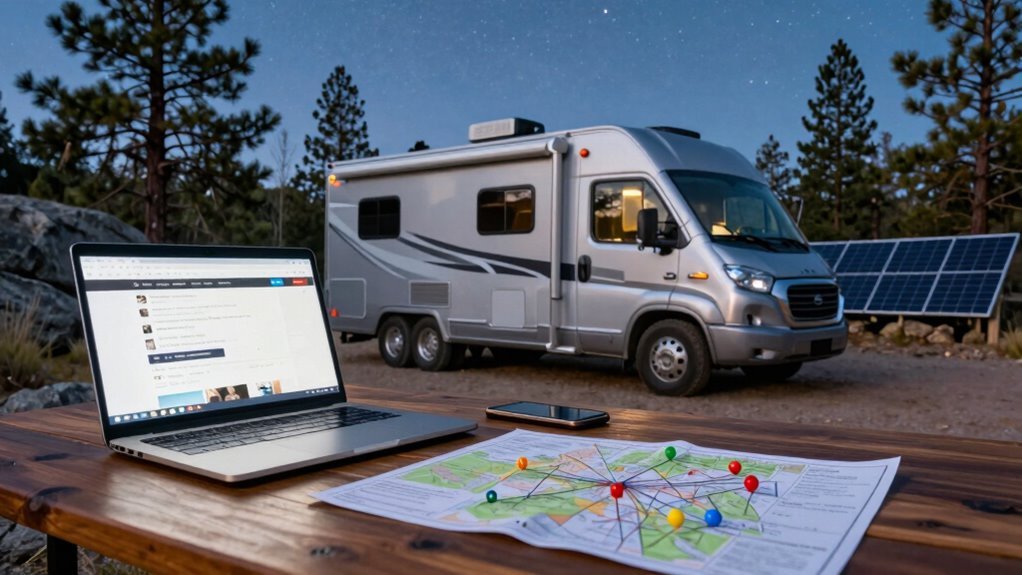
Hitting the open road without a plan? No worries—jump into online forums and social media, where fellow boondockers spill the beans on secret spots and savvy tips.
Check out IRV2 Forums, where seasoned travelers trade advice on everything from tire pressure on bumpy trails to which desert pull-offs fit big rigs.
Facebook’s #Boondocking & Free Camping USA group is gold—you’ll find real-time posts about free sites coast to coast, and members keep it tight by sticking strictly to off-grid talk.
Slack off your learning curve by joining groups like Escapees RV Club or Living the RV Dream, where newbie questions get warm welcomes.
RVillage and Meetup help you link up with nearby RVers, so you can swap stories, share locations, or even team up for a desert sunrise.
These communities aren’t just helpful—they’re like your nomadic family, always ready with a tip, a laugh, or a “Don’t go there—washboard road from hell!”
Practice Leave No Trace Principles While Camping Off-Grid
Roaming wild and sleeping under the stars? Awesome—but tread lightly, friend. Camp at least 200 feet from water and trails, and stick to durable spots like rock or gravel.
Stay just a night or two, and avoid carving new paths. If you’re in a pristine zone, spread out your tents and activities so you don’t start a new trail by accident.
And when you leave? Naturalize your site—brush away footprints, scatter pine needles, and make it look untouched. Pack out *everything*, yes, even trash and toilet paper.
Dig catholes 6–8 inches deep, far from camp, and cover them like you’re hiding treasure. Wash dishes 200 feet from lakes, use a tiny bit of biodegradable soap, and scatter strained water.
Skip campfires in untouched spots, or keep them small and clean. Leave rocks, plants, and old artifacts be—let others discover the magic too.
Know the Rules: Length of Stay and Local Regulations
You’ve left no trace, packed out your trash, and ghosted the campsite like a woodland ninja—nice work!
Now, don’t blow it by ignoring stay limits.
Most BLM and National Forest lands let you camp free for up to 14 days in a 28-day period, but you’ll need to move at least 25 miles away before looping back.
Rules reset when you set up camp, so track your dates.
Each person counts, but rangers usually cut you slack if you’re respectful.
Check local signs and websites—some forests or monuments tweak the rules, and fire bans pop up fast in dry heat.
A “no camping” sign means don’t even think about it.
Yeah, some spots allow 16 days, and a few rare gems have longer limits, but when in doubt, assume two weeks max.
Play by the rules, and you’ll keep boondocking free and open for all.
Prepare Your Vehicle and Gear for Remote Locations
Before you vanish into the wild like a modern-day hermit with a GPS and a coffee maker, make sure your rig’s ready for the backcountry spotlight.
Because no one wants a breakdown 20 miles from the nearest gas station and three Wi-Fi bars.
You’ve scouted your spot, but your rig needs TLC before you go off-grid. Don’t wing it—prepare like a pro:
- Inspect your rig’s health: Check tire pressure, test battery levels, verify fluids, and make sure brakes work—no surprises in the sticks.
- Lock it down: Secure slide-outs, disconnect hoses, stow jacks, and double-check lights so you’re road-ready and safe.
- Fortify the interior: Close cabinets, turn off appliances, and stabilize fridge contents—because bumpy roads turn kitchens into obstacle courses.
- Stock up and power on: Pack emergency gear, top off propane, charge solar batteries, and grab your duct tape—yes, it fixes *almost* everything.
Frequently Asked Questions
Can I Boondock With a Small Car?
Yeah, you can totally boondock with a small car—no huge rig needed!
Pack light, use roof cargo boxes, and tuck gear smartly inside.
A Subaru or hatchback works great on flat BLM land or quiet forest roads.
Just scout ahead, avoid muddy spots, and maybe bring a toad vehicle to test tricky paths.
With a cozy setup and the right mindset, your compact car’s got this.
Adventure’s calling—and it fits in your backseat!
Is Boondocking Safe for Solo Campers?
Yeah, boondocking’s safe for solo campers—you’ve got way bigger chances of a curious raccoon stealing your granola than facing real danger.
Did you know 64% of female murder victims knew their attacker? That means strangers are rarely the issue.
Trust your gut, pick smart spots, keep your phone charged, and you’ll be just fine.
Heck, some gals camp solo all over Arizona with zero issues—it’s safer than it sounds!
Are Pets Allowed During Boondocking?
Yeah, you can totally bring your pup boondocking—most BLM and National Forest lands welcome pets with tails wagging!
Just keep them on a leash, clean up their messes (nobody likes surprise poop bombs), and respect wildlife.
Check local rules, ’cause some spots have quirky restrictions.
Your furry co-pilot’s allowed as long as you’re responsible—think of it as a team adventure, not a free-for-all fur festival!
Do I Need a Permit to Boondock?
Nope, you don’t need a permit to boondock on most BLM or national forest lands—freedom’s built right in!
Just stay 14 days max, keep campfires legal with a free California permit, and set up camp away from water.
Pick spots others have used, stay near roads, and you’re golden.
Think of it like nature’s Airbnb—no booking, but don’t trash the place.
Pack it in, pack it out, and leave only footprints!
Can I Use a Generator While Boondocking?
Yeah, you can use a generator while boondocking, but keep it quiet and respectful—nobody wants a 3 a.m. lawnmower concert.
Stick to models under 70 dB, run it during designated hours, and never idle overnight.
Check local rules; some spots ban them outright.
And seriously, don’t cook marshmallows with it—generators aren’t campfires!
Stay safe, stay courteous, and power up smart.
Conclusion
You’re the modern-day pioneer, swapping pavement for pine-scented trails and streetlights for starlit skies. With a little know-how and a thirst for adventure, free campsites wait like hidden treasure. Just pack your sense of humor—alongside your toothbrush—and remember: no coffee drips on the map. Mother Nature’s your host, so treat her right. Now go claim your quiet corner of the wild, you adventurous soul, you.
References
- https://www.marsrvs.com/boondocking-vs-campground-travel-trailer-key-differences.html
- https://travelwyoming.com/blog/stories/post/developed-campgrounds-vs-dispersed-camping/
- https://ophalenadventures.com/rv-parks-vs-dispersed-rv-camping-ultimate-pros-cons/
- https://www.boondockersbible.com/learn/what-is-the-difference-between-dry-camping-and-boondocking-2/
- https://northerncaliforniahikingtrails.com/blog/2023/05/31/dispersed-camping-versus-boondocking/
- https://www.rvwholesalers.com/blog/information/all-about-boondocking/
- https://thefaiolas.com/boondocking-in-an-rv-vs-campgrounds/
- https://www.fs.usda.gov/sites/nfs/files/r05/stanislaus/publication/dispersed campping ROG.pdf
- https://nationalparkssupplyco.com/blogs/resources/beginners-guide-to-dispersed-camping
- https://activetraveladventures.com/boondocking-how-to-camp-for-free/