RV Weight Distribution and Loading Safety Tips
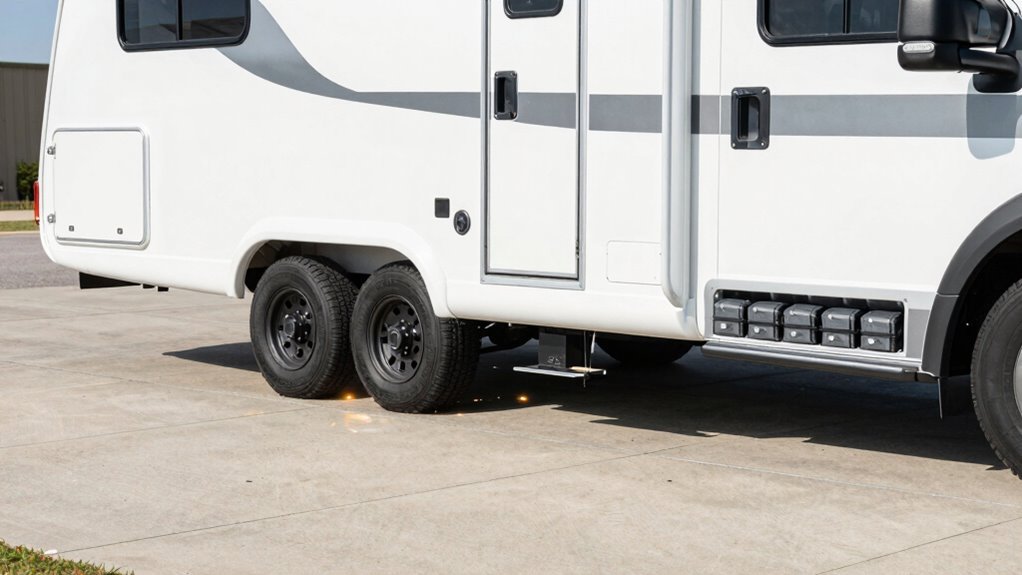
Know your RV’s GVWR and never max out the weight limit. Proper RV weight distribution is crucial for safe handling and stability on the road.
Keep heavy items low and centered over the axles, not piled in the back. Split weight evenly side to side to maintain balance and prevent swaying.
Aim for 10–15% of the trailer’s weight on the hitch to ensure proper control. Use a weight-distribution system if needed, especially with heavier loads.
Check tire ratings and inflate them to the recommended pressure. Overloaded tires generate heat, which increases the risk of failure—nearly as frustrating as getting a flat tire during a road trip.
Understanding Your RV’s Weight Limits
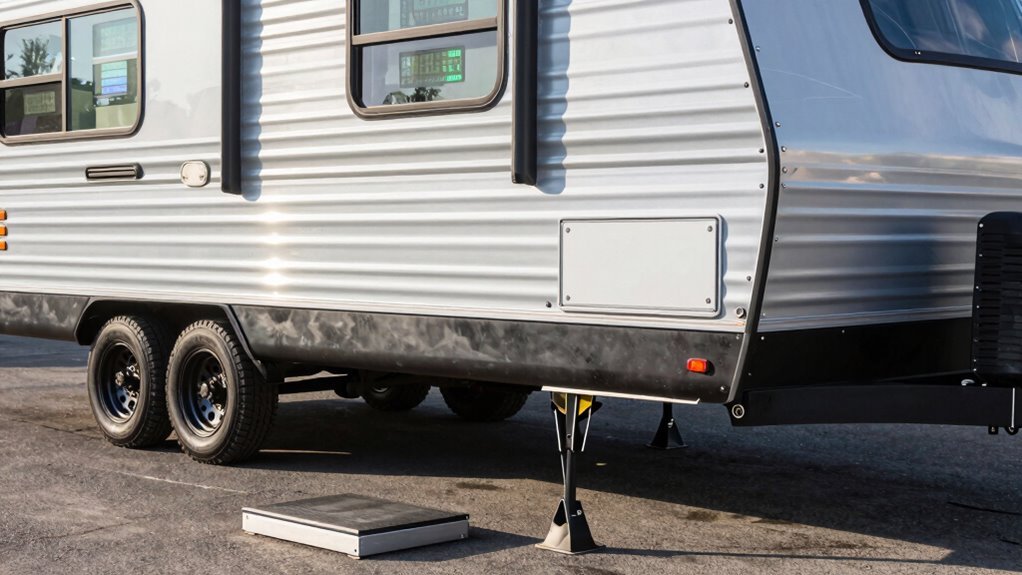
Ever wonder why your RV isn’t just a rolling storage unit? Because it has hard limits—like your clothes fit only so many drawers, your RV can only handle so much weight.
You’ve got GVWR, the max weight your whole rig can be, including you, your dog, your snacks, and that full water tank.
Exceed it and you’re risking damage, fines, or worse—unsafe driving.
Then there’s GAWR, the max each axle can carry, which you’ll find right on the label.
Overload it? Say hello to stressed axles.
Your CCC tells you how much cargo fits after the RV’s base weight—usually around 6,000 lbs for fluids, gear, and more.
And don’t forget GCWR—it’s the total max of tow vehicle plus trailer.
Think of it like a tug-of-war: everyone pulls, but nobody breaks.
Stay legal, stay safe, and keep your adventures stress-free! Federal law enforces key weight limits on Interstates, and states risk losing 50% of federal funds if they don’t comply.
Balancing Load for Stable Handling
Now that you know your RV’s weight limits, let’s get things rolling—literally—by balancing that load like a pro.
A well-balanced rig handles smoothly, corners safely, and resists swaying like a bad dance move.
Keep these key tips in mind to stay steady on the road:
- Split weight evenly side-to-side—nothing says “oops” like leaning to one side during a turn.
- Center the load over the axles—too much up front or in the back turns your RV into a seesaw from chaos town.
- Aim for 10–15% of trailer weight on the hitch—this sweet spot keeps the tow vehicle planted and happy.
- Use a weight distribution hitch for heavy trailers—it’s like giving your rig a balancing pole for tightrope stability.
Balancing side-to-side ensures your RV maintains stability, and proper weight distribution also means placing heavier items low to achieve a lower center of gravity.
Balance right, and you’ll ride smooth—no drama, just adventure.
Proper Placement of Heavy Items
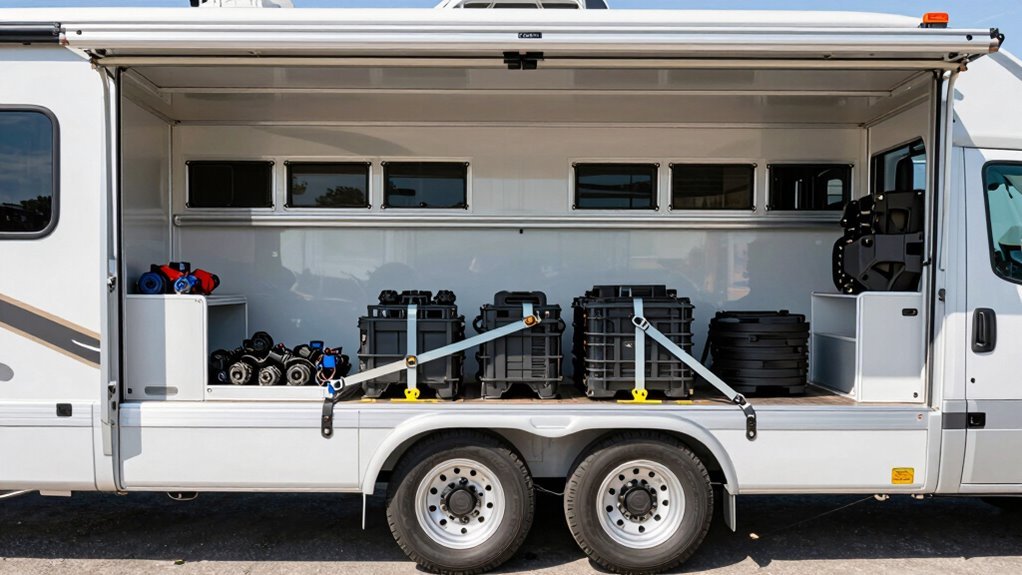
Packing heavy items right means riding with confidence, not crossed fingers.
You’re in control when you place heavy stuff close to the axles—right over or just in front of them—never piled in the back.
That’s asking for fishtails!
Keep things low and centered to lower your center of gravity, so you stay stable on curvy roads and highways.
Load heavy items near the floor first, then tuck lighter things around them like puzzle pieces.
Aim for that60/40 split:60% of weight up front,40% behind the axle.
And don’t forget side-to-side balance—nobody wants a lopsided tilt or wonky tire wear.
Use under-belly storage for heavy gear, not those iffy rear trays in slide-outs.
It’s smart.
It’s safe.
It keeps your ride smooth, steady, and way more fun—no white-knuckle driving here!
This strategy aligns with the GVWR (Gross Vehicle Weight Rating) to ensure you don’t exceed your RV’s maximum safe weight limit.
Avoiding Overloading Axles and Tires
You’ve nailed the smart spot for heavy gear—right near the axles, low and balanced—so now let’s make sure you’re not tipping the scales where it really counts.
Overloading axles or tires isn’t just risky—it’s a guaranteed invite for blowouts, brake trouble, and wobbly highway dances you don’t wanna lead.
Keep it safe and legal by respecting those manufacturer limits stamped on your data plate.
Tires hate extra weight—they overheat, wear fast, and pop like overfilled balloons.
And no, your RV isn’t a superhero—it can’t handle “just a little more” without consequences.
- Never exceed GVWR or axle weight ratings—your RV will thank you
- Check tire load ratings and keep inflation spot-on, every time
- Spread weight evenly across axles to avoid tipping the balance
- Remember: overloaded = slower stops, shaky handling, and stressed parts
Tips for Safe Towing and Highway Performance
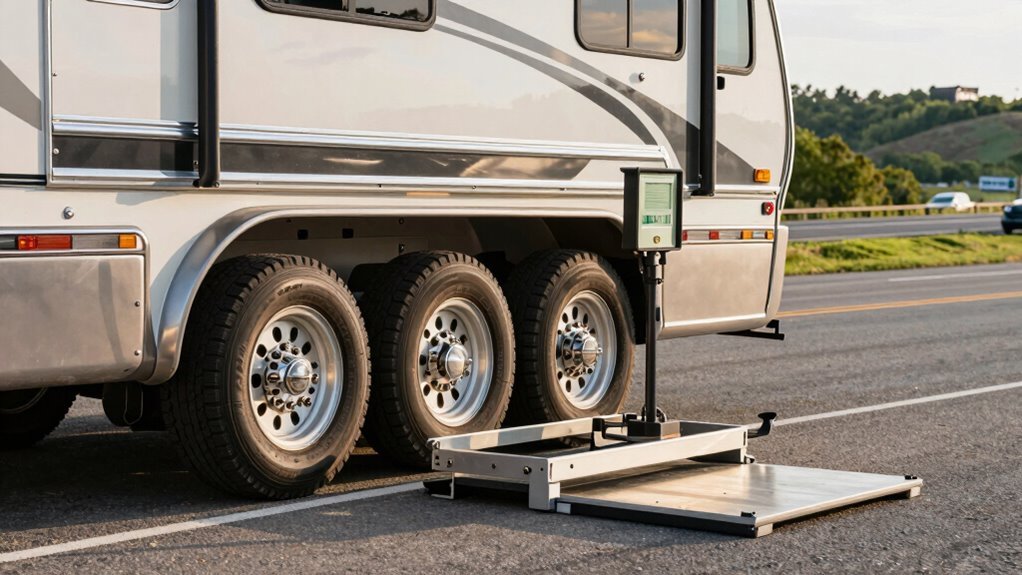
Ever wonder why some RVs glide down the highway like they’re part of the road, while others wobble like they’re trying to escape?
It’s all about smart towing habits.
Start by double-checking your hitch—make sure it’s tight, compatible, and locked in place.
A loose connection is a one-way ticket to Sway Town.
Keep your speed steady, especially in wind or rain, because hauling heavy loads means slower reactions and longer stops.
Don’t be that driver tailgating an 18-wheeler—give yourself space to breathe and brake safely.
If you’re new to towing, practice in an empty lot first; your future self will thank you when you’re not wrestling the wheel at 60 mph.
Load your cargo evenly, stay alert, and remember: you’re driving a house on wheels, not a sports car.
Smooth and slow wins the road race!
Frequently Asked Questions
How Often Should I Check My Rv’s Tire Pressure?
You should check your RV’s tire pressure monthly—it drops about 1 PSI every month, after all.
If you’re hitting the road for a long trip, check it before you go.
Drive often? High usage means weekly or bi-weekly checks.
Always inspect cold tires with a trusted gauge, and don’t forget the spare!
Throw in a quick once-over before and after each drive—your tires will thank you, and you’ll roll with confidence and a little peace of mind (plus, no blowout jokes on the highway).
Can Weather Affect My Rv’s Weight Distribution?
Yeah, weather can totally mess with your RV’s weight distribution—imagine wind shoving your trailer like a playground bully while rain slicks the road.
Those sudden gusts and wet pavement don’t just scare you, they shift forces around, making your rig sway like it’s dancing badly.
Keep heavy stuff low and centered, and yeah, maybe don’t pack that anvil “just in case.”
Stay light, stay smart, and your ride stays put.
Should I Use Weight-Distribution Hitches on All Trailers?
No, you don’t need weight-distribution hitches on all trailers—save ‘em for the heavy lifters.
If your trailer’s over 50% of your vehicle’s weight or longer than 15 feet, it’s a game-changer.
Light loads? Skip it.
But when you’re hauling big, these hitches keep things steady, smooth, and safe.
Think of them as shock absorbers for your sanity—especially when wind, passing trucks, or surprise potholes show up uninvited!
What’s the Best Way to Store an Unloaded RV?
You store your unloaded RV by prepping it like Sarah did with her 30-foot camper before winter—she cleaned every inch, topped off the fuel with stabilizer, and inflated tires to 25% over spec.
You’ll block the wheels, lift tires off the ground, shut propane valves, and stash batteries inside.
You’ll crack vents for airflow, drop DampRid packs around, and lock everything tight—your RV’s cozy, safe, and ready to roll next season!
Do Trailer Brakes Impact Weight Distribution and Safety?
Yeah, trailer brakes totally impact weight distribution and safety—you’re not just slowing down, you’re helping keep everything stable.
When you hit the brakes, they pull the trailer back in line, which nips sway in the bud.
Combined with proper tongue weight, they make your rig handle like a dream instead of a wobbly jelly mold.
Practice a few stops, and you’ll feel how smoothly it all works—safety with a side of confidence!
Conclusion
You’re not just packing a trailer—you’re choreographing a dance between gravity and freedom. Keep heavy items low and close, like secrets best kept quiet. Tires and axles will thank you by not throwing a roadside tantrum. Balance it right, and the open road won’t just call—it’ll sing. Drive happy, drive safe, and remember: your RV’s not a backpack. Treat it like one, and even the hills will side-eye you.
References
- https://ops.fhwa.dot.gov/freight/policy/rpt_congress/truck_sw_laws/app_a.htm
- https://www.nirvc.com/blog/rv-numbers-ratings-limits-and-capacity/
- https://fifthwheelst.com/rv-size-limits-equipment-laws-us.html
- https://leisurecw.com/rv-travel/the-importance-of-proper-weight-distribution-in-your-rv-and-how-to-achieve-it/
- https://www.rv.com/rv/towing/understanding-rv-weight-distribution/
- https://customskirting.com/the-complete-guide-to-rv-weights/
- https://rvsafety.com/mhreport
- https://www.curtmfg.com/trailer-weight
- https://tooltroopers.com/blogs/tooltroopers/rv-weight-distribution
- https://www.cedarcityrv.com/blog/safety/