How to Upgrade to Lithium RV Batteries
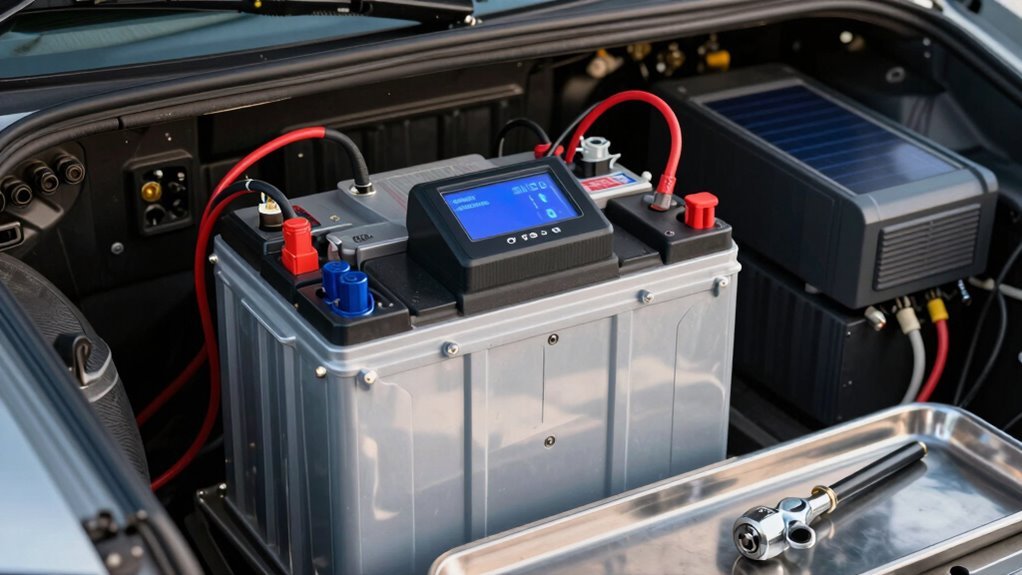
Upgrading to lithium RV batteries transforms your camping experience. Swap your heavy lead-acid battery for a lightweight lithium one and enjoy half the weight with double the power.
Imagine no more weekend water checks like it’s a science project. Lithium RV batteries deliver more usable energy, charge faster, and eliminate maintenance hassles.
These batteries can last up to 10 years with proper care. That’s a long-term upgrade that pays off in reliability and performance.
Size the lithium RV battery to your power needs and disconnect the old battery safely. Install it with clean, tight connections for optimal efficiency.
Boom—your RV’s basically been to the gym. Let’s get into why upgrading to lithium RV batteries might be the best decision since indoor plumbing.
Understanding Lithium vs. Lead-Acid Battery Differences
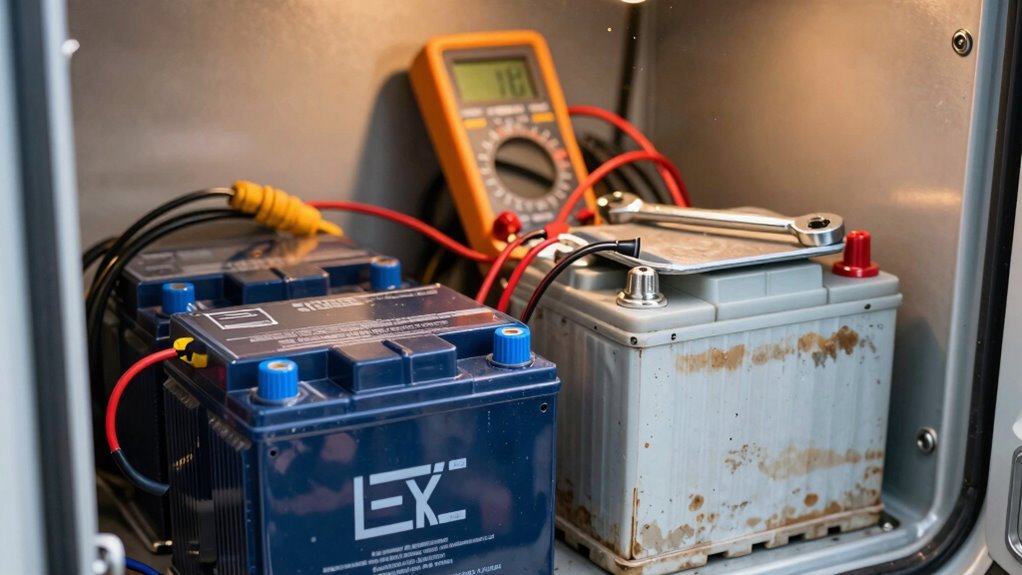
Ever wonder why so many RVers are making the switch to lithium?
You’re not alone—and the reasons are shockingly good.
Lithium batteries store way more power in a lighter, tinier package.
We’re talking 25-35 pounds versus lead-acid’s bulky 50-70.
That’s like swapping a backpack for a suitcase—same trip, way more room.
Plus, you actually get to *use* nearly all the juice—80-100%—while lead-acid punishes you by locking away half its power.
Imagine buying a 100-ounce soda but only sipping 50.
Crazy, right?
Lithium charges faster, lasts longer (think 10+ years!), and laughs off deep discharges.
It’s low-maintenance, too—no watering or fussing.
Lead-acid? More like high drama.
With stable voltage and cold-weather chops, lithium keeps your fridge cold and your coffee hot—no sweat.
Lithium maintains stable voltage during discharge, so your appliances run efficiently from first hour to last.
Honestly, it’s not just an upgrade.
It’s a lifestyle revolution on wheels.
Assessing Your RV’s Power Needs and Usage Patterns
Figuring out your RV’s power needs doesn’t have to feel like solving a math puzzle in a lightning storm.
You’re using 15 to 60 kWh daily, depending on whether you’re camping light or living large.
If you’re in a small trailer, you’re sipping power—5 to 15 kWh.
A Class A luxury coach? You’re guzzling 40 or more.
Each person adds 2–4 kWh, and running the AC can burn 1,800 watts fast.
Cooking with electricity instead of propane? That adds up.
Work from your RV? Your laptop’s always on, nudging usage higher.
In the Southwest, double AC units can push daily needs past 42 kWh, but in the mild Pacific Northwest, you’ll coast on 20.
Full-timers, boondockers, and digital nomads—all have different rhythms.
Track your real usage with a battery monitor, and don’t forget your inverter uses 29 watts just idling.
Know your habits, and you’ll size your upgrade right—no guesswork, just freedom.
Air conditioning is the largest electrical load in most RVs, often drawing 1,200 to 1,800 watts while running.
Choosing the Right Lithium Battery for Your RV

So, how do you pick the perfect lithium battery when there are so many shiny options promising the moon and stars?
Stick with LiFePO4—it’s safer, lasts longer, and handles heat better than other lithium types.
You’ll love its 4,000+ cycles and 80%+ usable capacity—no more guessing how much juice you’ve got left.
For most RVers, 12V models like the 100Ah, 230Ah, or 280Ah are sweet spots.
Need something lightweight?
The 23 lb 100Ah fits small rigs.
Want serious power?
The 280Ah packs a punch but still saves space—lithium’s 50-70% lighter than old-school lead-acid.
Plus, some even come with Bluetooth so you can check levels from your phone—because who doesn’t want battery stats at their fingertips?
Sure, lithium costs more upfront, but with lifespans over 10 years, you’ll save big time.
Don’t get tricked by cheap specs—go for value, not just price.
It also features an advanced Battery Management System (BMS) that provides protection against common failure points like overheating or short circuits, ensuring long-term reliability integrated BMS with multiple protections.
Installing Your New Lithium RV Battery System
Now that you’ve picked out the perfect lithium battery to power your adventures, it’s time to get it up and running in your rig. First, disconnect shore power and solar panels—safety first! Turn off all electrical systems and remove fuses to avoid surprise sparks.
If your fridge needs to keep running, isolate its circuit like a pro.
Carefully remove the old lead-acid battery, clean the compartment, and double-check there’s no leftover voltage.
Place your shiny new lithium battery inside—lighter than lead, right? Secure it snugly, connect positive first (no zaps, please!), then negative.
Use a bus bar if you’ve got multiple batteries.
Ground the system to the chassis so everything stays safe.
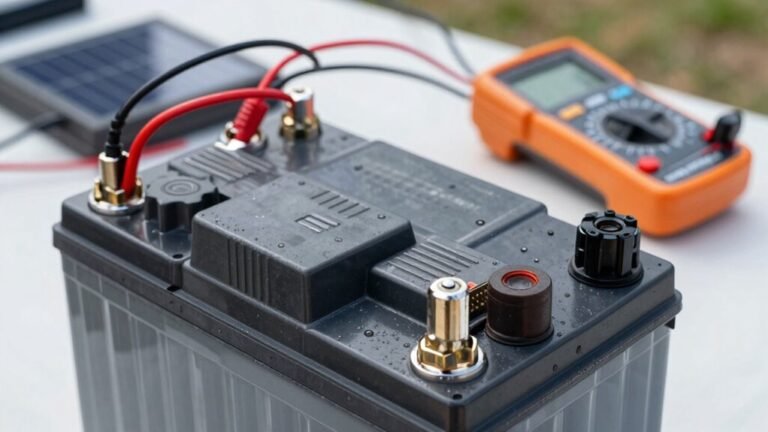
Check voltage with a multimeter—it should read 13.3–13.6V if fully charged.
Fire up the system, test the lights and fridge, and marvel at your upgrade.
Your RV just got a whole lot smarter—and quieter—without that old battery huffing and puffing to keep up.
Maintaining and Monitoring Your Lithium Battery Performance
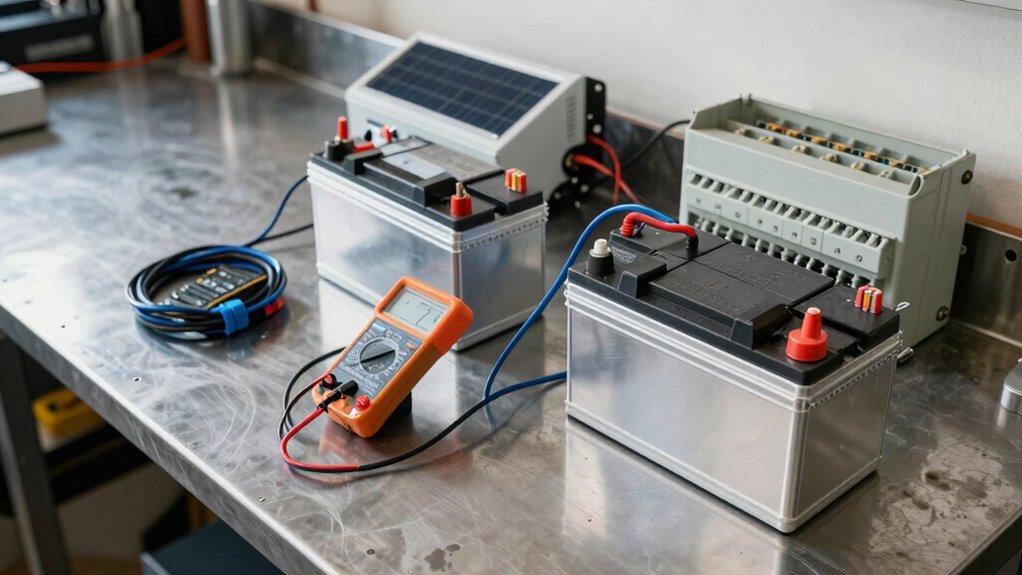
While your lithium RV battery doesn’t need constant babysitting, giving it a little love goes a long way in keeping your adventures trouble-free.
Wipe the terminals with a dry cloth now and then—dirt and sneaky dust bunnies don’t belong here.
Tighten connections to keep power flowing smoothly, and spritz on a protectant to fight off corrosion like a battery superhero.
Check your voltage using the BMS—think of it as your battery’s essential signs.
Keep it above 10–20% to avoid zombie mode, and never let it freeze while charging (brrr—no shivering allowed).
For long storage, aim for 50–70% charge, stash it cool and dry, and visit it every few months like a pen pal.
LiFePO4 batteries can last over a decade, so treat yours right, avoid extreme heat, and it’ll return the favor—powering your trips with zero drama.
You’ve got this!
Frequently Asked Questions
Can I Use My Old Charger With a Lithium Battery?
No, you can’t use your old charger with a lithium battery—trust me, it’ll throw a voltage tantrum!
Standard RV chargers push too hard, overcharging and shortening your battery’s life.
Lithium needs a gentler, smarter touch.
Swap in a lithium-friendly charger that knows when to chill.
It’s like upgrading from yelling to whispering—much healthier, and way more fun for your battery’s mood!
Are Lithium Batteries Safe for Enclosed RV Compartments?
Yeah, lithium batteries are totally safe for enclosed RV compartments—if you set them up right.
Just pop them in a vented, lockable box with airflow, and you’re golden.
They won’t leak acid or blow up like in scary campfire tales.
Keep them charged and away from extreme heat, and they’ll behave.
Think of it like giving your batteries a cozy, well-ventilated cabin—because even tech needs a little fresh air!
Do Lithium Batteries Work Well in Freezing Temperatures?
Yeah, lithium batteries do work in freezing temps, but they’re not exactly fans of the cold.
You’ll see less power when it’s below 32°F, and they won’t charge at all without help.
Think of them like you—grumpy and sluggish without coffee.
Luckily, heated models warm themselves up, so you’re not stuck waiting.
Just keep discharging them down to –4°F, and avoid charging below freezing unless your battery’s got its own built-in heater.
Smart, right?
How Do I Dispose of My Old Lithium Battery?
You toss old lithium batteries like gremlins—never in the trash, or they’ll multiply into environmental trouble.
Wrap terminals with tape, seal in a plastic bag, and haul them to a certified recycler.
Most big-box battery sellers take them back, no hassle.
Think of it as sending your battery to superhero retirement—safe, heroic, and totally eco-friendly.
Easy, right?
You’re doing the planet a solid.
Will Upgrading to Lithium Void My RV Warranty?
Nope, swapping to lithium won’t void your RV warranty—thanks to the Magnuson-Moss Act, manufacturers can’t just cancel coverage ’cause you upgraded.
They’ve gotta prove the battery actually caused the problem, which is way harder than it sounds.
So relax, you’re protected.
Just keep receipts, follow installation rules, and your warranty stays safe.
Smart move, by the way—lithium’s a game-changer!
Conclusion
You’ve made it this far, haven’t you? Imagine this: no more sputtering generators, no more dead batteries at dawn. Your RV hums to life like it’s magic—but it’s not, it’s lithium. You’ll wake to coffee, not chaos. Power’s waiting, always. And honestly? You’re gonna grin every time you flip a switch. Go ahead—hit the road. Adventure’s already charging.
References
- https://www.herewinpower.com/blog/lead-acid-vs-lithium-batteries-performance-tests-on-rvs/
- https://battlebornbatteries.com/lead-acid-vs-lithium-ion-batteries/
- https://www.power-sonic.com/lithium-vs-lead-acid-batteries-is-the-higher-cost-worth-it/
- https://www.wirentech.com/blog/rv-lithium-battery-vs-lead-acid-battery.html
- https://www.youtube.com/watch?v=Ub76dPl1c4g
- https://www.mygrandrv.com/threads/lithium-over-lead-acid-batteries.69537/
- https://solartechonline.com/blog/how-much-electricity-does-rv-use/
- https://solartechonline.com/blog/how-much-electricity-does-camper-use-guide/
- https://www.technomadia.com/2014/12/solar-planning-conducting-an-rv-electrical-consumption-audit/
- https://www.youtube.com/watch?v=sT_Z9CgNdCI