How to Control Humidity Inside an RV
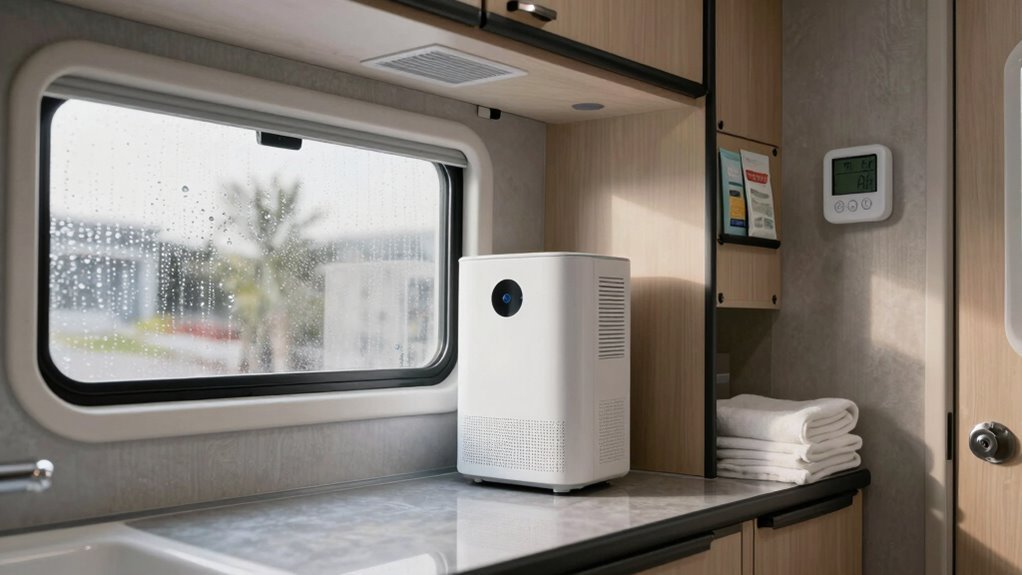
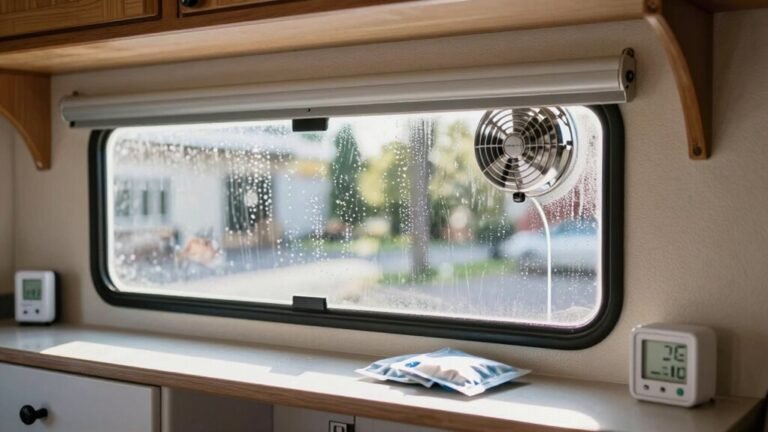
To control humidity inside an RV, run vent fans daily, especially those above the stove and in the bathroom. These help remove moisture at the source and maintain a dry environment.
Crack open opposite windows to create cross-ventilation and let fresh breezes flow through the space. This simple step can significantly reduce humidity inside an RV when done regularly.
Toss wet gear outside to dry and avoid bringing moisture indoors. Use a compact dehumidifier to zap excess humidity and keep levels in check.
Apply window film to minimize condensation and prevent foggy mornings. Seal gaps around windows and doors to stop humid air from sneaking in.
Monitor humidity with a reliable hygrometer to stay within the ideal range. Choose mold-resistant materials for upholstery and cabinetry to protect your RV long-term.
With consistent habits, your RV will stay cozy, fresh, and smelling like pine instead of damp socks. There’s even more to keep things crisp and comfy.
Use Vent Fans Regularly
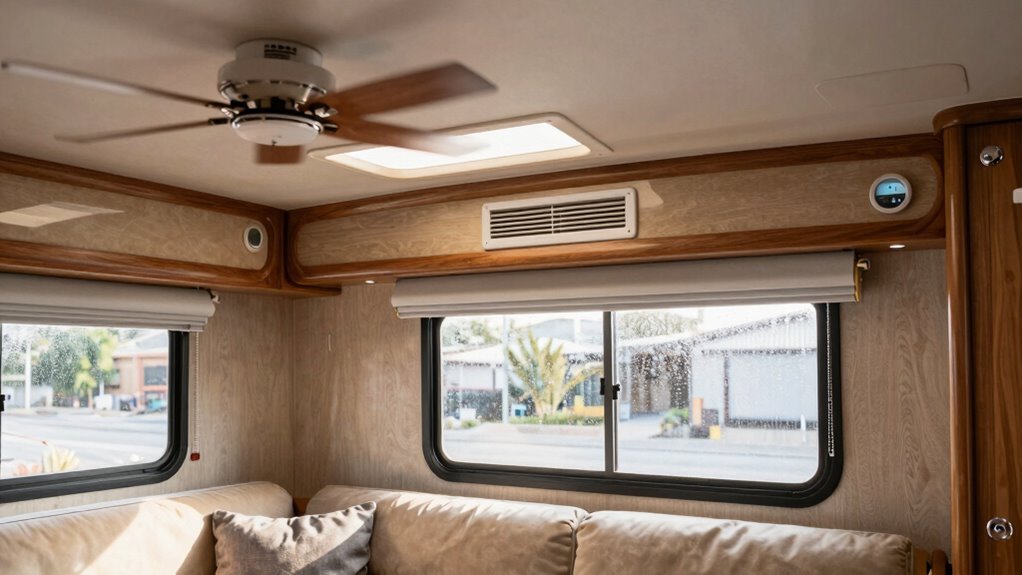
Fire up those roof vents—your RV’s superpower against soggy air is already installed and ready to roll!
You cook, you shower, you even breathe out moisture—yep, sorry, it’s true—and in your cozy rig, that humidity’s got nowhere to go unless you help it.
Let those roof fans do the heavy lifting!
They’re quiet, energy-smart, and some even open and close like magic with a remote.
Rain coming? No problem—pop on a vent cover and breathe easy, literally.
They keep air moving even when clouds roll in.
Run them in the kitchen after dinner, in the bathroom post-shower—those steamy spots love to grow mold.
And trust us, you’d rather not invite mold to your next road trip.
With automatic speed changes and thermostats onboard, these fans adapt like pros.
Just flip ‘em on and forget ‘em—your RV will stay fresh, dry, and drama-free.
Proper airflow directly impacts safety and longevity of the RV, so maintaining consistent ventilation isn’t just about comfort—it’s about protecting your investment.
Invest in a Quality Dehumidifier
Grab your favorite camp mug and settle in—your secret weapon against muggy RV air is a solid dehumidifier. You’ve got options: compressor types are budget-friendly but noisy, while desiccant models run quietly and work great in cold weather, even if they cost more and sip more power. For tiny vans, grab something like the Pro Breeze PB-03-US (covers ~200 sq ft); mid-sized rigs love the hOmeLabs HME0091; and go big with a Crane Compact for spacious Class A RVs. Look at moisture removal—some pull 1.5 pints daily—and tank size, so you’re not emptying it every five minutes. Pick 12V units for off-grid freedom or plug into shore power. Many even include gravity drain hoses—because nobody wants a midnight sloshing trip. And hey, combo units like the Afloia Q10 pull double duty as air purifiers. Warranties? Sweet bonuses—some even go 2 years. Breathe easy, friend—your RV’s air’s got this. WiFi compatible models let you control humidity remotely via app.
Promote Natural Airflow With Open Windows
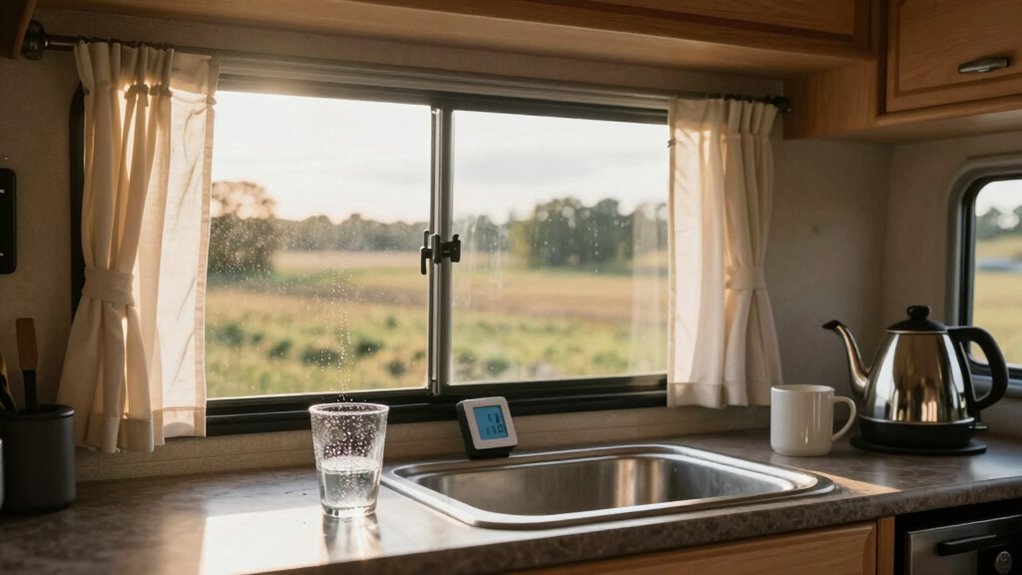
Throw open those windows and let nature do the heavy lifting—fresh air is your RV’s best friend when fighting sticky humidity. Position your RV to catch the breeze, and align windows with the wind’s flow for a natural airflow boost. Open opposite windows to create cross-ventilation—it’s like giving your RV an invigorating breath of freedom. Pair low windows for cool air in, high ones for hot air out, and don’t forget roof vents to help it all circulate. Park in the shade, use awnings to funnel air, and keep screens clean and tear-free—dirty or ripped screens slow things down. Cracked windows while driving? Yes, please—they turn motion into free AC. Use humidity monitors to see what’s working, and tweak openings as needed. Aim for under 50%, because nobody likes that swampy “eau de damp sock” vibe. Mold can worsen asthma and allergies, so reducing humidity through airflow also protects your health. With smart window tricks, you’ll stay cool, dry, and smiling.
Seal Leaks and Close Gaps in the RV Structure
Keeping your RV tight and dry starts with chasing down sneaky leaks before they turn into big, moldy messes.
You don’t want surprise puddles or that musty “wet dog” smell creeping in. Here’s how to zip up your rig like a pro:
- Scan seams, vents, windows, and slideouts twice a year—or after heavy rain—for cracks, stains, or soft spots that wave hello like tiny red flags.
- Try the DIY pressure test—seal a fan in a hatch, spray soapy water, and watch for bubbles that burst out like leaky confetti.
- Use the right sealant: butyl tape for instant grip, non-sag for vertical gaps, self-leveling for flat surfaces, and EternaBond for tough, lasting bonds.
- Press, smooth, and let cure—don’t rush it! A solid seal needs 24-48 hours to set up fully.
Stay dry, laugh at leaks, and keep that humidity running for the door!
Cook With Lids and Use Range Hood Vents
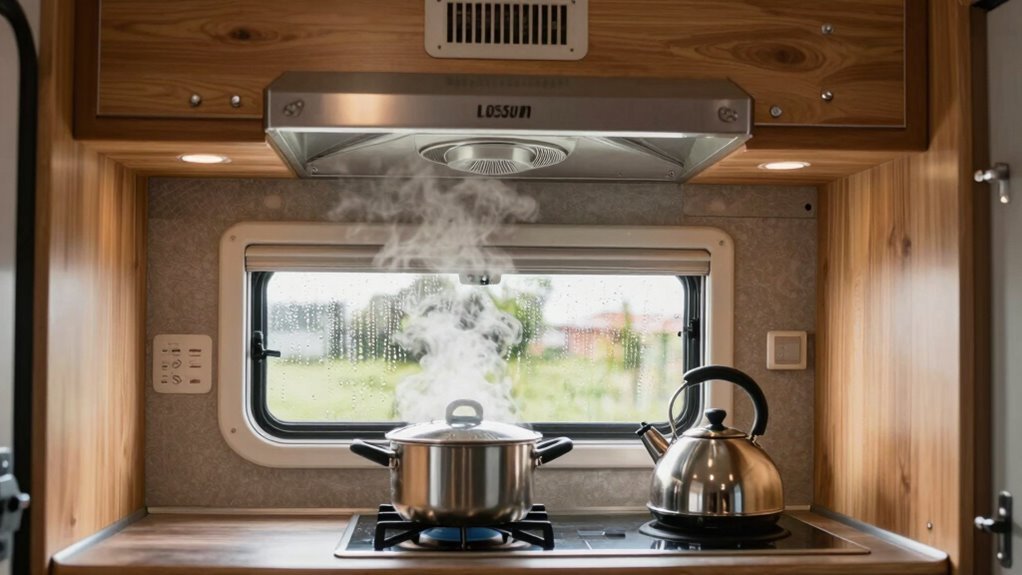
You’ve sealed up the nooks and crannies like a weatherproofing wizard, so now let’s tackle the steamy sneak attack that happens every time you whip up breakfast—yep, it’s time to get smart in the kitchen.
Slap a lid on your pots; it traps steam and keeps moisture from fogging up your windows.
Did you know boiling water without a lid can dump 70% more humidity into your RV? No thanks!
Turn on your range hood, too—it shoves steam straight outside, fast.
Use both together, and you’ll crush humidity spikes like a pro.
Open a roof vent for backup, and you’ve got a moisture-meltdown dream team.
Pop a hygrometer in the kitchen, and watch the numbers stay sweet (40–50% RH, please).
It’s like AC magic, but cheaper and way more satisfying.
Cook smart, vent hard, and keep your cozy little home from turning into a rainforest.
Take Shorter, Cooler Showers
Cutting your shower time to just 5 or 10 minutes isn’t just a win for your water tank—it’s a knockout punch to humidity buildup.
You’ll slash steam, save hot water, and keep mold from throwing a pool party in your walls.
Here’s how to shower smart:
- Keep it short – 5–10 minutes max, before your RV runs cold or your air turns into a sauna.
- Dial down the heat – lukewarm water means less steam and fewer humidity spikes.
- Use a shutoff valve – turn off water while soaping up; save gallons and cut evaporation time.
- Ventilate early – flip on the exhaust fan or crack the roof vent *before* you start.
You’ll stay clean *and* keep your RV dry—without turning your bathroom into a rainforest. Your hygrometer will thank you (and so will your towels).
Dry Wet Items Outside When Possible
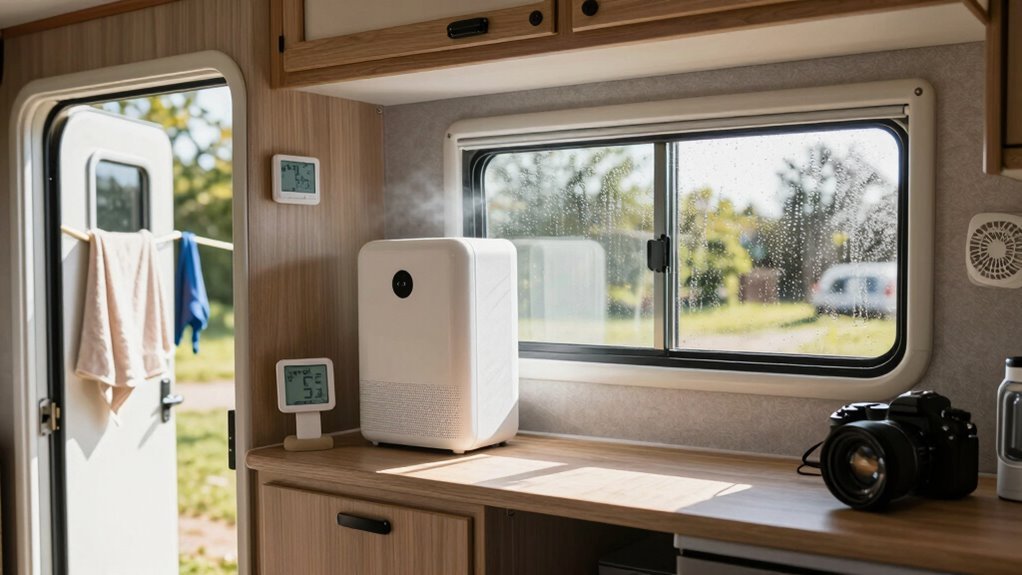
When the sun’s out and there’s a breeze in the air, why let your damp towels and laundry turn your RV into a steam room? Hang them outside instead! Fresh air and sunshine don’t just dry clothes faster—they naturally kill funky odors and bacteria too.
Wind zips through fabric like a pro, cutting drying time way down. Plus, you’ll skip the soggy indoor mess that makes dehumidifiers sweat.
Set up your clothesline where the sun loves to linger, away from windows so moisture doesn’t sneak back in. Pro tip: elevate racks off the ground for airflow magic.
Do it in the morning on low-humidity days, and bam—dry laundry by nap time.
You’ll protect your RV’s air quality, cut down on appliance stress, and keep that cozy space feeling fresh, not swampy.
It’s a tiny habit with a mighty payoff—like nature’s free laundry service with a bonus freshness upgrade!
Choose Moisture-Resistant Furnishings and Materials
Sunshine’s great for drying your socks, but what about the stuff that doesn’t go outside—like your walls, furniture, and floors?
You can keep moisture at bay by choosing the right materials from the start.
Swap out ordinary fabrics and drywall for smart, tough picks that laugh in the face of humidity.
Here’s how:
- PVC Panels – Super tough, waterproof, and mold-resistant, they handle splashes and spills like a champ.
- FRP Panels – Strong, lightweight, and perfect for ceilings, they wipe clean and never need paint.
- Marine-Grade Vinyl – Looks like leather, acts like a hero—stain-proof, UV-proof, and zero drama in storms.
- Solution-Dyed Acrylics – Colorful, comfy, and breathable, they stay vibrant even when life gets steamy.
Upgrade your rig with these champs, and say goodbye to soggy surprises!
Monitor Humidity Levels With a Hygrometer
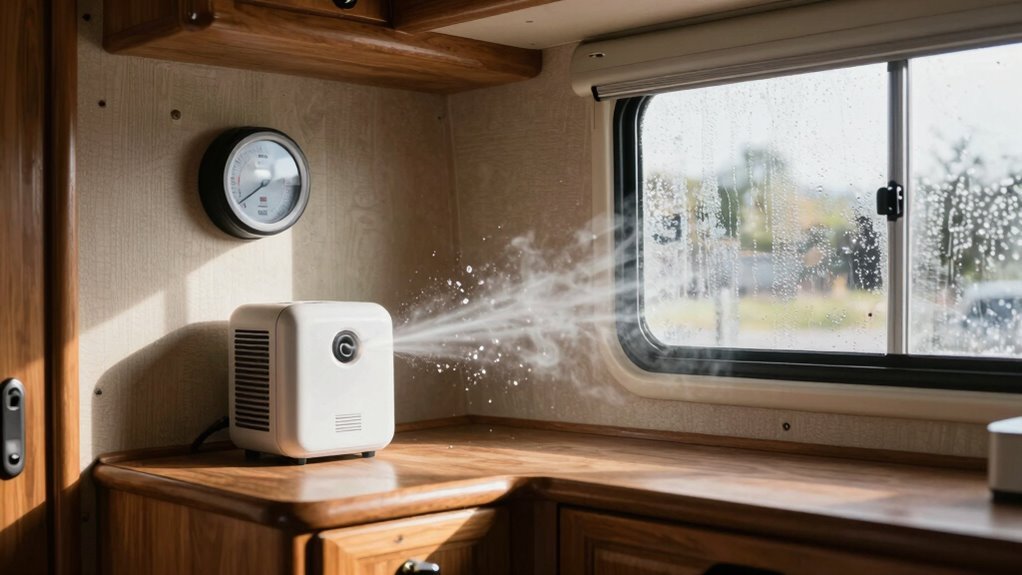
You’ve picked the right materials to fight moisture, now it’s time to bring in the secret weapon: a good hygrometer.
Skip the analog type—it’s like guessing the weather by how your hair curls.
Go digital instead, with one that’s accurate within ±3% RH and reads humidity fast, every 10 seconds or so.
Many double as thermometers, so you get two readings in one cool little gadget.
Stick it away from stoves or sunny windows, or it’ll freak out and give wonky numbers.
Models with long battery life (think 18+ months) save you from constant swaps, and bright LCDs help you check levels whether it’s noon or midnight.
Some, like Necto, even ping your phone with alerts—no Wi-Fi needed!
Just don’t tuck it behind your socks.
Even hygrometers need personal space to do their job right.
Maintain Proper Insulation and Ventilation
Keeping your RV cozy and dry starts with trapping warmth where it belongs—inside your walls, not outside.
Good insulation and smart ventilation team up like peanut butter and jelly to beat humidity.
Here’s how to make them work for you:
- Seal the space with spray foam or rigid foam boards—these block drafts and keep moisture from sneaking in.
- Add Reflectix or window film—they boost window temps and stop that icky morning fog (and yes, your views stay pretty).
- Run vent fans daily, especially above the stove and ceiling vents, to kick damp air out before it throws a puddle party.
- Install a 360 Siphon vent cap—it turns your roof vent into a moisture-sucking superhero, even on lazy days.
Frequently Asked Questions
What Causes High Humidity in an RV While Driving?
You’re breathing, cooking, and sweating—all pumping moisture into the air while you drive.
Showers add steam, and even your morning coffee releases vapor.
Outside humidity sneaks in through tiny gaps, especially on muggy days.
Your AC fights hard but might short-cycle, leaving moisture behind.
Warm bodies and hot surfaces keep humidity swirling, and cold vents? They sweat like a polar bear in a sauna.
It’s a mini rainforest on wheels—fun for plants, not so much for walls.
Can Houseplants Increase Humidity Inside an RV?
Yes, houseplants can totally boost humidity in your RV! Think of them like tiny green humidifiers—my friend’s pothos once saved her orchid from turning into a sad potato chip.
Group your plants, and their combined transpiration creates a cozy jungle vibe. Spider plants, ferns, even jade—they’re not just pretty, they’re moisture-machines with chlorophyll. Plus, they’ll forgive you for forgetting the misting bottle… sometimes.
Is Condensation on Windows Always a Bad Sign?
No, condensation on your windows isn’t always a bad sign—it’s often just physics doing its thing!
Cold glass meets warm, moist air, and bam: you get fog or beads of water.
It’s super common in RVs, especially in winter.
Think of it like your breath on a mirror—annoying, but normal.
Just keep airflow going and humidity in check so it doesn’t throw a mold party.
Do RV Air Conditioners Reduce Humidity Effectively?
Yep, your RV air conditioner’s like a mini weather wizard—it zaps humidity by turning muggy air into dew on its cold coils, then kicks the water outside.
You’ll see drips—proof it’s working!
It cools *and* dries, but on super sticky days, it might huff and puff to keep up.
Pair it with a dehumidifier, and boom—your RV stays crisp, not clammy!
Should I Run the Dehumidifier While Sleeping?
Yeah, you should totally run the dehumidifier while sleeping—it’s like a bedtime buddy for your RV’s air!
Most models stay super quiet, especially in sleep mode, so you won’t hear a peep.
Plus, waking up dry and comfy beats sleeping in a damp sponge.
Just set it and snooze; your lungs (and morning hair) will thank you with zero drama!
Conclusion
You’re the captain of your RV’s climate, not a soggy stowaway. Remember that time your towel grew fuzz like a science experiment? Yeah, 60% humidity turns dampness into a petri dish. But you’ve got fans, dehumidifiers, and windows to outsmart moisture. Seal cracks, vent while cooking, and let fresh air party inside. With a hygrometer watching your back, it’s easy—and kinda fun—to keep things comfy, dry, and mold-free. Smooth skies ahead!
References
- https://unitedrvparts.com/blogs/the-united-rv-advantage/why-rv-vent-covers-are-essential-for-airflow
- https://www.thervgeeks.com/rv-ventilation/
- https://community.goodsam.com/discussions/rvtipstricks/pros–cons-humidity-switch-for-a-fantastic-fan/1625230
- https://toyotamotorhome.org/forums/index.php?/topic/9913-ventilation-ac-vs-powered-vent-fans-vs/
- https://www.partsvia.com/blogs/rv/rv-ventilation-do-you-need-a-fan-or-just-a-vent
- https://www.kohree.com/blogs/buyers-guides/best-rv-vent-fan-buying-guide
- https://airconditionerlab.com/best-rv-dehumidifier/
- https://rvshare.com/blog/best-rv-dehumidifiers/
- https://blog.campingworld.com/gear-and-accessories/best-dehumidifier-for-camper/
- https://www.rvupgradestore.com/which-rv-dehumidifier-is-right-for-you-s/1033.htm