How to Weigh Your RV to Ensure Proper Load
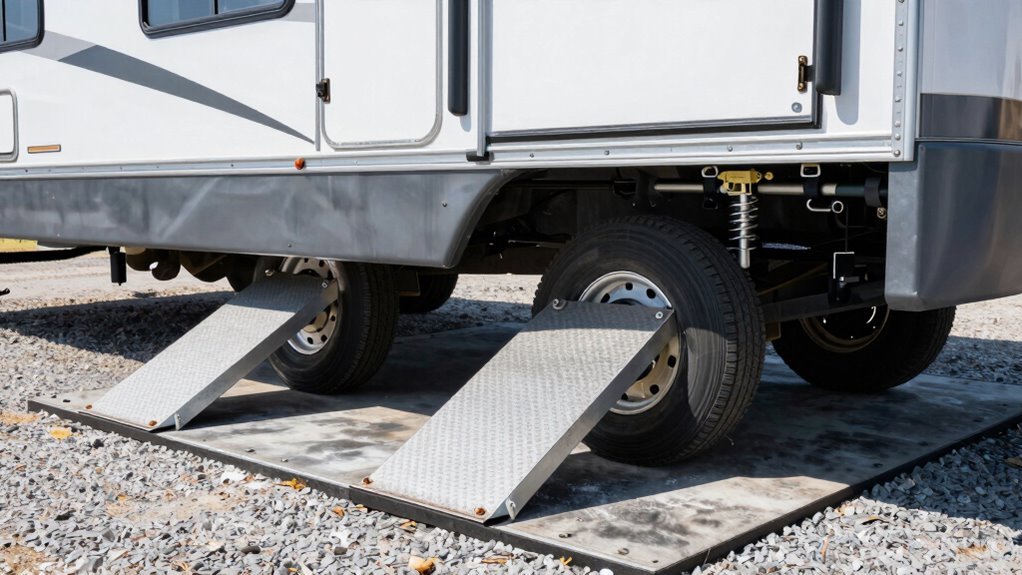
To properly weigh your RV, start by heading to a certified public scale—like a CAT Scale or truck stop—with your rig fully loaded, tanks filled, and tires properly inflated. This ensures an accurate measurement of your real-world travel weight.
Pull each axle onto the scale platform separately, making sure the RV is stationary to get a precise reading. After weighing, obtain your weight ticket to review the actual axle and gross weights.
Compare these numbers to your RV’s GVWR (Gross Vehicle Weight Rating) and GAWR (Gross Axle Weight Rating) to confirm you’re within safe limits. Also, calculate hitch weight to ensure proper trailer tongue balance and towing stability.
If any weights are too high, redistribute or remove cargo as needed. Once everything is within range, you can hit the road with confidence—knowing your RV is safely and properly loaded.
Understanding Key RV Weight Terminology
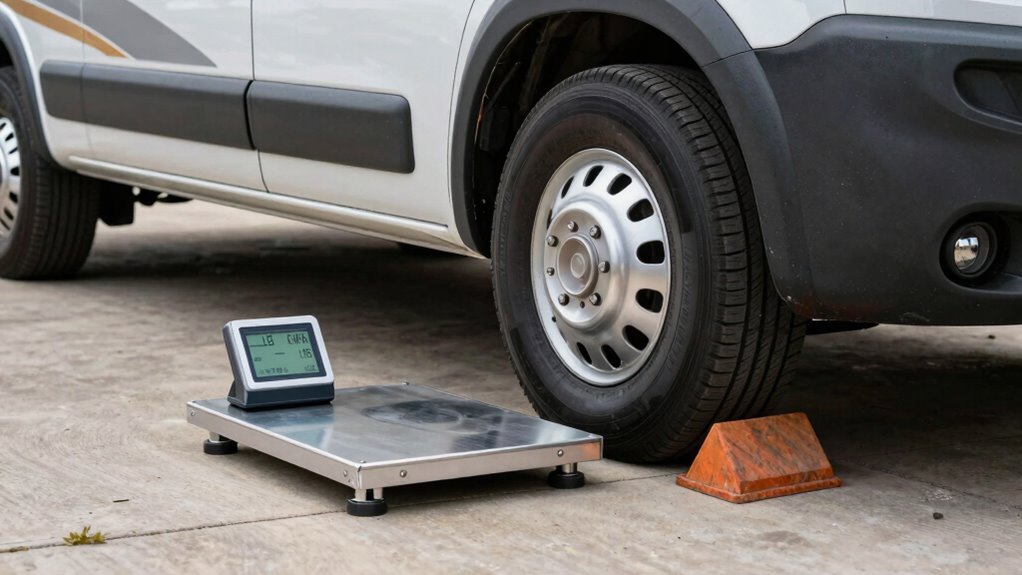
Getting your RV ready for adventure starts with knowing the lingo—after all, you wouldn’t go hiking without checking your backpack, right?
You’ve got to know GVWR, the max weight your rig can safely handle—don’t even think about going over.
Your UVW is the starting weight from the factory, but you’ll add people, water, and that killer coffee maker.
The difference? That’s your payload, or NCC.
Keep an eye on GAWR too—each axle has a limit, and overloading one can spell trouble fast.
Tongue weight matters more than your travel playlist; it shifts stress to your tow vehicle’s rear end.
And don’t forget, GCWR covers the whole shebang—the trailer, truck, dog, and all your camping snacks.
Exceeding the GVWR can cause potential damage to the RV.
Weigh it right, stay safe, and hey—nobody wants a tire blowout in Bumtown, USA.
Finding the Right Public Scales for Your RV
You’ve got the basics of RV weight terms down—now it’s time to hit the scales and see how all that knowledge stacks up in the real world.
You can find trusted public scales fast using tools like the Penske Public Scale Locator or CAT Scale’s interactive map—just plug in your zip or city and boom, options pop up.
Whether you’re near Oregon’s open weigh stations or need a certified scale in Ohio, there’s a spot nearby, many within 10–50 miles.
CAT Scales even offer mobile apps so you can weigh your rig with the ease of ordering coffee.
New locations keep popping up like surprise rest stops on a long drive—hello, Gaffney and Boise!
Just pick a certified scale, grab a ticket, and skip the guesswork.
After all, nothing says “responsible RVer” like knowing your rig won’t tip the scales—literally DITY move requires weighing vehicle empty and full.
Weighing Your RV: Step-by-Step Process
How does it feel to know exactly what your RV weighs—down to the pound?
Pretty awesome, right?
First, pack like you’re hitting the road—gear, passengers, full tanks, the works—and pump your tires to spec.
Lock down loose stuff and slide those slideouts in tight.
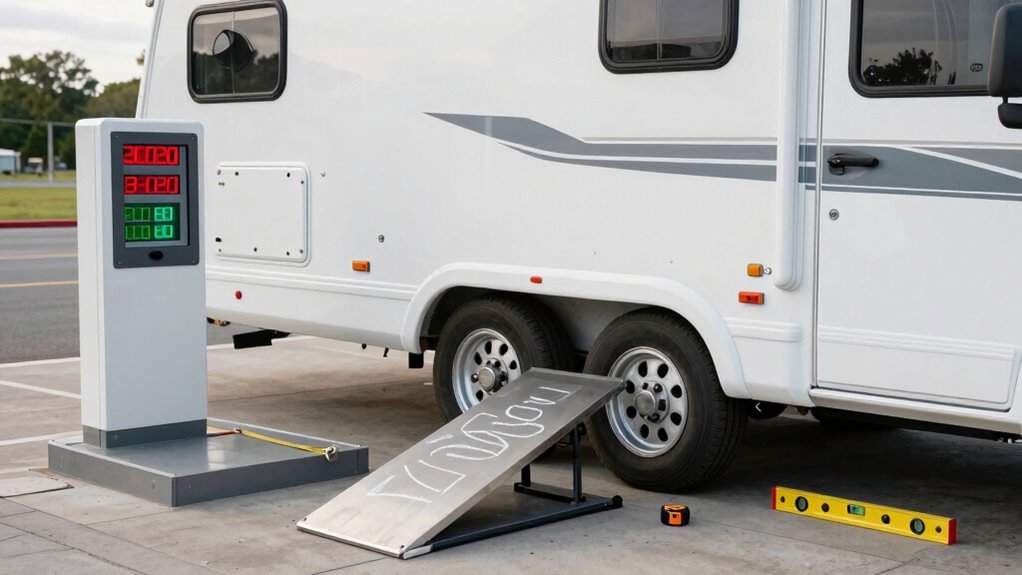
Pull onto the scale with your front axle on platform one, rear on two, and stay still while they weigh it.
If you’re towing, you might need two passes—once hooked up, once without.
Grab your ticket showing axle and total weights, and double-check that the wheels were where they should be.
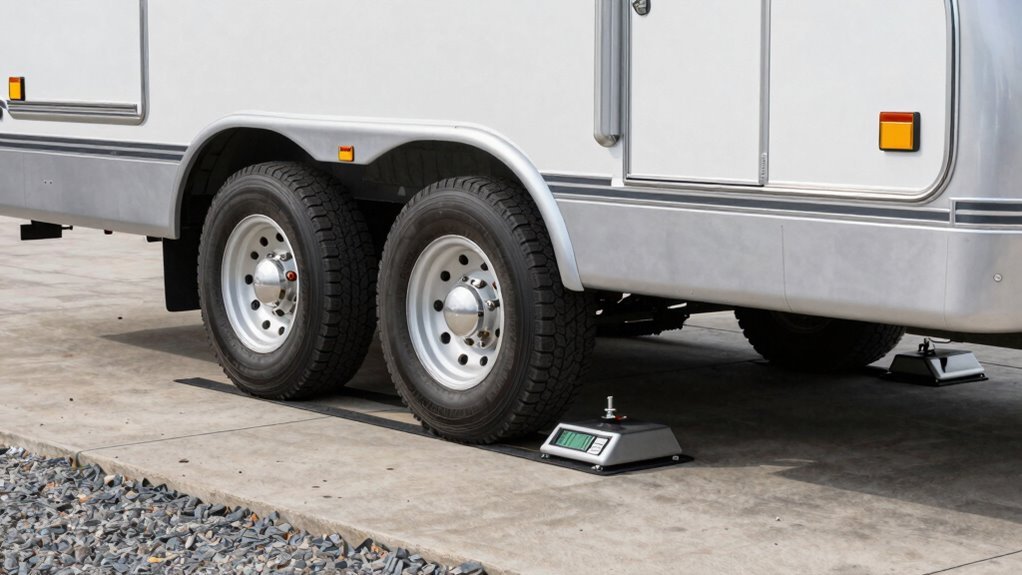
For deeper insights, try a four-corner weigh to see each tire’s load.
It’s a little pricier, but hey, your tires will thank you.
You’re not just guessing anymore—you’re *knowing*.
And that’s power.
These scales are part of a certified three-platform system.
Interpreting Your Weight Results Accurately
Ever wonder what those numbers on your RV scale ticket really mean — or why they’re secretly kind of a big deal? You’re not just chasing digits — you’re uncovering the truth about your rig’s safety.
Check your GVWR and axle ratings (GAWR) and match them to your actual weights — no guessing.
If your rear axle’s max is 6,000 lbs but you’re sitting at 6,200, uh-oh.
And don’t skip the wheel-position weights; one overloaded tire can ruin your whole trip.
Use the scale trick: subtract your truck’s weight (without trailer) from the combo weight to nail your exact hitch weight — should be 10–15% for most trailers.
Freshwater? Loaded gear? Weigh it all in.
When weight-distribution bars shift load, your front axle should gain weight — but not too much.
Stay sharp, stay legal, and keep your RV rolling happy and safe down the highway.
Adjusting Your Load for Safety and Balance
While the open road calls and adventure waits just around the corner, how you pack your RV can make the difference between a smooth ride and a shaky, white-knuckle experience.
Start by loading heavy stuff low and near the axles—think canned chili, not bowling balls on the roof.
Aim for 60% of cargo weight up front in travel trailers, 40% in the back, and keep things evenly balanced side to side, like a well-packed suitcase.
Secure everything tightly—bouncing coolers are sneaky weight shifters!
Use straps, non-slip mats, and locked cabinets to keep chaos at bay.
Check tongue weight—it should be 10–15% of your trailer’s total for bumper-pulls—then tweak cargo until it’s just right.
Don’t forget tire pressure and axle ratings; nobody wants a blowout picnic.
Recheck everything after the first few miles.
Safety? Now that’s a destination worth packing for!
Frequently Asked Questions
How Often Should I Weigh My RV?
You should weigh your RV every two years at least—it’s a quick way to dodge big problems down the road.
Got new gear, a remodel, or just hauled a year’s worth of “I might need this” stuff?
Weigh it then!
Think of it like a checkup, but for your home on wheels.
Skip the stress later—knowing your weight keeps your trips safe, legal, and way more fun.
Who knew scales could be this exciting?
Can I Weigh My RV With Passengers Inside?
Yes, you can weigh your RV with passengers inside—just like the Johnsons did on their Arizona trip, laughing as their dog barked from the passenger seat.
It’s totally fine when checking real-world weight, especially for tongue load or legal limits.
Just remember, passengers shift balance, so for precise wheel-level checks, go empty—or account for them consistently.
Think of it like a family road-trip weigh-in: fun, but gotta stay smart!
Do I Need to Weigh My RV When Empty?
Yes, you should weigh your RV when empty—it’s like knowing your starting score in a game.
You’ll uncover the real weight before adding water, gear, or that giant bag of souvenirs.
Skip this, and you’re guessing blind.
Plus, who doesn’t love a good weigh-in?
Think of it as a spa day for your RV—revealing all its hidden pounds and keeping everything safe, legal, and road-ready.
Fun, right?
What Happens if I Exceed Payload Capacity?
You’re asking for trouble if you exceed payload capacity—think of it like stuffing ten pounds of snacks into a five-pound bag; something’s gonna burst.
Your RV’s frame, tires, and brakes aren’t built to handle extra weight, so you’ll wear them out fast, waste fuel, and risk blowouts or worse.
It’s like playing Jenga with your safety—one wrong move and everything falls.
Don’t be that person crawling home with a broken axle.
Is It Safe to Tow Over the Rated Limit?
Nope, it’s not safe to tow over the rated limit—your rig’s basically waving a white flag at physics.
You’re risking blowouts, fried brakes, and wobbly sway that could turn your road trip into a thriller nobody wants.
Think of ratings like pizza: better to leave room than burst the box.
Stay under, stay safe, and keep the adventure fun, not frantic.
Conclusion
You’ve got this! Did you know nearly 60% of RVers unknow留学 safety issues due to improper loading? Yikes! But now, with your new weighing know-how, you’re way ahead of the game. Keep your rides smooth, your tires happy, and your adventures stress-free. A well-balanced RV isn’t just safer—it’s smarter. So go ahead, hit the road with confidence (and maybe a victory dance in the driveway).
References
- https://www.keystonerv.com/owners/understanding-rv-weight-rating-abbreviations
- https://www.rv.com/rv/defining-gvwr-gcwr-and-other-rv-weight-ratings/
- https://rvsafety.com/weight/glossary
- https://www.rvezy.com/blog/rv-weight-terms
- https://www.jayco.com/blog/understanding-rv-weights-and-their-meanings/
- https://www.onallcylinders.com/2022/12/02/understanding-some-basic-trailer-towing-terms-like-tire-load-tongue-weight-gvwr/
- https://rvtowcheck.com/Glossary_RVTC.html
- https://www.curtmfg.com/trailer-weight
- https://www.publicscaleslocator.com
- https://www.rvtravel.com/where-to-go-to-weigh-your-rv-rvdt-2020/