Understanding RV Weight Ratings (GVWR
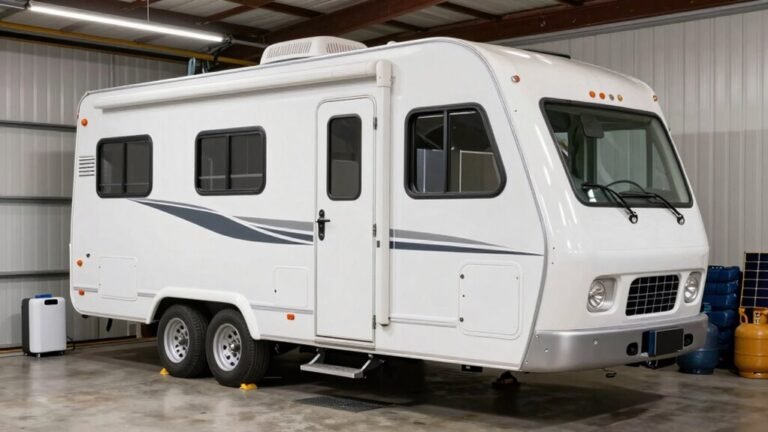
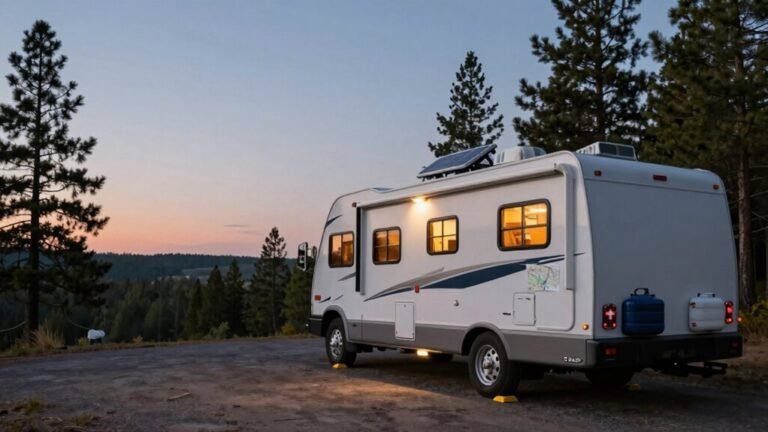
You’ve got gear, pets, passengers, and dreams of the open road—but don’t ignore your RV’s GVWR. GVWR, or Gross Vehicle Weight Rating, is the maximum weight your RV is ever allowed to be, as set by the manufacturer.
This limit includes everything: water, propane, cargo, and even that extra bag of souvenirs. Exceeding the GVWR can lead to blowouts, poor handling, or more serious safety risks.
Think of GVWR like your RV’s weight limit—no one wants a surprise snack and a breakdown. Staying under this limit keeps you safe, legal, and ready for smooth travels ahead.
What GVWR Means for Your RV
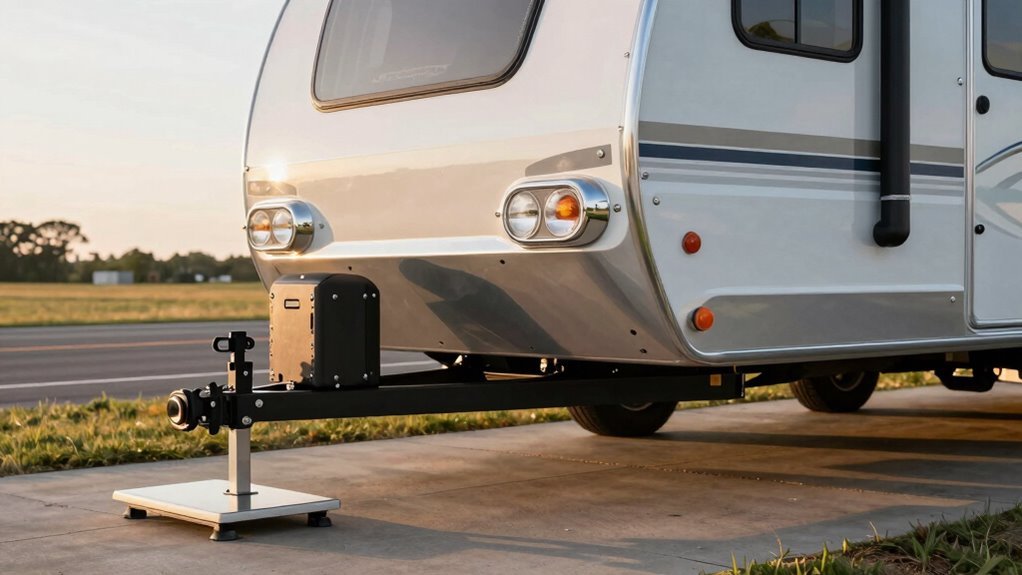
Ever wonder how much your RV can *actually* carry without turning into a groaning, wheezing beast on wheels?
GVWR—Gross Vehicle Weight Rating—is your magic number, set by the manufacturer to keep your rig safe and solid.
It includes everything: the RV itself, your gear, food, water, propane, pets, even that extra-large coffee maker you can’t live without.
It also counts passengers, dealer add-ons, and if you’re towing, the trailer’s tongue weight too.
Think of it as a hard “do not exceed” limit etched in engineering steel.
Go over, and you’re asking for trouble—stressed axles, sketchy brakes, or worse, a blown tire on the highway.
But stay within it, and you’ll roll smoothly, safely, and warranty-intact.
Find your GVWR on the yellow label by the door, then weigh your setup to stay in the sweet spot.
Exceeding GVWR causes undue stress, potential damage, and dangerous driving conditions.
Play it right, and your RV won’t just carry your stuff—it’ll carry you happily for miles.
How GVWR Differs From Other Weight Ratings
So, how does GVWR stack up against all those other alphabet-soup weight ratings on your RV?
Well, GVWR is your rig’s total max weight when fully loaded—think passengers, gear, water, and even that giant bag of dog food.
But it’s not the only number that matters.
GCWR? That’s the combined limit for your tow vehicle *and* the trailer—way higher, since it includes both.
Then there’s GAWR, which caps how much each axle can carry—yep, you can be under GVWR but still overload an axle if you pack the bathroom with bricks (don’t do that).
GCCC tells you how much *stuff* you can add, while UVW is basically your RV’s “before” photo—no fluids, no cargo, just bare bones.
Hit GVWR, and you’re at the finish line; go over, and bad things happen—fast.
Exceeding GVWR can lead to critical safety risks, including brake failure, tire blowouts, and loss of control.
Why Staying Under GVWR Matters for Safety
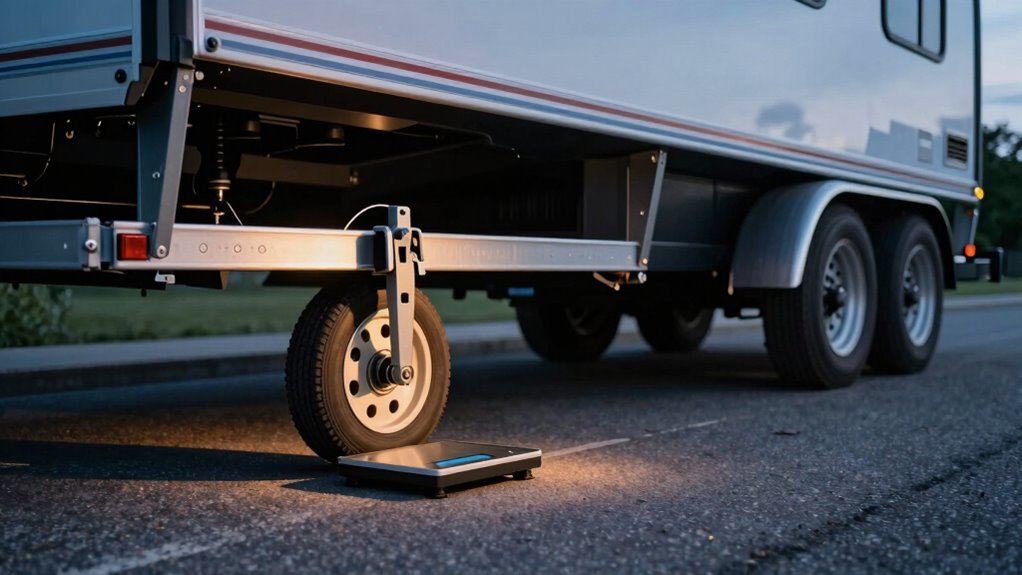
What’s the one thing standing between you and a smooth, safe journey down the open road? It’s staying under your RV’s GVWR. Exceeding it? That’s like asking your brakes to stop a freight train—stopping distances grow, and blowouts become way more likely. Your tires and suspension weren’t built for that stress, and trust me, you don’t want a mid-trip breakdown in the middle of nowhere. Overloading also makes your RV wobblier than a shopping cart with a bent wheel, especially around turns. Rollover risk shoots up, and suddenly, “driving easy” feels more like dodging disasters. Plus, if you’re in an accident, being over GVWR can make you legally and financially on the hook. The feds don’t mess around. Stay under, stay safe, and keep your adventures fun—not frantic. Play it smart, and your RV will thank you mile after mile. Exceeding GVWR compromises safety and handling.
Components That Contribute to Your RV’s Total Weight
Your RV’s total weight isn’t just about how much stuff you toss in before hitting the road—it’s built right into the bones of the rig from day one.
You’ve got the chassis, frame, and fluids all adding up before you even pack a single sock.
Full fuel, fresh water, and propane tanks pack serious pounds—water’s about 8.3 lbs per gallon, so a full tank’s like carrying a large dog!
Appliances, AC units, and fancy kitchen gadgets? Yep, they all add weight, too.
Even your wheels and tires have limits that affect how much you can safely haul.
Don’t forget, you and your travel crew count—passengers, pets, and that giant bag of snacks all go on the scale.
Every bolt, tank, and suitcase chips away at your available payload.
It’s like a real-life game of Tetris—except the prize is staying safe and legal on the road!
How to Find Your RV’s GVWR
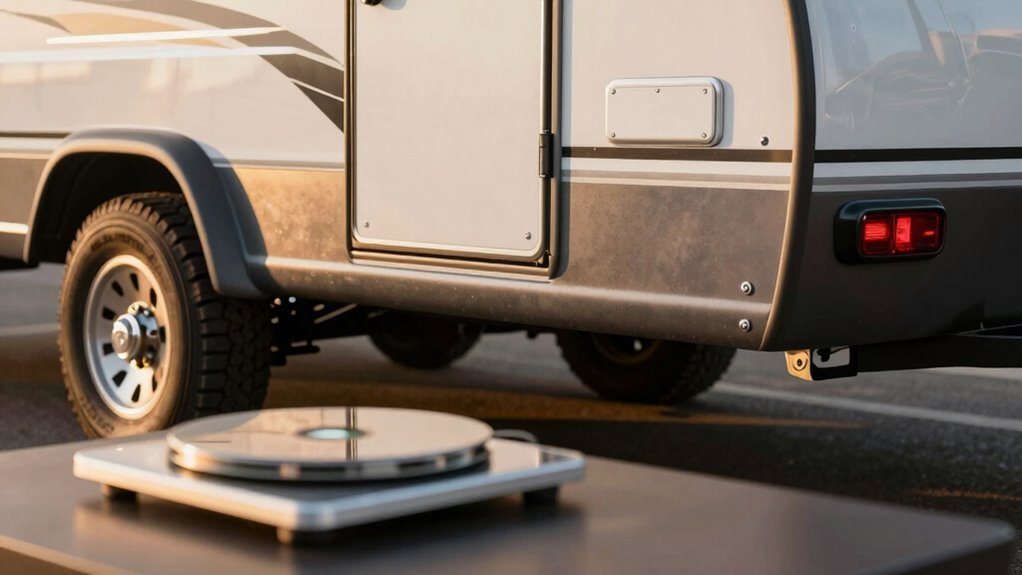
You’ve got a handle on all the things that add up to your RV’s total weight — from the water in the tank to the snacks in the pantry — but now it’s time to zero in on one of the most important numbers you’ll ever need: your RV’s GVWR, or Gross Vehicle Weight Rating.
Check the label on your driver’s side door jamb — it’s like your RV’s report card and lists the GVWR loud and clear.
Can’t find it? Peek at the owner’s manual or visit the manufacturer’s website — just plug in your model and boom, there it is.
GVWR includes everything: fluids, cargo, even that extra-heavy souvenir you picked up.
Don’t guess — get your rig weighed on a CAT scale to be sure you’re under the limit.
Think of GVWR as your RV’s weight “don’t-panic” zone — stay under and you’re golden!
Common Mistakes RV Owners Make With Weight Limits
Ever wonder why some RVers pull into campgrounds sweating bullets, only to find out they’re way over the weight limit?
You’re not alone.
Overpacking is sneakier than a raccoon in a snack drawer—those extra clothes, gear, and canned beans add up fast.
And oh, that full freshwater tank? It’s not just water—it’s hundreds of pounds you forgot to count.
Slap on solar panels or a bike rack without checking weight? That eats into your payload quicker than ants at a picnic.
Placing heavy stuff willy-nilly can mess up balance, strain axles, or cause wobbly sway on the highway.
Even your full propane tank and favorite hiking boots count.
Most folks skip weighing their rig fully loaded, but guessing is *not* a strategy.
Trust us, the scale won’t judge—your tires might, though!
The Role of Payload Capacity in Daily Use

Think of payload capacity as your RV’s backpack—the space and structure can only carry so much before it starts sagging at the seams.
You’ve got passengers, coolers, camping chairs, tools, and that secret snack stash—all fighting for space in the load budget.
Every person, propane tank, or full water jug chips away at your available payload, which is just GVWR minus the dry weight.
Sound technical? It’s not.
Picture loading up like a backpacking trip—only this pack drives down the highway.
Too much, and your RV handles like a grumpy bear: swaying, braking slow, and stressing out tires.
Stay within limits, pack smart, and keep heavy stuff low.
Your RV will thank you with smoother rides and fewer roadside surprises.
Lighten up, spread the load, and hit the road with confidence—you’re not just hauling gear, you’re protecting your adventure.
Weighing Your RV: Tips and Best Practices
How do you know if your RV is carrying more than it should? Weigh it like a pro! Load it up just like you’re heading on a trip—gear, passengers, full fuel and propane tanks, and a half-full fresh tank. Head to a certified CAT scale at a truck stop for a reliable, receipt-backed reading.
For ultra-precise results, try four-corner or RVSEF SmartWeigh systems that measure each wheel.
Got a fifth wheel? Weigh your truck alone first, then hooked up, to nail that pin weight.
Always pick large, low-profile scales with room to spare—no sketchy public ones!
Once you’ve got the numbers, compare them to your GVWR, axle, and tire ratings.
Spot imbalances? Shift heavy stuff around, keep weight low, and balance side-to-side.
Think of it as your RV’s annual checkup—because nobody likes a wobbly camper!
Upgrading or Modifying Your RV Without Exceeding GVWR
Tinkering with your RV to handle more gear or a heavier load? Smart move—but you can’t just magically boost the GVWR; that number’s set by the manufacturer and only they can change it legally.
Still, you *can* upgrade your RV’s muscle to carry more safely.
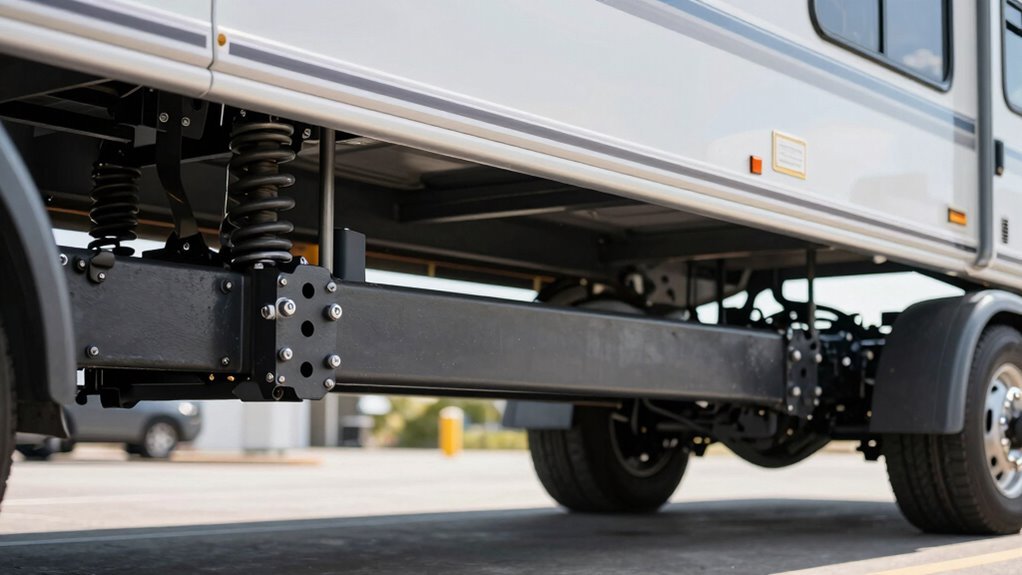
Swap in beefier axles, heavy-duty suspension, and stronger wheels to handle extra weight, but remember: those upgrades don’t alter the official rating on the label.
Match your tires to the load too—underpowered rubber can burst under pressure, and nobody wants a blowout picnic.
Always align tire, axle, and frame ratings so no single part becomes a weak link.
And please, don’t forget the brakes—stopping power matters more when you’re hauling more.
Upgrade wisely, stay under that GVWR, and keep your adventures fun, not fines!
Frequently Asked Questions
Can I Exceed GVWR for Short Distances?
No, you shouldn’t exceed GVWR—even for short trips.
Think of it like overstuffing a backpack: something’s gonna snap.
You’re risking tire blowouts, bad handling, and brake trouble, not to mention fines or voided insurance.
It’s not worth the hassle or danger.
Just lighten the load, check your weight, and roll easy.
Your RV will thank you—and so will your peace of mind!
Does GVWR Include the Weight of Passengers?
Yes, GVWR includes the weight of passengers—every last pound of you, your family, and anyone else riding along.
Think of your RV like a backpack: it’s not just what’s inside, but who’s wearing it.
You wouldn’t overload your pack and wonder why your shoulders ache, right?
Same deal here—passengers count, so don’t forget to factor them in when loading up and hitting the road.
How Often Should I Recheck My Rv’s Weight?
You should recheck your RV’s weight at least once a year, but don’t wait that long if you’ve added gear, passengers, or new toys like bikes or ATVs.
After big trips, seasonal swaps, or wintertime refills, hop on a scale—you’ll catch surprises before they become problems.
And hey, if your RV sags like it’s napping, it’s definitely weigh-in time!
Do Aftermarket Accessories Affect My GVWR?
You’re adding flair to your RV, but do aftermarket accessories affect your GVWR?
Yes, they do—every solar panel, generator, or rooftop AC counts toward your weight limit.
You’re not just accessorizing; you’re loading up pounds that eat into your cargo capacity.
Ever thought a cool upgrade could悄悄 stress your axles or tires?
Keep it fun, not risky—weigh after installing, stay under GVWR, and roll easy, knowing your rig’s still safe and sound.
Is GVWR the Same as Towing Capacity?
No, GVWR isn’t the same as towing capacity—they’re totally different beasts!
You’re looking at GVWR for your trailer’s max safe weight, while towing capacity is your truck’s muscle to pull it.
Think of it like pairing a strong buddy with a heavy backpack—they’ve gotta match up!
Get it wrong, and you’ll be the wobbly camper on the highway.
Safety first, fun second!
Conclusion
You wouldn’t pack a backpack so full it snaps, right? Same goes for your RV. One family learned the hard way—overloaded, their tire blew on a hill, turning a dream trip into a roadside wait. GVWR isn’t just letters; it’s your safety net. Stay under it, and you’re golden. Weigh smart, pack light, and roll with peace of mind. Adventure calls—but don’t forget to listen!
References
- https://www.rv.com/rv/defining-gvwr-gcwr-and-other-rv-weight-ratings/
- https://www.keystonerv.com/owners/understanding-rv-weight-rating-abbreviations
- https://www.escapees.com/blog/weight-and-safety-tip-gvwr
- https://leisurevans.com/blog/gvwr-weight-rv-matters/
- https://www.nirvc.com/blog/rv-numbers-ratings-limits-and-capacity/
- https://www.curtmfg.com/towing-capacity
- https://rvsafety.com/weight/glossary
- https://www.jayco.com/blog/understanding-rv-weights-and-their-meanings/
- https://www.daisyrv.com/how-to-calculate-rv-towing-capacity-and-payload-the-right-way-rv-weight-ratings-explained/
- https://www.youtube.com/watch?v=ElybL-QMUIw