Storing Food Safely in Your RV (Avoiding Spoilage)
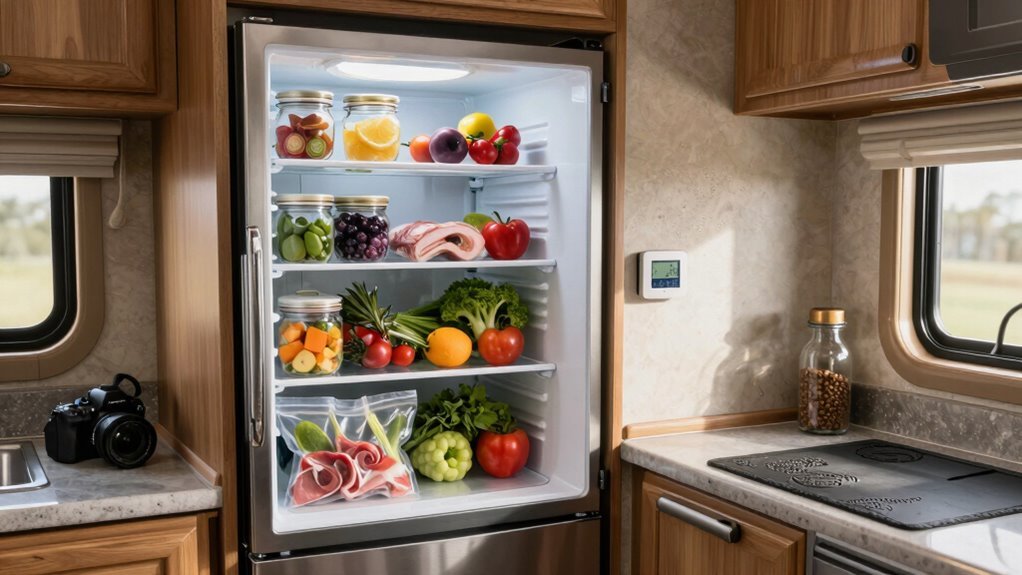
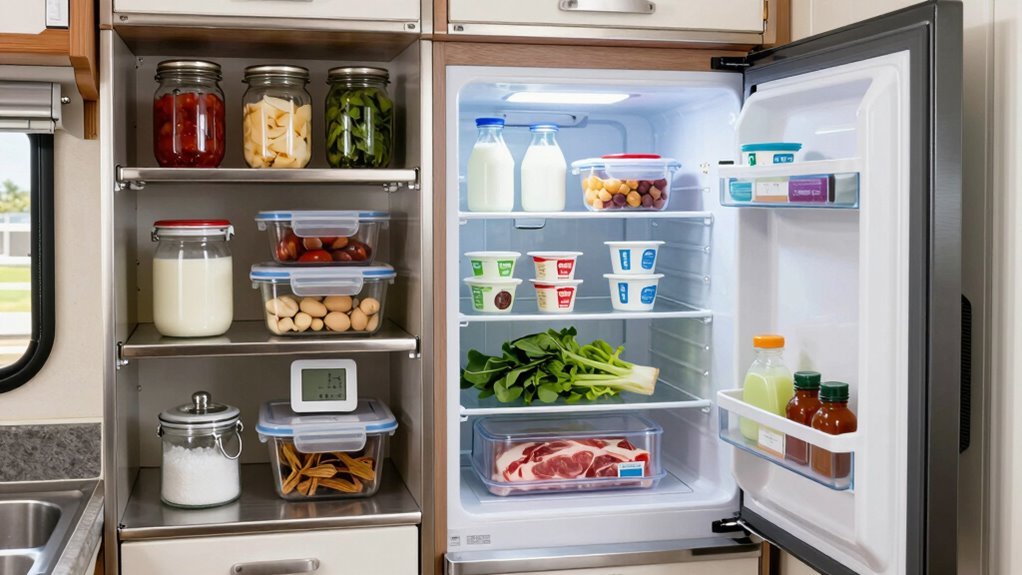
Storing food safely in your RV is essential to avoid spoilage and keep meals fresh on the road. Organize your fridge wisely by placing dairy and raw meats on the lower shelves, where temperatures are coldest.
Keep vegetables in the crisper drawer and store drinks in the door to minimize warm air exposure each time it’s opened. Use clear, airtight containers to prevent cross-contamination and make it easy to spot items before they turn into mystery slime.
Stock non-perishable staples like beans, canned tuna, and dried fruit in sealed bins to extend shelf life and deter pests. A wireless temperature sensor helps monitor your fridge in real time, so you never return to a warm interior or spoiled cheese.
Always handle raw meats with care, using separate containers and utensils to avoid cross-contact. Chill leftovers promptly to maintain freshness and prevent bacterial growth—your future self will thank you when reheating a safe, delicious meal.
Maximize Your Fridge Space With Smart Organization
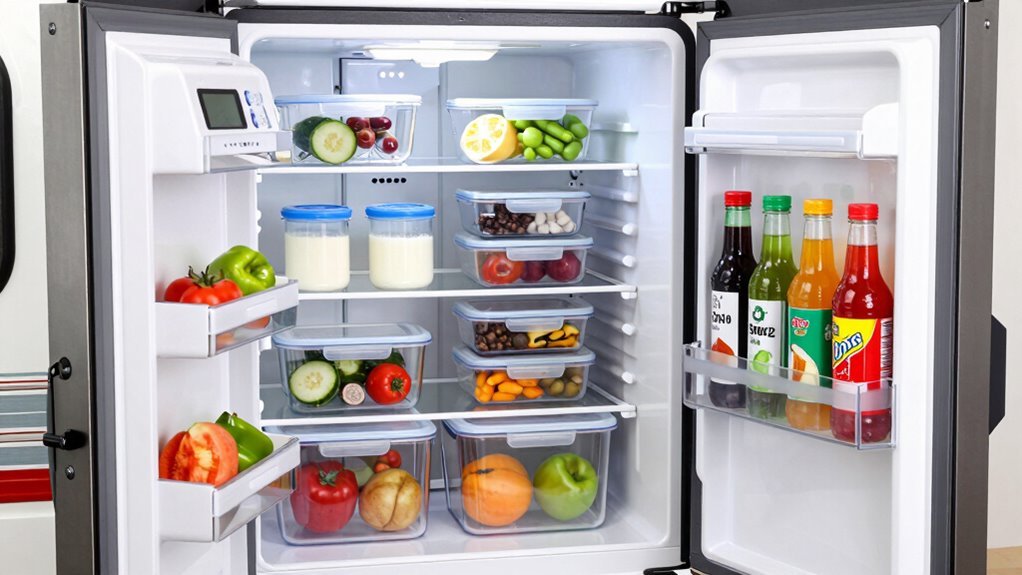
While your RV’s fridge may be smaller than your kitchen’s, with a few smart tricks, you can turn that compact cooler into a food-preserving powerhouse.
You stash dairy and meats on the lower shelves where it’s coldest, keep veggies crisp in the humidity-controlled drawer, and tuck condiments and drinks in the door—they won’t mind the warmer temps.
Slap clear, airtight containers on leftovers and pre-chopped snacks so everything’s visible and spill-proof.
Use slender, stackable bins to max out tight spaces—because nobody’s got room for fridge Tetris.
Label everything with names and dates (yes, even the mystery soup) so nothing ghostwrites its way to the back.
Place go-to items up front for quick grabs, and stash the backups behind.
Fewer door flings mean colder temps and fresher food.
With your fridge this organized, you’re not just saving space—you’re winning at RV life.
Meal planning helps streamline what you store and reduces clutter by focusing on planned meals only.
Choose the Right Foods for Long-Term Storage
When you’re miles from the nearest grocery store, picking the right foods for long-term storage isn’t just smart—it’s survival (well, tasty survival, at least).
Stock up on quinoa, farro, and beans—they’re packed with protein and fiber and stay fresh for ages in airtight containers.
Canned beans, tomatoes, tuna, and sardines? Total pantry heroes with crazy long shelf lives.
Toss in jars of olives, roasted peppers, and sauerkraut for flavor that survives bumpy roads.
Dried fruits, nuts, and seeds make crunchy, satisfying snacks—just keep ‘em cool and dry.
Dehydrated veggies like carrots and peppers rehydrate fast and save space.
Honey and jam won’t quit, even without refrigeration.
Stick to sturdy, non-perishable picks, rotate based on USDA dates, and you’ll eat well—even when the nearest market feels like a myth.
Water supply planning ensures you have safe drinking water and can preserve food properly when potable water isn’t available on site.
Who knew survival could taste so good?
Use Airtight Containers to Preserve Freshness
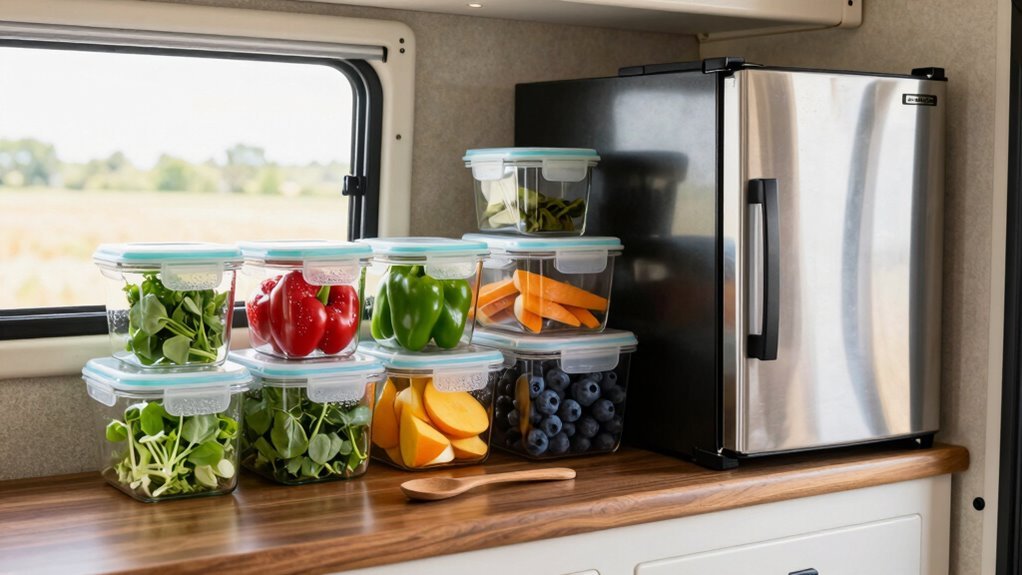
Grab a set of airtight containers and turn your RV pantry into a freshness fortress.
You’ll keep crispy snacks crunchy and oily goodies from turning rancid by blocking moisture and air—no more soggy crackers or funky-smelling nuts!
The silicone or rubber seals lock out humidity and pests, so bugs and rodents can’t crash your snack party.
Plus, you’ll stop mold before it starts, since it can’t grow without moisture.
These trusty bins also keep pantry moths and hungry mice from turning flour into a science experiment.
You’ll preserve flavor, texture, and even the good smells—coffee stays dreamy, and onions won’t invade your cookies.
No more mystery odors haunting your cabinets!
Durable and reusable, they handle bumpy roads and wild weather without breaking a sweat.
Transparent tops let you see your stash without cracking the seal.
Seriously, it’s like superhero armor for your food—practical, tough, and kind of fun.
Perishables can last as long as in the fridge when no air is present.
Monitor Temperature and Ventilation Regularly
Keep your cool—literally—by staying on top of your RV’s temperature and airflow like a pro.
Use wireless sensors like BMPRO SmartTemp to monitor fridges, freezers, and even wet bays with real-time data sent straight to your phone.
You’ll get instant alerts if temps rise or humidity spikes—because nobody wants a mystery soup party in their cooler.
Absorption fridges can be finicky, so keep a thermometer inside and watch for consistent readings, especially while driving.
Set custom alerts for highs, lows, or power hiccups, and sleep easy knowing your system texts you faster than your in-law after a family drama.
With Bluetooth and Wi-Fi, checking temps is as easy as scrolling memes.
Keep airflow unblocked with smart storage, and let data loggers catch overnight drops before they become disasters.
Stay frosty, stay fresh, and keep mold and bad bacteria doing the walk of shame out of your RV.
Practice Safe Handling of Perishable Items
Now that you’ve got your fridge and coolers running like a well-oiled chill machine, let’s talk about what you’re actually putting inside them—especially the stuff that spoils faster than ice in July.
Always separate raw meats from cooked foods to dodge cross-contamination—double-bag raw items so leaks don’t turn your cooler into a biohazard zone.
Keep frozen raw meat on the bottom where it’s coldest, and stash used plastic wrap in sealed bags until you can toss it at home.
Never mix raw chicken with your hard-boiled eggs—it’s a bacteria buffet you don’t want.
Plan meals ahead, freeze what you can, and pack perishables in waterproof containers.
Chill leftovers fast, and for heaven’s sake, keep canned goods low to avoid juggling soup cans like a circus act.
Stay smart, stay clean, and your taste buds (and stomach) will thank you.
Frequently Asked Questions
Can I Use Dry Ice to Keep My RV Fridge Colder?
Yeah, you can absolutely use dry ice to keep your RV fridge colder—it’s a game-changer!
Just stash it in a sturdy, vented cooler inside your fridge, never directly touching food.
It stays frosty-cold without melting into a puddle, lasts longer than regular ice, and keeps everything frozen tight.
Wear gloves, ventilate the area, and let those CO2 fumes escape—no surprise fog shows in your RV!
How Often Should I Clean My Rv’s Refrigerator?
You should clean your RV’s fridge at least once per season, but hey, why not do it monthly for a sparkling win?
Wipe interiors with baking soda and water, and don’t ghost the seals—they love attention too.
Defrost when frost stacks up like a mini glacier.
Hit the coils every few months, and give vents a pre-use spa treatment.
Pro tip: a clean fridge cools better, so keep it fresh and funky-free—no science experiments allowed!
Is It Safe to Store Food in My RV During Winter?
Yes, it’s safe to store food in your RV during winter—just like squirrels stash nuts in perfect winter hideaways, cold temps slow spoilage and keep food fresh longer.
You’ll save energy, cut restocking trips, and protect frozen goods naturally.
But beware: drain water systems to dodge mold, ventilate storage spots, and deep-clean to outsmart pests.
A tidy, dry RV means happy, safe food—and zero uninvited snack bandits!
What Should I Do With Expired Food on the Road?
You toss expired food right away, especially if it’s past the “Exp.” date or looks sketchy.
No peeking, sniffing, or taste-testing—just play it safe.
Bulging cans? Oozing jars? Toss ’em like last year’s road trip mixtape.
Pack out trash in sealable bags, and never leave it behind.
Wildlife’s not a fan of expired beans, but they’ll still come knocking.
Stay smart, stay tidy, and keep your RV a spoilage-free zone!
Can I Reuse Plastic Containers for Food Storage?
Yes, you can reuse plastic containers, but only if they’re made from safe resins like 2, 4, or 5—think your leftover takeout tubs made of sturdy polypropylene (code 5).
Just don’t turn your flimsy water bottle into a soup bowl, unless you enjoy plastic confetti in your chili! Wash by hand, toss if cracked, and never microwave unless labeled safe—your burrito isn’t a science experiment.
Conclusion
You’ve got this! Did you know nearly 40% of food spoilage in RVs comes from improper storage? Yikes! But with smart organization, airtight containers, and a watchful eye on temperature, your meals stay fresh and tasty. Think of your fridge as a VIP lounge—only the coolest stuff gets in! Keep it fun, keep it fresh, and your taste buds (and gut) will thank you every mile down the road. Happy camping—and even happier eating!
References
- https://www.coastalcowboyrvpark.com/smart-grocery-storage-in-an-rv-fridge/
- https://www.youtube.com/watch?v=aO0cV2QsEKs
- https://unravelledthyme.com/tiny-rv-fridge-organization-tips-and-tricks/
- https://www.youtube.com/watch?v=8-JKn2uPnAg
- https://www.rvtravel.com/tips-optimizing-rv-refrigerator-2037/
- https://explorerrvclub.com/blog/rv-food-storage/
- https://alittleandalot.com/long-shelf-life-foods/
- https://www.youtube.com/watch?v=Jg5LBuuuafA
- https://www.harmonyhousefoods.com/blogs/news/blog-rv-food-storage-ideas
- https://www.rvtravel.com/stock-small-rv-pantry-long-term-travel-1827/