Solo RVing: Tips for Traveling Alone Safely
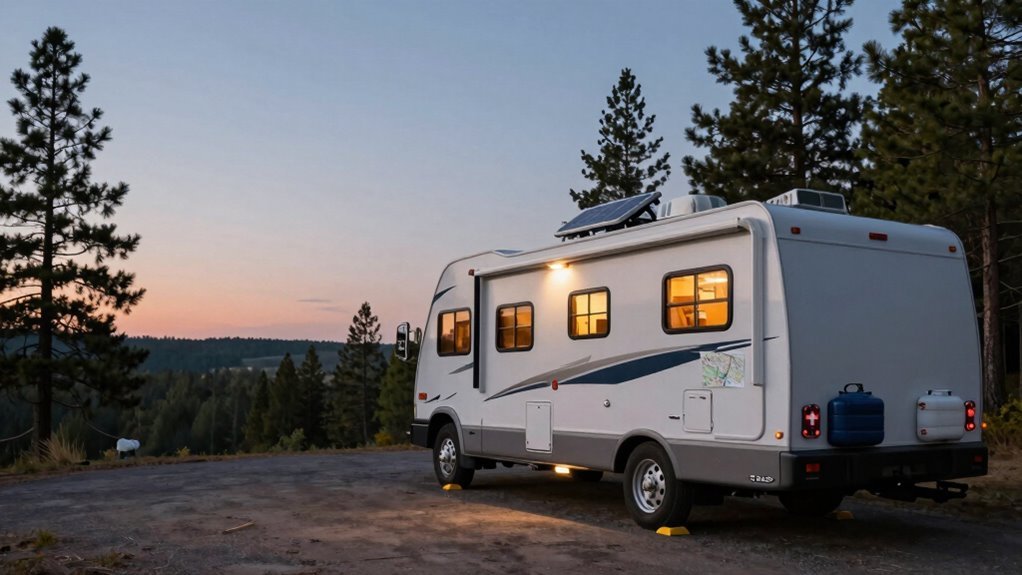
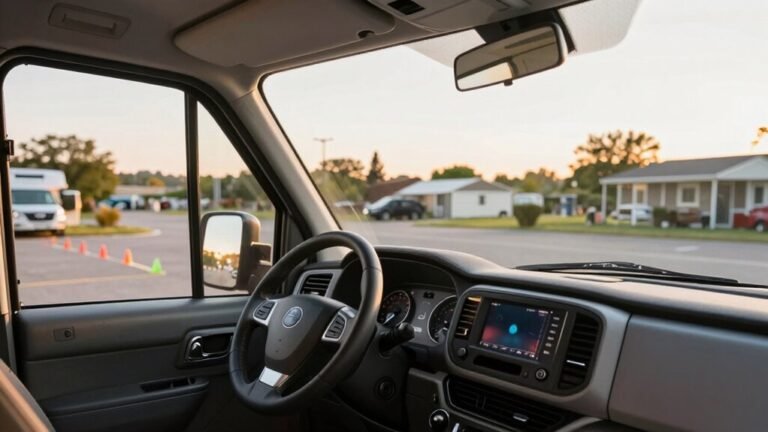
When traveling solo in an RV, safety should be a top priority. Pick well-lit campsites near busy areas like plazas or churches—safety loves company and visibility after dark.
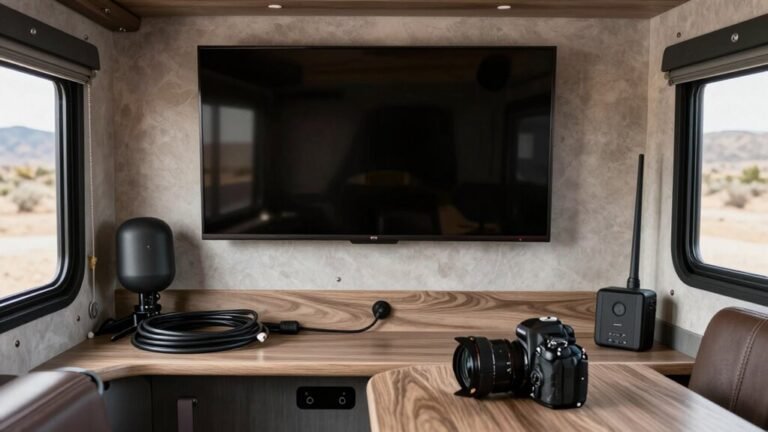
Install security features like cameras, motion-sensor lights, and door alarms to deter both wildlife and unwanted visitors. These smart upgrades make your RV safer and more secure during solo travels.
Stay connected by checking in daily with trusted contacts and using GPS sharing tools. Always trust your instincts—if something feels off, it probably is.
Pack a reliable emergency kit, stay alert on the road, and handle setbacks like flat tires with calm confidence. Solo RVing is about preparation, awareness, and embracing the journey.
Choose Safe and Well-Lit Campsites
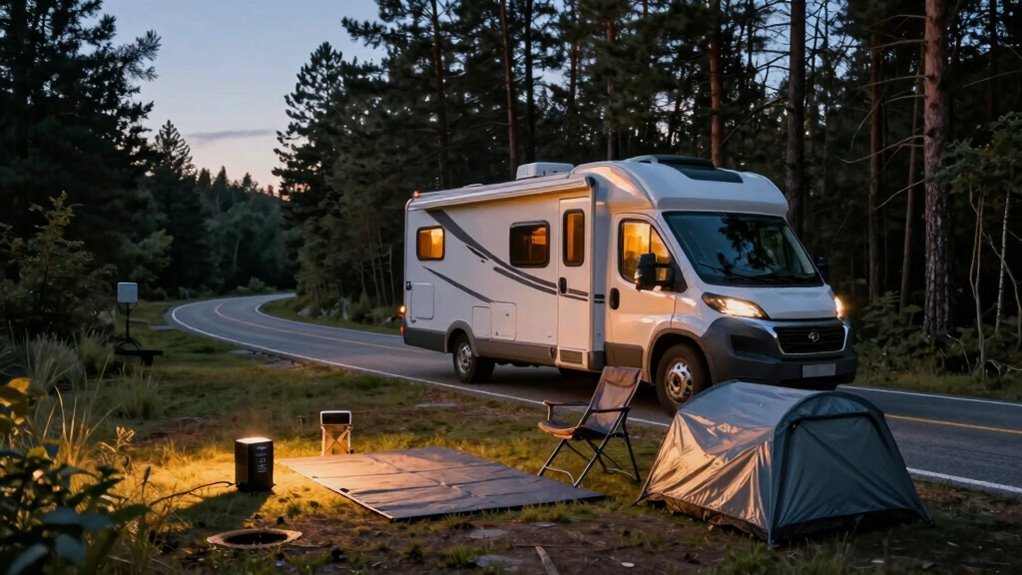
Ever wonder why some campspots just *feel* safer at night?
It’s not your imagination—well-lit sites really are smarter picks.
Bright lights mean better visibility, so shady characters think twice before wandering near.
You’re way less likely to get targeted in a lively, illuminated area than tucked away in some shadowy corner.
Trust us, no one wants to be the nighttime drama.
Urban parks and private RV spots usually shine brighter than remote ones—literally.
Lighted parking lots and central plazas? Perfect for quick overnight stops.
And when lighting teams up with nightly patrols, you’ve got a solid safety combo.
Think of it like a spotlight on peace of mind.
So go ahead, pick that spot under the glow—not only do you see everything, but critters (and people) think twice before sneaking around.
Safety’s always in the light, and you’re not just camping—you’re camping with confidence.
Choosing a site within earshot of other campers also helps, thanks to the added layer of neighbor awareness.
Install and Maintain Security Devices
You’ve picked a bright, busy spot to park for the night—smart move—now let’s make sure your RV stays a no-go zone for anything sketchy while you’re off exploring or tucked in bed bingeing shows on your tablet.
Snap in weatherproof cameras with night vision and solar power—IP65 or better—so rain or shine, you’re covered.
Mount them at corners, doors, and awnings, avoiding glare, and pair with motion lights for extra “back off” energy.
Go wired if you hate buffering, or use peel-and-stick sensors to skip the drilling drama.
Don’t forget door alarms, GPS, and smart locks—because who doesn’t love spy-level security?
Test monthly, clean lenses, tweak motion zones, and change batteries like you’re swapping playlists.
A little upkeep keeps your rolling fortress tight, safe, and totally yours—no uninvited guests, not even the creepy crawlies.
Proper installation ensures your camera stays secure and provides consistent coverage, even on bumpy roads.
Establish a Check-In Routine With Trusted Contacts
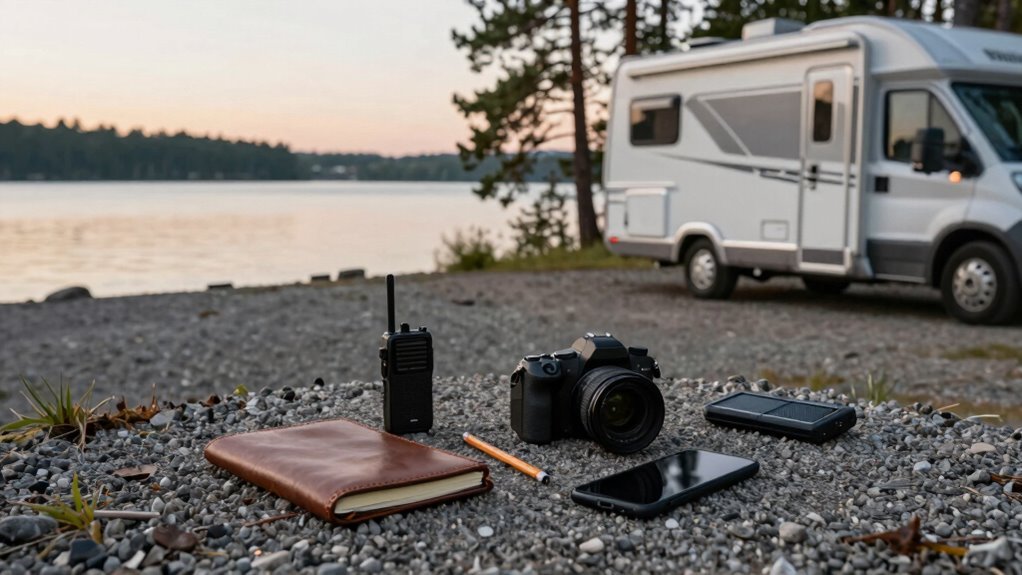
While your solo adventures are all about freedom and spontaneity, staying connected with a few key people keeps the fun from tipping into risk.
Pick at least two trusted folks—like a sibling or best friend—who know your plans and love checking in.
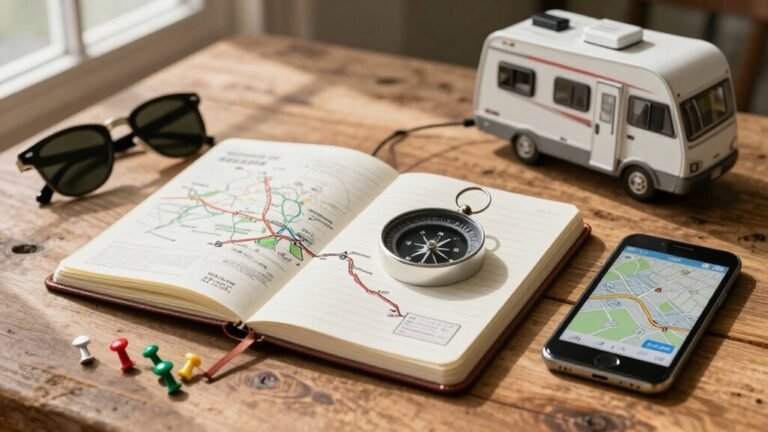
Share your full itinerary, including routes, stops, and arrival times, plus emergency contacts and GPS spots.
Update them fast if you change plans—it’s like sending a little “still alive and kicking!” postcard.
Set daily check-ins, maybe morning and night, via text or app, and use satellite messengers when bars disappear.
If you miss one, your contacts know to poke around.
Use shared docs, GPS pings, or funny code words like “pineapple alert” for emergencies.
Test the whole system before you roll—it’s peace of mind on wheels!
Staying connected is crucial because solo campers should inform at least two responsible people of their travel plans for safety, a practice supported by safety documentation and connectivity.
Trust Your Instincts and Stay Aware
Most of the time, your gut’s got your back—literally.
If something feels off, it probably is, so don’t ignore that inner alarm.
You’ve heard it before—women especially need to trust their instincts on the road, and for good reason.
If a campsite gives you the creeps or someone knocks after dark and your stomach knots, leave.
No hesitation.
Move to a safer spot, even if it’s midnight.
Pull into a well-lit campground, park near a church, or text your location to a friend while you drive.
Keep your eyes up, scan for sketchy vibes, and never shy from ditching a dicey situation.
Lock your doors, use security bars, and toss a men’s jacket on the dashboard for fun (it works!).
Stay sharp, stay safe, and remember: your gut is your best travel buddy.
Prepare a Comprehensive Emergency Kit
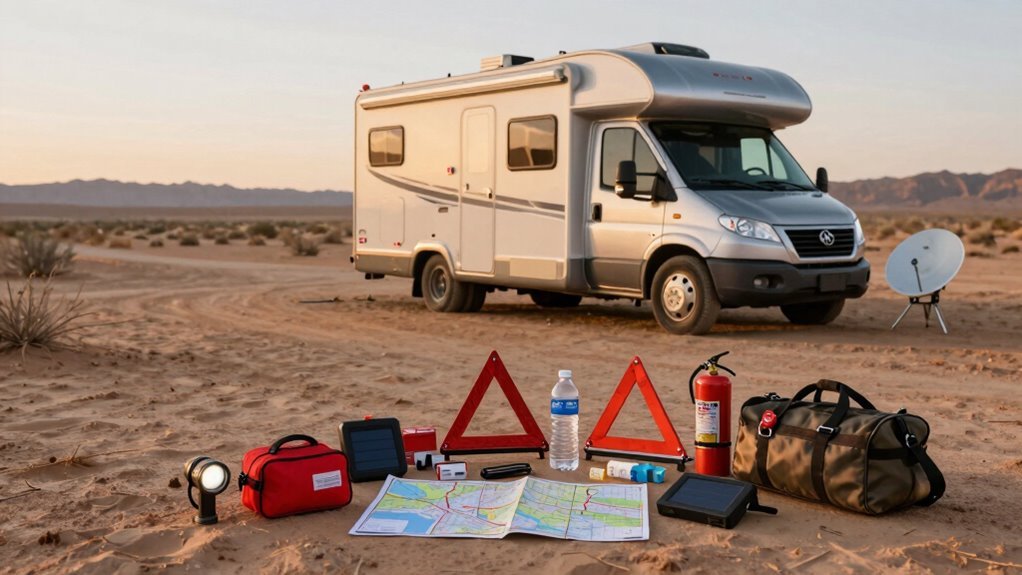
Pack like a pro and sleep like a baby—because when you’re flying solo in your RV, the right emergency kit can turn a potential disaster into a minor bump in the road.
You’re the captain of your home on wheels, so be ready for anything with gear that covers health, breakdowns, and the unexpected.
Don’t wing it—plan ahead and stock up like a savvy road warrior.
- First aid kit with meds and burn cream – because nobody wants blisters turning into panic mode.
- Jumper cables and tire inflator – your RV won’t start itself if the battery quits on a chilly morning.
- Solar-powered charger and power bank – keep your phone alive, because dead batteries kill vibes.
- Water, snacks, and purification tablets – in case you end up playing “Survivor: Desert Edition.”
- Fire extinguisher and whistle – safety first, always. You’ve got this—and your kit’s got you.
Frequently Asked Questions
Can I Legally Sleep in My RV Anywhere?
No, you can’t legally sleep in your RV just anywhere—sorry, wanderer!
States ban overnight stays at rest stops, and cities often restrict street parking.
But don’t stress!
You’ve got options.
Truck stops, Walmart lots, and BLM land usually say “yes” to overnighters.
Just check signs, ask when needed, and dodge fines like a pro.
Plan smart, park safe, and keep that freedom-filled journey rolling—all with a wink and a nod to the rules.
How Do I Find Solo-Friendly RV Parks?
You find solo-friendly RV parks by checking apps like Hipcamp for secure, well-lit spots with full hookups and Wi-Fi—perfect for staying comfy and connected.
Read Google reviews to spot parks with friendly staff and quiet vibes.
Look for pet perks, laundry, and trails so you’ve got fun and ease in one place.
You’ll sleep safer and have more fun when the park feels like a homey hideaway, not a random parking lot.
What Internet Options Work Best for Remote Areas?
You’ll love Starlink Roam for remote areas—it’s fast, reliable, and works almost anywhere thanks to tiny satellites zipping overhead.
Just avoid heavy tree cover, or you’ll get more frustration than Wi-Fi.
Pair it with a TravlFi device for backup; it auto-switches networks like a champ.
T-Mobile AWAY’s 5G hotspot helps too, though spotty in deep wilderness.
Skip slow public Wi-Fi—you’re not here for endless loading circles, right?
Are Pets Safe to Leave Alone in the RV?
Nope, you shouldn’t leave pets alone in your RV—it’s riskier than it seems.
Air conditioning can quit, temperatures can soar, and power outages happen fast.
Even with cracked windows, your furry buddy could overheat before you get back.
Most campgrounds also ban unattended pets—break the rule and you’re outta there!
Instead, bring them along, use pet cams, or find fun activities where they’re welcome.
Safety first, adventure second!
How Do I Handle Mail While Traveling Long-Term?
How’s a rolling home supposed to get mail, anyway?
You grab a mail-forwarding service for a real address, scan letters online, and skip the clutter.
You store or forward packages to campgrounds, hotels, or even a buddy’s place—no sweat.
You use free USPS General Delivery for quick stops, or stash parcels at UPS Stores with ease.
You stay alert with delivery alerts and same-day shipping, keeping life smooth, secure, and seriously smart on the road.
Conclusion
You’ve got this—safety’s not scary, it’s smart! Pack your kit, pick a bright spot to camp, and keep your people in the loop. Trust that gut of yours, like it’s your co-pilot with excellent instincts. Add a dash of humor, a pinch of caution, and boom: solo adventure magic. Traveling alone doesn’t mean being alone—it means freedom, fun, and flipping fear the bird. Ready? The open road’s grinning just for you!
References
- https://www.rvia.org/system/files/media/file/RVIA Campground Industry Market Analysis.pdf
- https://www.granddesignrv.com/adventure-more/live/are-rv-parks-safe-from-crime–tips-for-weekenders-and-full-time-
- https://www.insuremytrip.com/travel-advice/travel-inspiration/best-us-states-for-camping/
- https://rvservices.koa.com/rvinformation/rvautosafety/avoiding-crime/
- https://www.innowave-studio.com/post/trends-in-the-u-s-rv-park-and-resort-sector-for-2025-2026
- https://therovingfoleys.com/how-safe-are-rv-parks/
- https://camperchamp.com/usa/rv-camping-statistics/
- https://sageoutdooradvisory.com/blog/rv-park-location-data-usa-2024/
- https://www.rvtravel.com/why-rv-parks-are-no-longer-safe-1165/
- https://outdoorrecreation.wi.gov/Documents/Research Library Page files/US – Demographics & Participation/2025-koa-camping-outdoor-hospitality-report-vlr.pdf