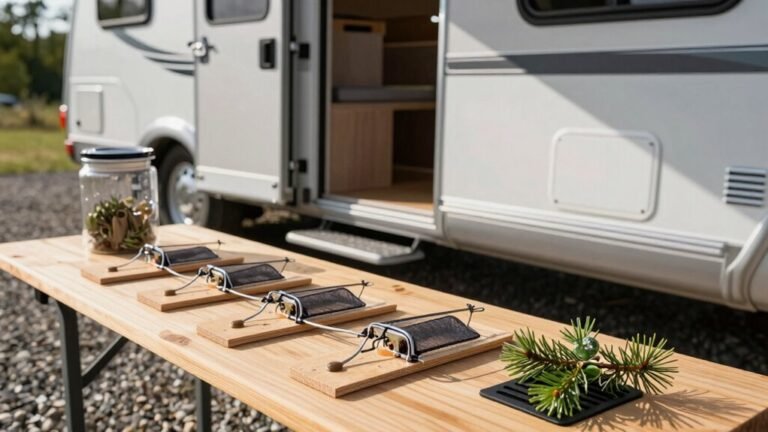
How to Secure Your Campsite From Theft and Wildlife
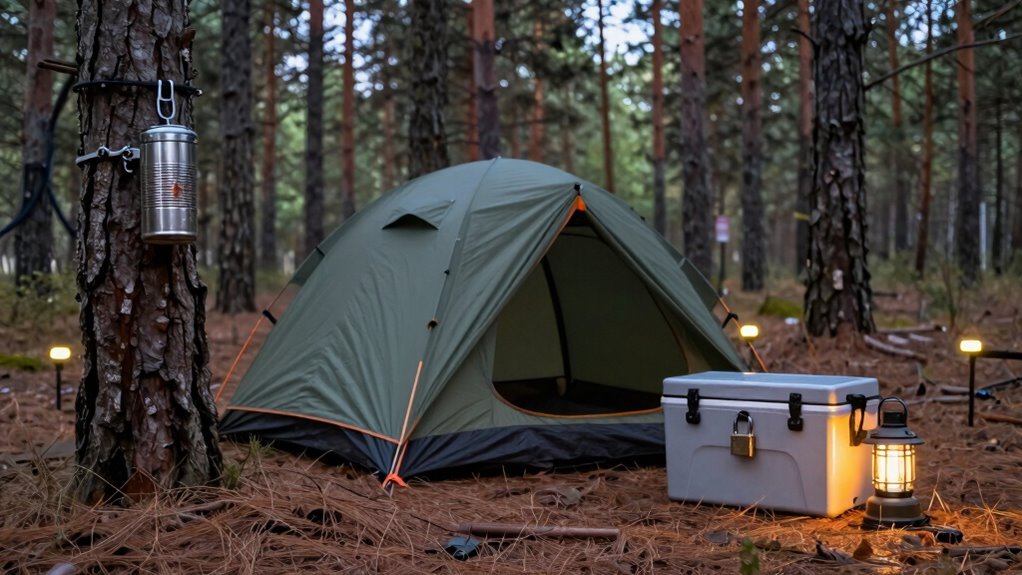
To secure your campsite from theft and wildlife, always use an IGBC-approved bear canister—never rely on flimsy coolers or untested sacks. Store all food and scented items inside, as this is the most effective way to deter animals.
Hang your food 12 feet off the ground and 6 feet from the tree trunk if no bear box is available. This helps secure your campsite from theft and wildlife by making it inaccessible to bears and rodents.
Pitch your tent on high ground, away from trails and water sources, for better safety and drainage. Position it so you have a clear view of your surroundings, helping you spot any unwanted visitors.
Keep all gear zipped away and never leave valuables in your car. Lock everything up to protect against theft and to avoid attracting wildlife with lingering food odors.
Cook meals downwind and far from your sleeping area to minimize food smells in your tent. Avoid wearing cooking clothes while sleeping so you don’t smell like a pepperoni pizza at night.
Store Food in Bear-Resistant Containers
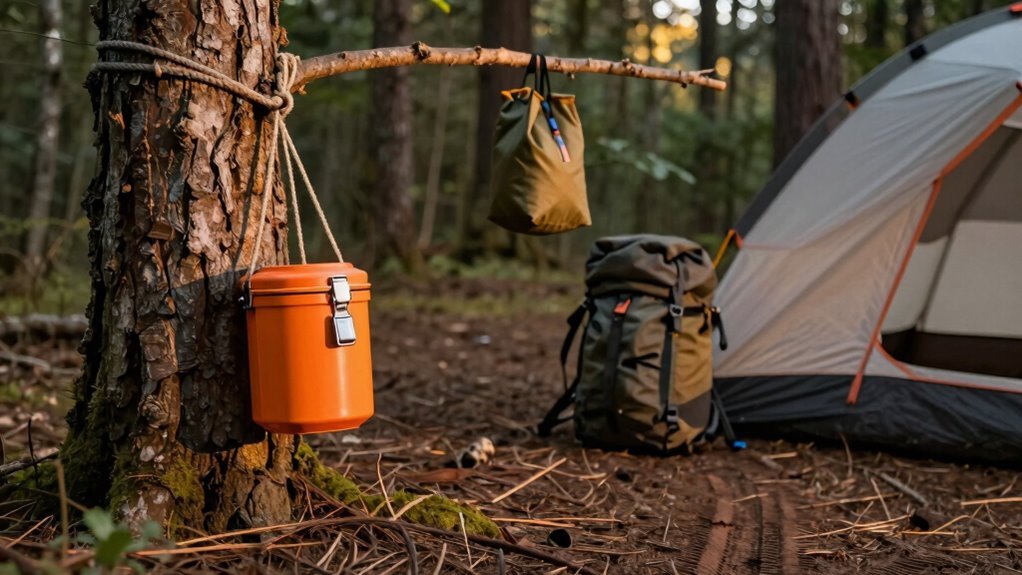
Pack smart and keep your snacks safe—because nobody wants a bear crashing their campsite snack party.
You’ve gotta store all scented stuff—food, toothpaste, even trash—in a bear-resistant canister.
It’s not just smart, it’s required in places like Rocky Mountain, Olympic, and Glacier National Parks.
Make sure your container is IGBC-approved, with zero gaps or flimsy spots a bear could bite or claw through.
No coolers without locks, no dry bags, and sorry—Ursacks won’t cut it everywhere.
Repackage meals into zip bags, measure portions, and test-fit everything at the trailhead.
You can keep your first lunch and dinner out, but everything else goes in.
Oh, and double-check that your toothpaste isn’t secretly a bear magnet.
Doing this keeps bears wild, your food safe, and your trip stress-free.
Win-win!
And remember, bear-resistant canisters must be rigid and approved to meet regulations and ensure safety.
Hang Your Food Properly in Bear Country
You’ve locked up your grub in a bear-proof canister—smart move—and that works great where regulations demand it, but what about when you’re in the backcountry and hanging is the name of the game?
No canister? No problem.
Use the PCT method with a carabiner and toggle if you’ve got one high branch, or go double-tree when limbs are scattered.
Got a low-hanging limb? Try the counterbalance trick—it’s like a food seesaw!
Launch your rope with a rock-sack to avoid a tangled mess.
Hang your bag 12 feet high, 6 feet from the trunk, and 100 feet from camp—more in grizzly country.
Keep it away from trails and lower branches, and stash cookware, toothpaste, and smelly clothes in there too.
Trust us, bears aren’t picky.
A clean, smart hang keeps both snacks and critters happy—sweet dreams come from smart hangs, not raided leftovers!
Bears are very clever and can figure out poorly secured food caches, so double-check your knot and placement.
Choose a Smart Tent Location
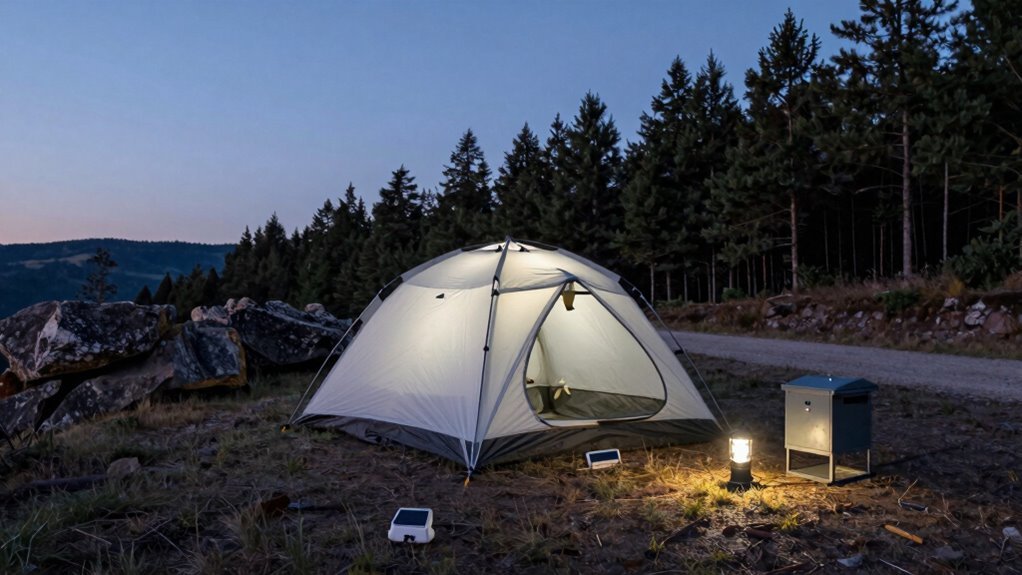
Where should you plop your tent for the perfect night under the stars? Pick a spot that keeps you safe, dry, and one step ahead of both sneaky raccoons and curious hikers. Here’s how to nail it:
- Elevate your base – Stay high and dry by avoiding dips, gullies, and old streambeds where rainwater sneaks in overnight (nobody wants a surprise moat).
- Stay back from trails and water – Give paths, roads, and lakes a wide berth to dodge wildlife traffic and wandering guests with sticky fingers.
- Open sightlines, smart cover – Choose a spot where you can see around you, use rocks or shrubs for wind protection, but skip the jungle-level bushes that hide late-night visitors.
- Mind the wind and sun – Tuck behind natural windblocks, face your tent inward, and balance shade with warmth—because no one sleeps well in a sweaty or icy tent.
Proper lighting and visibility enhance safety by deterring intruders and improving awareness, so consider setting up near campsite security features like designated lit paths or shared common areas.
Use Locks on Your Gear and Vehicle
Think of your gear as treasure, because to the right (or wrong) wanderer, it absolutely is.
Lock it up like you’re guarding gold!
Use flexible luggage locks on tent zippers—they slide right through and keep snoops out, especially when you tuck the lock body inside.
Combine two zippers for extra security, and pick combo models so you won’t lose keys.
For your vehicle and gear, go with shrouded or disc tumbler padlocks; they laugh in the face of bolt cutters.
Grade 4? Even better—twice as tough as Grade 3.
Cable locks are your best friend: wrap them around coolers, bikes, or kayaks tied to trees.
Stainless-steel hitch locks keep trailers from wandering off (without you).
Choose marine-grade, weather-resistant locks—they won’t rust when it pours.
A visible lock won’t stop master thieves, but it’ll make most casual takers walk on by.
Lock smart, sleep easier!
Minimize Noise and Scent to Deter Animals
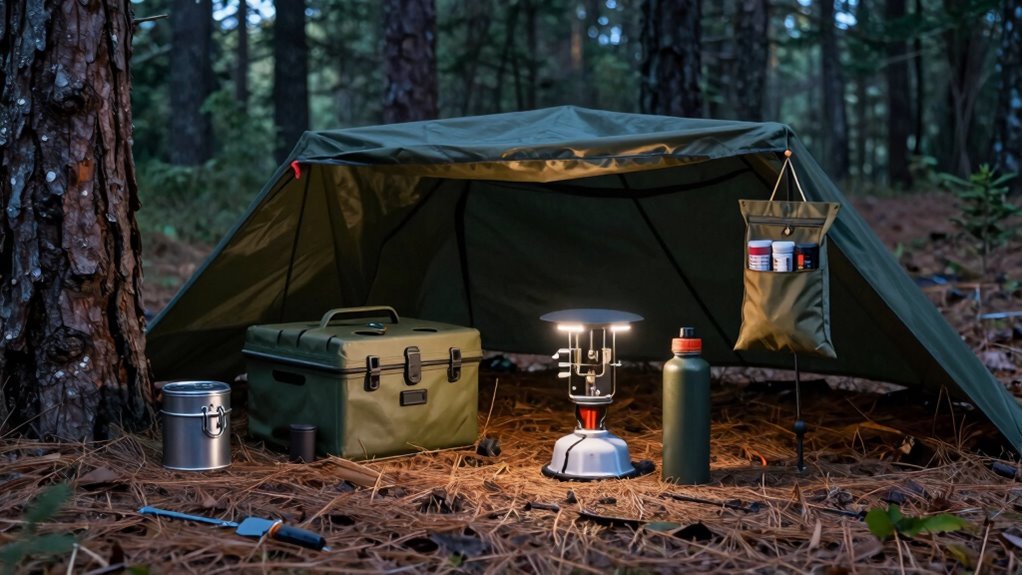
Locking up your gear keeps sneaky humans at bay, but quieting things down and cutting the smells? That’s how you stay off wildlife’s radar. Animals嗅音而至—uh, I mean, *follow their noses and ears*—right to your tent.
Don’t invite uninvited raccoons to dinner. Here’s how to stay low-key in critter country:
- Set up camp away from animal highways, like trails or berry buffets, and cook 200 feet downwind from your tent—so dinner prep doesn’t become *dinner bell*.
- Move slowly and quietly; drop the clank by padding gear and tiptoeing like you’re sneaking cookies past midnight.
- Store food and toothpaste in smell-proof bags or bear cans—yes, toothpaste counts, minty moose anyone?
- Use soft ground for sleeping spots and whisper instead of talk—save the campfire ballads for daylight.
Less noise, less scent, less surprise visitors. Sweet (quiet) dreams!
Frequently Asked Questions
What Should I Do if I See a Bear Near My Campsite?
You stay calm and don’t run—bears love a chase!
Group up, make noise, and wave your arms like you’re directing traffic.
Back away slowly, keeping that 100-yard bubble.
Grab kids and dogs, speak firmly, and have bear spray ready.
If it charges, don’t panic—spray when it’s close.
Most bears just want a snack, not a showdown, so play it cool and keep your campsite clean later.
Are Electric Fences Effective for Protecting My Camp From Animals?
Yes, they’re super effective!
Portable electric fences stop bears, deer, and even nosy wolves with a quick, harmless zap that says, “Not today!”
At 5,000+ volts, they learn fast—no repeat offenders!
Just keep your wires clear, test the power, and position it right.
It’s like invisibly telling critters, “This camp’s electrified, buddy!”
Safe, proven, and packable—you’ve got a furry-free zone in minutes!
Can I Use Motion-Activated Lights to Deter Nocturnal Wildlife?
Motion-activated lights startle squirrels and raccoons, making them think twice before sneaking in.
They’ll dart off when the beam hits, at least at first.
Just don’t expect shy cougars to care—one glance and they’re unfazed.
Swap light positions now and then so critters don’t catch on.
Add sprinklers or sealed bins, and you’ve got a nighttime fortress—high-tech, a little silly, but seriously effective.
Is It Safe to Sleep With Food Inside My Tent?
No, you can’t sleep with food in your tent—it’s a one-way ticket to critter chaos.
Did you know 40% of bear encounters happen because of food in tents?
Yikes! Even a granola bar’s smell tempts raccoons, mice, or worse.
They’ll chew through fabric like it’s tissue paper.
Keep food packed away in bear canisters, 100 feet from your tent.
You’ll sleep safer, and your tent stays bite-free—nobody wants midnight roommates!
Should I Carry Bear Spray Even in Non-Bear Areas?
Yes, you should carry bear spray even in non-bear areas—it’s your lightweight, pocket-sized superhero.
That hissing cloud stops curious wildlife fast, and hey, you never know when a rogue black bear might crash your picnic.
It’s 92% effective, way easier than fumbling with a gun, and honestly, spraying a nosy raccoon sounds kinda fun.
Stay safe, stay ready, and keep that spray handy!
Conclusion
You’ve locked it down—smart moves! Remember, an ounce of prevention is worth a pound of cure. Store food tight, pitch your tent wisely, and keep scents low. Critters may nose around, but they’ll find zilch and give up. You’ll sleep easy, gear stays safe, and your campsite stays happy. Adventure on, clever camper, you’ve outsmarted both thieves and raccoon bandits!
References
- https://dec.ny.gov/nature/animals-fish-plants/black-bear/management/bear-resistant-canisters
- https://bearvault.com/bear-canister-requirements/
- https://adk.org/a-bear-can-use-it-or-lose-it/
- https://www.nps.gov/gaar/planyourvisit/brfcs.htm
- https://bearwisejh.org/visitors/food-storage/
- https://www.fs.usda.gov/visit/know-before-you-go/bears/bear-resistant-food-canister
- https://www.rei.com/learn/expert-advice/bear-resistant-canisters.html
- https://www.pcta.org/discover-the-trail/backcountry-basics/food/bear-canister-protecting-your-food/
- https://appalachiantrail.org/experience/hike-the-trail/essential-skills/safety/bears-food-storage/
- https://andrewskurka.com/food-protection-techniques-in-bear-country/