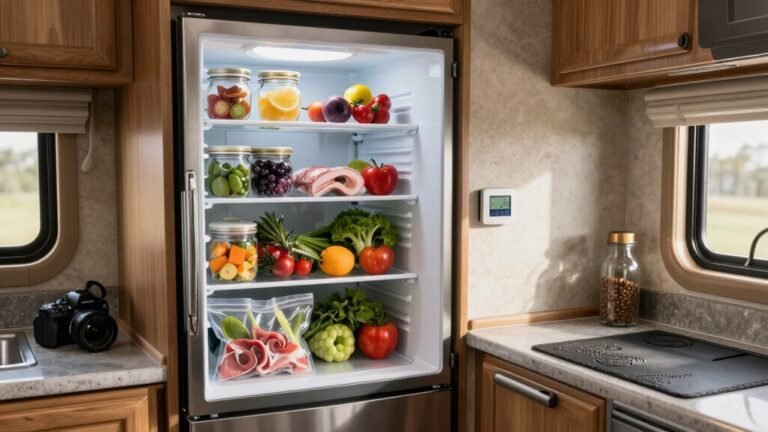
Troubleshooting Common RV Slide-Out Problems
Stuck slide? Don’t panic—this common RV slide-out problem is often easy to fix. Start by checking your power source, as a dead battery or tripped breaker could be the culprit.
If you hear grinding, stop immediately; this indicates a potential obstruction or misalignment. Inspect the slide area for debris and ensure the mechanism is properly lubricated.
Leaky seals and wobbly slides are also common RV slide-out problems. Worn gaskets or unlevel flooring often cause these issues.
A little grease, realignment, or a quick seal replacement usually resolves these concerns. Regular maintenance helps keep your RV cozy, dry, and trouble-free.
Slide-Out Won’t Extend or Retract
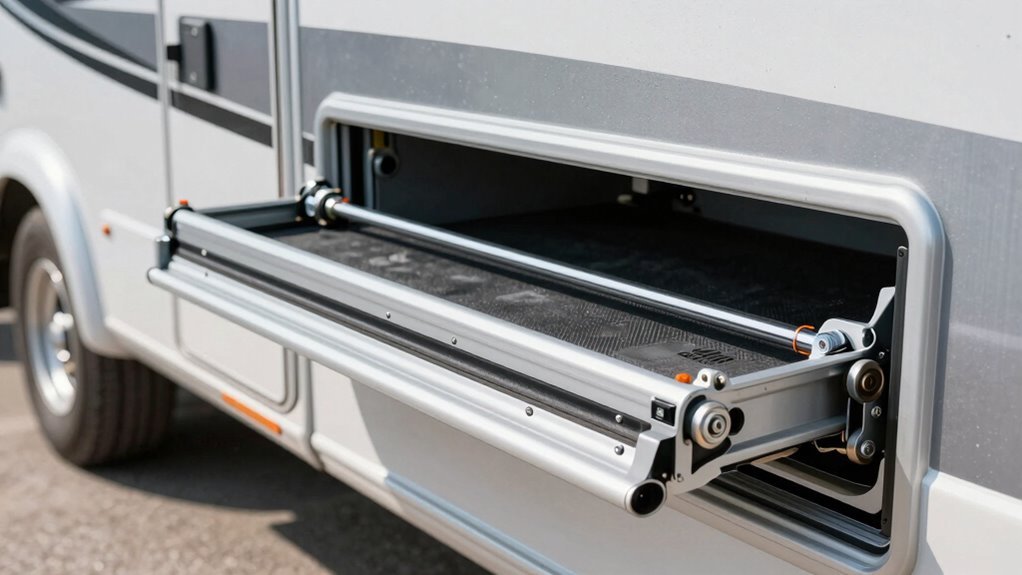
Ever hit the slide-out button and nothing happens? Don’t panic—start simple.
Check your power source first; a dead battery or disconnected shore power can kill the system fast.
Is the fuse blown or breaker tripped? That’s an easy fix.
Next, make sure your engine’s off and parking brake is on—many rigs have safety locks that stop slide action otherwise.
Listen for a click or hum; if you hear nothing, trace the wiring for loose, corroded, or chewed-up connections.
Bad switches or fried control modules can also ghost the system, so test voltage before tossing parts.
If power’s good but motors stay silent, your motor might’ve given up the ghost.
Burnt windings or stripped gears are sneaky culprits.
And hey, if one side moves, check for cable snaps or sync issues—nothing like a dramatic lopsided slide to ruin dinner plans!
Confirm the slideout switch has failed by testing if other switches operate the slideout or if no sound occurs when activating the control.
Slide-Out Is Leaking Water
So your slide-out works just fine—no gremlins in the motor or mystery silence when you hit the button—but there’s a drip, then another, and suddenly you’re hosting an indoor rainstorm every time it rains?
Misaligned seals are likely the culprits, especially if the top wiper seal slips under the side one instead of overlapping it like shingles.
Wind can then sneak water right behind the seals.
Over eight seasons, gaskets wear down, fold, or trap debris like pine needles, creating tiny highways for water to enter.
Even a poorly patched tire blowout or clogged roof track can invite leaks.
Improper installation or a tilted slide—thanks to overzealous stabilizer jacks—adds more gaps.
Fight back by cleaning gaskets, repositioning folded rubber, and sealing overlaps with 303 protectant.
Add an awning for extra shield and inspect seals yearly.
A little TLC keeps your interior dry—and your camping trips drama-free!
Factory glue failures shingle effect can also allow water intrusion, especially when the top seal ends up beneath the side seal instead of overlapping it.
Slide-Out Makes Grinding or Scraping Noises
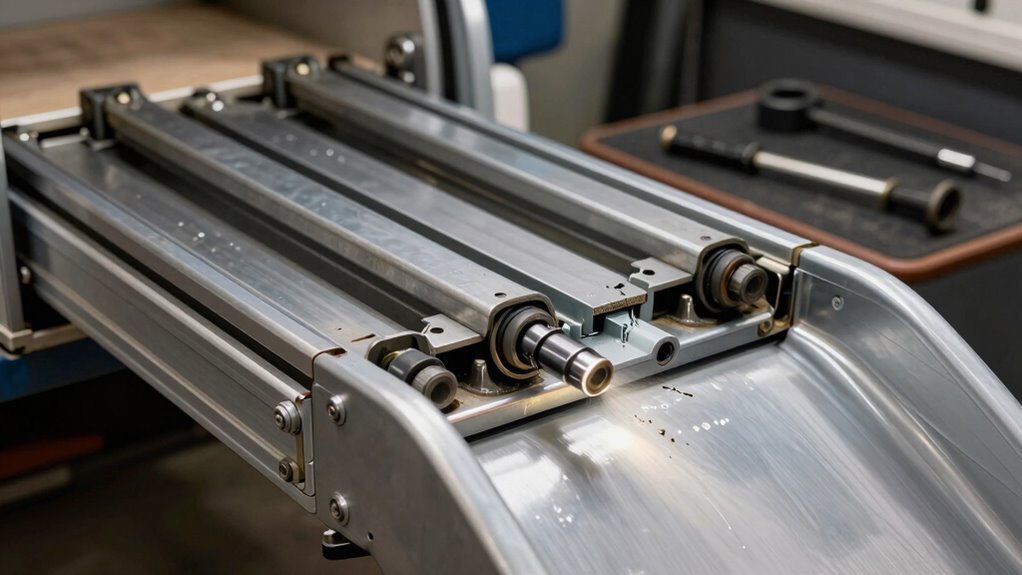
Hearing a grinding or scraping noise when you slide out your RV’s extension? Don’t panic—these sounds usually point to fixable issues, not a doomed adventure.
Think of your slide-out like a grumpy cat: it just wants attention in the right spots.
- Check cables and pulleys—if they’re loose, off-track, or slack, realign them fast; nothing likes a wobbly cable.
- Hunt down debris—screws, gunk, or rogue nuts love to hide and cause havoc in tight spaces.
- Lube it up!—dry parts squeal and grind; a squirt of proper grease keeps things smooth and quiet.
A little inspection goes a long way, and hey, you’ll impress your travel buddies with your RV whispering skills. Always stop extending or retracting at the first sign of noise to prevent further damage—stop slide-out movement immediately if grinding occurs.
Regular TLC means less noise, more peace—and no more wondering if your RV’s growling at you!
Slide-Out Is Not Level or Aligned
That grinding noise might’ve had you worried, but now it’s time to fix how your slide-out sits—not just the sounds it makes. If your floor sags or gaps appear, it’s misaligned—no more playing hopscotch indoors! Check these common culprits:
| Problem | Quick Fix |
|---|---|
| Sagging floor or uneven doors | Loosen head bolts, adjust position, and retighten |
| Slide-out not level after setup | Use a proper level, not just the bubble on your dash |
| Wobbly slide under weight | Add support pads and avoid over-tightening |
| Recliners sliding or walking feels risky | Inspect monthly—catch tilt before it’s a tilt-a-whirl! |
Ground shifts, your RV settles, and things go wonky—so play detective early. A few tweaks now save a mountain of hassle later. You’ve got this, RV boss!
Slide-Out Motor Runs but Mechanism Doesn’t Move
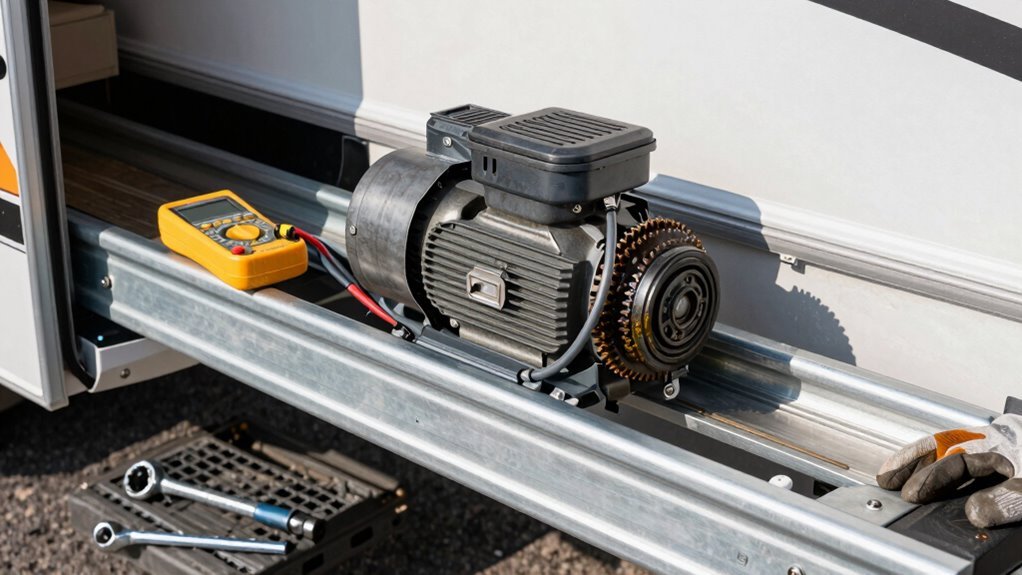
When your slide-out motor hums to life but the room just sits there like it’s ignoring you, don’t panic—you’re not imagining things, and your RV isn’t throwing a tantrum (even if it feels like it).
Something’s keeping the power from turning into movement, but the fix might be simpler than you think.
- Stripped gears could be the sneaky culprit—your motor spins, but worn teeth mean no grip, so nothing moves, not even a little.
- A burned-out motor might still click on, but if it smells like burnt toast or quits fast, it’s toast itself—time for a replacement.
- Hydraulic obstructions or jammed cylinders can block progress even with power, leaving your slide stranded despite the motor trying its best.
Check these first—you’ll likely find the problem before you start bargaining with your RV like it’s sentient.
Slide-Out Requires Excessive Force to Operate
Why does your slide-out feel like it’s bench-pressing the entire RV again? You’re not imagining it—excessive force means something’s off. Maybe tracks are misaligned, debris is clogging the rails, or you forgot to remove the transit bars (we’ve all been there). Low battery power or corroded wires can also rob your motor of strength, making you play superhero. Don’t forget weight balance and leveling—tilt adds serious drag. And if motors are out of sync, they’re fighting each other like tired roommates.
| Issue Type | Quick Fix |
|---|---|
| Mechanical Binding | Clear debris, check alignment |
| Lubrication Lacking | Apply dry lube, skip wet goo |
| Power Problems | Test battery, inspect fuses |
| Structural Tilt | Re-level RV, stabilize jacks |
| Motor Sync Drift | Cycle slide fully to resync |
Stay proactive, and your slide will glide like it’s on ice.
Slide-Out Seals Are Damaged or Worn
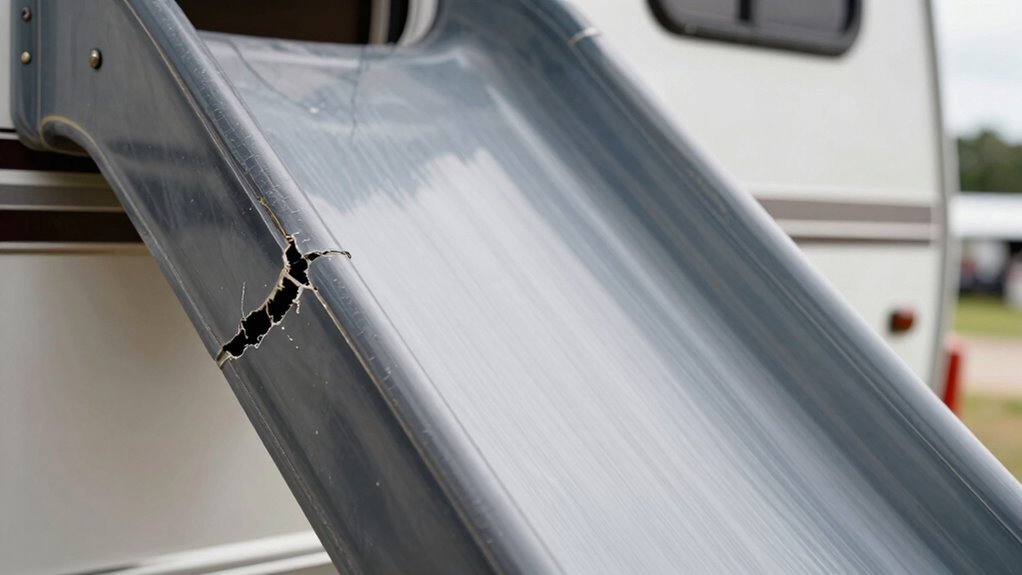
Your slide-out giving you a workout every time you extend it?
Worn or damaged seals could be the sneaky culprit letting in water, dirt, and even unwanted critters.
These rubber guardians take a beating from sun, weather, and grime, losing their squish and strength over time.
You might notice cracks, a musty smell, or gaps where rain sneaks in like an uninvited guest.
Keep your RV’s seals happy and healthy by:
- Pinching and flexing them to check for cracks or loss of bounce
- Cleaning with mild soap and water, then drying fully to prevent mold
- Replacing worn seals or re-caulking edges every few years for a tight seal
A little love goes a long way—don’t let your RV’s rubber armor turn into brittle junk.
Stay dry, stay cozy, and keep the great outdoors where it belongs—outside!
Frequently Asked Questions
Can I Manually Operate My RV Slide-Out if the Power Fails?
Yes, you can manually operate your RV slide-out if the power fails—no worries!
Just grab your tools, disconnect the battery, and find the motor.
Turn the socket or crank clockwise with steady pressure.
It might take a few minutes, and yes, it’s kinda like working out, but hey, at least you won’t need a gym membership this trip!
How Often Should I Lubricate My RV Slide-Out Mechanism?
You should lubricate your RV slide-out at least twice a year—once before and once after camping season.
If you’re on the road often, do it every few months or even monthly.
Listen for squeaks, groans, or sticky movement; those are your slide-outs begging for TLC.
Use a dry silicone lube to keep things smooth without attracting grime.
And hey, your slide-outs will thank you with long, happy travels!
Are RV Slide-Outs Covered Under Warranty?
Yeah, your RV slide-outs are usually covered under warranty—but it depends.
The structural parts, like the box, often have 3-year coverage, while motors and gears fall under the 1-year base or extended plans.
Just remember, warranties don’t cover chewed wires from squirrels or DIY repair mishaps.
Keep up with maintenance, follow the rules, and you’ll glide through claims way easier than a slide-out in rain!
What Causes Moisture Buildup Inside a Closed Slide-Out?
Moisture builds up in your closed slide-out when warm, damp air gets trapped and meets cold surfaces—hello, surprise puddles!
You’re adding moisture daily through showers, cooking, even breathing.
Without good airflow, that humid air has nowhere to go.
It condenses on cool walls and cabinets, especially in winter.
Think of your slide-out as a mini greenhouse gone rogue.
Grab a dehumidifier, vent better, and crack a window—your RV will thank you!
Can I Add Aftermarket Lighting Inside My Slide-Out?
Yeah, you can absolutely add aftermarket lighting inside your slide-out, and 85% of RVers say it’s the easiest upgrade they’ve done.
You’ll stick bright, efficient LED strips with 3M tape to a clean, flat spot—no fancy skills needed.
Just route the wires through tiny holes, seal ’em up, and boom: instant glow.
It’s like giving your slide-out a superhero cape—minus the drama, max on convenience!
Conclusion
Remember that time your sandwich slipped out of the picnic basket? Just like that, your slide-out needs care so it doesn’t “fall out” unexpectedly. With 65% of RV issues tied to simple maintenance, staying on top of seals, alignment, and motors keeps adventures smooth. You’ve got this! Think of it like petting your dog—regular, loving checks prevent big messes later. Now go enjoy that sunset, worry-free!
References
- https://seekingthervlife.com/rv-slide-out-problems/
- https://www.mygrandrv.com/threads/slide-extends-fine-wont-retract-without-pushing.62482/
- https://www.youtube.com/watch?v=dTssolugl9k
- https://www.youtube.com/watch?v=EBjpAF_t62w
- https://www.youtube.com/watch?v=80hU1ntLnbM
- https://www.youtube.com/watch?v=C3jhNune3FY
- https://bowlus.com/blog/tips/rv-trailer-slide-outs/
- https://www.rvtravel.com/slide-roof-hidden-dangers-2236/
- https://www.rvrepairclub.com/video/fix-camper-slide-making-grinding-noise-011506
- https://www.youtube.com/watch?v=ovk3j88YEUM