Staying Safe in Extreme Weather While RV Camping
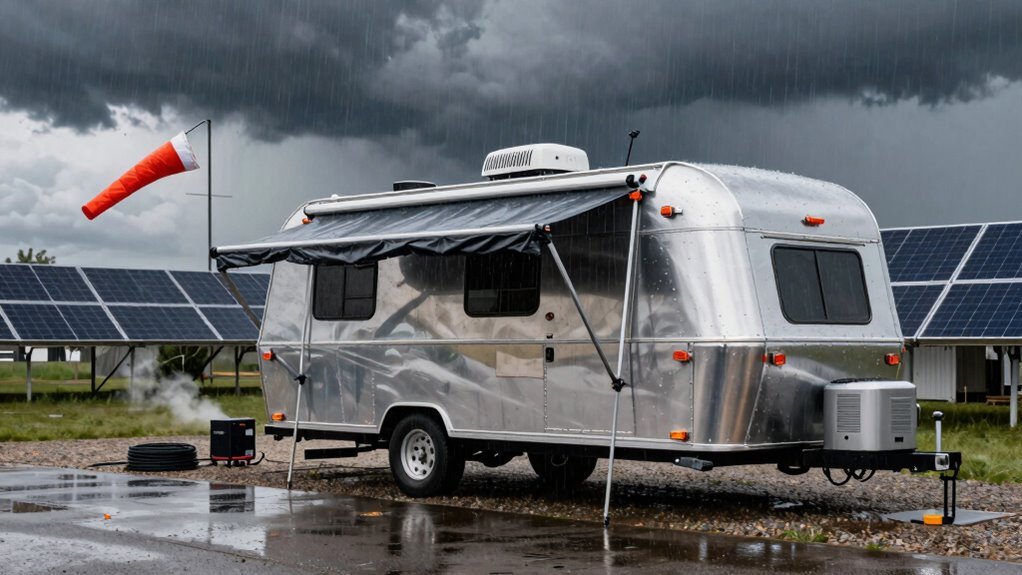
Staying safe in extreme weather while RV camping starts with awareness. Keep an eye on the sky and your phone, and sync RV sensors for real-time temperature, wind, and propane alerts to stay ahead of sudden storms.
Park your RV high and dry before severe weather hits to avoid rising water. Avoid flood zones like the plague—low-lying areas and dry riverbeds can become dangerous fast during heavy rain.
Close shutters, tuck in awnings, and unplug from shore power when high winds or lightning threaten. These steps help protect your rig and reduce the risk of damage or fire.
Never ride out a tornado in your RV—it’s not safe, even if you feel secure. When danger calls, head to a sturdy shelter immediately; the smart RVer knows when to bail.
Monitoring Weather Conditions on the Road
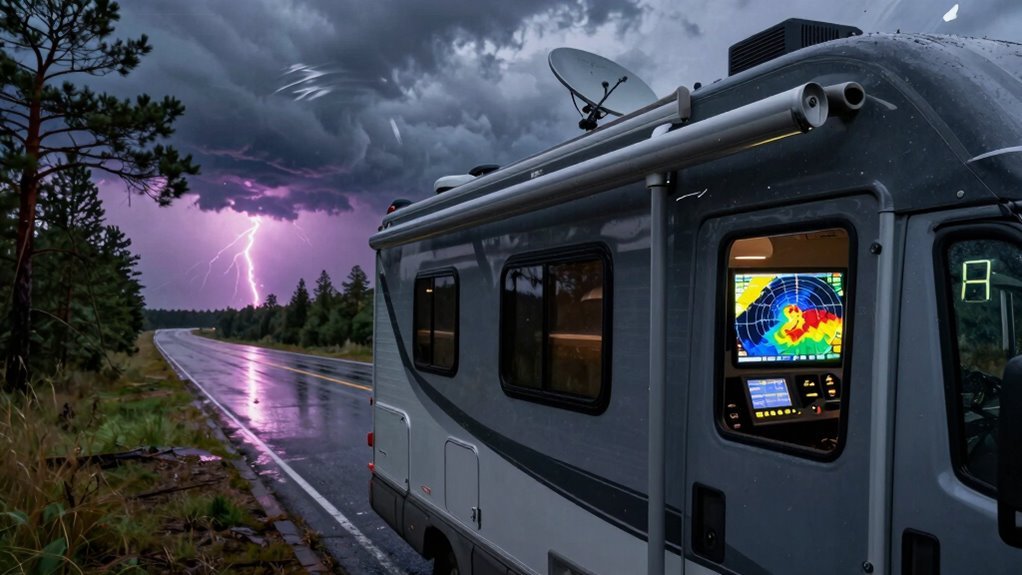
While you’re cruising down the highway with the open road stretching ahead, keeping an eye on changing weather doesn’t have to mean guessing or getting caught off guard—thanks to smart tech built for RV life, you can stay one step ahead of storms, heatwaves, and everything in between.
You’ve got real-time weather data flowing in from Road Weather Information Systems and mobile sensors, so you’re never blind to slick roads or sudden drops in visibility.
Your RV’s wireless sensors keep tabs on inside temps, battery power, and even propane levels—because no one wants a cold shower during a winter storm.
HD cameras wipe out blind spots, while infrared night vision turns darkness into daytime.
With NOAA alerts, GPS notifications, and websites like RV Weather, you’ve always got a backup plan.
It’s like your RV’s got a weather radar sixth sense—fancy, helpful, and totally low-drama.
Mobile sensing helps close critical gaps in weather data, giving RV travelers more accurate, localized road condition updates.
Weather’s wild, but you? You’re ready.
Securing Your RV Before Storms Hit
You’re already tracking storms like a weather pro with alerts pinging and cameras showing every角度—now let’s make sure your rig can stand up to the drama when the sky starts throwing punches.
Grab those shutters or plywood—slap ‘em over windows to stop flying glass and sneaky rain.
Reinforce doors, seal roof gaps, and tape up slide-outs like you’re prepping for a splash zone.
Don’t forget vents and skylights—sealants are your storm-day superheroes.
Tuck awnings in tight, stash chairs, grills, and plants inside, and secure roof gear before wind turns your yard into a missile yard.
Park high and dry—skip low spots that flood faster than a bathtub.
Chock those wheels, drop the jacks, add sandbags for muscle, and pull in all slides.
Disconnect propane, water, and power like you’re giving your RV a storm nap.
Maintain a charged cellphone and a battery-operated weather radio to stay updated if power fails.
Safety first, storm warrior—your cozy shell’s gotta ride it out safe, sound, and dry!
Handling High Winds While Parked
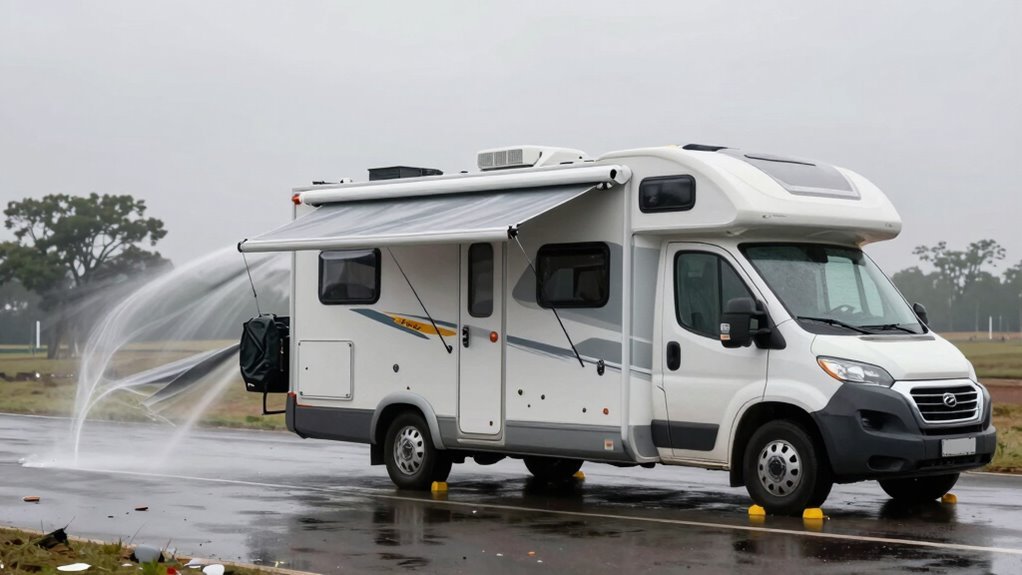
When the wind starts howling like it’s auditioning for a horror movie, your parked RV doesn’t have to turn into a wobbling punchline—it can stand strong with the right setup.
Point the front of your rig straight into the wind, since it’s built to slice through air, not take sideways smackdowns.
Avoid side or rear exposure—those flat walls can catch gusts like a sail, making things shaky and scary fast.
Snuggle up near natural windbreaks like trees or rocks, or use buildings or other RVs as shields.
Lock all windows, vents, and doors tight—no wind sneaking in!
Retract awnings, slide-outs, and antennas to avoid damage.
Stow chairs, trash, and loose gear so they don’t become flying hazards.
Check bolts on roof gear, and keep an eye on dead branches.
If winds hit 30 mph with 40+ gusts, stay put—no road trip’s worth the risk.
Keep your wheels on the ground during storm conditions since leveling jacks aren’t designed to resist strong horizontal forces.
Staying Safe During Lightning Storms
If the sky starts throwing a tantrum with crackling thunder and flashbulb lightning, don’t panic—your RV’s got your back, but only if you play it smart.
Unplug from shore power fast, retract leveling jacks, and pull in awnings or antennas—lightning hates mischief makers.
Seal up windows and doors, then stay inside for 30 minutes after the last thunderclap.
If caught outside, avoid tall trees, water, and hilltops—ditches are your friend, really!
Your RV’s metal shell acts like a Faraday cage, protecting you as long as you avoid touching plumbing, electronics, or metal surfaces.
Use battery-powered gadgets instead.
Surge protectors and grounded power cords help, too.
And hey, while strikes are rarer than unicorns (1 in 500,000), better safe than sorry.
Check your insurance, inspect wiring, and stay weather-aware—because nobody wants a shocking surprise on their camping trip!
Preparing for Extreme Heat Inside Your RV
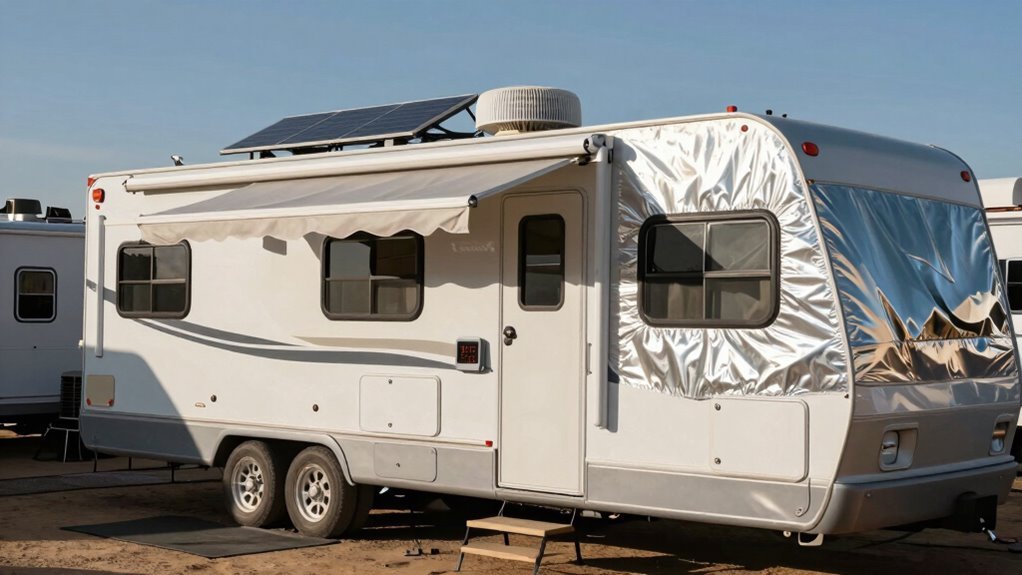
Now that we’ve weathered the storm—literally—it’s time to beat the heat and keep your cool when the thermometer starts running laps.
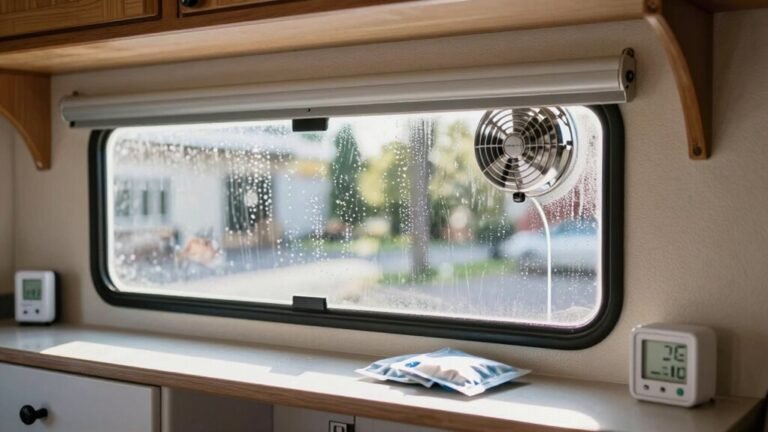
Crack windows while driving and run vent fans to keep air moving—stale, stuffy air is no match for a breezy RV.
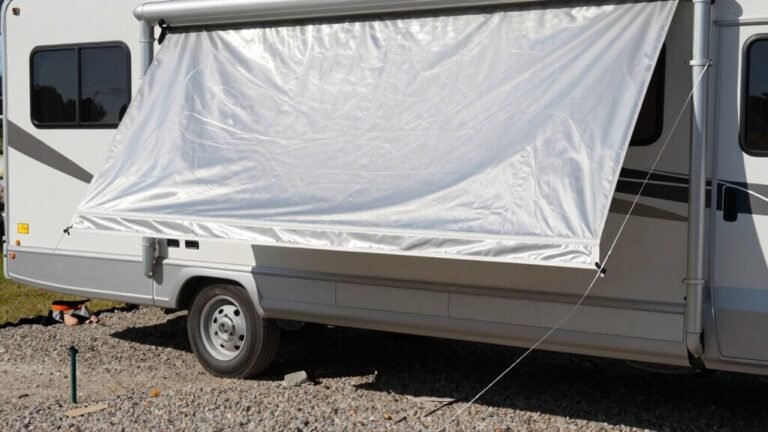
Pop on reflective window and windshield covers to block blazing sun, and use skylight covers to stop heat from sneaking in through the roof.
Cook outside whenever you can—grilling keeps both the heat and your delicious burger out of your living space.
Pack cold meals, wear loose, light clothes, and don’t forget that soggy hat trick for instant shade.
Drink water like it’s your job, and snack on juicy fruit to stay hydrated.
Park under trees when possible, call ahead for a shaded spot, and toss on a UV-protective roof cover.
Stay smart, stay cool, and remember: melting into your seat isn’t part of the camping plan.
Managing Cold Weather and Winter Storms
Braving the frosty wild with your trusty RV in tow?
Winter storms don’t stand a chance if you’re prepped right.
Keep your ride cozy and functional with these smart moves:
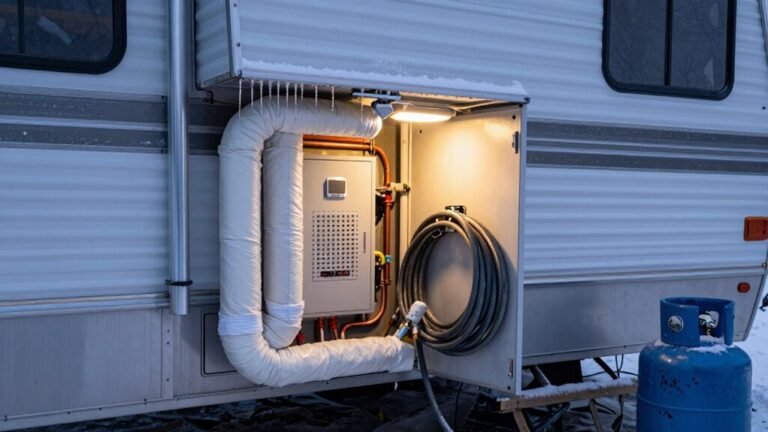
- Winterize your plumbing: Drain water systems, add antifreeze, and stash hoses indoors—or they’ll turn into popsicles.
- Layer the heat: Use electric heaters, heating pads, and skirting to keep pipes and tanks from freezing overnight.
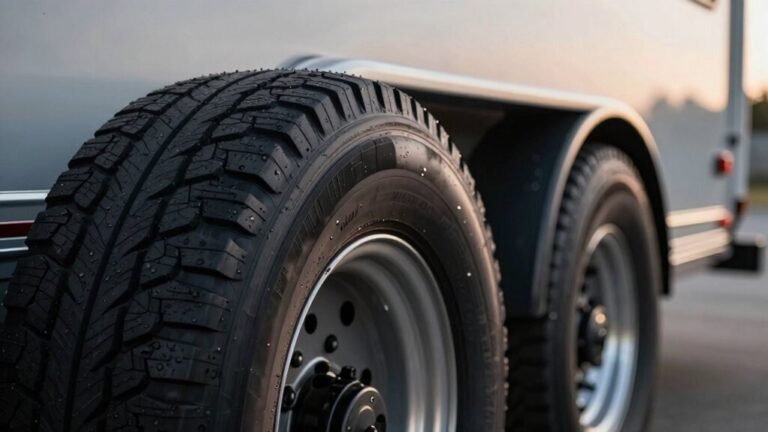
- Tame those tires: Slip on chains, check pressure, and inspect tread—icy roads hate cooperation, but your RV won’t.
- Stay weather-wise: Check forecasts, dodge shaded campsites, and watch for sneaky tree branches loaded with snow.
Top off fluids, pack extra blankets, and clear snow daily.
With the right prep, you’re not just surviving winter—you’re outsmarting it, one warm cup of cocoa at a time.
Avoiding Flash Flood Zones and Rising Water

Watching the horizon turn stormy while your campsite sits snug between canyon walls? You’re in flash flood territory, and it can go downhill—literally—fast.
Skip dry creek beds, valleys, or low spots; they’re nature’s bathtub.
Pick high ground, ideally 200 feet from water’s edge, and steer clear of soggy soil or willow patches that scream “poor drainage.”
Check topo maps, reviews, or old flood reports—knowledge is your best raincoat.
Use weather apps or a handheld radio to track storms and rising river levels.
If the water looks muddy, fast, or full of floating junk, don’t wait—move.
Flash floods strike in minutes, especially in canyons.
Have escape routes mapped, practice them with your crew, and never drive through flooded roads.
Your RV’s tough, but even it can’t swim.
Stay smart, stay dry, and remember: when thunder roars, heads for the hills!
Creating a Weather Emergency Kit
Packing smart means you’re not just ready for the storm—you’re ready to laugh it off from a cozy, well-stocked RV.
Build your weather emergency kit with these four essentials:
- First Aid & Medical Supplies: Pack bandages, antiseptic wipes, pain relievers, tweezers, and a CPR shield—because nobody wants a splinter turning into a drama.
- Water & Hydration: Store extra bottled water, bring a purifier, and keep backup reserves—you’ll stay hydrated even if the rain’s coming sideways.
- Food & Nutrition: Include no-cook meals, canned goods, dried snacks, and pet food so hunger doesn’t crash your weather-party.
- Light, Power & Warmth: Grab flashlights, battery packs, a NOAA radio, and thermal blankets to keep the lights (and laughs) going all night.
Toss in gloves, ponchos, and fire starters—you’ll be prepped, not stressed, when nature throws a tantrum.
Knowing When to Evacuate Your Campsite
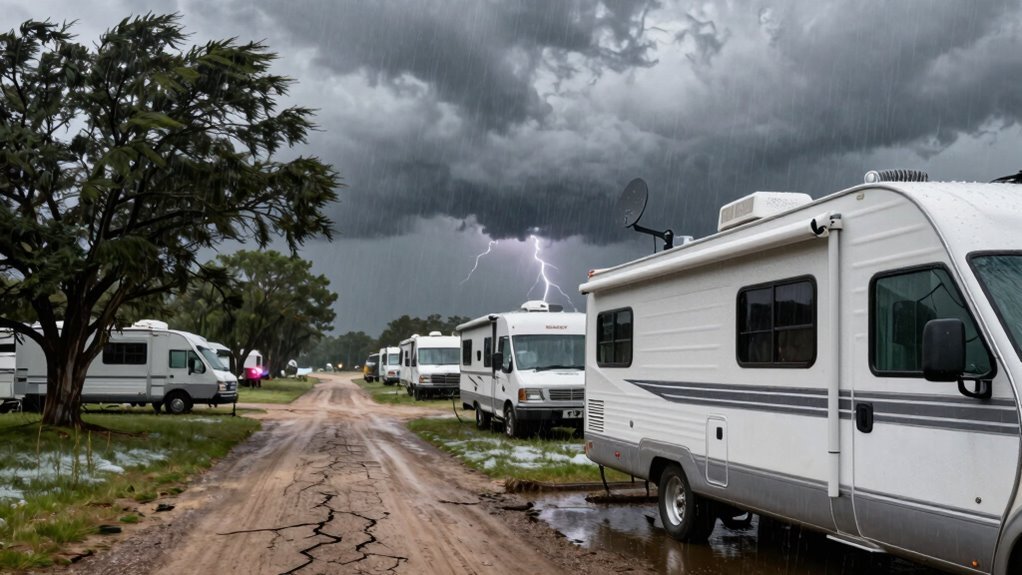
When’s the last time you played it cool while a tornado warning lit up your weather app?
Yeah, us neither.
If a warning drops—tornado, severe thunderstorm, or flood—you don’t wait around.
Evacuate fast.
Local orders mean go *now*, especially for hurricanes or rising water near your campsite.
Don’t ride it out in your RV; they’re no match for high winds or floods.
Know your escape routes *before* storms hit—map out a few, because roads flood or clog up fast.
If there’s time, head to a sturdy building or designated shelter.
When warned, every minute counts, so act quick.
Watches? Keep watching, but don’t dawdle—secure your rig and be ready.
But when sirens blare or alerts blast, bail early.
Skip the “what ifs” and drive smart.
Your safety’s worth more than a perfect campsite view.
Using Technology to Stay Weather-Aware
- Set up a portable weather station to track wind, rain, and even lightning within 25 miles—because surprise storms aren’t your idea of fun.
- Sync sensors to your phone so you can check temperature, humidity, and propane levels without stepping outside (hello, pajama meteorology).
- Use AI-powered apps that learn your location’s patterns and dish out hyperlocal forecasts better than the nightly news.
- Join a community weather network and tap into real-time data from nearby RVers—because sharing is caring, especially when skies get ugly.
Stay smart, stay safe, and let tech do the worrying.
Frequently Asked Questions
Can I Use My Generator During a Thunderstorm?
Yes, you can use your generator during a thunder storms—you just gotta play it smart!
Keep it running outside, at least 20 feet away, so deadly carbon monoxide doesn’t sneak in.
Use a proper canopy to shield it from rain, never a tarp—it’s a fire hazard!
And hey, no grilling inside the camper, even if the storm’s cramping your style.
Stay safe, stay dry, and keep the power flowing!
Should I Insulate My Rv’s Water Lines in Mild Winter Areas?
Yes, you should insulate your RV’s water lines even in mild winter areas.
Imagine waking up to a burst pipe because overnight temps dipped to 26°F—brrr, not fun!
Wind can sneak in and freeze exposed pipes fast.
Wrap them with foam sleeves or heat tape, seal gaps with spray foam, and you’re golden.
It’s like giving your RV a cozy winter jacket.
Quick, cheap, and totally worth it—trust me, frozen pipes are *not* part of the camping charm!
Is It Safe to Camp Near a Dry Riverbed?
No, you shouldn’t camp near a dry riverbed—it’s a sneaky danger!
That peaceful, sandy spot can become a raging river in minutes, even if it’s not raining where you are.
Flash floods come fast, give little warning, and love to surprise campers asleep in their RVs.
Skip the drama—park at least 100 feet away from dry streams.
Your future self will thank you, especially when dinner isn’t washed down the canyon!
How Often Should I Check My Rv’s Tires in Extreme Heat?
Think of your RV’s tires as thirsty camels in the desert—they need constant checking when it’s scorching.
You should check pressure before every trip and every few hours on long, hot drives.
Use a cool tire gauge, not right after driving.
If it’s over 80°F, keep an eye on them like a hawk.
An onboard monitor helps, and always, always match the manufacturer’s PSI—your tires will thank you, probably with a tire hug.
Can Wind Damage Affect My Rv’s Satellite Connection?
Yes, wind can totally mess with your RV’s satellite connection!
It can wobble or knock your dish out of alignment, even if it doesn’t break it.
You’ll see pixelated screens or dropped signals, especially in gusts.
Think of your dish doing the cha-cha in the breeze—fun to imagine, not so fun when you’re missing your favorite show!
Lower it during storms, secure the mount, and kiss those signal dropouts goodbye.
Stay connected with a little prep and some TLC!
Conclusion
You’ve got this—staying safe in wild weather’s like riding a rollercoaster with your seatbelt buckled, thrilling but smart. Keep an eye on forecasts, secure your rig, and trust your gut when it’s time to bolt. With the right prep and a dash of humor, you’ll laugh through storms, chill in the heat, and dodge floods like a pro. Happy (and safe) trails!
References
- https://www.otthydromet.com/en/applications/road-weather
- https://furrion.com/collections/rv-observation-system
- https://rvweather.com/landing-page-bfcm2/?amp
- https://rvweather.com
- https://rvwhisper.com
- https://www.acurite.com/blogs/why-weather-matters/rv-weather-station-benefits-uses
- https://www.adventurousway.com/blog/remote-rv-monitoring-camera-system
- https://www.youtube.com/watch?v=Apir7PWERWs
- https://rvweather.com/how-to-be-weather-aware-in-your-rv-and-on-the-road/weather-safety/
- https://www.optimumrv.com/posts/preparing-your-rv-for-a-hurricane