Why Does My RV Battery Die So Fast?
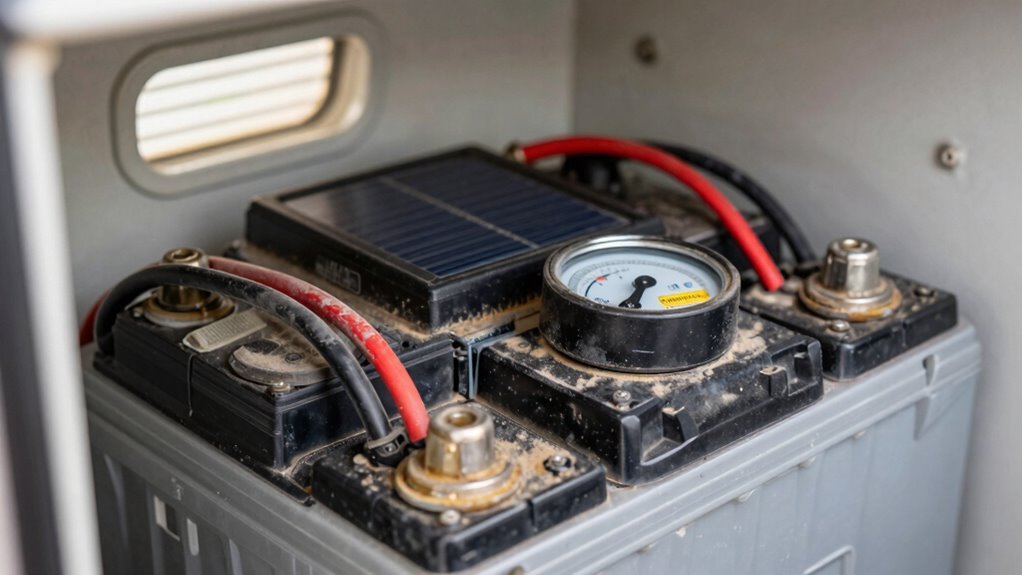
Your RV battery’s dying fast because tiny power hogs—like clocks, alarms, or a rogue fridge light—are sneaking energy while you sleep. These parasitic drains can significantly reduce battery life, especially if the battery is older or not holding a charge well.
Old or worn-out batteries simply can’t hold a charge like they used to. Add weak charging from your converter or alternator, and your RV battery won’t stay powered for long.
Poor wiring, extreme temperatures, or lack of solar charging can make the problem worse. Skipping solar is like hiking without water—it leaves your RV battery vulnerable to frequent drain.
Parasitic Loads Draining Your Battery Overnight
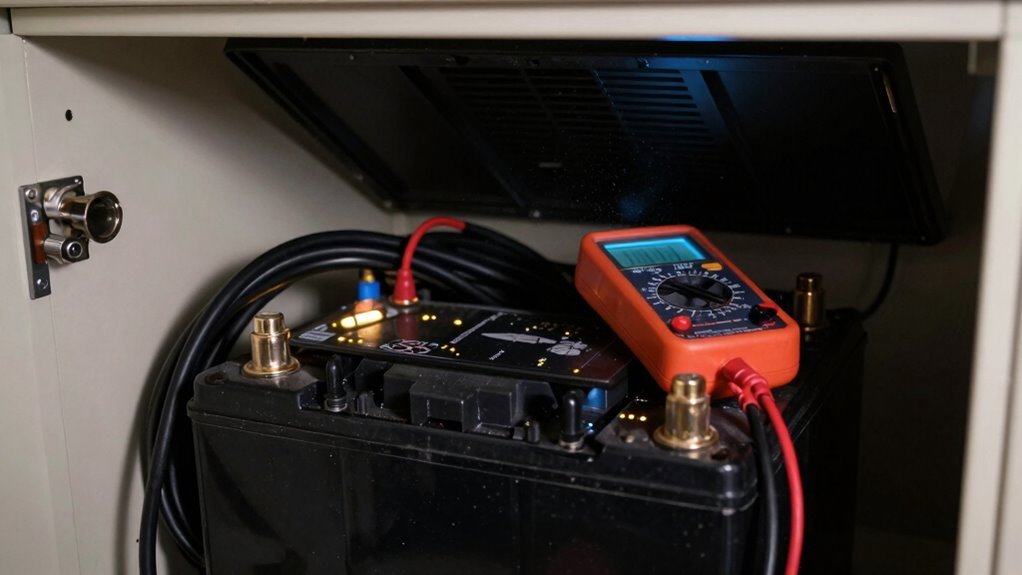
Ever wake up to a dead RV battery and wonder, “Where did all that power go?”
Well, chances are, tiny energy thieves—called parasitic loads—are to blame.
You’d be surprised what’s sipping power while you sleep: smoke detectors, fridge monitors, and even your stereo’s memory settings.
They may seem harmless, but together, they’re throwing a power party on your dime.
Clocks tick, control panels hum, and TVs peek at the electrical system—all drawing juice, 24/7.
And if there’s faulty wiring? Loose connections or corroded terminals make it even worse, draining your battery like a slow kitchen faucet.
Even with the disconnect switch on, some sneaky loads still get through.
Over time, these little vampires add up, leaving you powerless by sunrise.
But don’t panic!
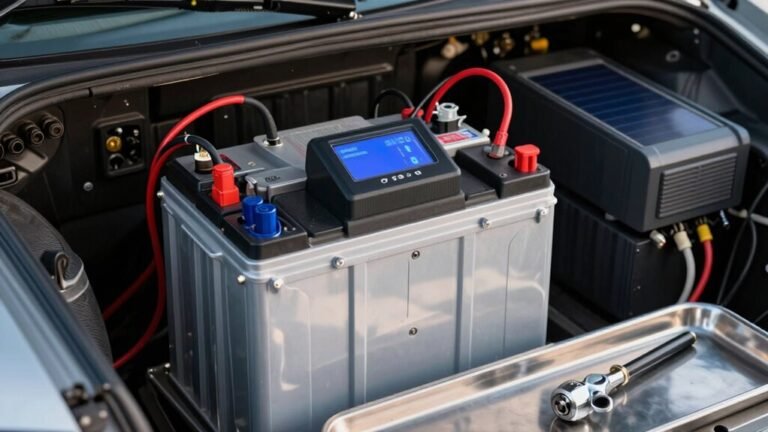
A few smart checks—like using a multimeter or installing a battery monitor—can catch these culprits.
These systems help ensure your battery maintains optimal charge, especially since parasitic drains from clocks, alarms, and refrigerators are common reasons for unexpected battery depletion.
Outsmart the drain, and keep your RV ready to roll.
Aging or Damaged Batteries Losing Capacity
Even if you’ve been careful with your RV’s power use, your battery might still be losing steam over time—and the culprit could be age or hidden damage.
All batteries wear out, like sneakers on a long hike.
Lithium ones slowly lose active material or build up gunk inside, while lead-acid batteries get crusty from sulfation or lose water.
Deep discharges, heat, or just sitting too long at full charge can speed things up—kind of like leaving your soda in the sun.
Even if you don’t use it, aging happens; it’s just battery karma.
Poor build quality, dodgy connections, or a confused BMS can also fake a power drop.
And let’s be real—your battery isn’t immortal.
After a few years, it’s probably not failing you; it’s just tired.
Time for a replacement? Think of it as a battery glow-up!
One owner’s 8.5-year lifespan pack eventually failed after a prolonged discharge during storage, highlighting how even well-maintained systems degrade over time.
Inadequate Charging From Your Rv’s System
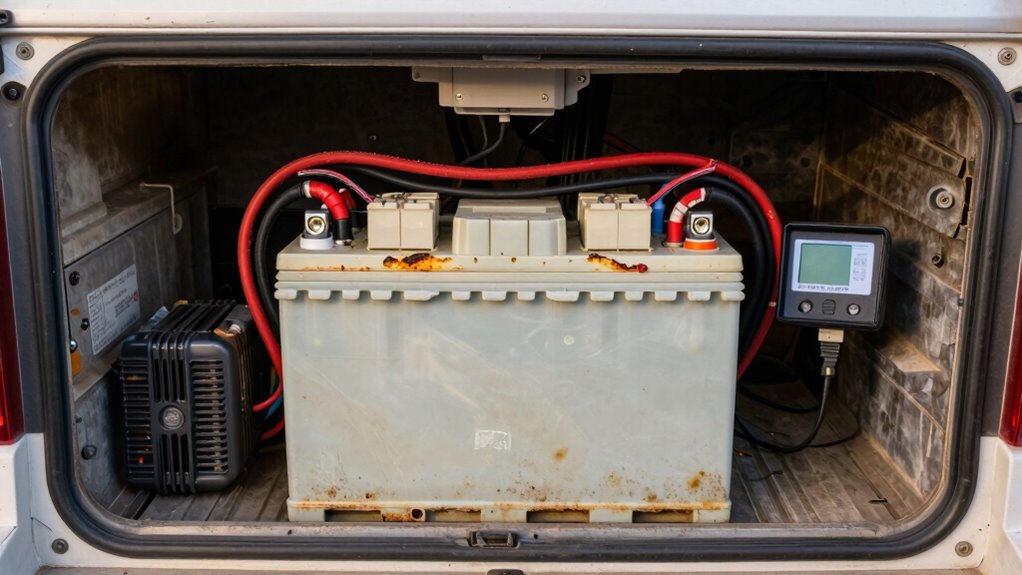
Your RV’s battery might be tired, sure, but before you write it off like yesterday’s road snack, let’s talk about what’s actually feeding it.
If your converter’s too weak or faulty, your battery’s barely getting a snack itself—no wonder it’s running on fumes.
Maybe your alternator’s slacking while you drive, or corroded wires are blocking power like a kink in a garden hose.
Check those connections; loose or dirty terminals can strangle charging current fast.
Faulty isolators, blown fuses, or a bum DC-to-DC charger?
That’s like serving dinner with no spoon—everything’s there, but nothing gets through.
And if your shore power’s flaky or the converter’s stuck in protection mode, your battery’s not charging at all.
Even wrong settings on your inverter/charger can leave it sipping instead of gulping power.
A converter not delivering 14.6 V for lithium-iron phosphate batteries could prevent a full charge, reducing usable capacity and lifespan.
Extreme Temperatures Affecting Performance
| Too Cold? | Too Hot? |
|---|---|
| Loses power fast, struggles to start things | Feels peppy at first, but ages quicker |
| Hard to charge without risking damage | Self-drains even when parked |
Keep it temperate when you can—your battery’s not built for drama. A little protection from weather goes a long way. Think insulation in winter and shade in summer. Treat it right, and it’ll keep your lights on, no tantrums included.
Overlooking Solar or Alternative Charging Options

Wondering why your RV battery keeps tapping out when you’re off the grid? You might be skipping solar or other charging tricks that could save your trips.
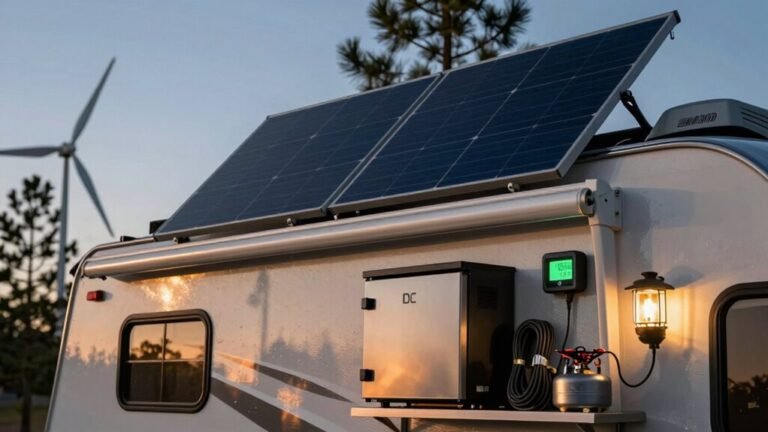
If you’ve got no panels or a tiny setup, you’re missing out on free, endless sunshine power—especially if your roof’s wide open.
Skipping solar? That’s like backpacking without snacks—fine until you get hungry.
And without an MPPT controller, you’re tossing away energy like cold coffee.
Using your alternator while driving? Great, but without a proper DC-DC charger, your battery’s only getting a weak sip, not a full gulp.
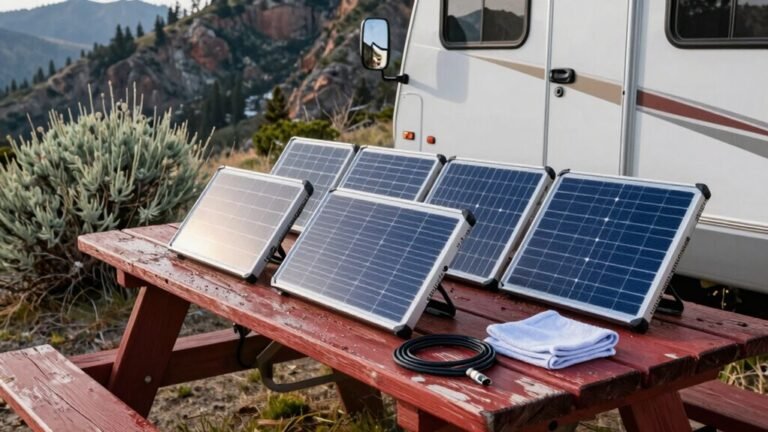
And hey, portable solar or a small generator aren’t just gadgets—they’re lifelines when clouds roll in.
Embrace hybrids! Sun, alternator, generator—team them up and your battery won’t just survive—it’ll thrive.
Lighten up, power up, and never sweat a dead battery again!
Frequently Asked Questions
How Often Should I Completely Discharge My RV Battery?
You should never completely discharge your RV battery—it’s a fast track to killing it.
Stick to 50% max for lead-acid, 80% for deep-cycle types, and recharge ASAP.
Going deeper too often causes damage, shortens life, and leaves you powerless mid-adventure.
Think of your battery like a snack: nibble it, don’t gulp it!
Keep it charged and smiling—your lights (and fridge) will thank you!
Can I Use a Car Battery Charger for My RV?
You could use a car battery charger on your RV, but good luck explaining to your poor house battery why you’re treating a deep-cycle like a starter.
Spoiler: it’ll hate you.
Car chargers aren’t smart enough for your RV’s needs, skipping critical stages and risking damage.
Instead, grab a smart charger—like Battery Tender or NOCO.
It’ll keep your battery happy, healthy, and actually last longer.
Win-win!
Is It Safe to Leave My RV Battery Plugged in All Winter?
Yes, you can leave your RV battery plugged in all winter—but only if you’re using a smart charger that matches your battery type.
It’ll keep things safe, smart, and fully charged without overdoing it.
Just don’t go lazy and plug into an old charger, unless you want a fried battery come spring.
Think of it like leaving your phone on a charger forever—good tech? Great.
Bad tech? Oops.
Stay smart, stay charged!
Do I Need a Battery Disconnect Switch on My RV?
Yes, you do need a battery disconnect switch on your RV—better safe than sorry.
You flip it off when storing your rig, so sneaky vampire drains don’t kill your battery overnight.
It’s like putting your RV to bed with a cozy blanket and a goodnight kiss.
You’ll protect your battery, extend its life, and avoid the dreaded “why won’t anything turn on?” panic every spring.
Can I Mix Old and New Batteries in My RV System?
No, you shouldn’t mix old and new batteries—they’ll fight like siblings over chores.
The newer one works overtime, draining faster and wearing out prematurely.
It’s like pairing a sprinter with a snail; they can’t keep pace.
Mismatched batteries cause imbalanced charging, reduced capacity, and shorter lifespans.
For best results, replace the whole bank at once.
Your RV will thank you with longer, happier adventures—no battery drama included!
Conclusion
So, your RV battery’s flatter than yesterday’s soda? Shocking, right? Turns out, tiny energy vampires snack on it all night, old batteries forget their job, and your charger might just be napping. Heat turns it dramatic, cold makes it grumpy. And hey, solar panels? You ignored them like your gym membership. But guess what—fixing it’s easier than explaining why the fridge light’s still on. Wake up, hero—your battery’s waiting!
References
- https://berrylandcampers.com/blog/why-is-my-rv-battery-draining-while-plugged-in
- https://www.daisyrv.com/why-is-my-rv-battery-draining-so-fast/
- https://alliancervowners.com/forum/threads/parasitic-battery-drain.354/
- https://www.youtube.com/watch?v=a1cJNPI-H5w
- https://www.technomadia.com/2020/06/what-killed-our-rv-lithium-batteries-8-5-years-of-lifepo4/
- https://www.herewinpower.com/blog/lead-acid-vs-lithium-batteries-performance-tests-on-rvs/
- https://www.youtube.com/watch?v=a9N3OTv4YWg
- https://pmc.ncbi.nlm.nih.gov/articles/PMC9709825/
- https://www.anernstore.com/blogs/off-grid-solar-solutions/rv-lithium-battery-sizing-mistakes
- https://lithionics.com/how-long-do-lithium-batteries-last/