How to Prevent Your RV Pipes From Freezing
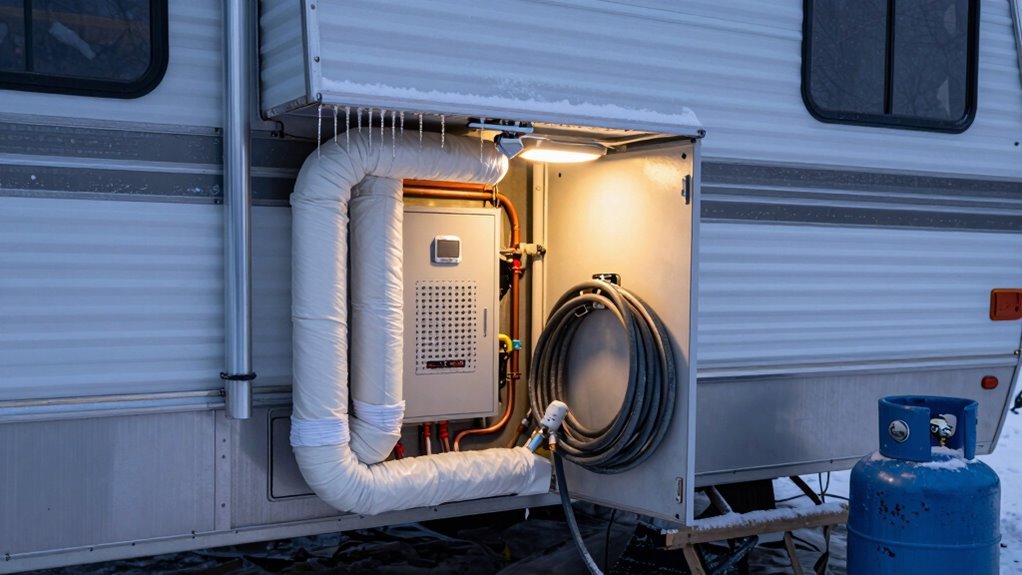
When the mercury drops, don’t let your RV pipes freeze—insulating them with foam sleeves is one of the simplest and most effective ways to prevent frozen pipes in an RV. Wrap any exposed lines with self-regulating heat tape for added protection, especially in frigid conditions.
Keep your furnace running to maintain a steady interior temperature, and open cabinet doors to allow warm air to circulate around plumbing. Leaving your fresh water tank partly full can also reduce the risk of freezing, as empty spaces are more prone to ice buildup.
If a deep freeze is forecast, take extra precautions by draining all water systems and using RV antifreeze to safeguard internal plumbing. Stay proactive and monitor weather updates closely—being prepared can prevent costly damage. There’s plenty more to learn when it comes to preventing your RV pipes from freezing.
Understand When Freezing Temperatures Become a Threat
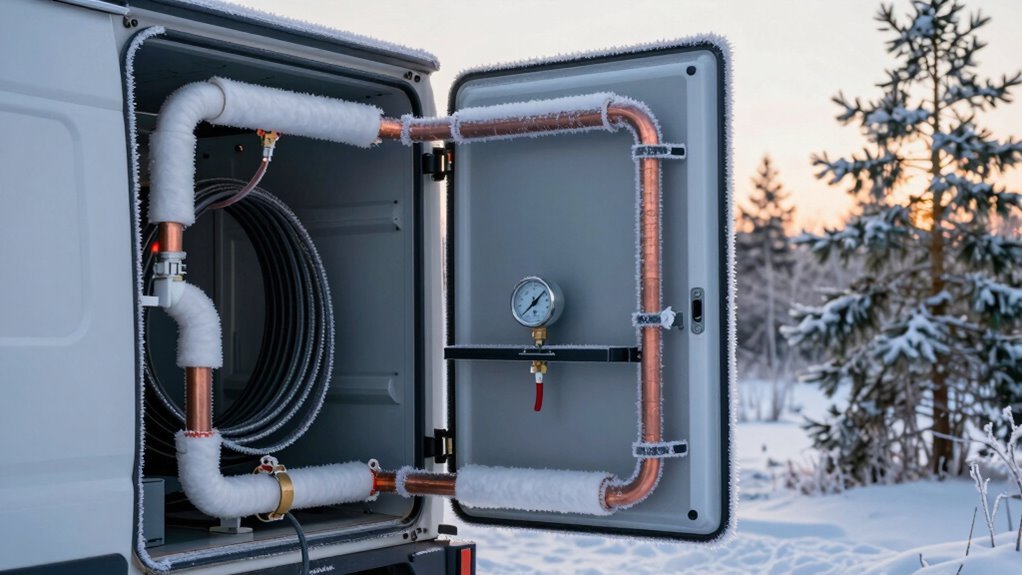
Ever wonder just how cold it has to get before your RV pipes turn into icy popsicles?
It’s not just about hitting 32°F—your pipes usually start freezing around 20°F, especially if it stays that cold for over 24 hours.
Wind chill makes it worse; even 21°F for 10 hours can spell trouble.
You’ve got more wiggle room if your underbelly’s enclosed or you’ve got heat tape, but exposed pipes? They’ll freeze faster than you can say “brrr.”
Most plumbing runs through chilly floor cavities, so without interior heat, they’re sitting ducks.
Keep your furnace running and the inside above 65°F—open cabinet doors so warm air flows.
Just one night below freezing mightn’t doom you, especially if you use the RV, but don’t push your luck.
Check hourly forecasts, because surprise cold snaps are sneaky.
Stay alert, stay warm, and keep that water flowing—nobody wants a plumbing popsicle.
Antifreeze works down to –20°F to –50°F, depending on the product, providing a critical buffer once your system is winterized.
Insulate Your RV’s Plumbing System
Wrapping your RV’s pipes is like giving them a cozy winter jacket—only smarter and way more effective. Slip on split-foam sleeves for quick, DIY protection—just grab a kit from the hardware store and go.
They’re great as a first defense, but don’t stop there. For serious cold, add spray foam (pros love this stuff—it seals tight and keeps heat in). It costs more up front, but your pipes (and wallet) will thank you later.
Don’t forget the underbelly; insulating it shields your whole system, especially when you add skirting. Use duct tape or zip ties to secure everything snug—no loose ends!
Wrap in spirals, cover every inch, and toss on extra tape for fittings and sensors.
Think of it as a spa day for your plumbing—warm, cozy, and ready to brave the chill.
Your RV’s gotta stay frost-free, after all!
Use Heat Tape on Exposed Pipes
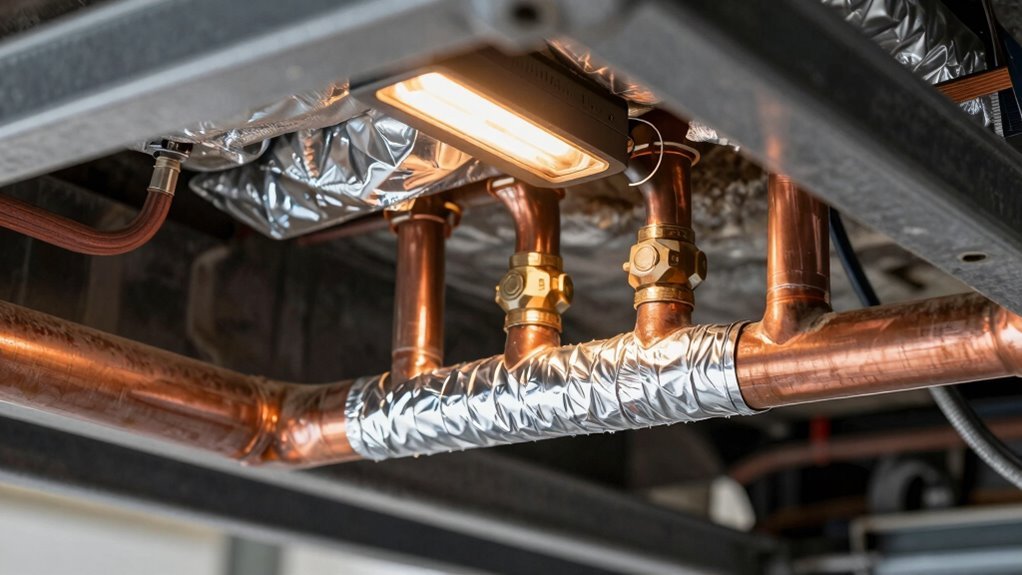
Keep those pipes from turning into icy popsicles by putting heat tape to work on any exposed plumbing.
It’s like a cozy electric blanket for your pipes, and when you do it right, freezing fears melt away. Here’s how to nail it:
- Pick automatic, self-regulating heat tape made for RVs—it’ll won’t fry your plastic pipes.
- Before wrapping, check for leaks, wipe things clean, and make sure the thermostat can feel the cold air. Check pipe joints for leaks to prevent damage to insulation and avoid shorting the heat tape.
- Wrap snugly from plug to pipe end, spiral it smoothly (no overlaps!), and secure with electrical tape.
- Cover everything with foam insulation and a waterproof jacket—think layers, like you’re bundling up for snowball fights.
Plug into a GFCI outlet, watch for that glowing orange light, and sleep easy knowing your pipes are toasty.
—even when it’s 12°F outside. Voilà—no more frozen plumbing panic!
Keep Your Fresh Water Tank Partially Full
Fill your fresh water tank just right—like packing a lunchbox, not a suitcase—and you’ll dodge the icy tantrums freezing pipes love to throw.
Keep it between one-third and two-thirds full, and you’re golden.
This sweet spot holds enough warm water to slow freezing, while leaving room so ice won’t burst the tank.
Water fights cold better than air, so that liquid mass soaks up leftover heat from your RV’s interior and furnace.
It also lets water move slightly, keeping things flowing near heat sources.
Traveling in freezing temps? This balance keeps weight stable and warmth working.
Pair it with insulation or a heated bay, and you’ve got a cozy snow fortress.
Don’t forget to check levels daily when it’s below zero—stagnant water is a party no one wants.
Skip the salt (it’s risky for drinking water), but toss in an aerator if you’re feeling fancy.
Smart, simple, and freeze-free? Now that’s camping magic.
Heated holding tanks can provide additional protection when ambient temperatures drop drastically.
Drain and Winterize Your Plumbing When Not in Use
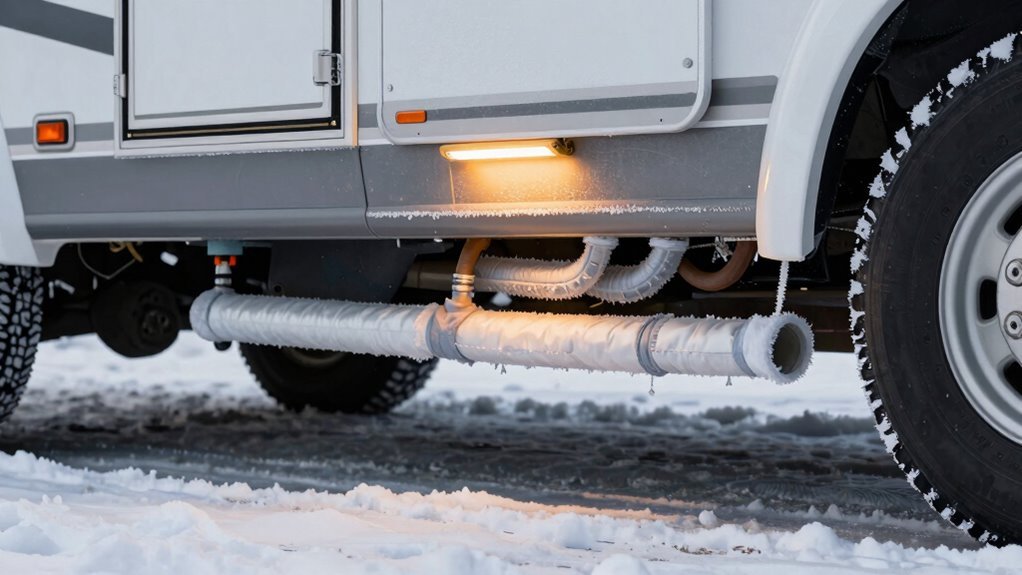
- Drain everything – Freshwater tank, water heater, low-point drains – leave no drop behind.
- Bypass the water heater – Save antifreeze (and cash) while protecting your system.
- Pump in pink – Use RV antifreeze to flush all lines until it flows cherry blossom bright.
- Protect the traps – Pour antifreeze down drains to guard P-traps and seals from cracking.
Boom—your RV’s ready to snooze through winter in peace!
Maintain Proper Interior Temperature With Heating Sources
Now that your pipes are safe and sound with a proper winterizing routine, it’s time to keep the chill at bay by warming up your ride with the right heat source.
If it’s below 40°F, fire up your propane furnace—it blasts cozy warmth fast and even heats the belly where pipes hide.
Just don’t forget: it needs 12V power, so keep those batteries charged.
For milder cold, your heat pump works quietly, but it’ll tap out when temps drop too low—think of it as a warm sidekick, not the main hero.
Diesel lovers, rejoice: hydronic systems run off your fuel tank, give steady heat, and even power hot showers—nice!
And while you’re heating things up, seal windows and doors tight; trapped warmth means less work for your system.
Pro tip: Insulated window inserts aren’t just for nerds—they’re stealthy heat guardians.
Stay warm, not wild, and your RV will feel like a toasty cocoon, not a freezer with wheels.
Open Cabinet Doors to Allow Warm Air Circulation
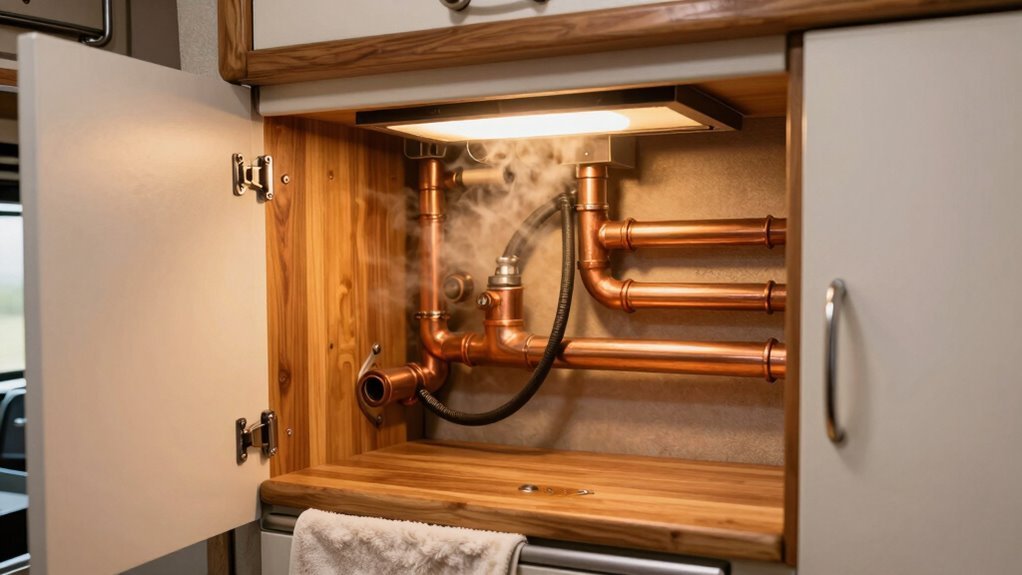
Crack open those cabinet doors and let the warm air waltz in—your pipes will thank you with a standing ovation.
This simple move lets heat hug every inch of your plumbing, especially under sinks where cold likes to sneak in.
You’re not just warming a cabinet—you’re throwing a heat party for your pipes.
- Open all sink cabinets, including bathroom ones, and keep interior doors open for airflow.
- Keep your RV at 65°F or warmer so the warm air actually helps.
- Focus on areas where pipes run through outer walls—they’re cold zones.
- Pair this with good insulation and sealed gaps to keep heat from escaping.
It’s like giving your RV a cozy blanket from the inside out. Freezing pipes? Not on your watch.
Monitor Weather Conditions and Plan Ahead
While the weather mightn’t care about your RV’s plumbing, you definitely should—especially when Jack Frost starts creeping in uninvited.
Keep an eye on forecasts, because pipes can freeze at20°F or lower, especially with wind speeding things up.
Use weather apps to alert you to cold snaps, and plan routes that dodge prolonged freezing zones.
If it’s going to be below freezing for over24 hours, take action—don’t wait!
Install WiFi sensors like Temp Stick PRO to monitor pipe temps in real time, and get alerts if things get too chilly.
Activate tank heaters near freezing, and keep your furnace running during cold spells.
For longer absences, winterize early or rely on remote monitoring.
Anticipate cold fronts, check insulation, and never let your guard down—your pipes will thank you!
Stay smart, stay warm, and keep your RV’s insides from turning into an icy surprise.
Frequently Asked Questions
Can I Use Regular Tape Instead of Heat Tape?
Nope, regular tape won’t cut it—sorry, DIY hero!
It doesn’t generate heat or fight freezing temps like real heat tape does.
Without warmth, your pipes are sitting ducks for ice buildup and bursts.
Trust us, duct tape’s superpower isn’t miracle thawing.
Swap it for proper heat tape with insulation, and you’ll skip the plumbing panic.
Your wallet (and winter camping trip) will thank you!
Stay warm, stay smart!
What Happens if Only One Pipe Freezes?
If one pipe freezes, it’s not just a little hiccup—it can snowball fast.
That icy blockage builds pressure, and whoops, your pipe cracks.
Then water sneaks out, damaging floors and walls, maybe even growing mold like it’s throwing a party.
Plus, one freeze can trigger others, leaving your whole system high and dry.
It’s the domino effect from frosty doom—with surprise leaks and repair bills that’ll make you groan!
Should I Leave Faucets Dripping in Winter?
Yes, you should leave faucets dripping in winter, but don’t turn on a waterfall—just a slow, steady trickle will do.
You’re keeping water moving, dodging ice jams, and saving your pipes from bursting.
It’s not magic, but it helps—especially if you’re warm inside and the thermostat’s humming.
Just remember: dripping’s not a superhero.
It can’t save frozen underbellies or beat zero-degree winds.
Pair it with insulation, heat tape, and warm tanks, and you’ve got a solid defense.
Stay cozy, not costly!
Can I Use Space Heaters Safely Overnight?
Sorry, but you shouldn’t run space heaters overnight—they’re risky and could start a fire or worse.
Instead, rely on your RV’s built-in furnace; it’s safer and made for the job.
If you’re still worried, plug in a heated tank pad or wrap pipes with heat tape.
They’re like cozy socks for your plumbing!
With a little prep, your RV stays warm, safe, and freeze-free—all while you snooze soundly.
Sweet dreams!
Do RV Holding Tanks Freeze From the Top Down?
So, do RV holding tanks freeze from the top down?
Yep, they sure do—just like a lake in winter! Ice forms on the surface first since it’s lighter than water, leaving the lower parts slushy or liquid longer.
That’s why a fuller tank resists freezing better—less air space for ice to expand into. Keep that in mind, and you’ll dodge a frosty plumbing nightmare with a smile!
Conclusion
One minute it’s sipping cocoa in sunshine, the next you’re battling ice inside your pipes—don’t let winter sneak up on you! Wrap those pipes like burritos in foil, keep the heat humming, and peek under sinks like you’re checking for secrets. Warm air loves open cabinets, not chilly corners. Stay ahead of the freeze, and you’ll dodge a plumbing disaster. Stay cozy, stay smart, and keep rolling—your RV’s counting on you!
References
- https://prideportabletoilets.com/2021/03/how-to-keep-rv-pipes-from-freezing-while-camping/
- https://www.roamly.com/learning-center/how-to-keep-rv-pipes-from-freezing
- https://www.harvesthosts.com/blog/what-to-do-rv-pipes-freeze
- https://www.youtube.com/watch?v=xR49TWfSD5U
- https://community.goodsam.com/discussions/motorhomesforum-board/will-my-pipes-freeze/903691
- https://www.youtube.com/watch?v=vSOzF9ccSmw
- https://www.youtube.com/watch?v=p9va9Z54KUw
- https://www.rvtravel.com/ask-dave-how-to-insulate-rvs-exposed-drain-pipes/
- https://www.foremost.com/learning-center/how-to-install-heat-tape.asp
- https://www.youtube.com/watch?v=zBkUs57Ub94